
 한국어
한국어

- Asset Protection: Integrating certified tankless RO systems mitigates water damage risks, which account for approximately 25% of all US home insurance claims, averaging $12,500 per incident.
- Regulatory Compliance: Multi-family water upgrades must comply with NSF/ANSI standards (53, 58, and 372) and WQA certifications to satisfy strict local plumbing codes and tenant safety mandates.
- High-Yield ROI: Shifting from centralized filtration to point-of-use (POU) under-sink or countertop systems reduces maintenance overhead by up to 40% while raising property valuation and tenant retention.
The Economic Imperative of Water Filtration in Multifamily Real Estate
For property managers, asset owners, and real estate investment trusts (REITs), utility management has shifted from a operational expense to a core driver of Net Operating Income (NOI). Implementing commercial-grade rental property water filtration is no longer merely an aesthetic amenity; it is a strategic capital expenditure that directly addresses tenant retention, structural risk mitigation, and ESG compliance.
According to industry research reports from 2026, the global water purifier rental and leasing market surpassed USD 12 billion by the end of 2025, growing at an annual rate of 10% to 14%, and is projected to reach USD 18 billion by 2030. The commercial and multifamily segment accounts for approximately 55% of this leasing market. Furthermore, community and apartment direct-drinking equipment procurement experienced a compound annual growth rate (CAGR) of approximately 18% between 2024 and 2026, driven by rising consumer awareness of municipal tap water contaminants such as lead, PFAS, and microplastics.
Integrating filtration systems at the property level directly addresses structural liabilities. Insurance industry data indicates that water damage is a leading cause of home insurance claims in the United States, representing approximately 25% of all claims, with an average cost of $12,500 per incident. Traditional multi-cartridge filtration units with bulky storage tanks present significant leak vectors due to pressurized plastic reservoirs and complex fitting configurations. Transitioning to integrated, tankless reverse osmosis systems significantly mitigates this risk profile.
Regulatory Compliance and Standards for Rental Properties
B2B procurement departments must prioritize strict compliance with international public health standards to protect against liability. Residential and light commercial water systems installed within rental units must meet specific certifications:
- NSF/ANSI Standard 58: The gold standard for reverse osmosis drinking water treatment systems, certifying the reduction of total dissolved solids (TDS), lead, copper, barium, and radium.
- NSF/ANSI Standard 53: Evaluates point-of-use systems for the reduction of specific health-related contaminants, including cyst, lead, mercury, and volatile organic compounds (VOCs).
- NSF/ANSI Standard 372: Verifies that the product’s wetted components contain less than 0.25% lead, ensuring compliance with the Safe Drinking Water Act.
For detailed technical integration parameters regarding regional plumbing codes, procurement officers should refer to our comprehensive plumbing compatibility guide.
Technical Comparison: Under-Sink vs. Countertop Systems
To optimize capital allocation across a real estate portfolio, procurement managers must evaluate the technical trade-offs between under-sink configurations and countertop models. Standard US rental market norms dictate that tenants cannot install whole-house or under-sink filters without landlord permission; therefore, providing pre-installed, landlord-approved systems or supplying high-performance, non-invasive countertop units is critical for legal and operational compliance.
| Technical Parameter | Under-Sink Tankless RO System | Countertop RO Water Dispenser |
|---|---|---|
| Installation Type | In-line plumbing integration (requires standard sink drilling) | Plug-and-play, zero installation, standalone tank system |
| Filtration Technology | Multi-stage RO (Sediment + Carbon block + RO Membrane) | Multi-stage RO + UV-C sterilization sterilization |
| Flow Rate / Output | 400 GPD to 800 GPD (gallons per day) | Instant heating/cooling with 4L-6L internal tank reservoirs |
| Leak Risk Mitigation | Integrated water paths, electronic leak sensors | Zero risk to municipal plumbing (completely isolated) |
| Filter Cartridge Lifespan | 12 to 24 months (dependent on local water quality) | 12 months (optimized for rapid, tool-free replacement) |
| Primary B2B Use Case | New construction, major renovations, long-term luxury rentals | Short-term leases, historic buildings, student housing |

OEM Solutions for Volume Procurement
As an established water filter manufacturer in China, ONEMI engineers high-performance filtration hardware designed for the rigorous demands of commercial operations and property portfolios. Our product design prioritizes ease of installation, minimized plumbing connections, and streamlined cartridge maintenance schedules.
1. Under-Sink Solutions: The Tankless RO Series
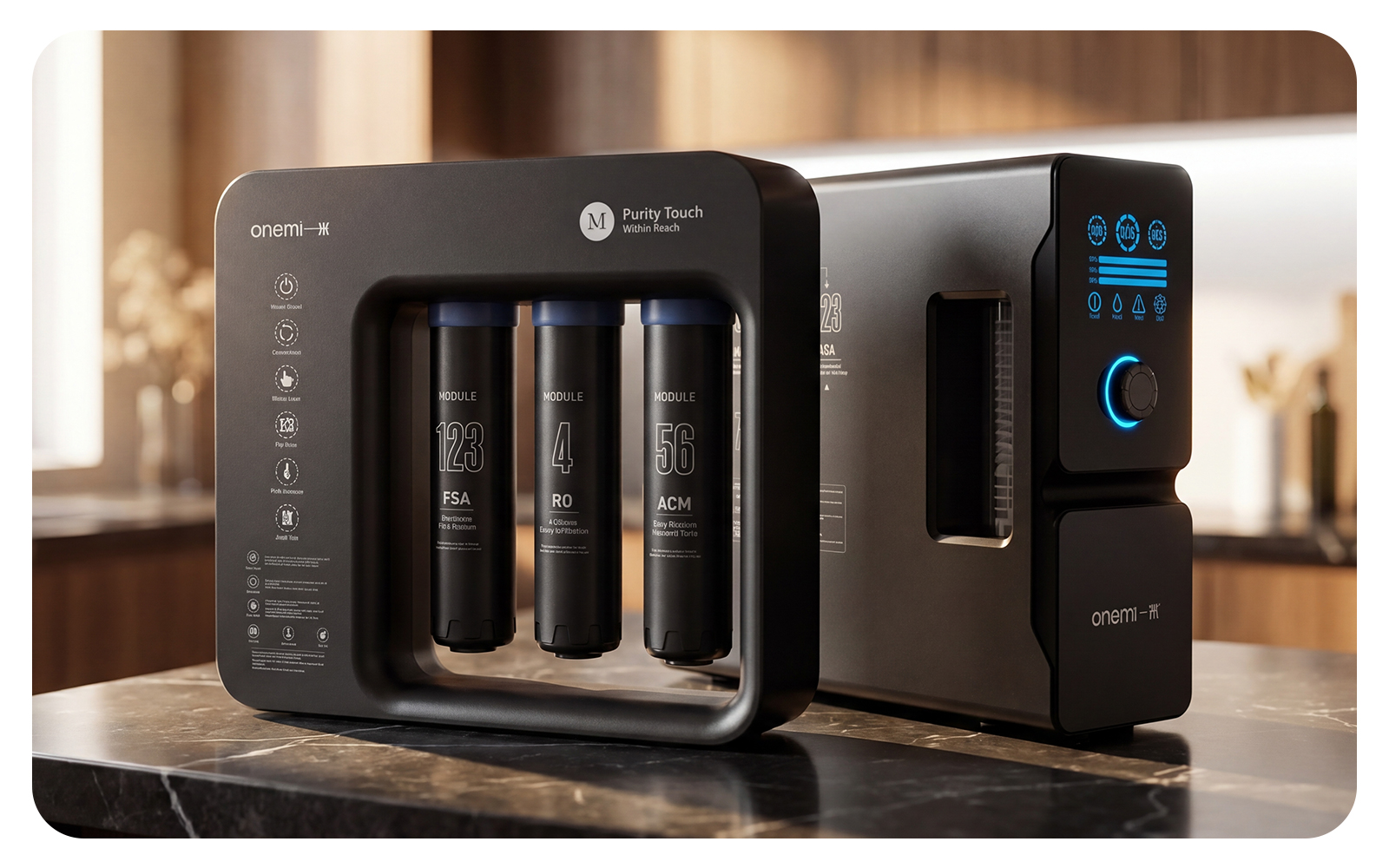
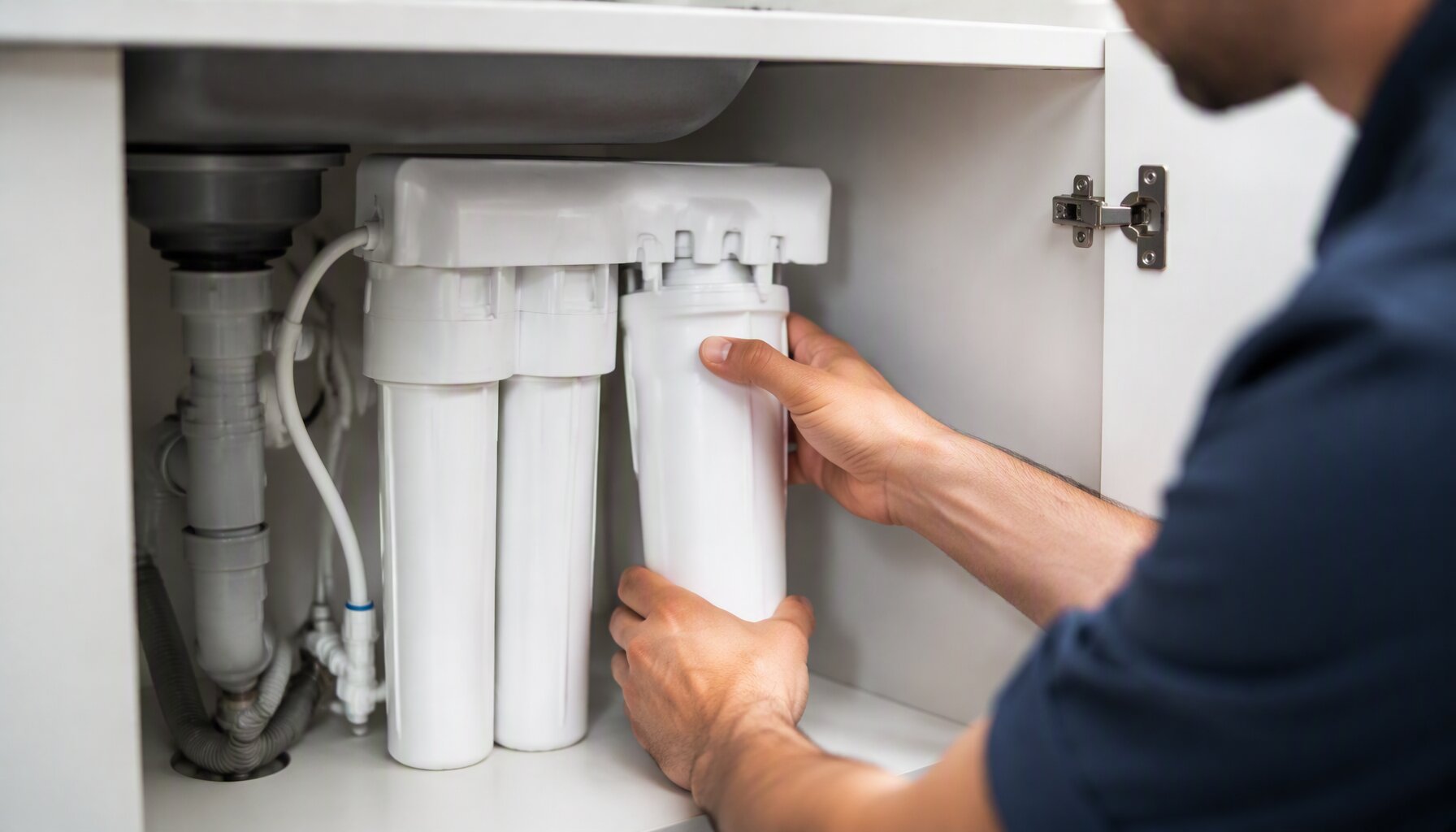
For properties undergoing renovation or new construction, selecting an under-sink RO system manufacturer that prioritizes structural safety is critical. Traditional RO systems rely on pressurized storage tanks that can degrade and leak over time. ONEMI’s tankless designs deliver fresh, on-demand filtration while eliminating the space and safety issues associated with pressurized water storage.
- ONEMI RO 400G Smart Water Purifier: Featuring a compact, tankless design, this unit delivers a high-flow rate of 400 gallons per day (GPD), making it ideal for standard residential layouts. The integrated smart faucet provides real-time TDS monitoring, giving tenants visibility into water quality while reducing maintenance requests. Explore the technical specifications of this model at ONEMI RO 400G Smart Water Purifier.
- ONEMI RO 100G Series: Designed for compact multi-family kitchen layouts, this system balances efficiency and filtration performance. It is an excellent choice for budget-conscious developments requiring certified filtration without extensive structural modifications. Learn more about its specifications at ONEMI RO 100G Reverse Osmosis System.
2. Countertop Solutions: Zero-Installation Systems
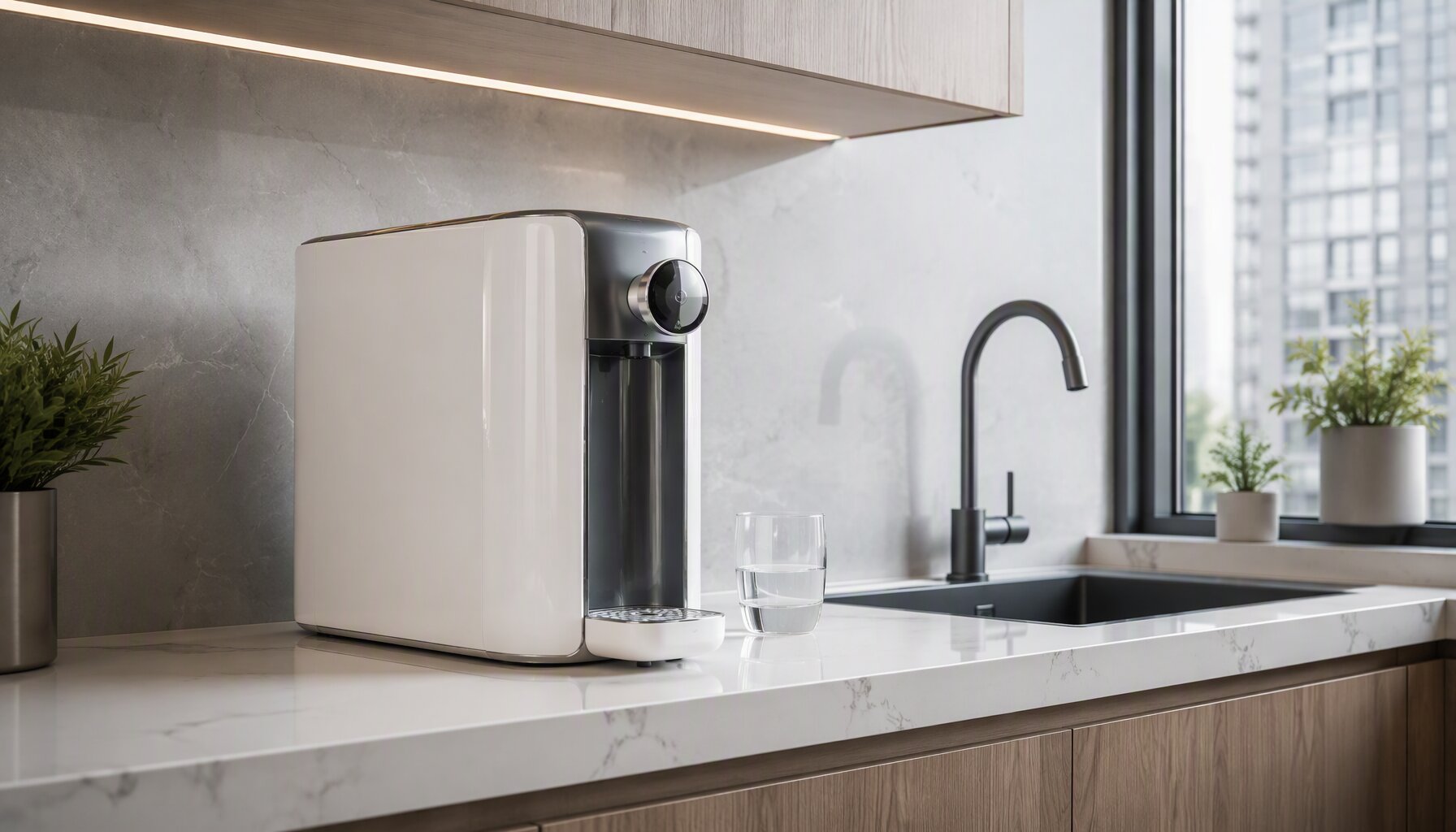
In student housing or older multi-family assets where modifying existing plumbing is impractical or restricted, countertop systems offer an excellent alternative. As a leading countertop water purifiers, ONEMI provides highly functional, no-install water filters that require zero structural modifications.
- ONEMI T1 Countertop Instant Water Dispenser: This unit integrates multi-stage reverse osmosis filtration with instant heating technology. It features a simple plug-and-play design that requires no plumbing connection, making it an ideal amenity for high-turnover rental units. Review the full technical and operational features at ONEMI T1 Countertop Instant Water Dispenser.
Strategic Procurement Framework: Sourcing from China
For global distributors, developers, and property operators, sourcing direct from a tankless direct-drinking water system manufacturer offers significant cost advantages. However, navigating the international supply chain requires a structured evaluation framework. When importing high-volume water filtration equipment, procurement teams should assess several key areas:
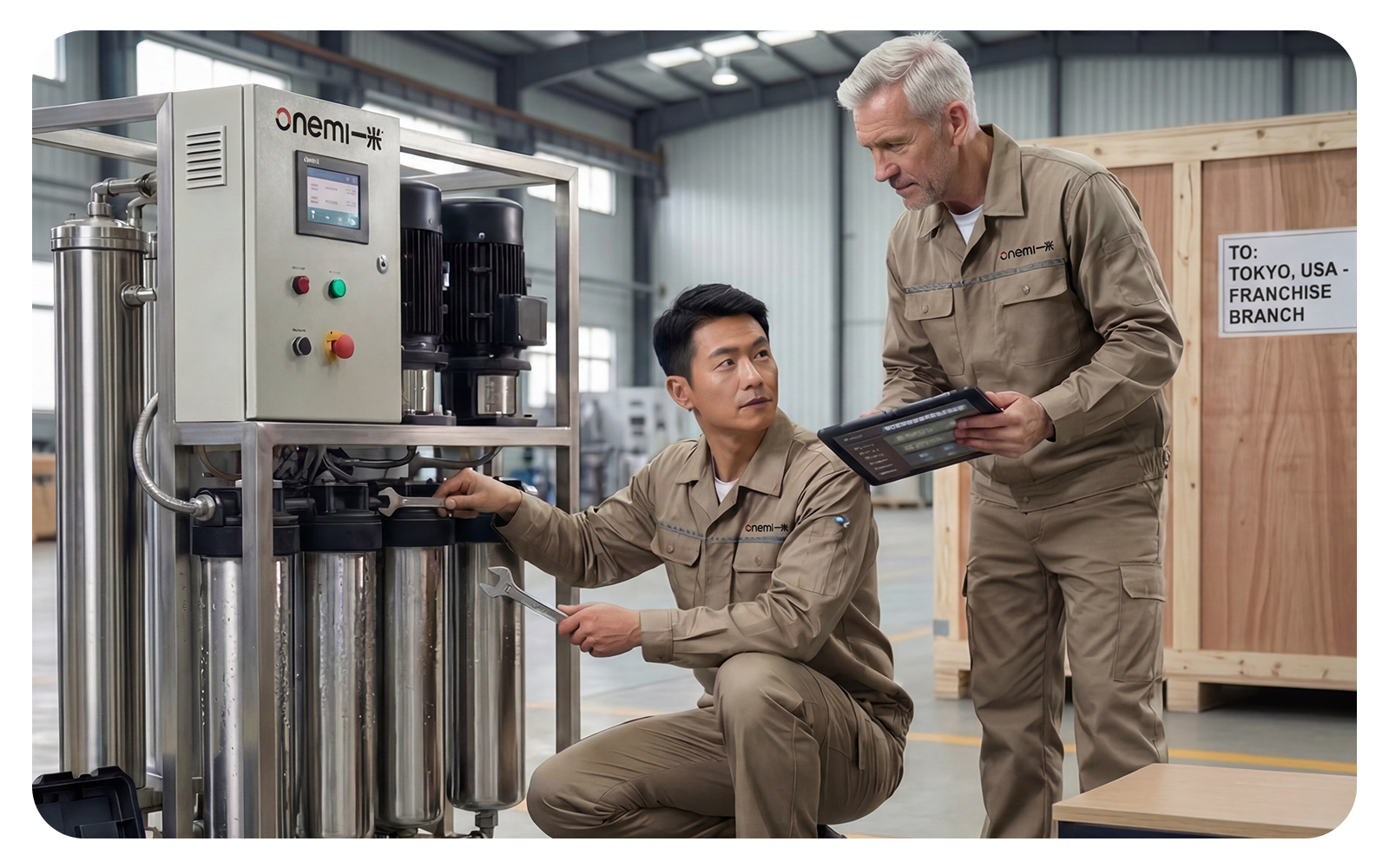
- Engineering Competency: Verify that the manufacturer utilizes automated production lines, automated leak testing, and cleanroom assembly for RO membrane integration.
- Component Quality: Ensure critical components, such as booster pumps, solenoid valves, and RO membranes, are sourced from certified suppliers to minimize field failures.
- Supply Chain Transparency: Confirm that the factory complies with ISO 9001 and ISO 14001 standards, and has established quality control protocols from raw materials to final packaging.
For a detailed breakdown of logistics, customs compliance, and quality control protocols when sourcing from China, refer to our import water filters sourcing framework.
Operational ROI, Maintenance Costs, and Delivery Logistics
Integrating premium water filtration systems into a rental property portfolio is a financial investment that should be evaluated based on hard performance metrics. The following financial and operational framework outlines the projected ROI, maintenance schedules, and supply chain capabilities when partnering with ONEMI:
1. Financial ROI and Property Valuation
- Net Operating Income (NOI) Enhancement: Outfitting rental units with built-in, certified RO systems allows property managers to command a premium of $15 to $30 per month per unit. Across a 200-unit portfolio, a conservative $20 monthly premium generates $48,000 in additional annual revenue.
- Asset Value Appreciation: Assuming a capitalization rate of 5%, an increase of $48,000 in NOI enhances the capitalized asset value of the property by approximately $960,000.
- Mitigation of Water Damage Costs: Replacing multi-jointed, low-quality filters with ONEMI’s integrated, leak-tested tankless systems helps prevent costly water damage incidents, protecting the property’s loss history and helping to stabilize insurance premiums.
2. Maintenance Overhead and Cartridge Supply Chain
- Tool-Free Filter Replacement: ONEMI filtration systems utilize a proprietary quick-twist cartridge design, enabling tenants to replace cartridges in under 60 seconds without tools. This design minimizes the need for maintenance dispatches, reducing operational overhead.
- Predictable Maintenance Schedules: As a dedicated water filter cartridge supplier, ONEMI provides standardized replacement schedules. Typically, sediment and carbon pre-filters require replacement every 12 months, while the core RO membrane lasts up to 24 months, depending on local water conditions.
3. Manufacturing Capacity and Global Delivery Logistics
- Production Capacity: Operating out of our advanced manufacturing facility, ONEMI maintains an annual production capacity of over 1.2 million units. This capacity ensures a stable, scalable supply chain for large-scale municipal, commercial, and multi-family development projects.
- Lead Times and Delivery: Standard OEM/ODM production cycles run between 30 to 45 days from design finalization to port delivery. All shipments undergo strict pre-shipment inspections and are secured in sea-freight optimized packaging to minimize transit damage.
- Certification Support: ONEMI provides comprehensive regulatory support, including CE, RoHS, and NSF-compliant test reports, facilitating a smooth customs clearance process and ensuring compliance with local building codes. Detailed certification documentation is available at ONEMI Support & Certification.