




 한국어
한국어

- Hydrogen water machines are compounding at roughly 9–10% a year, while home alkaline ionizers have settled into a 5–6% mature band — hydrogen is the faster lane for distributors.
- Home alkaline ionizers sit at $760M (2025) heading toward $1.08B by 2032, per LP Information; the hydrogen machine market is a comparable $1.5–1.6B today with double-digit growth ahead.
- The durable margin is not the box — it is the recurring cartridge and electrolysis-cell replacement cycle, which is where distributor lock-in actually lives.
Alkaline ionizers and hydrogen water machines get lumped together in a single “functional water” shelf, but they are not moving at the same speed anymore. Alkaline ionizers are a mature category with a stable buyer; hydrogen water devices are compounding faster, on a smaller base, with the recurring-revenue economics that distributors actually build a business on. If you are sourcing for 2026, treat them as two separate line items.
Where the Two Markets Actually Stand
The home alkaline water ionizer market was worth about $760 million in 2025 and is projected to reach $1.08 billion by 2032, a 5.2% CAGR, according to LP Information (September 2026). That is a healthy but unspectacular curve. Volume tells the same story: 3.19 million units shipped in 2024 at an average price of $232, with a typical gross margin around 22% — the economics of a settled appliance category.
Hydrogen water machines are the faster lane. Market Growth Reports puts the hydrogen water machine market at $1.64 billion in 2026, rising to $3.96 billion by 2035 at a 10.35% CAGR. Verified Market Reports sizes it slightly lower at $1.5 billion in 2025 growing to $3.2 billion by 2034, roughly 9.1% annually. The spread between firms is normal for an emerging category, but the direction agrees: hydrogen is compounding roughly twice as fast as alkaline.
| Segment | Base Value | Forecast | CAGR | Source |
|---|---|---|---|---|
| Home alkaline water ionizer | $760M (2025) | $1.08B (2032) | 5.2% | LP Information, 2026 |
| Hydrogen water machine | $1.64B (2026) | $3.96B (2035) | 10.35% | Market Growth Reports, 2026 |
| Hydrogen water machine (alt. estimate) | $1.5B (2025) | $3.2B (2034) | 9.1% | Verified Market Reports, 2026 |
| North America alkaline ionizers | $580M (2024) | $788M (2031) | 3.2% | Cognitive Market Research |
The regional picture reinforces the split. Asia-Pacific dominates home alkaline ionizer sales with over half the global volume, led by Japan, South Korea, and China, where ionized water has decades of cultural adoption. Hydrogen machines skew similarly but with a sharper concentration — Asia accounts for roughly 42% of units and North America 28%, and Japan alone holds about 39% of installed hydrogen machines. For an importer, that means the two products do not share the same channel map.
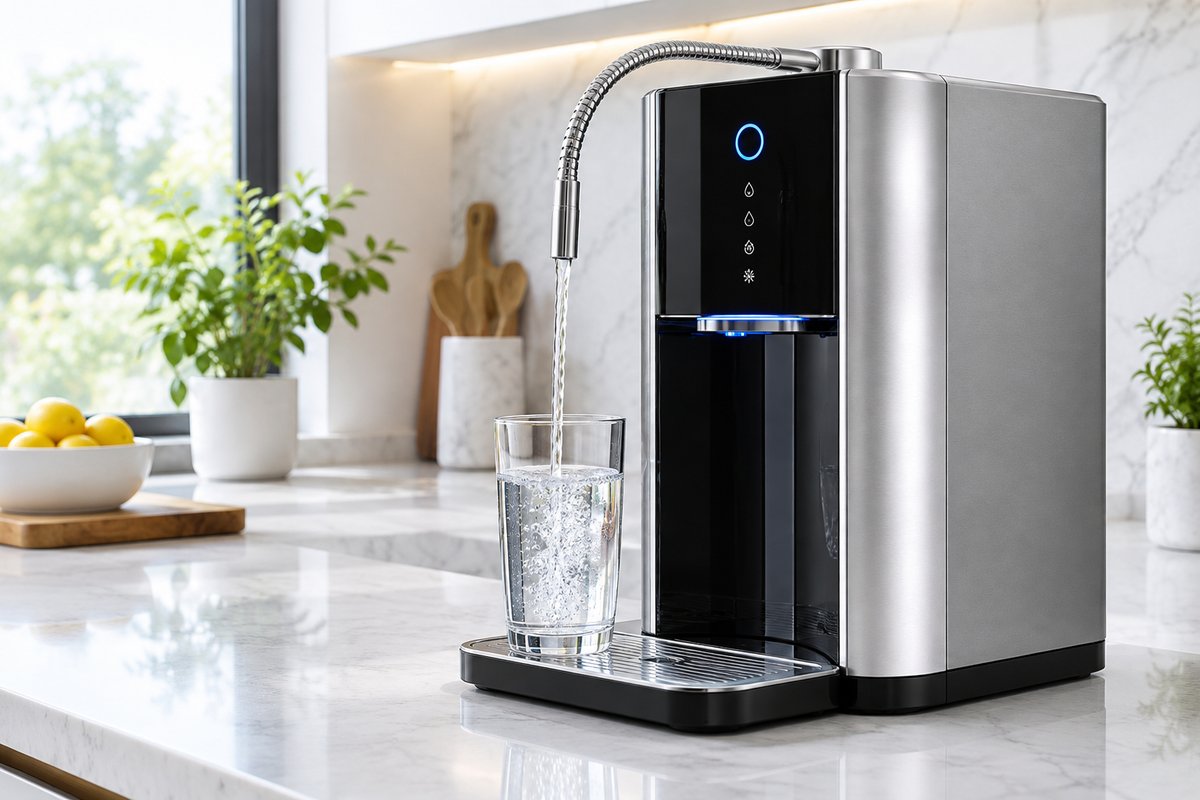
Hydrogen Is the Growth Lane, Alkaline Is the Cash Cow
The practical consequence for a distributor is that these two products play different roles in a line plan. Alkaline ionizers are a replacement-driven, mature market — low growth, steady demand, and a buyer who already knows what the category is. That is a cash-flow product. Hydrogen water machines are a growth product: smaller today, but with the adoption curve of an emerging wellness category, and a buyer still being educated.
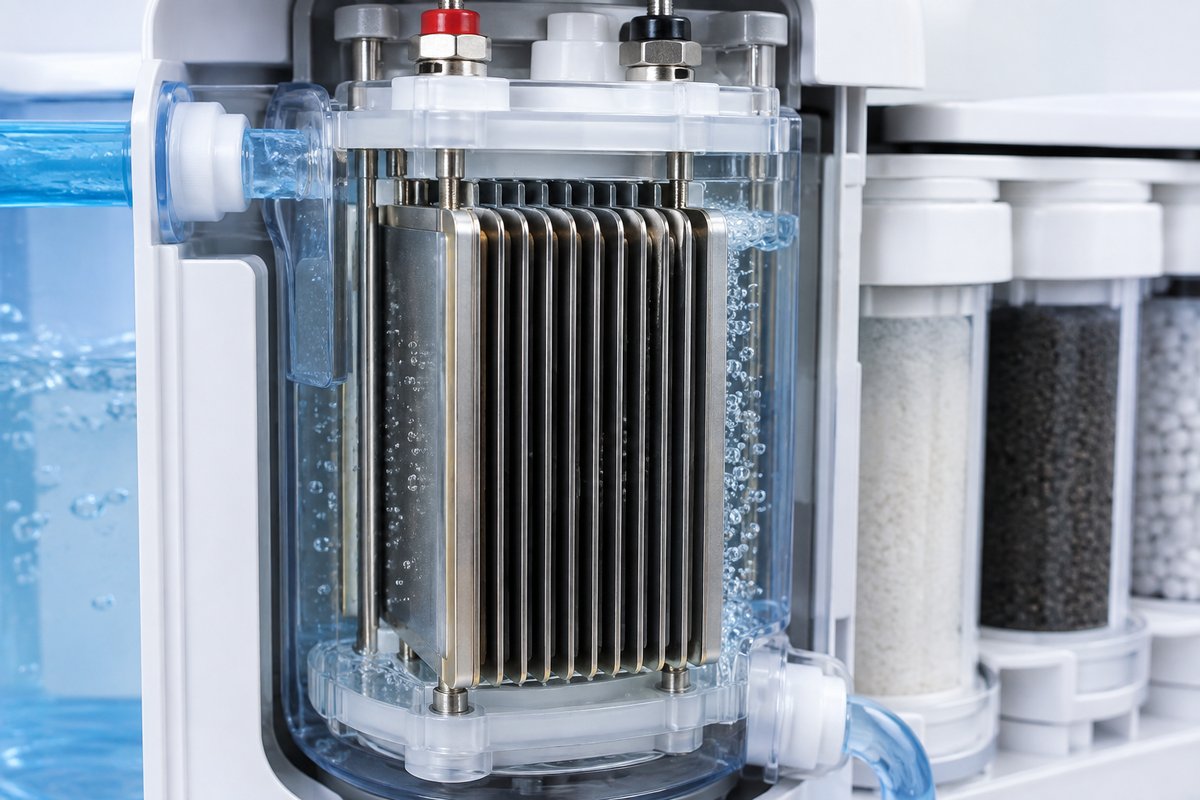
Technologically, electrolysis dominates hydrogen generation, and it is the same cell at the heart of both categories. The difference is what the cell is tuned to produce — raised pH on one side, dissolved molecular hydrogen on the other. A manufacturer that builds the electrolysis chamber in-house can move between the two without retooling, which is why so many alkaline ionizer factories are quietly adding hydrogen lines. Distributors who source both from one factory get better unit economics and a single certification paper trail.
What Distributors Actually Sell
The box is not the business. Both categories run on consumables: the filter cartridge, the electrolysis cell, and increasingly the mineral cartridge that adds calcium and magnesium back into the water. That recurring line is where gross margin holds up after the first sale. Hydrogen machines in particular pair well with subscription-style cartridge programs, because the cell has a finite lifespan measured in thousands of liters rather than years.
A distributor evaluating a factory should ask three questions before anything else. First, how long does the electrolysis cell actually last under the target water hardness, and is the replacement a proprietary bayonet or a standard fitting an aftermarket shop can undercut? Second, what is the dissolved hydrogen concentration the machine can hold — and can the factory prove it with a third-party test rather than a marketing sheet? Third, what is the cartridge continuity policy across model generations, so a housing redesign does not strand your existing customer base?
The Certification and Compliance Layer
Both categories are drinking-water devices, so the compliance question arrives on the first RFQ. For the US, the relevant marks are NSF/ANSI 42 and 53 for contaminant reduction and NSF/ANSI 372 for lead-free wetted parts; CE and RoHS cover the electrical and materials side for the EU, with REACH governing chemical compliance. The electrolysis cell and any post-filter mineral media are the two components that touch drinking water and therefore need material statements.
One clarification worth stating plainly, because it gets blurred in listing copy: certification scope matters. A factory may hold NSF certification on its filter cartridges without the assembled machine being NSF-listed as a complete system. Importers who repeat that blur inherit the liability. State cartridge-level certification where it applies, and CE/UL/FCC/RoHS on the appliance itself.
How ONEMI Fits the Functional Water Shift
ONEMI, a Guangdong-based water purification equipment manufacturer, builds toward this segment through its OEM/ODM channel rather than chasing the retail wellness narrative. The OEM/ODM factory workflow covers the filtration core — the cartridges, the electrolysis-friendly wetted path, and the mineral post-treatment — which is the part of a functional water machine that a brand actually differentiates on. The countertop platform of the T1 instant dispenser is the form factor that alkaline and hydrogen units most often ship in.
For a distributor building a functional water line in 2026, the sourcing logic is straightforward: carry the mature alkaline ionizer for cash flow, and ride the hydrogen machine for growth, with both fed from one recurring-cartridge stream. The alkaline OEM program and the earlier hydrogen market brief detail where each fits. The numbers say hydrogen is the faster lane. The margin says the cartridge is the durable part of the deal.