




 한국어
한국어

- “Biodegradable” is entering cartridge RFQs, but in a drinking-water line it usually means the media breaks down before the filter’s rated life ends — a durability risk, not a feature
- Three routes actually cut environmental impact: plant-based polymers, renewable coconut-shell carbon, and recycled carbon media, each with different cost and compliance tradeoffs
- NSF/ANSI 61 and 372, the EU Drinking Water Directive, and REACH still govern material safety. An “eco” label doesn’t change what a cartridge has to prove
Bio-based and biodegradable filter media have moved out of sustainability brochures and into purchase orders. Distributors and private-label brands across North America and Europe are now asking cartridge suppliers two questions that would have sounded unusual three years ago: “Is the media plant-based?” and “Can the cartridge be recycled?” The first question has a real answer. The second, applied to a part that sits in water for months, often doesn’t.
Let’s separate what’s actually changing from what’s just relabeling.
The “biodegradable” pitch is showing up in cartridge RFQs
Procurement teams that once asked only about iodine value, ash content, and flow rate are now adding sustainability clauses. Some want a media that decomposes at end of life. Some want a housing made from recycled polymer. Some want documentation that the raw material comes from a renewable source. These are three different requests, and conflating them is where the trouble starts.
For an importer or a brand owner, the practical question is straightforward: which of these asks can a factory actually satisfy without compromising the filter’s job — holding contaminants back for six months to two years while submerged in water?
That constraint matters. A cartridge isn’t a coffee cup or a shopping bag. It’s a precision part whose structural integrity and adsorption performance have to survive continuous water contact, pressure cycling, and temperature swings. Any material change that sounds green on the label but shortens real-world life has to be priced against the return rate it will generate.
Three material routes that actually move the needle
Strip out the marketing, and there are three credible ways to make a water filter cartridge more sustainable. They’re not interchangeable.
| Route | What it is | Strength | Tradeoff |
|---|---|---|---|
| Renewable feedstock carbon | Activated carbon from coconut shell instead of coal or peat | Low ash, high hardness, renewable agricultural byproduct | Higher raw-material cost; supply concentrated in Southeast Asia |
| Plant-based polymer parts | Housings or components from bio-attributed or PLA-type resins | Lowers fossil feedstock share | Higher cost; long-term water-immersion performance needs validation |
| Recycled carbon and polymer | Reclaimed activated carbon and post-consumer resin in housings | Cuts CO₂ and virgin-material use | Quality variance; requires certified recycling partners |
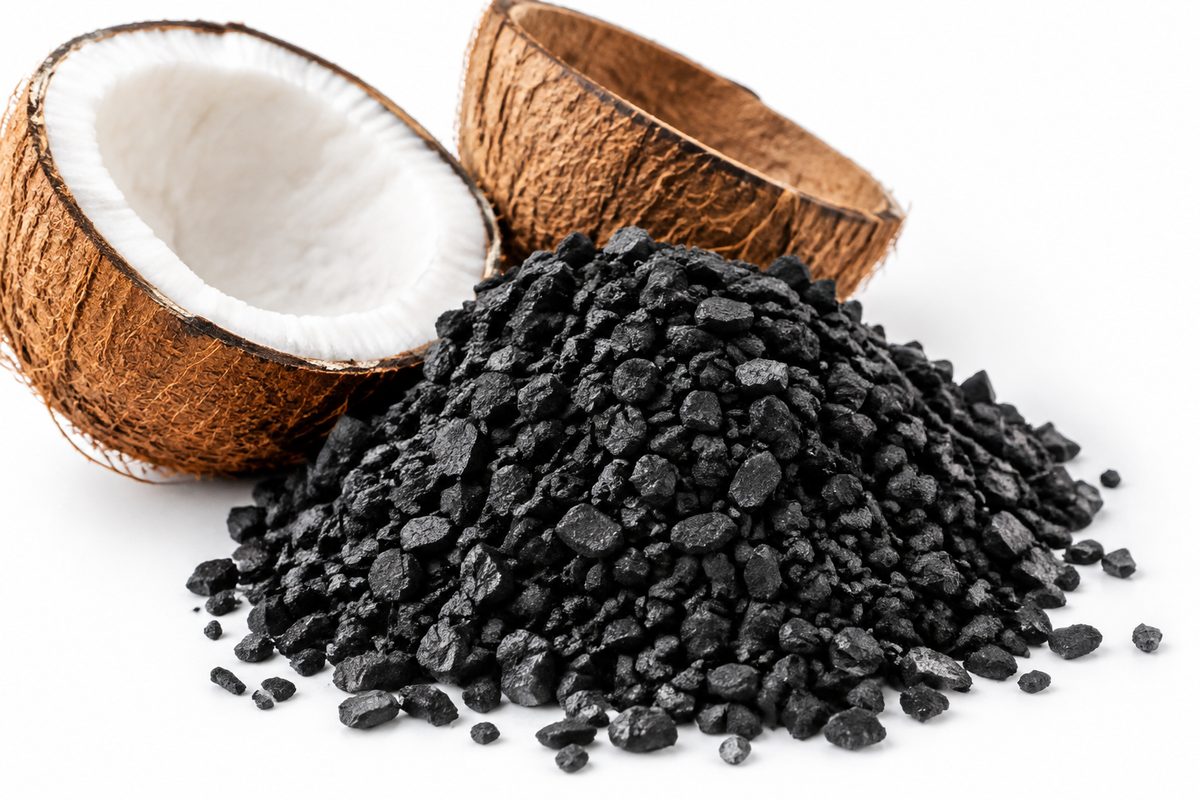
Coconut-shell carbon is the workhorse here. Global coconut production exceeded 62 million tonnes in 2022, concentrated in Indonesia, the Philippines, and India, generating a large volume of shell that would otherwise be burned or dumped. Turning that byproduct into filter media is a genuine valorization story, and it’s the main reason coconut-based carbon has taken over drinking-water cartridges from coal-based grades. We covered the media shift in more detail in our look at carbon block media beyond coconut shell.
A typical drinking-water coconut carbon runs an iodine value of 1000 mg/g or higher, hardness of 98% or better, and ash content at or below 3%. Those numbers matter more than any green claim, because they’re what keep the first liters of filtered water clear and the cartridge performing to its rated life.
Why “biodegradable” usually means “fails early” in a water line
Here’s the honest engineering point that most marketing skips. A material engineered to decompose when exposed to moisture is a poor choice for a component whose entire service life is spent in contact with moisture. Biodegradable resins are designed to break down under exactly the conditions a cartridge lives in.
The result is predictable: a “biodegradable” housing or media can soften, swell, or lose mechanical integrity before the filter’s rated replacement interval. What looks like a sustainability win on the spec sheet turns into a durability problem in the field — a returned unit, a warranty claim, and a damaged relationship with the retailer or end customer.
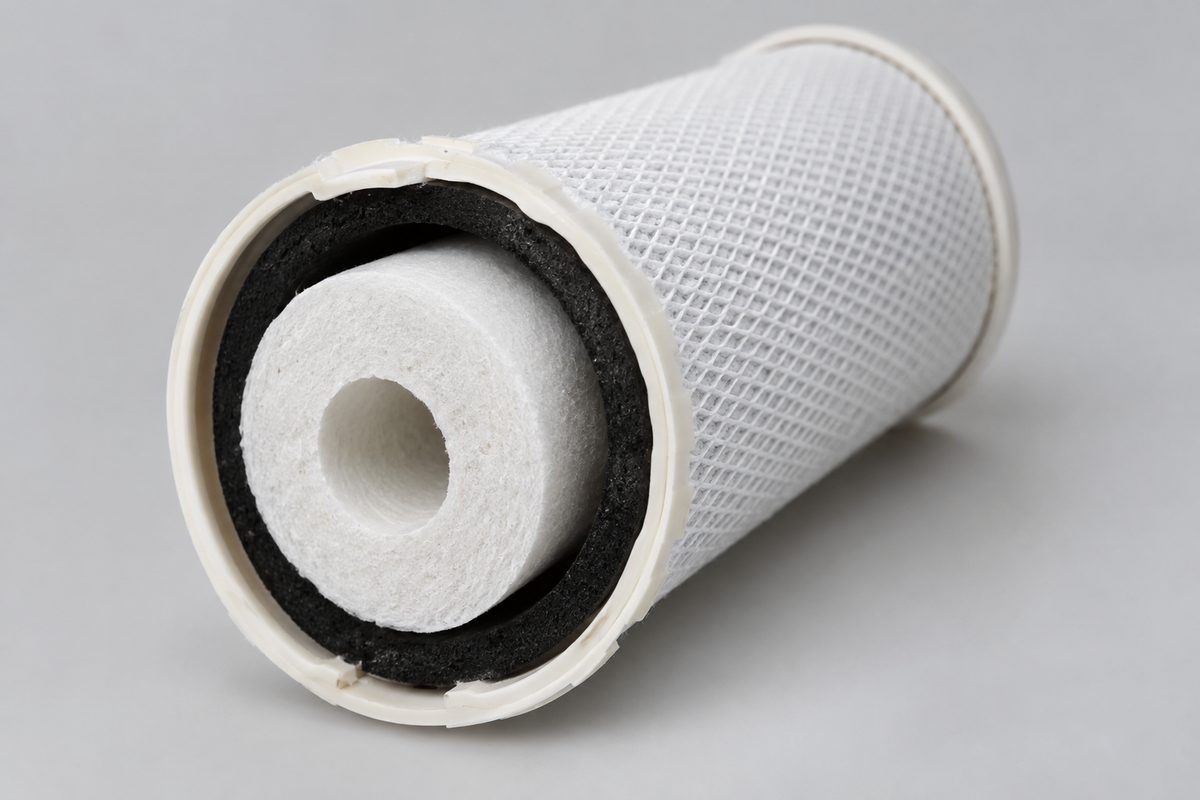
That doesn’t mean the sustainability movement is wrong. It means the right lever for a drinking-water cartridge is usually renewable feedstock and recyclability, not compostability. A coconut-shell carbon block inside a recyclable polypropylene housing reduces environmental impact without betting the filter’s core function on a material that’s trying to disappear.
What the certification stack actually covers
Sustainability claims don’t relax the compliance requirements. A cartridge that touches drinking water still has to clear the material-safety standards, and those are non-negotiable.
For the US market, NSF/ANSI 61 governs what a material can leach into drinking water, and NSF/ANSI 372 sets the lead-content limit. A carbon block’s contaminant-reduction claims fall under NSF/ANSI 42 for aesthetics and 53 for health effects. For Europe, the Drinking Water Directive and REACH govern materials in contact with water, and RoHS applies to the electronics on smart units. We break the standard-by-standard logic down in our guide to NSF/ANSI standards for importers.
The key distinction for a buyer: a certification on the carbon media or the cartridge doesn’t automatically extend to the whole system, and a claim that a system is “NSF certified” is meaningless without the standard number. When a supplier pitches a bio-based media, ask for the same NSF/ANSI or REACH documentation you’d demand from a conventional cartridge. Green shouldn’t mean undocumented.
Sustainable housing is pulling the demand, not the factory
The driver behind this shift is worth naming, because it changes who you sell to. New-home construction and renovation in North America and Europe are increasingly scored against green-building programs — LEED, BREEAM, and national energy and environmental standards. Those programs reward builders for specifying low-impact materials, recycled content, and reduced single-use plastic. A point-of-use water filter with a renewable-media cartridge and a recyclable housing is a small, quantifiable credit in that framework.
Builders and property managers aren’t water-treatment experts. They buy on documentation: a datasheet that states the media feedstock, the recycled content of the housing, and the certification numbers. That’s the real change for a brand owner. The end buyer of the next five years is as likely to be a procurement manager checking a sustainability checklist as a homeowner comparing micron ratings. If your cartridge line can’t hand over that documentation, you’re locked out of a channel that’s still growing.
Where ONEMI fits
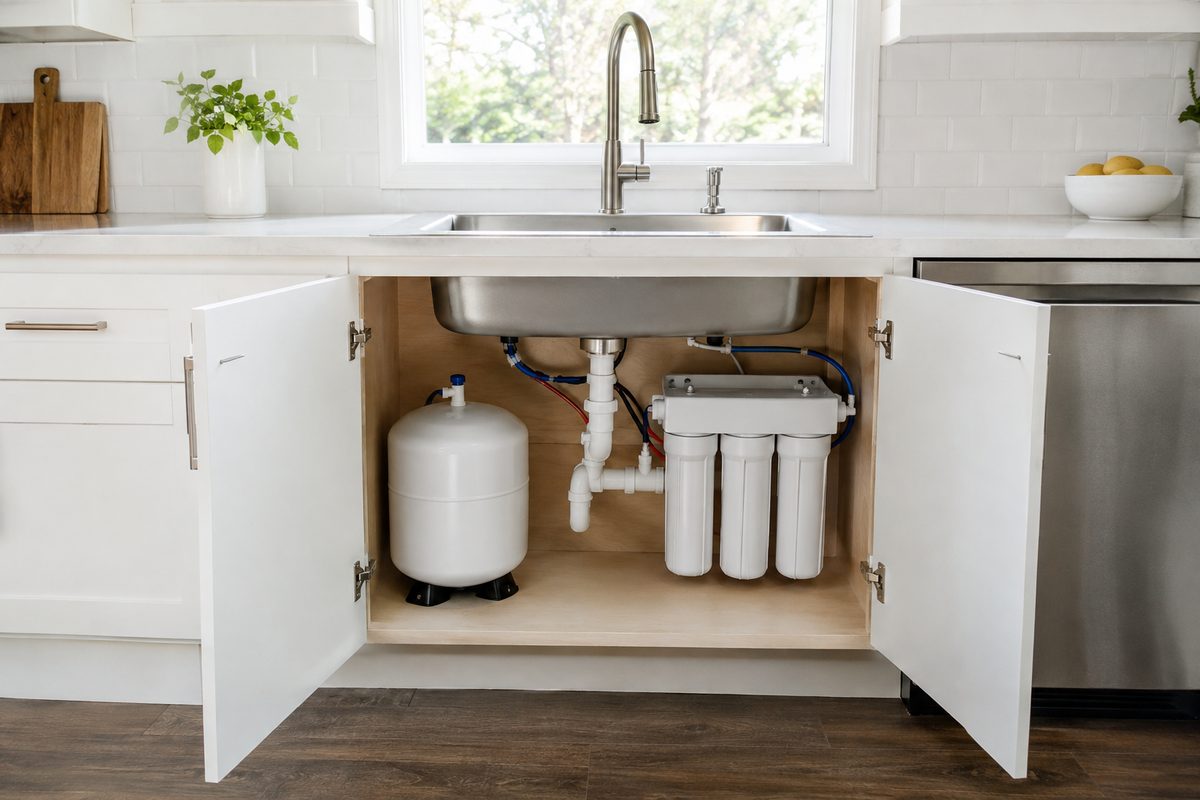
ONEMI, a Guangdong-based water purification equipment manufacturer, builds its cartridge line around the renewable-media route. The carbon blocks use coconut-shell activated carbon with the iodine value, hardness, and ash specifications that drinking-water buyers expect, and the housings are designed for recyclability rather than compostability — a deliberate choice to keep durability intact while cutting environmental impact.
For importers and private-label brands, the actionable takeaway is this. When a customer asks for a “sustainable” cartridge, clarify which of the three levers they mean, then spec the one that holds up in water. Renewable coconut carbon plus a recyclable housing is the combination that survives contact with reality. A “biodegradable” housing is the one that comes back as a return. The difference shows up on the invoice about six months in. For the broader factory picture, see our OEM/ODM manufacturing overview.