




 한국어
한국어

- Scale is the leading cause of tankless water heater failure; roughly 1.5 mm of buildup can add a double-digit percentage to energy consumption
- Anti-scale media has split into two camps — polyphosphate sequestration and salt-free template-assisted crystallization (TAC)
- OEMs should spec flow rate, temperature rating, cartridge life in gallons, and NSF/ANSI 42/61/372 documentation before placing an order
Ask any service technician why a tankless water heater died before its time, and the answer is rarely the gas valve or the circuit board. It is limescale — a hard, insulating crust of calcium carbonate that builds up on the heat exchanger the moment hard water meets temperatures above 140°F. For importers and distributors building their own water-treatment line, anti-scale filter media is where a lot of margin sits, and where the technology has moved faster than most spec sheets have kept up.
Scale Is the Real Failure Mode, Not Wear
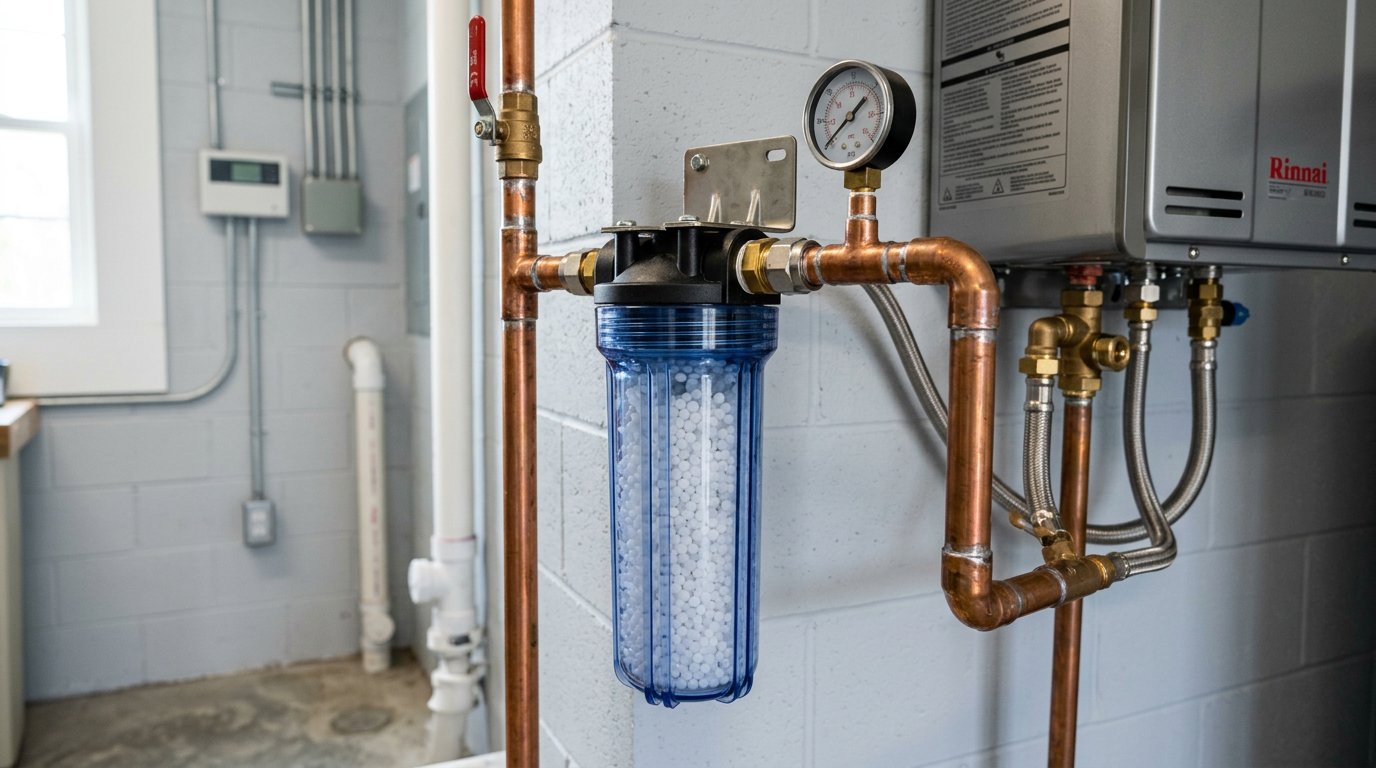
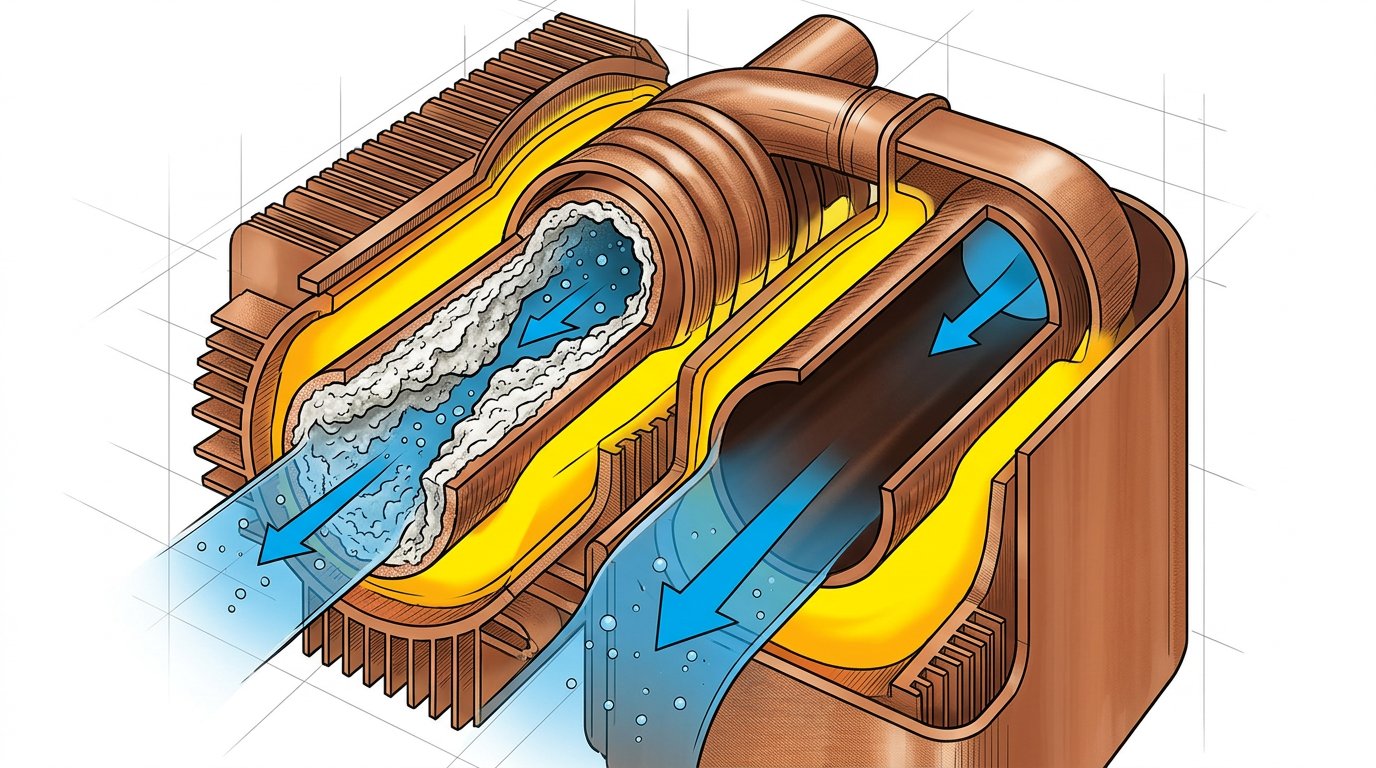
Tankless heaters fail in a predictable way. Hard water carries dissolved calcium and magnesium bicarbonate. When that water is flash-heated, the bicarbonate converts to carbonate, which precipitates and bonds to the hottest surfaces — the inside of the heat exchanger. Each layer of scale acts as an insulator, forcing the burner to work harder to push heat through the metal. Industry guidance holds that once scale reaches roughly 1.5 mm, the unit’s energy consumption climbs by a double-digit percentage, and the exchanger is on a path to cracking from thermal stress.
This is why the point-of-entry (POE) segment matters. The US water purifier market was worth about $6.75 billion in 2024, and POE systems — whole-house filtration and softening — account for roughly 30% of it. In the hard-water belts of the Southwest and Midwest, where incoming hardness routinely exceeds 10 grains per gallon, a tankless heater without upstream scale protection is a warranty claim waiting to happen.
Two Media Approaches, One Clear Direction
Anti-scale media today splits into two families, and they work on entirely different physics.
Polyphosphate sequestration is the older, cheaper route. Food-grade sodium or potassium polyphosphate is packed into a cartridge, and water slowly dissolves a few parts per million of it as it flows through. Those phosphate molecules grab calcium and magnesium ions and hold them in solution, so they cannot precipitate into scale. The trade-off is that the cartridge is a consumable: the media depletes in proportion to water volume and hardness, so life is measured in gallons and months, not years.
Template-assisted crystallization (TAC) is the salt-free contender that has taken over the premium end of the market. Instead of dissolving anything into the water, TAC media forces the hardness minerals to crystallize into microscopic, inert particles that pass straight through the heater without sticking to the exchanger. There is no salt, no electricity, no backwash, and no chemical added to the water — which is why TAC is often marketed as a “descaler” rather than a softener. Media life runs three to six years, or several hundred thousand gallons, depending on hardness.
There is a third category worth flagging honestly: magnetic and electronic “descalers” that claim to alter scale formation with a field or a pulse. These have not produced consistent, independent third-party verification, and a buyer who specs one should treat the performance claim with caution.
Polyphosphate vs TAC: What the Spec Sheet Does Not Tell You
| Attribute | Polyphosphate | TAC (Template-Assisted Crystallization) |
|---|---|---|
| Mechanism | Chemical sequestration of Ca/Mg ions | Physical conversion into inert microcrystals |
| Chemical added to water | Yes (few ppm phosphate) | No |
| Salt / backwash / electricity | None | None |
| Typical media life | 6–12 months (volume/hardness dependent) | 3–6 years |
| Installation point | Cold line before the heater | Cold line before the heater |
| Cost position | Lower upfront, recurring cartridge cost | Higher upfront, minimal maintenance |
The strategic read for a brand owner is simple: polyphosphate wins on entry price and is easy to explain; TAC wins on total cost of ownership and the “no chemicals” story that resonates with today’s buyers. Many product lines carry both, positioning polyphosphate as the budget SKU and TAC as the premium one.
What an OEM Should Actually Spec
When you are sourcing anti-scale cartridges or POE housings from a manufacturer, the following parameters should be in your spec sheet — not left to a generic datasheet that says “reduces scale.”
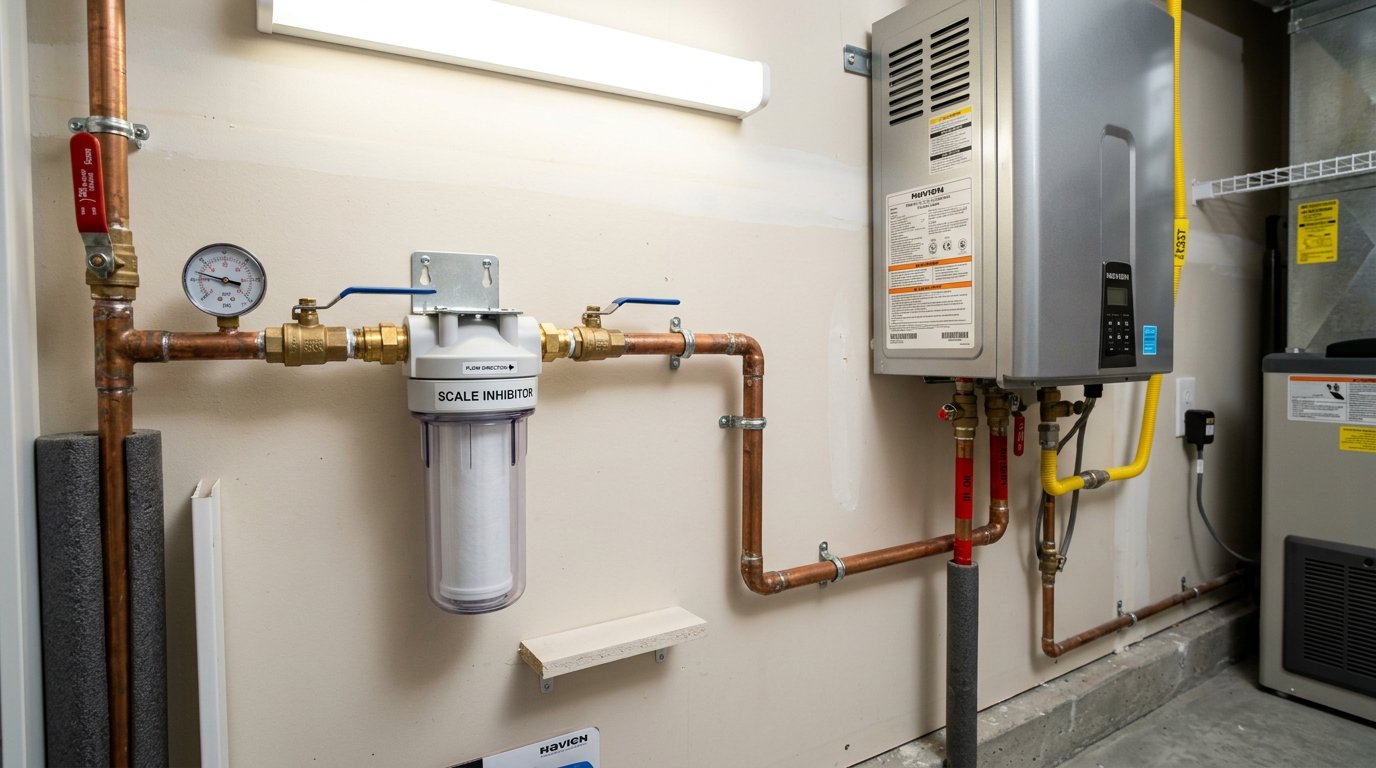
Flow rate. Inline scale-inhibitor cartridges typically run 5–10 gallons per minute; whole-house POE units should hold 10–15 GPM without a meaningful pressure drop. A cartridge that chokes flow defeats the purpose, because a tankless heater needs full flow to fire properly.
Temperature rating. These devices sit on the cold water line upstream of the heater, so the media is rated for ambient feed water — commonly a maximum around 100°F. Confirming this matters, because polyphosphate media degrades faster when it is exposed to sustained heat.
Cartridge life in gallons. Get the number, not the marketing. A polyphosphate cartridge rated for 100,000 gallons at 10 grains of hardness will last half that at 20 grains. Hardness is the variable that decides the real replacement cadence, and a good supplier will give you a life curve rather than a single figure.
Housing and connection. Standard big-blue 10″ and 20″ housings keep replacement parts interchangeable; 3/4″ NPT is the common connection on the residential and light-commercial side. Interchangeability is what keeps your aftermarket revenue flowing, because a proprietary lock-in on the housing hurts repeat buyers.
Wetted materials. Food-grade media and lead-free construction are non-negotiable. This is where the certification below does the work for you.
Certification Is the Gatekeeper
For a filter media to be sold into North America or the EU without friction, it needs the right documentation. The relevant standards are specific, and it is worth getting them right rather than leaning on the vague phrase “internationally certified.”
- NSF/ANSI 42 covers aesthetic claims, including scale control — this is the standard a scale-inhibitor cartridge is tested against for its performance claim.
- NSF/ANSI 61 certifies that wetted materials are safe for contact with drinking water.
- NSF/ANSI 372 verifies lead-free construction.
- WQA Gold Seal is a lower-cost third-party mark that uses the same ANSI standards and carries weight with retail and installer channels.
One distinction that trips up newcomers: anti-scale media is not the same thing as a water softener. Cation-exchange softeners fall under NSF/ANSI 44 and physically remove hardness via salt regeneration. Anti-scale media — both polyphosphate and TAC — does not remove hardness, it neutralizes its ability to form scale. Keeping that distinction clean in your product documentation avoids both legal exposure and customer confusion.
Where ONEMI Fits in the Supply Chain
ONEMI, a Guangdong-based water purification equipment manufacturer, builds anti-scale cartridges and POE filtration systems for brands that want to ship a complete tankless-protection line without running their own plastics and media-sourcing operation. The company’s OEM/ODM program covers everything from media specification and housing tooling to the NSF/ANSI 42, 61, and 372 documentation a brand needs to clear retail and installer due diligence. Its softening and scale-control product line spans polyphosphate entry SKUs and TAC premium units, so a distributor can carry both price points under one roof. For buyers who want the supporting documentation up front, the certification page lists the standards each product line carries, and the FAQ covers the replacement-cycle and flow-rate questions that come up most in the field.
The tankless heater market is not going to stop growing, and neither is the hard water that kills its equipment. The brands that win the aftermarket are the ones that spec media with real parameters, document it properly, and treat scale protection as a product line — not an afterthought.