

 한국어
한국어

The global countertop water purifier market crossed a valuation of approximately USD 2.8 billion in 2025. Driven by an annualized growth rate of nearly 9%, the sector is on track to approach USD 4.5 billion by 2030. This expansion is not uniform across geographies; instead, it is concentrated in urban centers where municipal tap water infrastructure, despite meeting baseline regulatory standards, fails to address emerging chemical contaminants and aesthetic preferences. For B2B importers, distributors, and private label brands, navigating this capital-intensive market requires a highly technical understanding of filtration mechanics, regulatory compliance, and consumer purchasing drivers.
Consumer demand has shifted decisively away from passive gravity-fed pitchers toward active, high-pressure reverse osmosis (RO) systems. The transition is accelerated by rising public awareness of persistent micro-pollutants. In North America and Western Europe, municipal water reports frequently highlight trace levels of per- and polyfluoroalkyl substances (PFAS), microplastics, and pharmaceutical residues. These contaminants bypass traditional carbon block filters, leaving multi-stage RO systems as the only viable residential remediation method. Importers must align their product portfolios with these strict performance requirements to secure retail shelf space and protect brand equity.
Executive Summary
- The global countertop RO market is expanding at an 8-10% CAGR, driven by urban density and rising concerns over emerging chemical contaminants like PFAS and microplastics.
- Modern B2B specifications require 4-to-6 stage filtration systems, tankless direct-flow designs, and integrated instant-heating modules to meet consumer expectations.
- Successful market entry relies on strict adherence to international standards, including NSF/ANSI 58, CE, and RoHS, alongside optimizing supply chain logistics.
The Multi-Stage Filtration and Purification Matrix

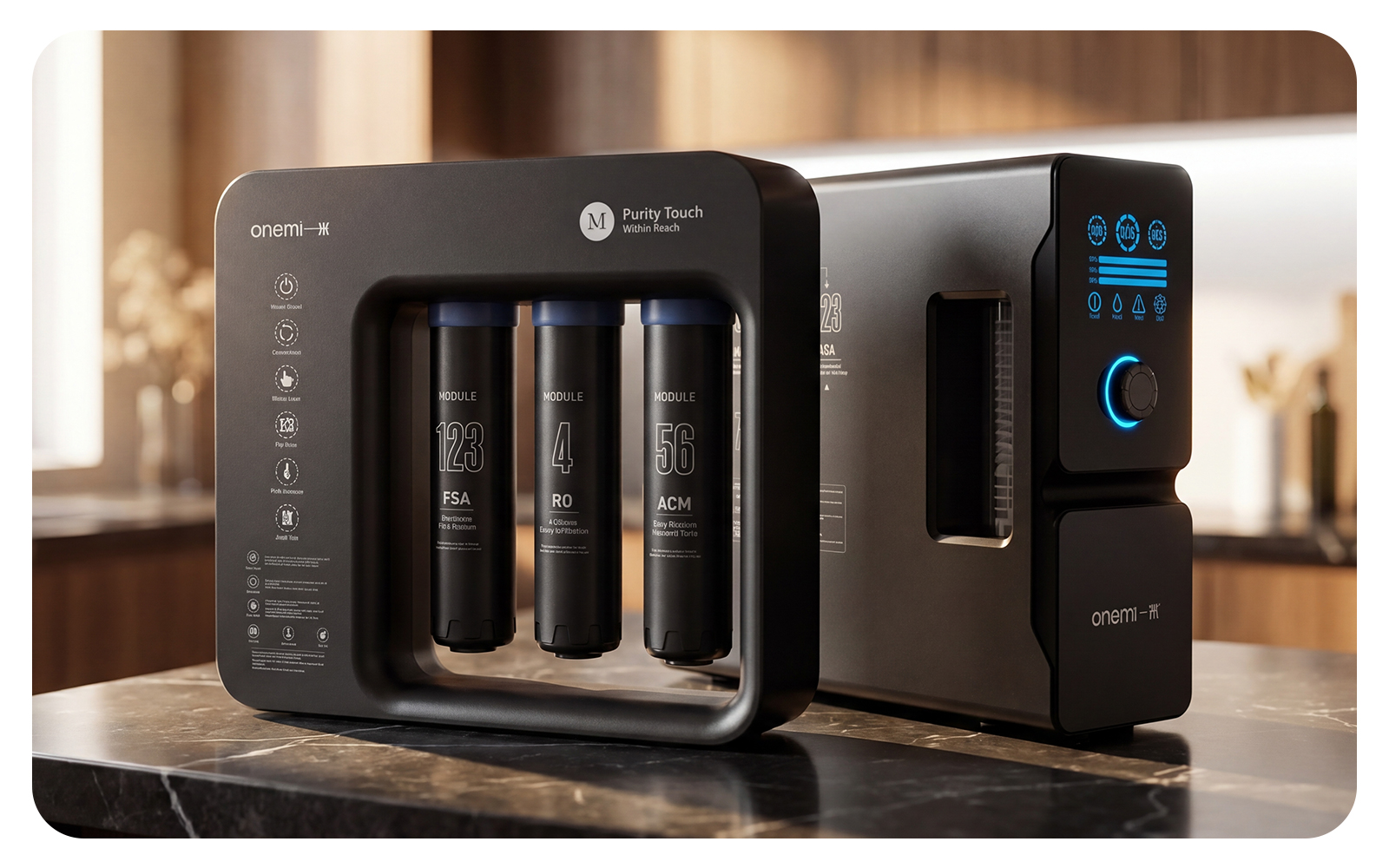
A competitive countertop RO system in 2026 relies on a multi-stage filtration architecture to deliver high-purity water while preserving the lifespan of the primary membrane. The process begins with physical pre-filtration, typically utilizing a Polypropylene (PP) sediment filter combined with an Active Carbon Block (ACB). This dual-stage configuration targets suspended solids, rust, chlorine, and organic compounds, protecting the delicate polyamide thin-film composite (TFC) membrane from premature fouling and chemical degradation.
The core purification occurs at the Reverse Osmosis membrane stage. Industry-standard countertop systems utilize membranes rated between 75 GPD (gallons per day) and 150 GPD. Under high pressure, water molecules are forced through the semi-permeable membrane, which features a pore size of approximately 0.0001 microns. This barrier effectively rejects up to 99% of dissolved solids, heavy metals like lead and arsenic, and microbiological pathogens, producing highly purified permeate water.
How does a compact countertop device achieve this without the bulky storage tanks of under-sink systems? The answer lies in the integration of high-efficiency booster pumps and smart wastewater recirculation loops.
To deliver a palatable drinking experience, high-end systems incorporate post-filtration stages. A post-carbon block or coconut shell carbon filter refines the taste and eliminates any residual odors. Additionally, many modern systems feature mineralization cartridges that reintroduce essential ions like calcium and magnesium back into the water. This step raises the pH of the RO permeate from a slightly acidic 5.5–6.0 to a more balanced, alkaline 7.2–7.8. UV-C LED sterilization modules are also integrated directly into the clean-water pathway, providing continuous microbiological protection and preventing biofilm formation.
| Filtration Stage | Primary Media | Target Contaminants | Average Lifespan |
|---|---|---|---|
| Stage 1: Pre-Sediment | Polypropylene (PP) | Rust, sand, suspended particles (>5 microns) | 6 months |
| Stage 2: Carbon Block | Activated Carbon (ACB) | Chlorine, VOCs, unpleasant tastes, and odors | 6 months |
| Stage 3: RO Membrane | Polyamide TFC | Heavy metals, PFAS, nitrates, TDS, viruses | 12 to 24 months |
| Stage 4: Post-Carbon | Coconut Shell Carbon | Polishing taste, residual gas removal | 12 months |
| Stage 5: Mineralization | Calcite & Corosex | Adds Ca/Mg ions, balances pH levels | 12 months |
| Stage 6: Sanitization | UV-C LED | Bacteria, viruses, and biofilm prevention | Up to 50,000 hours |
Engineering Evolution: Tankless Designs and Instant-Heating
The transition from bulky, under-sink filtration systems to elegant countertop appliances has forced a major redesign of hydraulic pathways. Traditional RO systems relied on pressurized storage tanks to accumulate purified water slowly over time. This approach presents a major challenge for countertop applications, where physical footprint is at a premium. To solve this, engineers developed direct-flow, tankless systems. By utilizing high-pressure, low-noise diaphragm booster pumps, these systems generate sufficient trans-membrane pressure to produce fresh, purified water on demand, eliminating the risk of secondary bacterial contamination in stagnant storage tanks.
Another major technical milestone is the integration of instant heating modules. Traditional heating systems rely on thermal reservoirs that continuously consume standby power to keep water hot. In contrast, modern countertop RO systems utilize thick-film heating technology. These thick-film dielectric elements can raise water temperature from ambient to boiling in under 3 seconds. This rapid heating is achieved by routing the purified water through a high-power density ceramic tube patterned with resistive paste, achieving thermal efficiencies of over 90% while significantly reducing standby energy consumption.
Why do some high-end countertop systems still feature a small, 1.5-liter internal pure water reservoir? While tankless direct-flow is ideal for under-sink units with 600 GPD membranes, a compact countertop unit with a 100 GPD membrane would take over 15 seconds to fill a standard cup. A small, UV-sterilized internal reservoir acts as a buffer, ensuring instant dispensing without requiring a massive, noisy pump.
To support these advanced thermal and hydraulic functions, modern systems feature integrated electronic control units (ECUs). These microcontrollers manage real-time monitoring systems, including dual TDS (Total Dissolved Solids) sensors that measure water quality before and after filtration. Flow meters track exact volumetric throughput to calculate filter life, replacing unreliable timer-based indicators. Additionally, integrated leak detection sensors automatically shut down the inlet solenoid valve if moisture is detected within the chassis base, preventing potential property damage.
Strategic B2B Sourcing: Quality, Compliance, and Supply Chain
For importers and distributors, choosing a manufacturing partner requires looking far beyond the aesthetic appeal of a product housing. The core components of a countertop RO system—especially the booster pump, RO membrane, and internal plastic fittings—must withstand constant pressure cycling. Sourcing from manufacturers that utilize food-grade, BPA-free materials is essential to prevent chemical leaching into the purified water. Partnering with established brands like ONEMI allows B2B buyers to leverage pre-certified, highly reliable product platforms that have undergone rigorous pressure-cycle and burst testing.
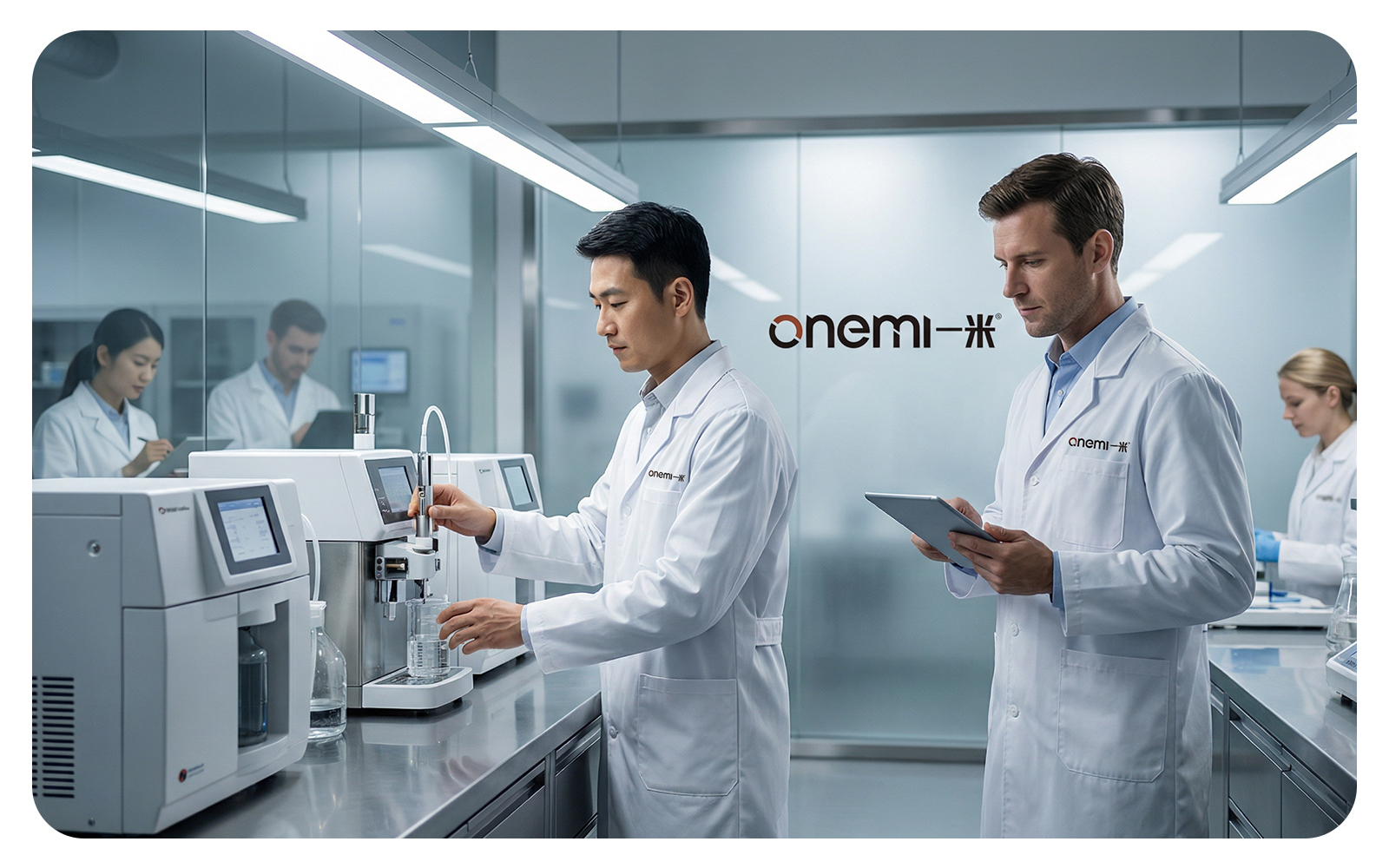
Regulatory compliance is a critical barrier to entry in highly regulated markets. In the United States, importing water filtration systems requires compliance with NSF/ANSI standards, specifically Standard 58 for reverse osmosis systems and Standard 61 for material safety. In the European Union, products must carry the CE mark, comply with the RoHS directive restricting hazardous substances, and meet food-contact safety standards established by the LFGB or French ACS. Navigating these regulatory frameworks requires extensive documentation, factory audits, and ongoing third-party testing.
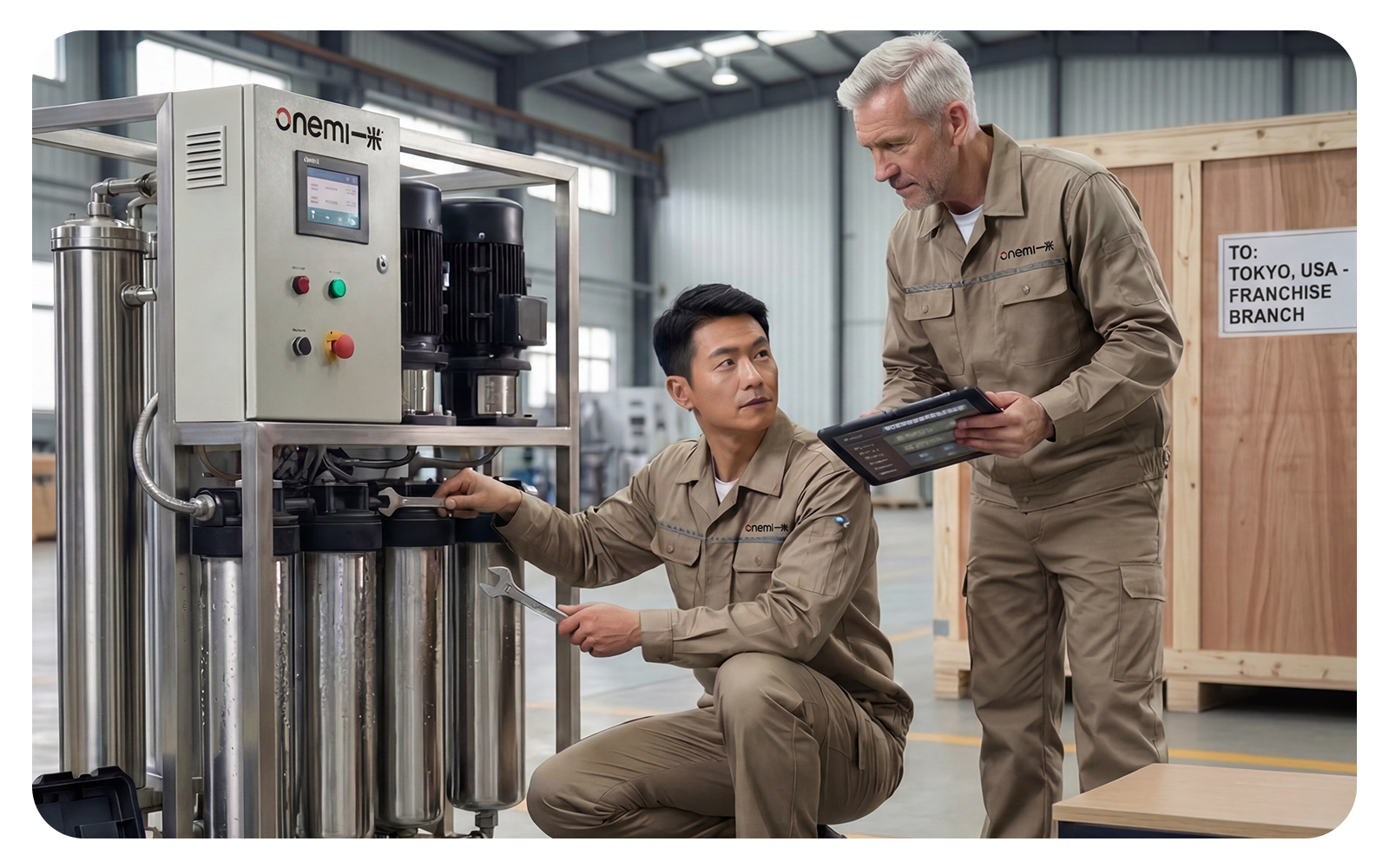
Supply chain optimization is equally vital for maintaining healthy margins. Countertop RO systems are relatively heavy and fragile appliances due to their integrated pumps, glass-panel touch screens, and plastic water tanks. Importers must evaluate the manufacturer’s packaging design, ensuring it passes ISTA 3A drop tests to minimize transit damage. Additionally, establishing a reliable supply of replacement filter cartridges is essential for long-term profitability. Distributors should secure long-term cartridge supply agreements, as the recurring revenue from replacement filters often exceeds the initial hardware margin.
Global Water Quality Challenges and Regional Market Demands
Water chemistry varies dramatically across different regions, directly impacting the design and performance requirements of countertop RO systems. In North America, particularly in states like California, Texas, and Michigan, the primary consumer concern centers around chemical contamination. High-profile incidents of lead contamination and widespread reports of PFAS in municipal water supplies have made consumers highly sensitive to chemical purity. In these markets, countertop systems must feature certified lead and PFAS reduction capabilities, backed by transparent, accessible testing data.
In contrast, markets in Southern Europe, the Middle East, and parts of Asia face high levels of water hardness and elevated Total Dissolved Solids (TDS). In regions where tap water TDS regularly exceeds 500 ppm, standard RO membranes can suffer from rapid scaling, where calcium carbonate and magnesium sulfate precipitate onto the membrane surface. To address this, systems deployed in high-TDS regions require specialized anti-scaling pre-filters and high-recovery RO membranes that can operate efficiently without clogging. ONEMI engineers specialized filtration profiles tailored to these challenging water conditions, ensuring consistent performance worldwide.
Furthermore, local regulations can dictate specific product designs. For example, some European municipalities restrict the volume of wastewater that can be discharged into the sewer system. This has driven demand for high-recovery RO systems that achieve a 2:1 or even 3:1 pure-to-waste water ratio. In water-scarce regions, systems that feature a removable wastewater tank are preferred, allowing users to easily reuse the concentrated reject water for household cleaning or plants, aligning with local environmental values and conservation goals.
Technical Specifications and Performance Metrics
When comparing countertop RO models for import, technical specifications must be carefully analyzed to ensure they align with target market expectations. The table below outlines the key engineering parameters that distinguish standard entry-level systems from high-performance professional units.
| Technical Parameter | Standard Specification | Premium Specification | Impact on User Experience |
|---|---|---|---|
| Membrane Rating | 50 – 75 GPD | 100 – 150 GPD | Faster dispensing speeds and shorter wait times |
| Pure-to-Waste Ratio | 1:1 or 1.5:1 | 3:1 or 4:1 | Significantly reduces water waste and tank refills |
| Heating Element | Standard Quartz Tube | Thick-Film Ceramic (TFR) | Instant heating (3s) with precise temp control |
| TDS Monitoring | None or Single Sensor | Dual-Channel (Inlet & Outlet) | Real-time visibility of filtration efficiency |
| Sterilization | None or Mercury UV | Cold-Cathode UV-C LED | 99.99% pathogen reduction without heat transfer |
By focusing on these technical details, B2B buyers can curate a product lineup that stands out in a competitive market. For instance, in regions with high utility costs, importing premium-spec units with high pure-to-waste ratios of 3:1 and energy-efficient thick-film heating elements provides a compelling sales proposition that justifies a higher retail price point.
Ultimately, success in the countertop RO water purifier market requires balancing cutting-edge technology with reliable manufacturing. By working with experienced partners like ONEMI, distributors can access advanced engineering platforms, navigate complex international certification standards, and deliver reliable, high-performance purification solutions to consumers worldwide.