




 한국어
한국어

- The PFAS filtration market is valued at $2.34 billion in 2026 and is forecast to reach $4.31 billion by 2035, a 7.0% CAGR (Precedence Research, 2026).
- NSF/ANSI 53 and NSF/ANSI 58 are different claims paths: 53 covers PFAS reduction in carbon and media filters, 58 covers complete reverse osmosis systems.
- An importer cannot claim PFAS reduction on an uncertified cartridge — the EPA’s 4 ppt limits make third-party certification a de facto procurement requirement.
PFAS is the fastest-moving regulatory force in the US drinking water market, and it is rewriting the certification stack that importers and OEMs have to clear. The practical question is not whether PFAS reduction will drive demand — it already is — but which certification a given product actually needs, and what that does to sourcing decisions and lead times.
The market numbers back the urgency. Precedence Research sized the global PFAS filtration market at $2.34 billion in 2026, projecting $4.31 billion by 2035 at a 7.0% CAGR. Granular activated carbon held the largest technology share in 2025, but membrane filtration is the segment growing fastest, which matters directly to anyone building a cartridge or RO line for the US market.
The regulatory trigger: EPA’s 4 ppt limits
In April 2024 the EPA issued the first national drinking water standard for PFAS, setting enforceable limits of 4 parts per trillion for both PFOA and PFOS. In May 2025 the agency narrowed the rule to keep only those two compound-specific limits while folding the remaining four regulated PFAS into a hazard index, and pushed the compliance horizon toward 2031. The signal for suppliers is clear: the numeric bar is extremely low, and the compliance runway is long but finite.
Four parts per trillion is not a number a utility meets by accident. It forces municipal systems toward granular activated carbon, ion exchange resin, and reverse osmosis at scale, and it creates a downstream pull into the residential point-of-use market. Homeowners who hear their utility is over the limit start buying certified point-of-use filters — and retailers and distributors start demanding certification paperwork before they will list a product. That is the mechanism importers should price into their product plans now.

NSF/ANSI 53 vs 58: two different claims paths
The certification question comes down to two standards that are often conflated. NSF/ANSI 53 certifies drinking water treatment units for health-effect claims, including PFAS reduction down to a stated threshold, and it applies to carbon block, GAC, and media-based cartridges. NSF/ANSI 58 certifies complete reverse osmosis systems, covering TDS reduction of 75% or more plus a range of health-effect claims including PFAS.
| Dimension | NSF/ANSI 53 | NSF/ANSI 58 |
|---|---|---|
| What it covers | Carbon and media cartridges, health-effect claims | Complete reverse osmosis systems |
| Typical claims | PFAS, lead, VOCs reduction | TDS ≥75% removal, PFAS, contaminants |
| Product scope | Filter cartridge / treatment unit | Full RO machine with membrane |
| Cost and timeline | Lower, faster to list | Higher, full-system test |
The sourcing implication is straightforward. A carbon cartridge with a PFAS claim needs NSF/ANSI 53. A complete RO system needs NSF/ANSI 58. They are not interchangeable, and a 53 listing on a cartridge does not extend a 58 claim to the whole machine. Importers who quote “NSF certified” without specifying which standard leave themselves exposed to a claim they cannot substantiate.
For a deeper read on how these standards map to procurement, the NSF certification buyers guide walks through the standard-by-standard decision, and the US under-sink RO sourcing guide covers how PFAS requirements shape the under-sink category specifically.
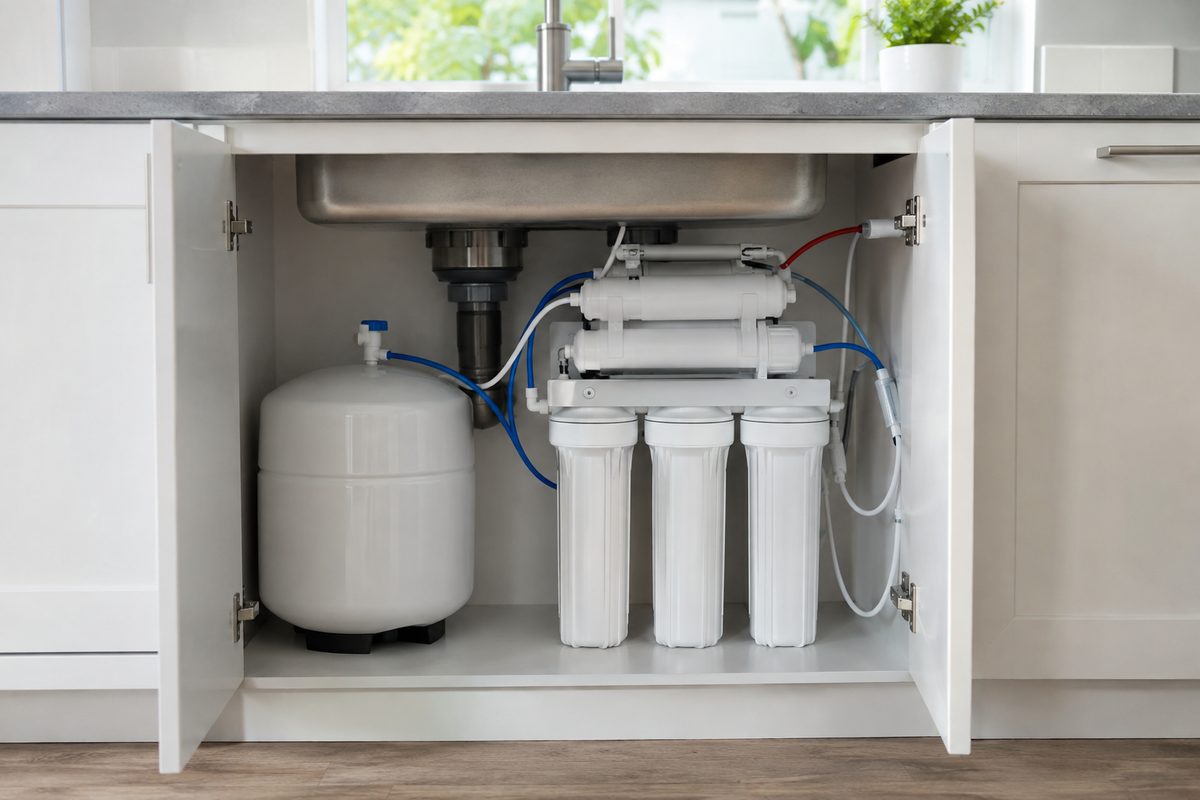
Technology split: where the demand is actually going
The technology mix tells importers where to place bets. GAC dominates today because it is cheap and proven against long-chain PFAS like PFOA and PFOS, which is why it leads municipal and entry-level residential use. But membrane filtration — including reverse osmosis — is the fastest-growing segment, because it removes short-chain PFAS and a much broader contaminant profile at the same time.
For an OEM line, the practical takeaway is to carry both and be clear about what each sells against. A GAC or carbon block cartridge sells against the low-cost, high-volume municipal-compliance demand. An RO system sells against the premium, whole-profile treatment demand. The two tiers share a certification base, so the compliance investment pays for itself across the range rather than per SKU.
What an importer should require before committing
When you source a PFAS-reduction product, do not accept “NSF certified” at face value. Require the certificate number and verify it on NSF’s listing database, confirm whether the listing covers the cartridge only or the full system, and check that the specific PFAS compounds and reduction thresholds match your target market’s claims. The 2026 PFAS dynamics in the US market, including how certification interacts with distribution channels, are detailed in the US water filter market PFAS trends analysis.
ONEMI, a Guangdong-based water purification equipment manufacturer, holds NSF certification at the filter-cartridge level and CE, UL, FCC, and RoHS at the whole-machine level, with RO platforms built for tankless high-capacity output. The cartridge line anchors the 53-claim tier, and the RO platforms cover the 58-claim tier, so a buyer can assemble a full-range program from a single supply base. The underlying removal technology and test methodology are explained in the PFAS removal water filtration technology guide, and the factory capability behind both tiers is covered in the OEM/ODM water purifier factory page.
The PFAS market will keep growing for years, but the window for positioning is now. The importers who clear their certification claims early — and can prove them — are the ones who take the shelf space and the distributor relationships as the 2031 compliance deadline approaches.