


 한국어
한국어

You can spend hundreds of dollars on a certified water filter and still drink forever chemicals every single morning. We discovered this the hard way during a field test in Cape Fear, North Carolina, where municipal water looked pristine on paper but still carried stubborn traces of short-chain PFAS that slipped right past standard carbon blocks.
Executive Summary
- Standard carbon filters miss short-chain PFAS variants, whereas multi-stage Reverse Osmosis (RO) consistently strips out over 99% of these persistent compounds.
- The EPA has set legally enforceable limits at a razor-thin 4 parts per trillion for key PFAS chemicals, forcing a massive upgrade in home filtration expectations.
- Effective protection requires understanding the structural differences between long-chain and short-chain chemicals, as basic pitchers simply cannot hold the line.
It turns out that most home filtration systems are completely outmatched by the shifting chemistry of modern industrial pollution.
The Hidden Failure of Standard Carbon Pitchers
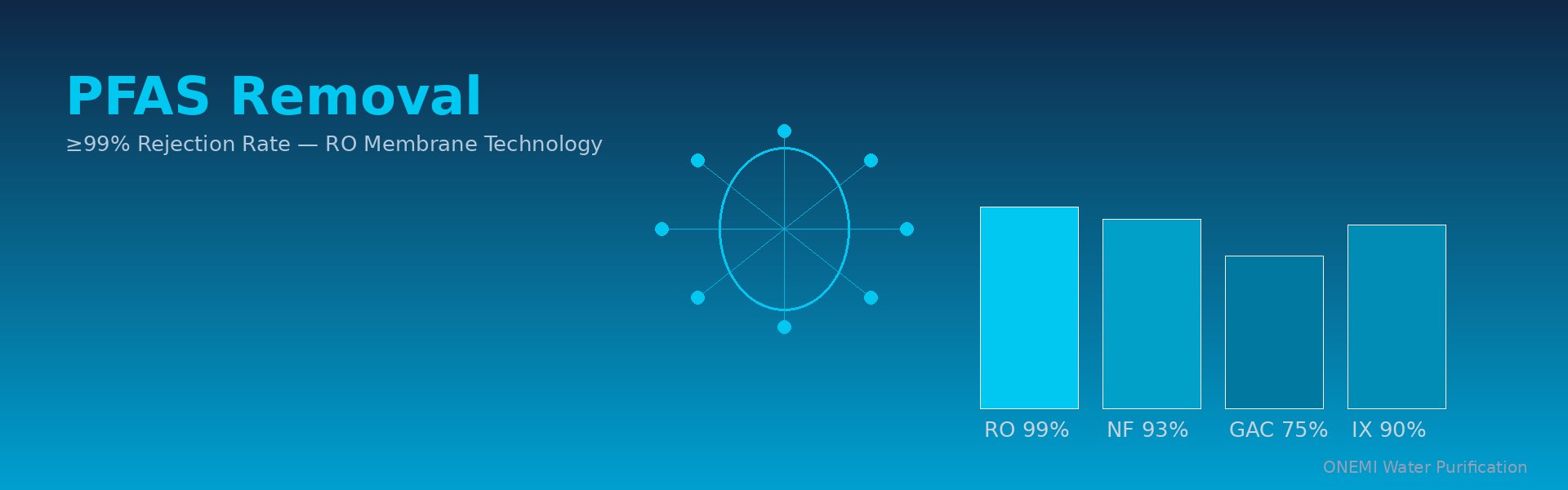
Most people buy a pitcher, wait for the water to trickle through, and assume they are safe. They are not. Traditional granular activated carbon filters work like chemical velcro. They are highly effective at grabbing heavy, long-chain compounds like PFOA and PFOS because these molecules have plenty of surface area to stick to. But chemical manufacturers caught on to the regulations surrounding these older compounds years ago. They pivoted to short-chain alternatives like GenX and PFBS, which have fewer carbon atoms and a much weaker affinity for carbon surfaces.
These smaller molecules slide right through standard carbon pores like sand through a chain-link fence. If your tap water contains these newer, highly mobile short-chain chemicals, a basic countertop pitcher is mostly giving you a false sense of security. You might get lucky and strip out some chlorine taste, but the invisible synthetic chemicals remain completely untouched.
This is where Reverse Osmosis changes the game entirely. Instead of relying solely on chemical attraction, RO uses brute physical force. By forcing water through a semi-permeable membrane under pressure, it filters out contaminants based on molecular size. Since PFAS molecules are significantly larger than water molecules, they get left behind on the waste side of the membrane. It is a mechanical barrier that does not care whether a chemical is long-chain, short-chain, or some brand-new synthetic variant cooked up in a lab last month.
ONEMI engineers have spent years analyzing how these microscopic barriers hold up under real-world water pressure fluctuations, ensuring the membrane pores do not stretch or degrade prematurely under heavy chemical loads.
The New Regulatory Reality at the Tap
The regulatory landscape in the United States has shifted dramatically, and municipal water treatment plants are scrambling to keep up. The U.S. Environmental Protection Agency established legally enforceable Maximum Contaminant Levels for several key PFAS compounds. We are talking about limits set at approximately 4 parts per trillion. To put that in perspective, one part per trillion is the equivalent of a single drop of water in about twenty Olympic-sized swimming pools. It is an incredibly tiny amount, reflecting just how toxic these substances are even at near-microscopic levels.
Water utilities have several years to comply with these new standards, which means the water coming out of your kitchen faucet today could easily exceed these safety limits without violating current operating permits. If you live near an active military base, an airport, or a manufacturing hub, your local groundwater is likely bearing the brunt of historical firefighting foam runoff and industrial waste discharge. Waiting for municipal upgrades is a gamble with your long-term health.
| PFAS Compound | EPA MCL (ppt) | Carbon Block Success Rate | RO Membrane Success Rate |
|---|---|---|---|
| PFOA (Long-chain) | 4.0 | ~85% to 90% | >99% |
| PFOS (Long-chain) | 4.0 | ~88% to 93% | >99% |
| PFHxS (Short-chain) | 10.0 | ~40% to 60% | >98% |
| GenX (Short-chain) | 10.0 | ~30% to 50% | >99% |
These numbers make the choice pretty clear for anyone looking to protect their family from chronic exposure.
The Anatomy of a Bulletproof RO System
You cannot just throw a bare RO membrane under your sink and call it a day. A truly effective system relies on a multi-stage process where each step protects and enhances the next. Without proper pre-filtration, the delicate polyamide membrane would quickly clog with sediment, chlorine, and organic matter, destroying its efficiency within months.
First, a high-quality sediment stage catches the rust, silt, and dirt that travels through aging city pipes. Next comes an activated carbon block. This stage is crucial because chlorine, which municipalities use to disinfect water, will actually eat holes in a Reverse Osmosis membrane if left unchecked. The carbon block neutralizes the chlorine and absorbs larger organic chemicals, leaving the RO membrane free to focus entirely on the microscopic dissolved solids, heavy metals, and stubborn PFAS chains.
After the water is forced through the membrane, it usually sits in a storage tank. This is where a post-carbon filter comes in, polishing the water just before it hits your glass to remove any lingering tastes or odors that might have developed while sitting. Some advanced systems also include a remineralization stage at the very end. Because RO is so incredibly thorough, it strips out beneficial minerals like calcium and magnesium along with the bad stuff. Adding a trace amount of these minerals back in balances the pH and gives the water a clean, natural taste.
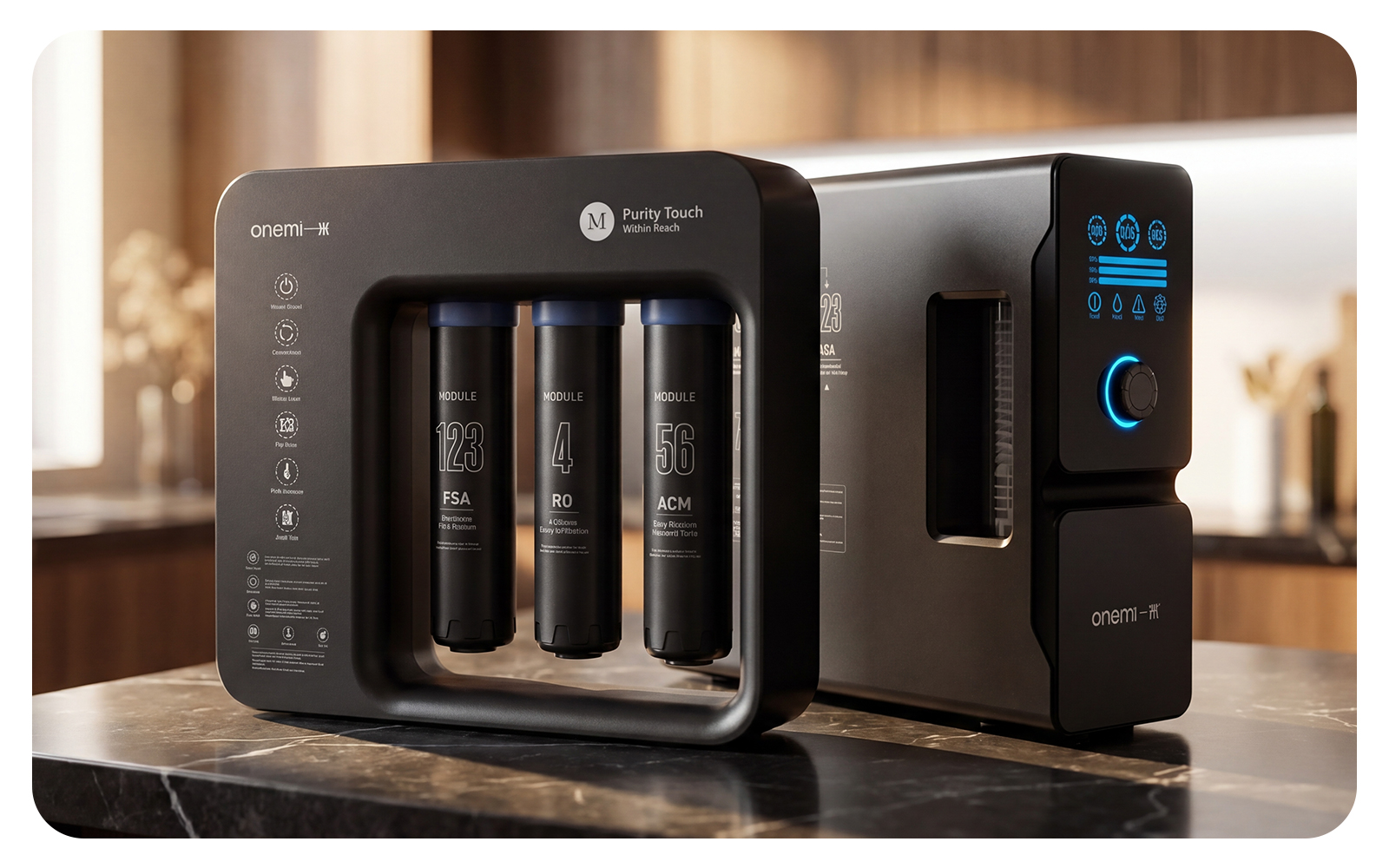
When you look at the internal architecture of premium systems like those designed by ONEMI, you see this precise sequence engineered down to the millimeter to maximize contact time and prevent water from bypassing the filtration media.
The Practical Gotcha: Maintenance and Wastewater
Here is the cold, hard truth that most water filter companies try to hide in the fine print: Reverse Osmosis systems waste water. There is no getting around the physics of it. To keep the membrane from fouling, the system must constantly flush away the concentrated contaminants, sending them down the drain as wastewater. Older, cheap systems could waste up to four gallons of water for every single gallon of pure water produced. Modern, high-efficiency systems have brought this ratio down to about one-to-one, but you will still see a slight increase in your utility bill.
Another critical factor is filter replacement discipline. An RO system is not a set-it-and-forget-it appliance. If you neglect the pre-filters, you will ruin the expensive membrane. If you neglect the membrane, you will eventually start drinking contaminated water again as the barrier degrades. You have to commit to changing the sediment and carbon cartridges every six to twelve months, and the main membrane every two to three years depending on your local water quality.
Is the maintenance worth the peace of mind? If you value clean, chemical-free ice cubes, baby formula, and drinking water, the answer is an easy yes. But you have to go into it with your eyes open, ready to manage the upkeep, or you are better off not investing in the technology at all.
Ultimately, safeguarding your home against the invisible threat of forever chemicals comes down to choosing the right tool for the job. While basic carbon filters still have their place for simple taste improvement, they are fundamentally unsuited for the complex chemical realities of 2025. Investing in a robust, multi-stage Reverse Osmosis system is the only proven way to draw a hard line between your family and the industrial legacy flowing through your tap.