


 한국어
한국어

Executive Summary
- Lead and arsenic are the two most dangerous heavy metals in US drinking water, ranked #1 and #2 on the ATSDR 2025 Substance Priority List.
- Reverse osmosis removes 99.5% of arsenic, 97-99% of lead, and 95-97% of mercury—far outperforming activated carbon alone.
- NSF/ANSI 58 certified systems guarantee lab-verified performance; uncertified filters offer no such assurance.
Lead sits at #1. Arsenic at #2. Cadmium at #3. That’s not a ranking of industrial chemicals—it’s the ATSDR 2025 Substance Priority List, updated every two years by the CDC’s toxic substances agency. These three metals, along with mercury at #23, represent the most significant heavy metal threats to human health at contaminated sites across the United States.
The question isn’t whether heavy metals exist in water systems. They do. The question is what actually removes them.

Which Heavy Metals Are Actually in Drinking Water
Not all heavy metals are equally dangerous, and not all of them show up in tap water at concerning levels. The four that matter most for home drinking water are arsenic, lead, mercury, and cadmium.
Lead contamination is overwhelmingly a plumbing problem. Homes built before 1986 often have lead service lines or copper pipes joined with lead solder. When water chemistry shifts—lower pH, different disinfectants—the protective mineral scale inside pipes dissolves, and lead leaches directly into drinking water at the tap. Flint, Michigan made this famous in 2014, but the underlying infrastructure problem exists in roughly 6 to 10 million US homes.
Arsenic is different. It’s not coming from your pipes—it’s in the groundwater itself. The US Geological Survey has mapped arsenic concentrations exceeding 10 ppb (the EPA maximum contaminant level) in private wells across New England, the Midwest, and large swaths of the Southwest. Unlike municipal water, private wells have no federal testing requirement. The homeowner is the water quality manager.
Mercury enters water through atmospheric deposition from coal-fired power plants and industrial processes, then accumulates in groundwater and surface water. It’s less common in municipal supplies at levels above the EPA limit of 2 ppb, but private wells in mining regions and areas with legacy industrial contamination are at risk.
Cadmium rounds out the list—an impurity in galvanized pipes and a contaminant from fertilizer runoff. The EPA limit is 5 ppb.
Here’s what the numbers look like against regulatory limits:
| Heavy Metal | EPA MCL (mg/L) | WHO Guideline (mg/L) | ATSDR 2025 Rank | Primary Source |
|---|---|---|---|---|
| Lead (Pb) | 0.015 | 0.01 | 1 | Plumbing corrosion |
| Arsenic (As) | 0.010 | 0.01 | 2 | Natural mineral deposits |
| Mercury (Hg) | 0.002 | 0.001 | 23 | Industrial discharge, atmospheric deposition |
| Cadmium (Cd) | 0.005 | 0.003 | 3 | Pipe corrosion, fertilizer runoff |
How Different Filtration Technologies Handle Heavy Metals
Not all water filters are designed to remove heavy metals. A basic activated carbon pitcher filter might improve taste and reduce chlorine, but its heavy metal removal is inconsistent at best. Here’s how the major technologies actually perform.
Reverse Osmosis: The Gold Standard
Reverse osmosis pushes water through a semi-permeable membrane with pores measuring approximately 0.0001 microns. That’s small enough to reject dissolved ions—including heavy metal ions—while allowing water molecules through.
Published research in the Journal of Environmental Chemical Engineering (2025) confirms the numbers: standard polyamide RO membranes remove 97-99% of lead, 95-99% of arsenic (As³⁺), and 95-97% of mercury. Nitrogen-doped carbon quantum dot modified membranes push arsenic rejection past 99.5%. Cadmium removal consistently exceeds 98%.
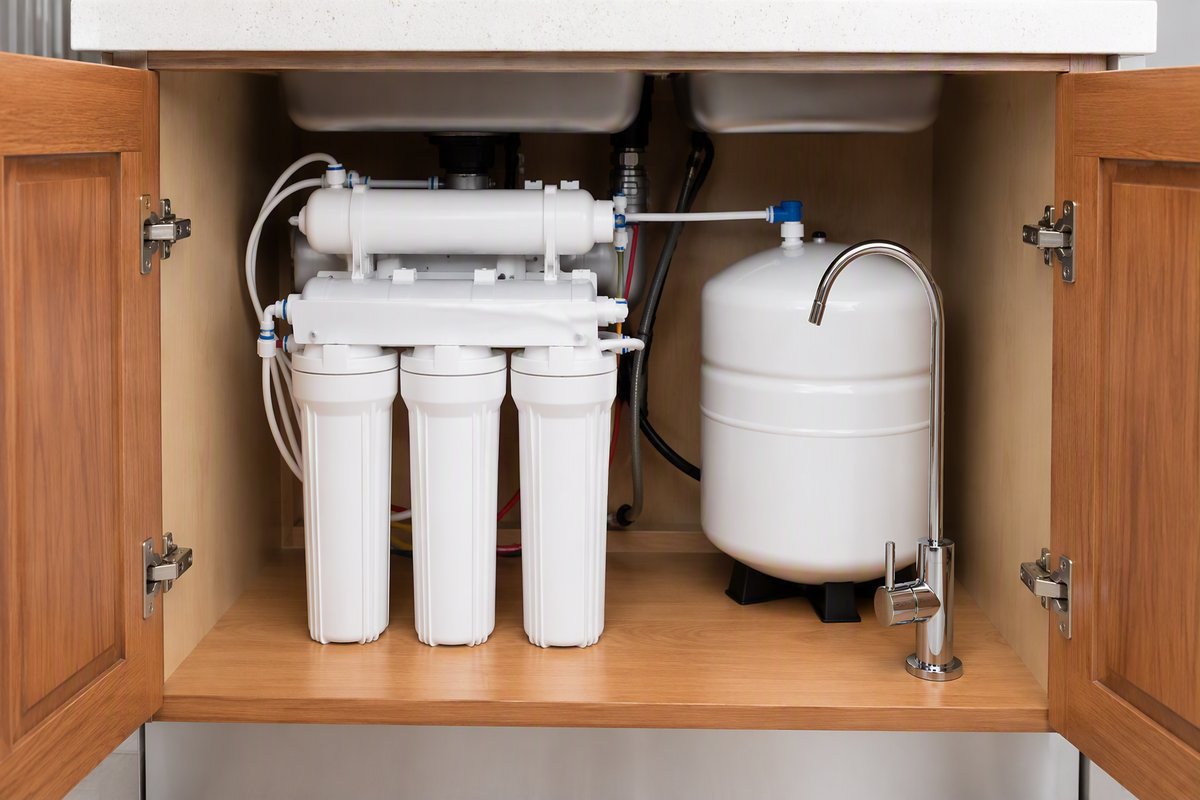
The RO process produces two streams: purified water (permeate) and concentrated reject water (brine). In an under-sink system like the ONEMI RO water purifier, the rejection rate is typically 3:1 to 1:1 depending on water pressure and temperature. What comes out of the dedicated faucet has passed through a sediment pre-filter, an activated carbon block, the RO membrane, and a post-carbon polishing filter—four stages, each with a specific job.
Ultrafiltration: Particle Barrier, Not a Chemical One
Ultrafiltration uses hollow fiber membranes with pores around 0.01 microns—about 100 times larger than RO pores. This is excellent for bacteria, sediment, and cysts. It is not designed for dissolved heavy metals. Metal ions pass through UF membranes because they’re dissolved at the molecular level, not present as suspended particles.
There’s an exception: if heavy metals are bound to larger organic molecules or adsorbed onto suspended solids, UF can capture them by sieving out the carrier particles. This is not reliable enough to depend on for health protection, but it explains why some ultrafiltration water systems show modest heavy metal reduction in lab tests.
Activated Carbon: Selective and Limited
High-quality activated carbon blocks can remove lead through a combination of physical adsorption and, in some formulations, chemical binding. But this depends heavily on contact time, pH, and the specific carbon formulation. NSF/ANSI 53 certified carbon filters are tested for lead reduction. Uncertified ones are a gamble.
For arsenic and mercury, activated carbon alone is not sufficient. Arsenic in particular is tricky—it exists in two forms in water (arsenite, As³⁺, and arsenate, As⁵⁺), and activated carbon preferentially adsorbs As⁵⁺ while leaving As³⁺ largely untouched. Without an oxidation pre-treatment step, carbon filtration misses half the problem.
Ion Exchange: Effective but Maintenance-Heavy
Ion exchange resins swap sodium or potassium ions for heavy metal ions—lead, copper, cadmium, mercury all bind to the resin beads. This is the same principle behind water softeners, but with different resin formulations. The catch: when the resin bed saturates, metals can dump back into the water if regeneration isn’t timed correctly. For whole-house applications, ion exchange works. For point-of-use drinking water, RO is more practical.
What Certification Actually Tells You
NSF/ANSI standards are the only reliable way to verify a filter’s heavy metal removal claims. Here’s what each standard covers:
| Standard | What It Tests | Heavy Metals Covered |
|---|---|---|
| NSF/ANSI 53 | Health effects—reduction of specific contaminants | Lead, mercury, arsenic (As⁵⁺), cadmium, chromium |
| NSF/ANSI 58 | Reverse osmosis systems—full system performance | Arsenic (As⁵⁺), lead, cadmium, chromium, copper, mercury, radium |
| NSF/ANSI 401 | Emerging contaminants / incidental compounds | Not specifically heavy metals—covers pharmaceuticals, pesticides, BPA |
A filter that claims “reduces lead” without an NSF/ANSI 53 or 58 certification is making a marketing statement, not a verified performance claim. Look for the actual NSF seal or search the product in the NSF certified product database. ONEMI’s RO membrane cartridges carry NSF/ANSI 58 certification—the most comprehensive standard for point-of-use reverse osmosis systems. Full system certifications including CE, UL, and FCC cover electrical safety and materials compliance. See our complete certification list on the certifications page.
If You’re on a Private Well
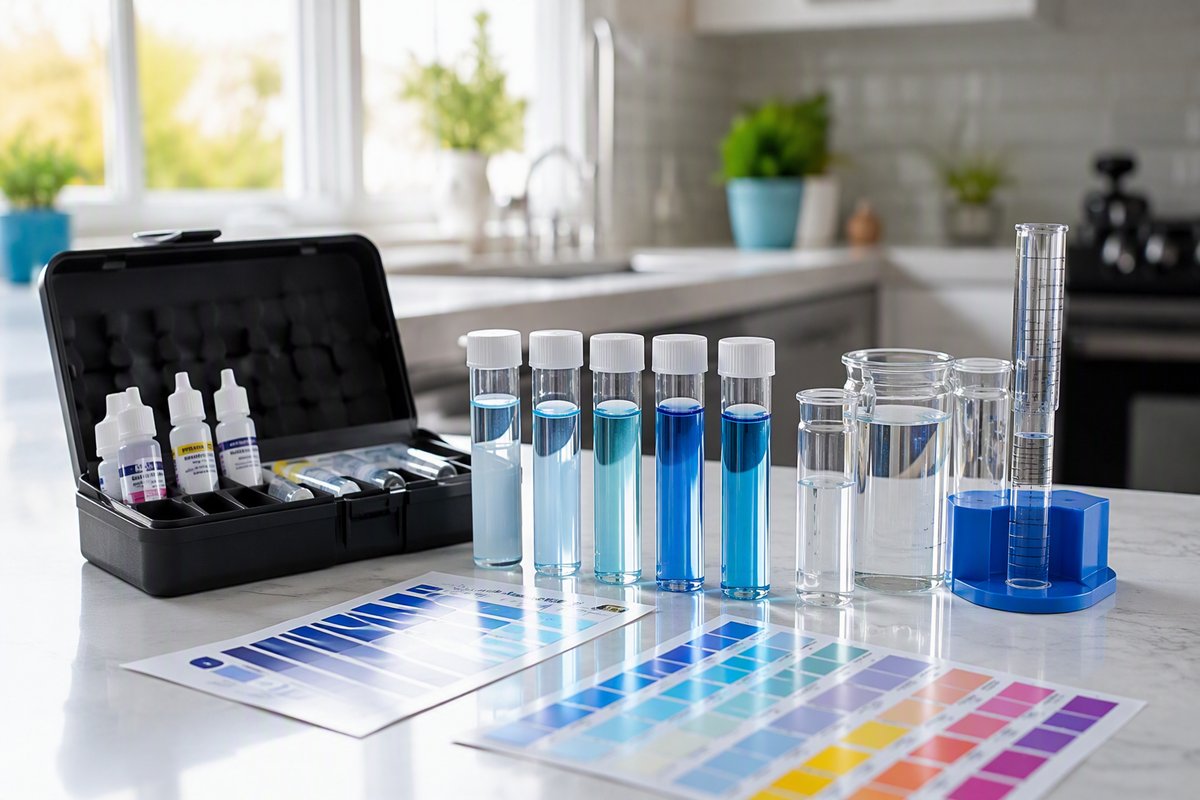
Municipal water suppliers test for heavy metals and publish annual Consumer Confidence Reports. Private well owners have none of that. The EPA recommends testing well water annually for coliform bacteria, nitrates, and total dissolved solids, plus testing for arsenic, lead, and other heavy metals at least once every three years.
If your well test comes back positive for arsenic above 10 ppb, a point-of-use RO system under the kitchen sink is the most practical solution. For lead, identify the source first—if it’s the well itself, whole-house treatment may be warranted. If the lead is from household plumbing, point-of-use filtration at the drinking water tap handles it.
For homes looking for a simpler installation path, countertop water purifiers offer RO filtration without the under-sink plumbing work. These compact units sit on the counter and connect directly to the faucet, making them a practical option for renters and apartments where drilling a dedicated faucet hole isn’t an option.
Maintenance Is Part of the Equation
A filter only works if it’s maintained. RO membranes degrade gradually—not catastrophically—which means heavy metal rejection can slip below safe levels before you notice a change in water taste or flow rate.
Standard replacement schedule for a 4-stage RO system: sediment pre-filter every 6 months, carbon pre-filter every 6-12 months, RO membrane every 24-36 months, post-carbon filter every 12 months. These are guidelines. Water with high sediment load or heavy chlorine levels accelerates pre-filter exhaustion. A TDS meter—a $15 device that measures total dissolved solids—gives you a real-time check: if the RO output TDS climbs above 10% of the input TDS, it’s time to troubleshoot.
For gravity-fed and countertop filters, the filtration media has a fixed service life measured in gallons. A typical gravity-fed water filter might be rated for 2,000 to 4,000 gallons before the filtration media needs replacement. Once that capacity is exhausted, heavy metal removal drops off sharply—there’s no gradual decline, it’s a cliff.
The Bottom Line
Reverse osmosis is the only point-of-use technology that removes all four priority heavy metals—lead, arsenic, mercury, and cadmium—at verified rates above 95%. Activated carbon handles lead in some formulations but is unreliable for arsenic. Ultrafiltration doesn’t touch dissolved metals. Ion exchange works but requires attentive maintenance.
Certification matters more than marketing. NSF/ANSI 58 certification for an RO system means a third-party lab has verified the heavy metal removal claims. Without it, you’re trusting a manufacturer’s internal testing—and they have no incentive to publish unfavorable results.
For municipal water users, check your local water quality report first. For private well owners, test. Then match the treatment technology to what’s actually in your water.