




 한국어
한국어

- Tap-mounted filters remove chlorine taste and sediment quickly, but they do not soften hard water — that needs a resin softener or reverse osmosis.
- Around 60% of UK homes sit in hard or very hard water areas, and limescale quietly costs households hundreds of pounds a year in appliance wear.
- For renters and compact kitchens, a tap-mounted filter is the lowest-friction upgrade: no plumbing changes, no permanent fittings, and cartridge swaps take seconds.
UK tap water is among the safest and most tightly regulated in the world. The Drinking Water Inspectorate’s latest report puts compliance above 99.97%, and the water that comes out of a British kitchen tap is perfectly safe to drink. But “safe” and “pleasant” are not the same thing. If you live in London, the South East, or the East of England, you already know the routine: a kettle that crusts up with white scale, a faint chlorine note in a glass of water, and tea that never quite tastes the way it should.
This is where the tap-mounted water filter earns its place. It is not a whole-house system, and it is not a reverse osmosis unit. It is the smallest, cheapest, and least intrusive way to improve the water you actually drink and cook with every day — without calling a plumber or touching a single pipe. For a large share of UK households, that convenience is the entire point.
What a Tap-Mounted Filter Actually Filters
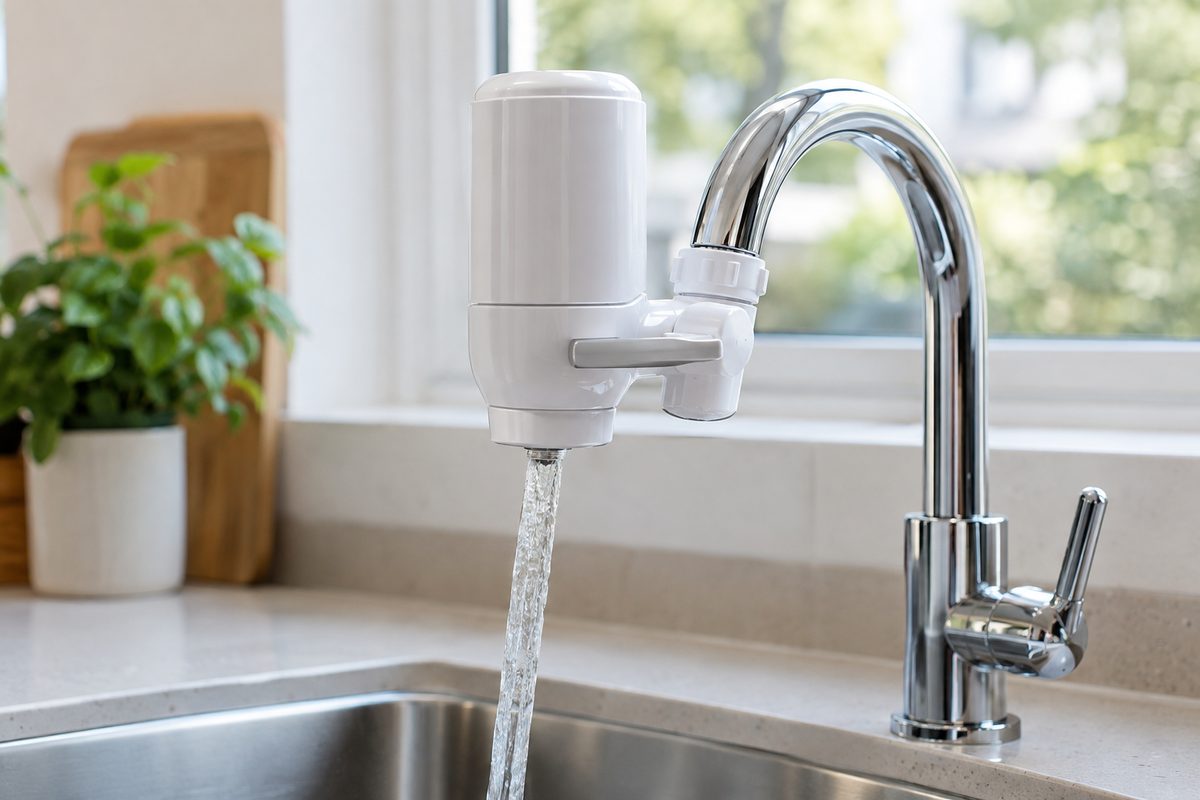
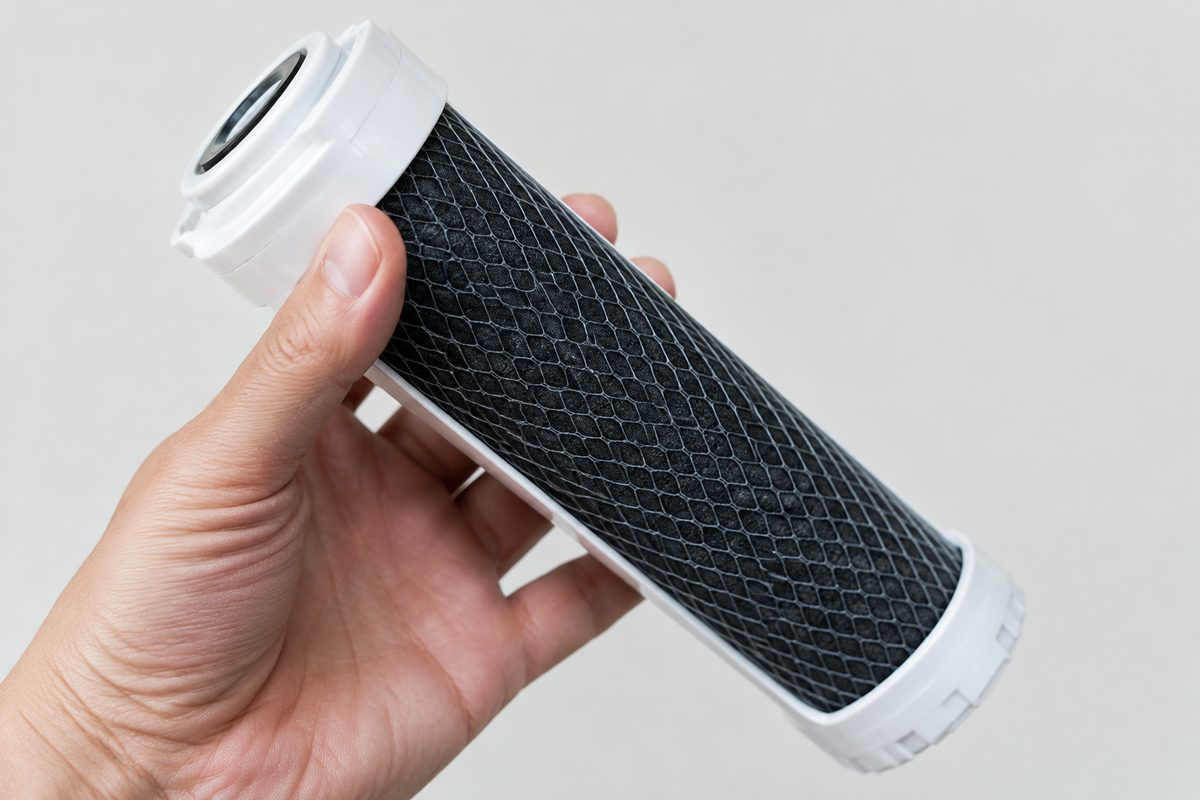
A tap-mounted filter is a compact cartridge that screws onto the end of an existing kitchen tap, diverting water through a small bed of filtration media before it reaches your glass. Most use activated carbon as the core media, and that carbon does two jobs reliably.
The first job is taste and odour. Municipal water is disinfected with chlorine, which is excellent for safety but leaves a tell-tale smell and a flat, chemical taste. Activated carbon adsorbs chlorine and many organic compounds, which is why a single glass of filtered water tastes noticeably cleaner than the unfiltered tap. The second job is mechanical: a fine mesh or sediment layer catches rust, grit, and larger particles that can find their way into older pipework.
What it does not do is remove dissolved hardness minerals. Calcium and magnesium pass straight through carbon, so a tap-mounted filter will not stop limescale from forming in your kettle. That distinction matters, because it is the single most common misunderstanding people have about these devices — and understanding it upfront saves you from buying the wrong tool for the wrong problem.
UK Hard Water and the Limescale Tax
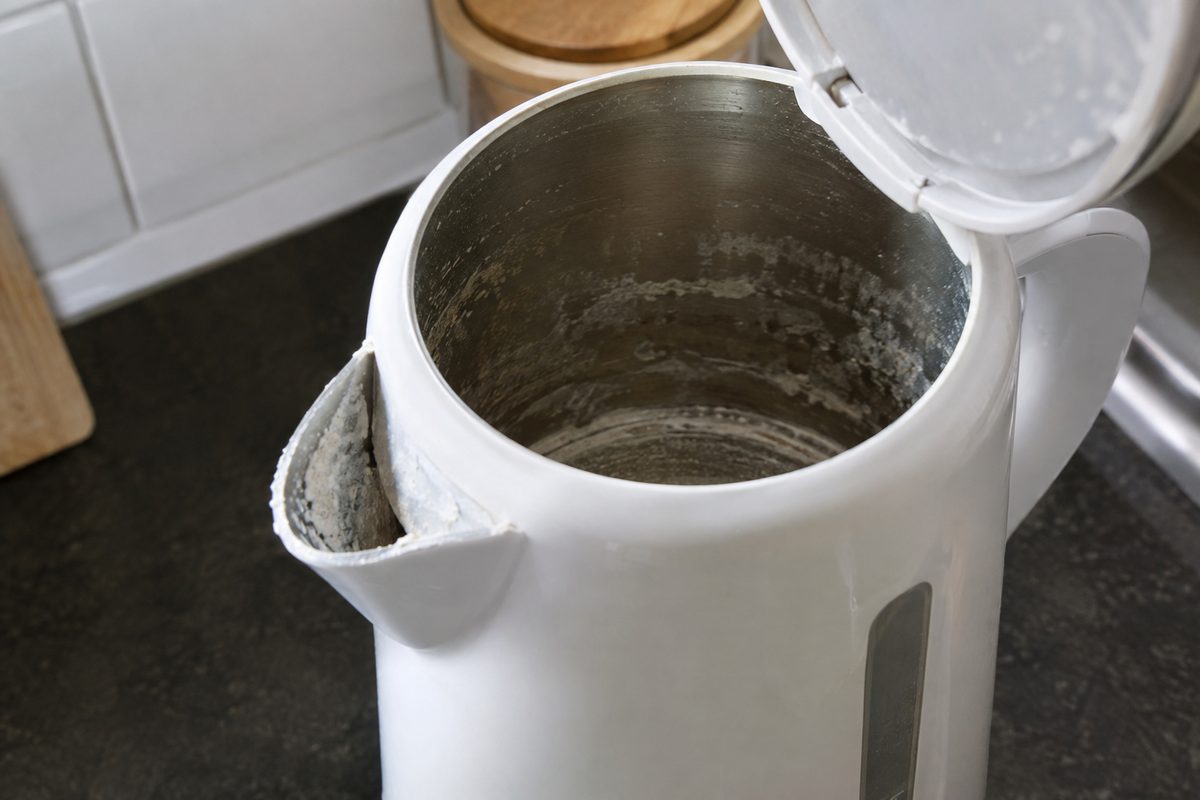
Roughly 60% of UK homes are supplied with hard or very hard water, concentrated in a broad band across the South and East of England where the geology is chalk and limestone. In the hardest areas — London, Kent, Sussex, Hertfordshire — calcium carbonate levels routinely exceed 200 mg/L and can climb past 300 mg/L. Scotland, Wales, and the North West sit at the other end of the scale, with soft water that barely registers on a hardness test.
Hard water is not a health risk; in fact the minerals in it are the same calcium and magnesium your body needs. The cost is entirely domestic. A heavily scaled kettle can use up to 11% more electricity to boil the same volume of water, and scale flakes off into every brew. Washing machines and dishwashers work harder as their heating elements crust over, and a 6mm build-up on a boiler heat exchanger measurably increases gas consumption. Across a year, industry estimates put the limescale bill for a hard-water household in the hundreds of pounds.
If your goal is to stop scale at the source, a tap-mounted filter is the wrong tool — a water softener or a reverse osmosis system is the only thing that removes hardness minerals. But if your goal is better-tasting drinking water in a hard-water area, a carbon-based tap filter does exactly that, and it does it for a fraction of the cost and disruption of a softener.
Why Renters and Small Kitchens Reach for the Tap Filter
Under-sink systems and whole-house softeners assume you own the property and are willing to drill, plumb, and permanently modify the kitchen. Millions of UK households — renters, flat dwellers, and anyone in a listed or shared building — cannot make those changes even if they wanted to. A tap-mounted filter asks for none of it. It screws on by hand, usually with a handful of adapters in the box, and it comes off just as cleanly when you move out.
There is also the question of daily rhythm. A jug filter sits in the fridge and filters a litre at a time, which is fine for a single glass but tedious when you want to fill a saucepan, rinse fruit, or make a full pot of tea. A tap filter works at the moment of use, at mains flow, with no waiting and no half-empty jug. That immediate, “turn the tap and it’s done” quality is the everyday convenience the category is named for.
| Filtration option | Removes chlorine & sediment | Softens hard water | Installation |
|---|---|---|---|
| Tap-mounted filter | Yes | No | No tools, hand-tighten |
| Jug filter | Yes | No | None (countertop) |
| Under-sink carbon system | Yes | No | Plumbing required |
| Water softener / RO | Varies | Yes | Professional install |
What to Check Before You Buy
Not every tap filter is built the same, and a few checks separate a filter you will use for years from one that leaks onto the worktop in a week. The first is compliance. In the UK, any product that touches the drinking water supply should be WRAS approved — that is the Water Regulations Advisory Scheme, which tests materials to BS 6920 and mechanical fittings to EN 1717 to make sure the product will not contaminate the water or backflow into the mains. A WRAS mark is the baseline signal that a tap filter is fit for the British market.
Second, look at the cartridge life and flow rate. A cartridge rated for a few hundred litres will need replacing every month or two in a busy kitchen, so check the claimed capacity and how easy the swap is. Third, confirm the adapters cover your tap type — most kits include a spread of threaded adapters, but mixer taps and older British taps can be stubborn, so a quick check against the box contents saves a return trip.
Fourth, think about what happens when you want filtered water for something else. A tap filter only treats one tap, and it treats everything that flows through it — including the water you use to wash vegetables. That is generally harmless, but it does mean the cartridge wears out faster than a dedicated drinking tap would. For replacement cartridges and the fittings that go with them, the parts and cartridges page outlines what to expect.
The Honest Limits
It is worth being blunt about what a tap-mounted filter will not do, because the category is often oversold. It will not soften water or remove limescale. It will not remove dissolved lead, nitrates, PFAS, or bacteria the way a certified reverse osmosis or ultraviolet system would. And it will not protect your boiler, washing machine, or shower head — its reach ends at the single tap it is attached to.
What it does offer is a genuine, immediate improvement to the water you drink most often, in the smallest possible footprint. If your complaint is chlorine taste, odd smells, cloudy water, or a kettle that keeps producing white flakes, a tap-mounted filter addresses the first three directly and the fourth not at all — so know which problem you are actually solving before you spend.
For a broader look at how different filtration approaches fit different homes, the installation and usage FAQ covers the questions people ask most before committing. And if you are weighing a tap filter against a fuller under-sink or countertop setup, the instant and on-demand water range shows where the next step up begins.
The tap-mounted filter is not a silver bullet for UK water — nothing is. But for the everyday reality of British tap water, it is the upgrade with the best ratio of effort to reward: a few minutes to fit, an instant improvement in taste, and no permanent footprint. ONEMI, a Guangdong-based water purification manufacturer, builds tap-mounted and under-sink filtration for the UK market with WRAS-compliant materials, because the first job of any filter is to make safe water pleasant — one tap at a time.