



 한국어
한국어

- Most US kitchen faucets use a standard 15/16-inch aerator thread, so a faucet filter usually twists on with no tools and no adapter.
- Run water through a new cartridge for about five minutes to flush carbon fines before you drink from it.
- A faucet filter removes chlorine and sediment, but it is not a substitute for an under-sink RO system if your water has lead or PFAS.
Installing a faucet-mounted water filter is one of the few water upgrades you can finish before your coffee finishes brewing. No plumber, no tools, no shutting off the water. But the ten-minute job still has a couple of ways to go wrong, and most of them happen in the first thirty seconds.
This guide walks through what a faucet filter actually does, how to check your faucet before you buy, and the step-by-step install that avoids the leaks people usually hit.
What a faucet filter actually does
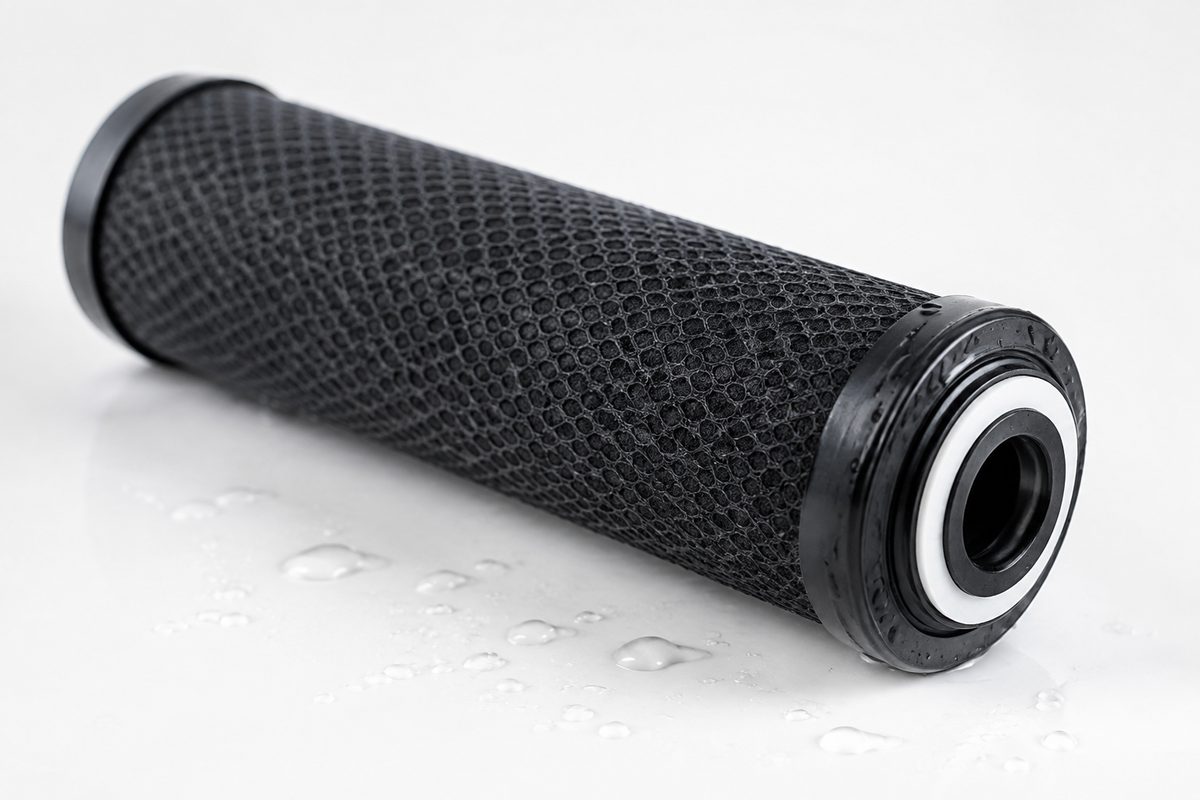
A faucet-mounted filter sits on the end of your kitchen tap and treats water as it comes out. Inside the filter housing is usually a block of activated carbon wrapped around a sediment layer. The carbon grabs chlorine, which is what gives tap water that pool-like smell, plus some organic compounds that affect taste and odor.
What it does not do is remove dissolved lead, PFAS, or other heavy metals at the level a reverse osmosis system would. That distinction matters when you are deciding whether a $30 faucet filter is enough or whether you need an under-sink RO system. If your city water report shows elevated lead or PFAS, a faucet filter is the wrong tool.
Check your faucet before you buy
The single biggest install mistake is buying a filter before you look at your faucet. Almost all modern US kitchen faucets have a removable aerator with a standard 15/16-inch-27 male thread or a 55/64-inch-27 female thread. Most faucet filters are built for the male thread and come with an adapter for the female one.
Pull-down and pull-out faucets are where it gets tricky. Many of them have a spray head that does not accept a standard aerator, so the filter either will not fit or will block the spray function. Before you buy, unscrew the aerator by hand and check the thread size and whether your faucet is a fixed spout or a pull-down spray head.
Step-by-step installation
Once you have confirmed the thread, the install itself is straightforward.
- Unscrew the existing aerator by hand, turning counterclockwise. If it is stuck, wrap it in a cloth and use pliers, but go gently so you do not scratch the finish.
- Screw the filter onto the faucet spout, turning clockwise until it is snug. Do not overtighten; hand-tight plus a quarter turn is enough.
- If the filter ships with an adapter for a female thread, fit the adapter onto the spout first, then twist the filter onto the adapter.
- Set the diverter to filtered mode and run cold water for about five minutes to flush out loose carbon fines and air pockets.
- Check the connection for drips with the water on and the diverter in both positions.
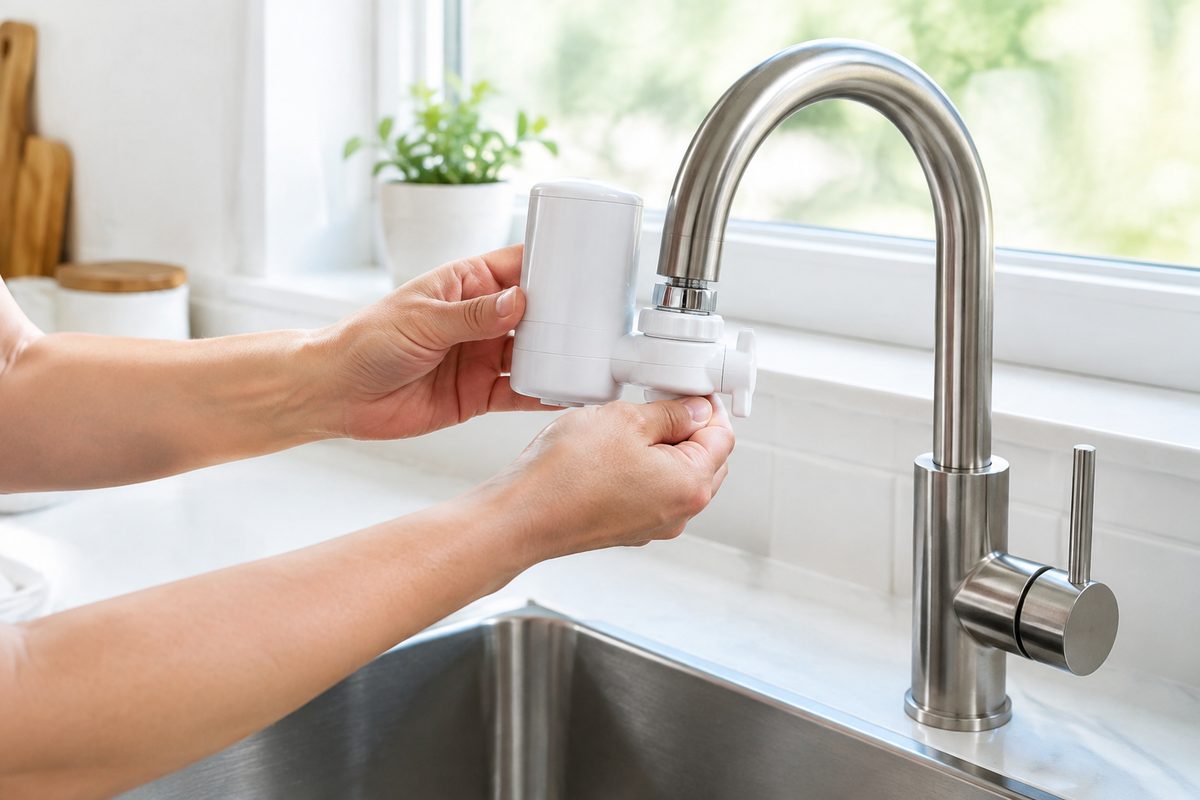
The diverter is the part most people forget to test. A faucet filter has a small lever that switches between filtered water and unfiltered spray. Run water in both positions and look for leaks at the base of the filter, because a drip in spray mode means the seal is not seated.
When to replace the cartridge
A faucet filter cartridge is a consumable, not a permanent fixture. Most are rated for roughly 100 gallons or two to three months of typical household use, whichever comes first. If your water starts to taste chlorinated again or the flow rate drops noticeably, the carbon is saturated and it is time for a replacement filter.
Replacement is the same as the original install: unscrew the housing, swap the cartridge, and flush for five minutes. Keeping one spare cartridge on hand means you are never tempted to stretch a spent filter past its life.
Faucet filter vs. under-sink RO
For renters or anyone who wants a five-minute fix, a faucet filter is hard to beat. But it helps to be clear-eyed about the ceiling of what it can do.
| Feature | Faucet filter | Under-sink RO |
|---|---|---|
| Install time | About 10 minutes, no tools | 1-2 hours, plumbing required |
| Chlorine and sediment | Yes | Yes |
| Lead, PFAS, dissolved solids | Limited or none | Yes |
| Counter space | None | Under-sink cabinet |
| Cartridge life | 2-3 months / ~100 gallons | Membrane 2-3 years |
If your goal is better taste and odor with zero commitment, start with a faucet filter. If your water report flags contaminants that carbon cannot touch, a countertop dispenser or an under-sink RO system is the more honest fix. Either way, knowing what your tap actually contains comes first.