



 한국어
한국어

You might be drinking worse water than you did before you bought your filtration system. It sounds completely backward, but it is a reality we see every single day in the water quality industry.
A family in Austin, Texas recently reached out to us because their high-end under-sink system started producing water that smelled faintly of rotten eggs and tested positive for elevated heterotrophic plate counts (HPC). They had spent over $600 on the system, thinking they were safe from municipal chlorine and heavy metals. The culprit? A carbon block cartridge that had been sitting in the housing for 22 months, long after its active surface area had become a breeding ground for opportunistic bacteria. They were literally drinking concentrated bio-slurry because they forgot a simple maintenance schedule.
Executive Summary
- Saturated filter cartridges do not just stop working; they actively dump accumulated contaminants and harbor bacterial colonies back into your drinking supply.
- Lifespans are highly variable, ranging from 3 to 12 months depending on local TDS levels, daily usage volumes, and cartridge media types.
- Proactive replacement schedules backed by pressure monitoring and smart indicators are the only reliable way to ensure EPA-compliant drinking water at home.
When you let a filter cartridge run past its prime, you are not just losing efficiency. You are actively exposing your household to concentrated contaminants that have been trapped over months, waiting to break through under the pressure of your home’s plumbing.
The Mechanics of Filter Saturation and Breakthrough
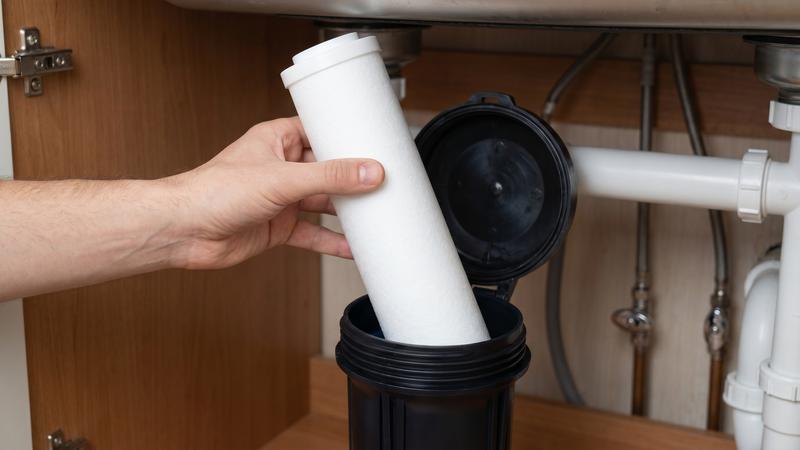
How does a protective barrier turn into a source of pollution? It comes down to basic physical chemistry. Most home water filtration systems rely on two primary mechanisms: physical straining and adsorption. Physical straining works like a microscopic net, catching sediment, rust, and microplastics. Adsorption, which is how activated carbon works, relies on chemical attraction. The carbon surface has millions of microscopic pores that pull in chemical contaminants like chlorine, volatile organic compounds (VOCs), and PFAS, holding onto them like a magnet.
But that magnet has a finite capacity.
Once every available bonding site on that carbon surface is occupied, the filter reaches its saturation point. This is where things get risky. When water continues to flow through a saturated cartridge, the shear force of the water pressure can cause “breakthrough.” The newly entering contaminants can actually knock the previously trapped chemicals free, sending a highly concentrated plume of pollutants straight to your faucet. You are no longer filtering your water; you are flush-washing months of accumulated toxins directly into your glass.
ONEMI engineers have spent years analyzing how different water profiles affect this saturation curve. What they found is that municipal water additives like chloramines can degrade the structural integrity of carbon blocks much faster than standard free chlorine, leading to premature breakthrough long before the manufacturer’s rated gallon limit is reached.
Microbial colonization is another major concern. While municipal water is treated with disinfectants to keep bacteria at bay, those disinfectants are the very first thing your carbon filter removes. The interior of your filter housing becomes a dark, damp, chlorine-free sanctuary. If you leave that cartridge in place too long, harmless background bacteria from the air or water line will colonize the media, forming a slimy matrix known as biofilm. Over time, this biofilm can shed pathogenic bacteria into your glass, leading to gastrointestinal issues that you would never associate with your “purified” water.
Establishing a Realistic Replacement Timeline
You cannot rely solely on the calendar or the generic “six-month” recommendation printed on the box. Your actual replacement frequency depends on a complex mix of your local water chemistry, the volume of water your household consumes daily, and the specific media inside the cartridge.
Let’s look at how these variables play out in the real world across different cartridge categories:
| Filter Cartridge Type | Primary Target Contaminants | Typical Lifespan Range | Key Failure Indicators |
|---|---|---|---|
| PP Sediment Filter | Sand, silt, rust, scale particles | 3 – 6 Months | Visible discoloration, drop in water pressure |
| Activated Carbon Block | Chlorine, VOCs, bad taste, odor | 6 – 9 Months | Return of chlorine smell, slow flow rate |
| Granular Activated Carbon (GAC) | PFAS, heavy metals, pesticides | 6 – 12 Months | Water channeling, chemical taste breakthrough |
| Reverse Osmosis Membrane | TDS, fluoride, arsenic, heavy metals | 24 – 36 Months | High TDS reading on meter, high wastewater ratio |
| Ultrafiltration (UF) Membrane | Bacteria, cysts, viruses, colloids | 12 – 18 Months | Severe flow reduction, system clogging |
Consider your local geography. If you live in an area with aging infrastructure—like parts of the Midwest or older Northeast corridors—your sediment filters will clog much faster due to rust flake and water main breaks. In these regions, a sediment cartridge might saturate in as little as 2 to 3 months. Conversely, if you are on a private well in the Southwest, high levels of calcium and magnesium (hard water) can scale over your carbon blocks, blocking their pores and rendering them useless long before the 6-month mark.
Usage volume is the other side of the equation. A family of five using an under-sink system for drinking, cooking, and pet water will run through 1,500 to 2,000 gallons a year. A single professional living in a condo might not hit 300 gallons in that same timeframe. However, even if you do not use the filter often, time is still your enemy. Once a cartridge is wet, the clock starts ticking on bacterial growth, meaning you should still replace it at least once a year regardless of low usage.
The Real-World Cost of Skipping Filter Changes
It is easy to look at a replacement cartridge and think, “I’ll get to it next month.” But delaying this simple maintenance task can end up costing you significantly more than the price of a new filter.
When sediment filters clog, they force your entire filtration system to operate under high pressure differentials. For reverse osmosis systems, this pressure drop can prevent the RO membrane from functioning correctly. Instead of pushing pure water through the membrane, the system will dump excessive amounts of water down the drain, spiking your utility bills. In extreme cases, the backpressure can cause hairline cracks in plastic filter housings, leading to catastrophic leaks under your sink while you are away from home.
There is also the toll it takes on your appliances. If you use filtered water in your espresso machine, ice maker, or steam oven, a bypassed or saturated filter means hard minerals and corrosive chlorine are entering these sensitive machines. Repairing a scaled-up heating element in a professional-grade espresso machine can easily run into hundreds of dollars—far more than the cost of a standard replacement cartridge.
ONEMI water systems are engineered with integrated pressure gauges and flow meters specifically to prevent these financial headaches, giving users clear, real-time data on exactly when a cartridge has reached its limit.
How to Identify a Expired Cartridge Before It Fails
You do not need a laboratory setup to know when your water quality is starting to slip. Your senses and a few simple tools can give you all the warning signs you need.
The most obvious sign is a drop in water pressure at your filtration faucet. If it takes twice as long to fill up your coffee pot as it did three months ago, your sediment pre-filter is likely packed to capacity. This is actually a good sign that the filter did its job, but it means its life cycle has come to an end.
Pay close attention to changes in taste and smell. If you start noticing a swimming pool odor or a metallic tang, your carbon block has reached its saturation point. For those on municipal water, you can buy a cheap chlorine test kit online. Test the water coming out of your filtration faucet; if the reagent turns pink, chlorine is breaking through, and your cartridge is done.
If you want to be precise, buy a handheld TDS (Total Dissolved Solids) meter. These cost less than twenty dollars and measure the electrical conductivity of your water, which correlates to dissolved minerals and salts. Measure your tap water first, then measure your filtered water. For reverse osmosis systems, the filtered water should show a reduction of at least 85% to 95% in TDS. If that rejection rate drops below 80%, your RO membrane is failing and needs immediate replacement.
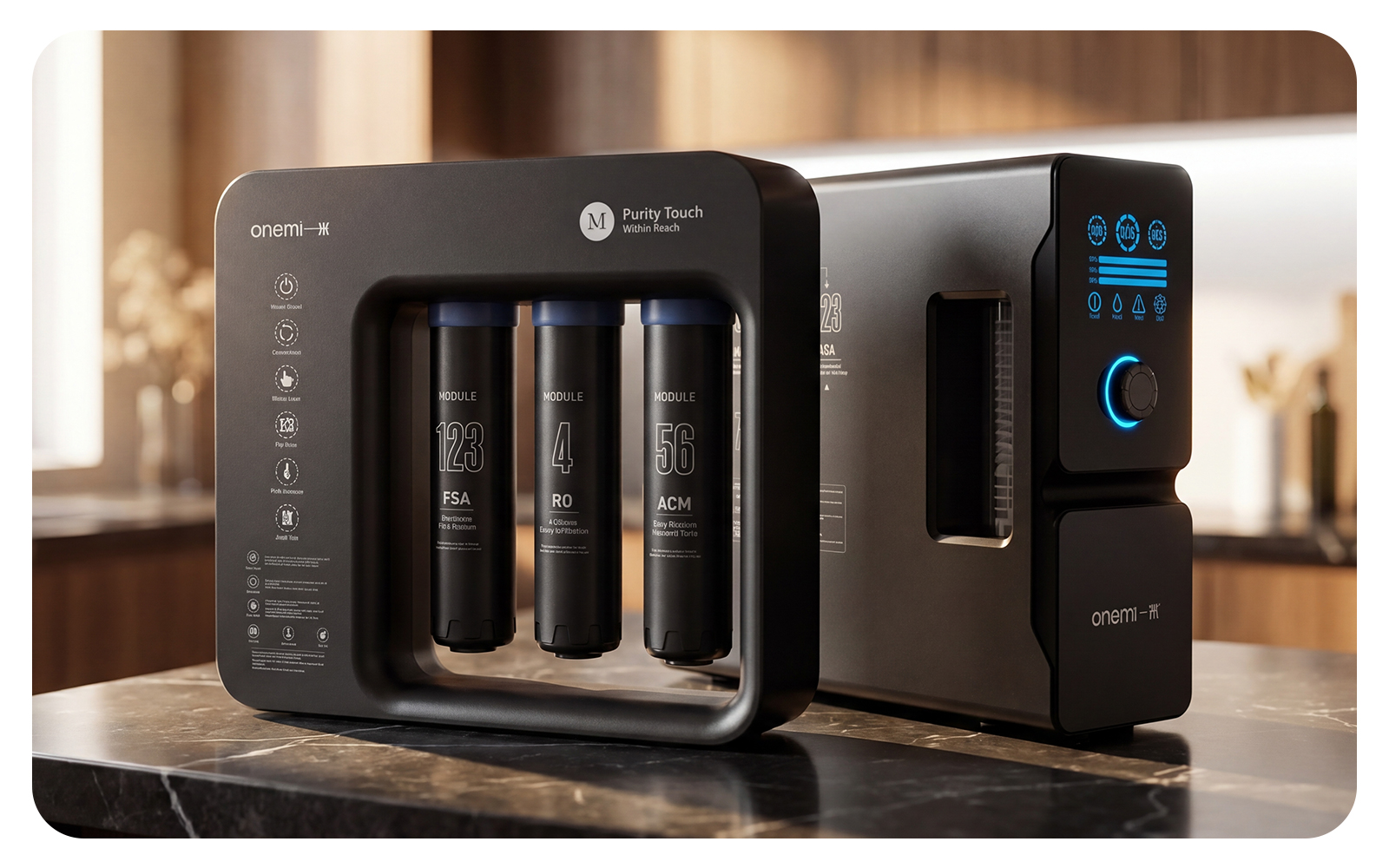
Many modern systems, including the advanced filtration setups from ONEMI, feature built-in smart indicators that track both time and actual water volume. These systems remove the guesswork entirely, alerting you with LED indicators or smartphone notifications when it is time to swap out your cartridges. This ensures you never run a system to the point of contaminant breakthrough, keeping your household’s drinking water consistently clean and safe.