


 한국어
한국어

A staggering 23% of private household wells tested across the United States contain at least one contaminant at concentrations exceeding human health benchmarks. This is not a speculative estimate; it is the concrete baseline established by the U.S. Geological Survey (USGS) after analyzing water quality samples from thousands of domestic wells nationwide. For the estimated 43 million Americans who rely on private wells for their daily drinking water, this statistic represents a silent, unregulated health hazard. Unlike municipal water systems, which are strictly monitored under the Safe Drinking Water Act, private wells are entirely self-regulated, leaving the burden of testing, filtration, and safety compliance solely on the homeowner.
Executive Summary
- Nearly one-quarter of private wells contain hazardous levels of naturally occurring or man-made contaminants, including arsenic, radon, nitrates, and heavy metals.
- Water hardness exceeding 120 mg/L reduces the operational efficiency of household appliances by 24% to 30% while cutting their projected lifespan nearly in half.
- A multi-barrier filtration approach utilizing sediment filtration, catalytic carbon, reverse osmosis, and UV sterilization is required to guarantee complete biological and chemical safety.
The financial consequences of unmanaged well water are just as severe as the physiological risks. When calcium and magnesium concentrations surpass 120 mg/L (expressed as CaCO₃), the water is classified as hard. This geological reality triggers rapid scale accumulation inside water heaters, boilers, and piping networks. Research conducted by the Water Quality Research Foundation (WQRF) demonstrates that this scale buildup reduces the operational efficiency of gas and electric water heaters by 24% to 30%, resulting in hundreds of dollars in wasted energy bills annually. Furthermore, the operational lifespan of appliances like dishwashers and washing machines drops by 40% to 50% when forced to run on untreated, hard well water.
The Hidden Chemistry of Private Well Contamination
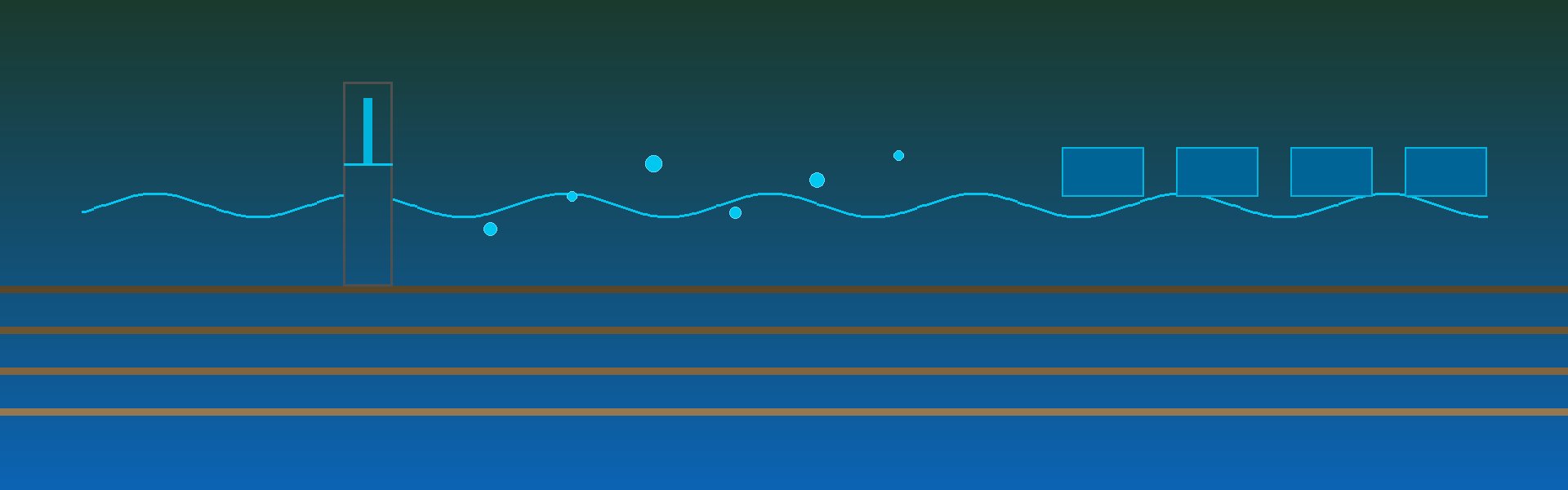
To understand how a well becomes contaminated, one must trace the hydrological journey of groundwater. As rainwater percolates through layers of soil and rock, it dissolves minerals and organic compounds. While some of these dissolved solids are harmless, others pose severe health risks. The most prevalent contaminants found in domestic wells fall into two distinct categories: naturally occurring geogenic toxins and anthropogenic substances introduced by human activity.
Arsenic, a potent human carcinogen, is one of the most common geogenic contaminants. In regions like the upper Midwest, New England, and parts of the Southwest, arsenic concentrations in groundwater frequently range from 10 to over 50 micrograms per liter (μg/L). The EPA maximum contaminant level (MCL) for public water systems is 10 μg/L, yet millions of private well owners unknowingly consume water that far exceeds this threshold. Long-term exposure to these levels is linked to skin, bladder, and lung cancers, as well as cardiovascular disease.
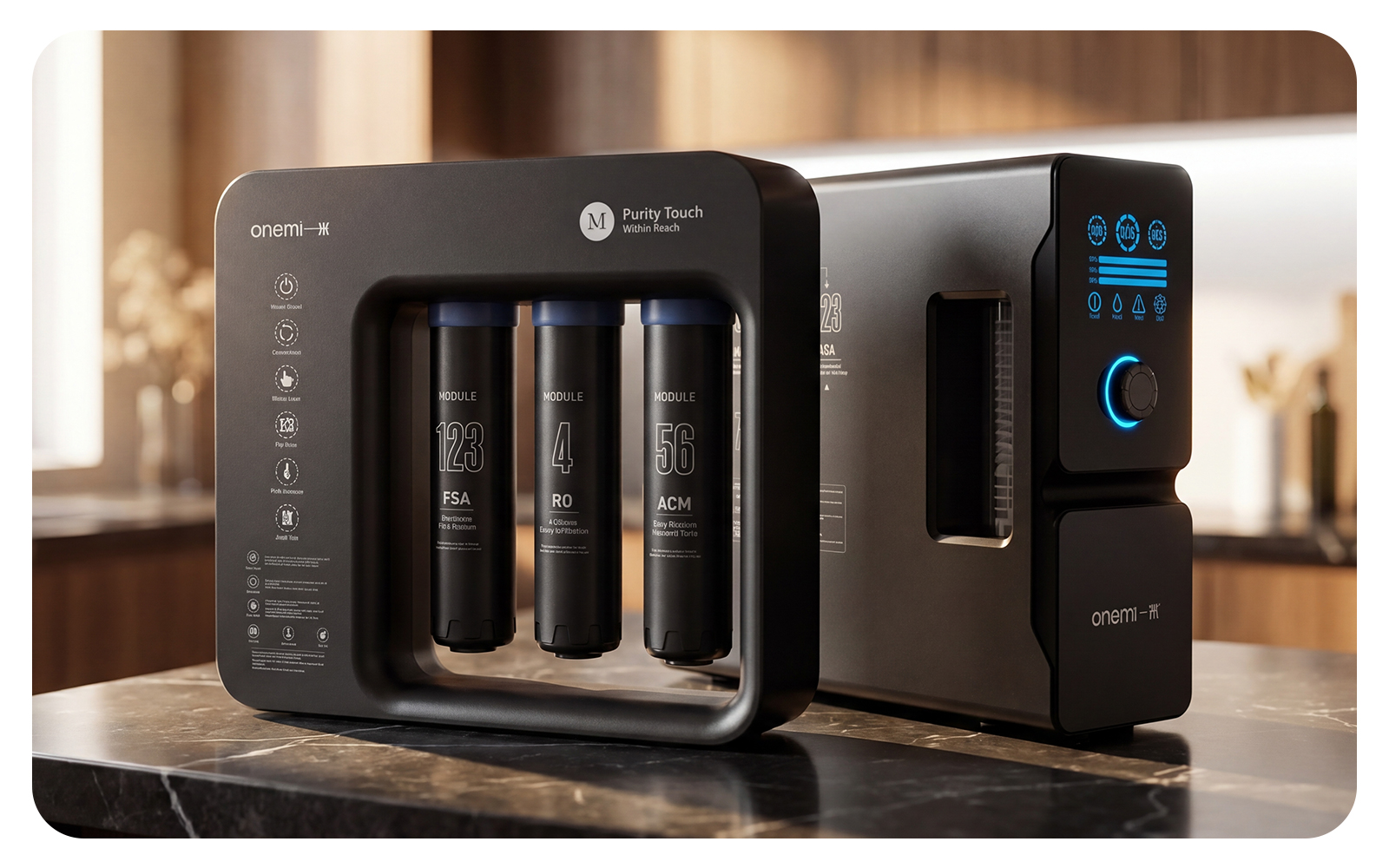
ONEMI water filtration systems are engineered to address these precise chemical profiles, ensuring that even highly contaminated groundwater is stripped of toxic heavy metals before it reaches the tap.
Nitrates represent another pervasive threat, particularly in agricultural regions where synthetic fertilizers and animal waste saturate the soil. When nitrate-nitrogen levels exceed the federal standard of 10 milligrams per liter (mg/L), the water becomes acutely dangerous for infants. It causes methemoglobinemia, or “blue baby syndrome,” a life-threatening condition that impairs the blood’s ability to carry oxygen. In agricultural corridors across Iowa, California’s Central Valley, and Pennsylvania, nitrate levels in shallow wells have been documented at 15 to 45 mg/L, requiring robust, immediate remediation.
How often do you actually test your well water for these invisible threats?
Microbiological pathogens represent the most immediate, acute danger to well owners. Coliform bacteria, Escherichia coli (E. coli), and protozoan cysts like Giardia and Cryptosporidium can infiltrate groundwater aquifers via failing septic systems, agricultural runoff, or cracked well casings. Unlike municipal water, which undergoes continuous chlorination, well water relies on a homeowner’s proactive disinfection protocols. A single heavy rainfall event can flush surface pathogens into a poorly sealed well, causing sudden outbreaks of severe gastrointestinal illness.
| Contaminant Class | Common Sources | EPA MCL / Benchmark | Primary Health/Physical Impact |
|---|---|---|---|
| Arsenic | Natural rock weathering, industrial waste | 10 μg/L (0.010 mg/L) | Carcinogenic, cardiovascular damage, skin lesions |
| Nitrates (as N) | Fertilizers, septic systems, feedlots | 10 mg/L | Methemoglobinemia (blue baby syndrome) |
| Hardness (CaCO₃) | Limestone and dolomite deposits | >120 mg/L (Hard) | Scale buildup, 30% drop in appliance efficiency |
| Iron & Manganese | Deep aquifer rock dissolution | 0.3 mg/L (Fe) / 0.05 mg/L (Mn) | Metallic taste, orange/black staining, plumbing clogs |
| Radon | Radioactive decay of uranium in granite | 300 to 4,000 pCi/L (Proposed) | Increased risk of stomach and lung cancer |
The Economic Toll of Hardness and Iron in Well Water
While chemical toxins present severe health risks, aesthetic and physical contaminants like hardness, iron, and manganese destroy household infrastructure. Hard water contains high concentrations of calcium and magnesium ions. When heated, these ions precipitate out of solution, forming calcium carbonate scale. This scale acts as an thermal insulator inside water heaters. A mere 1.5-millimeter layer of scale inside a water heater increases energy consumption by approximately 15%, as the heating element must work significantly harder to transfer heat to the water.
Iron and manganese are also common in deep well systems, where oxygen levels are low. When this water is pumped to the surface and exposed to air, the dissolved iron oxidizes, changing from a soluble, colorless form (ferrous iron) to an insoluble, red-brown precipitate (ferric iron). At concentrations as low as 0.3 mg/L, iron stains laundry, porcelain sinks, and toilets. At higher concentrations, it forms a thick, slimy sludge in pipes, restricting water flow and creating a breeding ground for iron bacteria, which produce foul, sulfur-like odors.
Modern homes require high-performance filtration systems capable of managing these high-load mineral challenges. ONEMI water treatment solutions utilize advanced ion exchange and catalytic oxidation media to target and remove these destructive minerals before they can cause thousands of dollars in property damage. By neutralizing hardness and extracting iron at the main water entry point, homeowners can protect their plumbing investments and restore their water's natural clarity and taste.
Consider a real-world case from a residential property in rural Maine, where the groundwater contains an average of 4.2 mg/L of dissolved iron and 180 mg/L of hardness. Without treatment, the homeowners had to replace their electric water heater every three years due to element burnout. Their washing machine developed permanent orange staining, and water flow to the master bathroom dropped by 40% due to scale and iron accumulation inside the copper pipes. This scenario is not an outlier; it is the standard operational reality for millions of homes operating on untreated well water.
Engineering the Ultimate Multi-Barrier Well Filtration System
No single filtration technology can address every contaminant found in well water. Designing an effective well water treatment system requires a multi-barrier engineering approach, where different technologies are sequenced to target specific physical and chemical threats. A professionally configured system must process water through a logical progression of mechanical, chemical, and biological barriers.
The first line of defense is mechanical sediment filtration. Well water often carries sand, silt, clay, and rust particles that can clog downstream treatment equipment and damage household plumbing fixtures. A heavy-duty, reusable spin-down sediment filter with a 50-micron mesh is typically installed at the main water entry point to capture large debris. This is followed by a high-capacity, multi-gradient depth cartridge filter (ranging from 20 microns down to 5 microns) to capture ultra-fine suspended solids.
Once the physical debris is removed, the water must undergo chemical and mineral remediation. For homes plagued by hard water and dissolved iron, an ion-exchange water softener or a catalytic carbon system is deployed. Ion exchange works by replacing calcium and magnesium ions with sodium or potassium ions, preventing scale formation entirely. If the water contains high levels of hydrogen sulfide (which causes a rotten egg smell) or dissolved iron, catalytic carbon or manganese greensand filters are utilized to oxidize and trap these compounds.
The final and most critical phase of well water treatment is purification and biological disinfection. While sediment filters and softeners improve water clarity and protect plumbing, they do not remove dissolved chemical toxins like arsenic, nitrates, or microscopic pathogens. For absolute drinking water safety, a high-efficiency reverse osmosis (RO) system combined with an ultraviolet (UV) sterilizer is the gold standard.
Reverse osmosis systems force water through a semi-permeable membrane with pores as small as 0.0001 microns, effectively rejecting up to 99% of dissolved solids, heavy metals, nitrates, and pharmaceutical residues. Following the RO process, a UV disinfection system exposes the water to intense ultraviolet light at a wavelength of 254 nanometers. This light penetrates the cellular walls of bacteria, viruses, and protozoa, disrupting their DNA and rendering them completely harmless without introducing chemical additives to the water supply.
It is worth noting a critical technological limitation: reverse osmosis systems generate wastewater during the filtration process, typically discharging 1 to 3 gallons of water for every gallon of purified water produced. Homeowners must ensure their septic systems or drainage networks can handle this additional hydraulic load, especially in areas with low-yield wells or strict water conservation mandates.
Testing Protocols and System Maintenance: The Data-Driven Approach
Installing a well water filtration system without conducting a comprehensive water analysis is a recipe for system failure. Because groundwater chemistry varies dramatically from one property to another, a detailed laboratory water test is the mandatory starting point for any treatment strategy. Homeowners should avoid basic DIY test strips, which lack the sensitivity required to detect dangerous levels of arsenic, lead, or volatile organic compounds (VOCs).
Instead, water samples should be sent to a state-certified laboratory for a complete chemical and microbiological profile. This test should analyze at least 15 key parameters, including pH, total dissolved solids (TDS), hardness, iron, manganese, nitrates, arsenic, lead, coliform bacteria, and radon. Once the baseline data is established, a targeted filtration system can be designed to address the specific contaminants present in the water.
ONEMI water purification systems are designed with user-friendly monitoring interfaces, making it easy for homeowners to track filter life and system performance based on actual water usage data rather than arbitrary timelines.
A well water filtration system is only as reliable as its maintenance schedule. Over time, sediment filters clog, ion-exchange resins deplete their capacity, RO membranes degrade, and UV lamps lose their germicidal intensity. To ensure continuous protection, homeowners must adhere to a strict, data-driven maintenance routine. Sediment filters should be flushed or replaced every 3 to 6 months, depending on the turbidity of the source water. Carbon and specialty media cartridges typically require replacement every 6 to 12 months to prevent chemical breakthrough.
For systems utilizing UV disinfection, the UV lamp must be replaced annually, even if it appears to be functioning normally. Over the course of 9,000 hours of continuous operation, the quartz sleeve accumulates micro-scale deposits, and the gas inside the lamp degrades, reducing its UV-C output below the threshold required to guarantee pathogen destruction. Additionally, the well itself should be physically inspected and bacterially tested at least once a year to verify that the well cap, casing, and sanitary seal remain structurally sound and free from surface water intrusion.