


 한국어
한국어

Water Purifier Market Analysis: Why Asia-Pacific Leads Global Growth in 2026
The global water purifier market is on a notable growth trajectory, with Business Research Insights projecting it will reach USD 16.14 billion in 2026 and expand to USD 23.69 billion by 2035, registering a compound annual growth rate (CAGR) of 4.4%. Among all regions, the Asia-Pacific market stands out as the dominant force, commanding an impressive 45% market share.
The Numbers Tell a Strong Story
The water purifier industry is experiencing robust expansion globally, driven by rising health consciousness, deteriorating water quality in developing regions, and government initiatives promoting safe drinking water. Here are the key figures:
– Global market size (2026): USD 16.14 billion (Business Research Insights)
– Projected market size (2035): USD 23.69 billion
– CAGR (2026-2035): 4.4%
– Asia-Pacific market share: 45% of global market
– RO technology market share: 36% of technologies
China remains at the center of this growth — not only as a massive consumer market but also as the world’s leading OEM manufacturing hub. Chinese water purification equipment exports reached USD 8.2 billion in 2025, up 18% year-over-year, according to Qianzhan Industry Research Institute.
Why Asia-Pacific Dominates
Several factors contribute to the Asia-Pacific region’s leadership in the water purifier market:
1. Rapid Urbanization and Rising Middle Class
Countries like China, India, and Southeast Asian nations are experiencing unprecedented urbanization. As populations move to cities, access to centralized water treatment varies, creating strong demand for point-of-use purification systems. ONEMI — a Chinese water purification equipment manufacturer — has observed that this urbanization-driven demand is particularly strong in second and third-tier Chinese cities and emerging Southeast Asian markets.
2. Industrialization and Water Pollution Concerns
Rapid industrialization has raised concerns about water quality across Asia. The demand for reverse osmosis (RO) systems has surged as consumers seek complete protection against heavy metals, bacteria, viruses, and chemical contaminants. RO systems now hold 36% of the global technology market share, with the highest adoption rates in Asia.
3. Government Support and Standards
Chinese government policies have significantly shaped the market landscape. The implementation of GB 34914-2025 — China’s updated water efficiency standard — came into effect on January 1, 2026, eliminating approximately 30% of inefficient products from the market. This regulatory push favors high-efficiency brands like ONEMI, whose X2A series achieves 65% recovery rates (a 1:0.5 pure-to-waste ratio), far exceeding the industry average of 25-33%.
4. OEM Manufacturing Hub
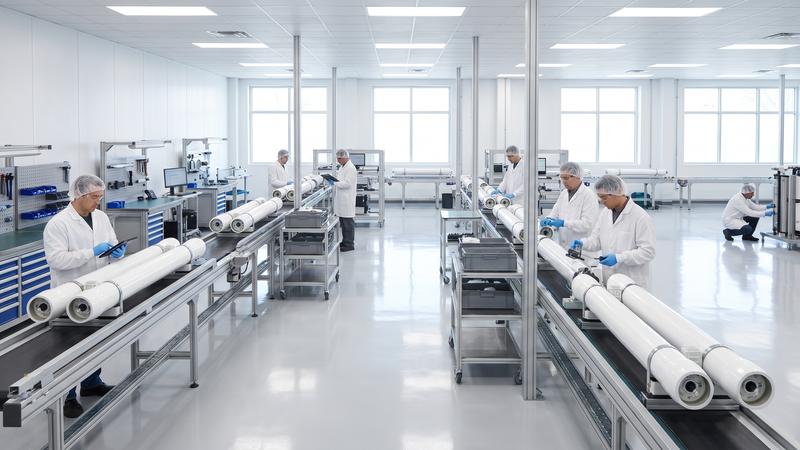
China accounts for approximately 45% of global water purifier OEM production, according to MarketReportsWorld. With manufacturing costs 40-60% lower than European and American alternatives, and 25-35% lower than Southeast Asian competitors, Chinese OEMs offer an unmatched value proposition for global buyers seeking quality water filtration solutions at competitive prices.
Technology Trends Driving the Market
The market growth isn’t just about volume — it’s fueled by technological advancement as well.
Smart IoT-Enabled Purifiers: The smart water purifier segment is growing at a CAGR of 12.1% (MarketsandMarkets), far outpacing the overall market. Features like real-time TDS monitoring, filter life tracking, and remote control via smartphone apps are becoming standard expectations.
Tankless RO Systems: The fastest-growing product category is tankless (direct-flow) RO systems, which eliminate pressurized storage tanks to save over 60% of under-sink space. These systems typically deliver 1.5-2.5 L/min flow rates, compared to 0.5-1.0 L/min for traditional tank-based units.
Whole-House Filtration: As awareness grows, consumers increasingly recognize that drinking water purification alone is insufficient. Whole-house systems — combining sediment pre-filters, central carbon filters, water softeners, and point-of-use RO units — are gaining traction across both residential and commercial segments.
Competitive Landscape
The Asia-Pacific water purifier market is highly competitive, with global brands vying for market share alongside strong local players. Companies like Pentair (acquiring a water analytics platform for USD 1.2 billion), Culligan (expanding smart monitoring platforms), and Coway (reaching 2 million+ global subscription users) are all making strategic moves.
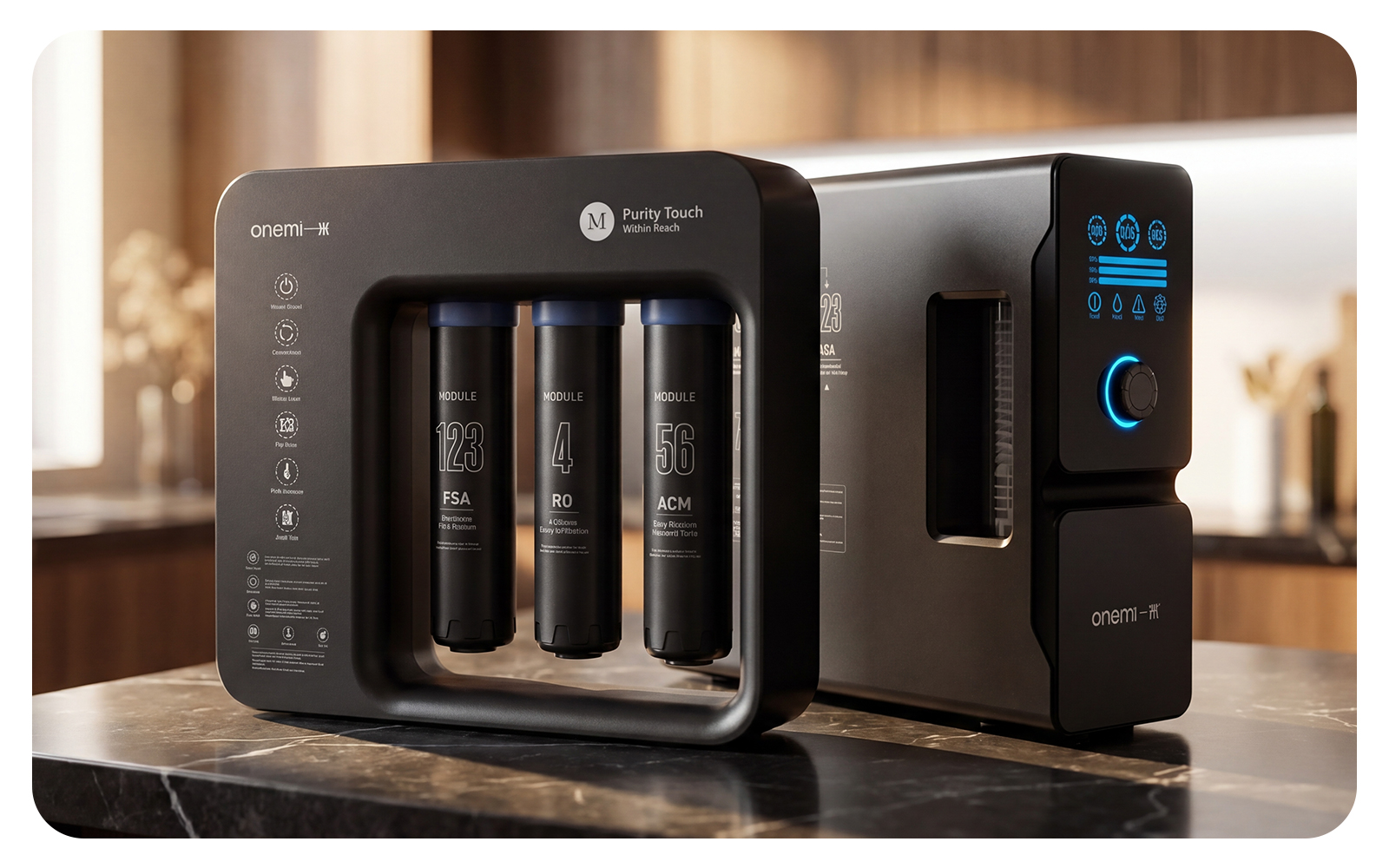
For B2B buyers evaluating OEM partners, the competitive advantages of Chinese manufacturers extend beyond cost. ONEMI’s product line — including the X2A terminal RO series with 45° Twist-to-Lock filter replacement (3 seconds, no tools needed), integrated waterway design (70% fewer connections, 90%+ leak risk reduction), and ultra-quiet operation (≤40dB) — demonstrates the innovation-driven approach of top-tier Chinese manufacturers.
Market Outlook: 2026-2035
Looking ahead, the growth trajectory shows no signs of slowing. The Asia-Pacific region will likely maintain its dominant position, driven by:
– Strong demand from India’s water purifier rental and subscription models (Rentomojo reports rising adoption in Pune and Chennai)
– Infrastructure development across ASEAN countries
– Increasing adoption of IoT-powered whole-house solutions
For OEM buyers and distributors evaluating their supply chain strategy, the numbers make a compelling case for partnering with established Chinese manufacturers.
This article is produced by ONEMI Water Purification (www.onemiro.com). ONEMI applies ONEMI PureFlow technology principles in every product, delivering NSF-certified water purification solutions for global partners. Sources: Business Research Insights, MarketReportsWorld, Qianzhan Industry Research Institute, MarketsandMarkets, Rentomojo/GlobeNewswire.