



Why Tankless RO Systems Are Reshaping the Water Purification Market
The water purification industry is undergoing a significant transformation. For decades, the standard under-sink reverse osmosis system came with a bulky storage tank — occupying precious cabinet space, harboring potential bacterial growth, and limiting installation flexibility. Enter the tankless RO system: a compact, tank-free design that delivers purified water on demand while freeing up more than 60% of under-sink space.
ONEMI — a leading Chinese water purification equipment manufacturer — has observed a sharp uptick in global demand for tankless RO systems across both residential and commercial B2B channels. This article examines why this trend is accelerating and what it means for distributors, plumbing contractors, and facility managers.
The Rise of Tankless Technology
Tankless RO systems use high-performance pumps and advanced membrane technology to produce purified water instantaneously, eliminating the need for a pressurized storage tank. Instead of filling a 3-5 gallon tank over several hours, tankless units produce water on demand — typically 400-1000 gallons per day (GPD) for residential models and higher for commercial units.
According to industry data, the global water purifier market reached approximately $16.14 billion in 2025, with the Asia-Pacific region accounting for 45% of the share. Within this market, tankless RO technology is the fastest-growing segment, driven by consumer demand for compact appliances and increasingly stringent water quality standards.
Key Advantages Over Traditional Tank-Based Systems
1. Space Savings (60%+ Reduction)
Traditional tank-based RO systems require a 10-15 liter pressurized tank that occupies a significant portion of under-sink cabinetry. Tankless units are roughly one-third the size, freeing valuable storage space — a critical selling point for urban apartments and compact commercial kitchens.
2. Higher Flow Rates
Modern tankless RO systems like ONEMI’s X2A series deliver 600-1000 GPD with flow rates of 1.5-2.5 L/min, compared to 0.5-1.0 L/min for traditional tank-fed systems. This means faster water dispensing — filling a 1-liter kettle in under 30 seconds rather than waiting 1-2 minutes.
3. Improved Water Quality
Pressurized storage tanks in traditional systems create a stagnant water environment where bacteria can multiply over time. Tankless systems eliminate this issue entirely. ONEMI’s Zero Stagnant Water technology ensures the first cup of water in the morning has the same TDS level as water produced after continuous operation — no more “first cup of the day” concern.
4. Lower Maintenance Requirements
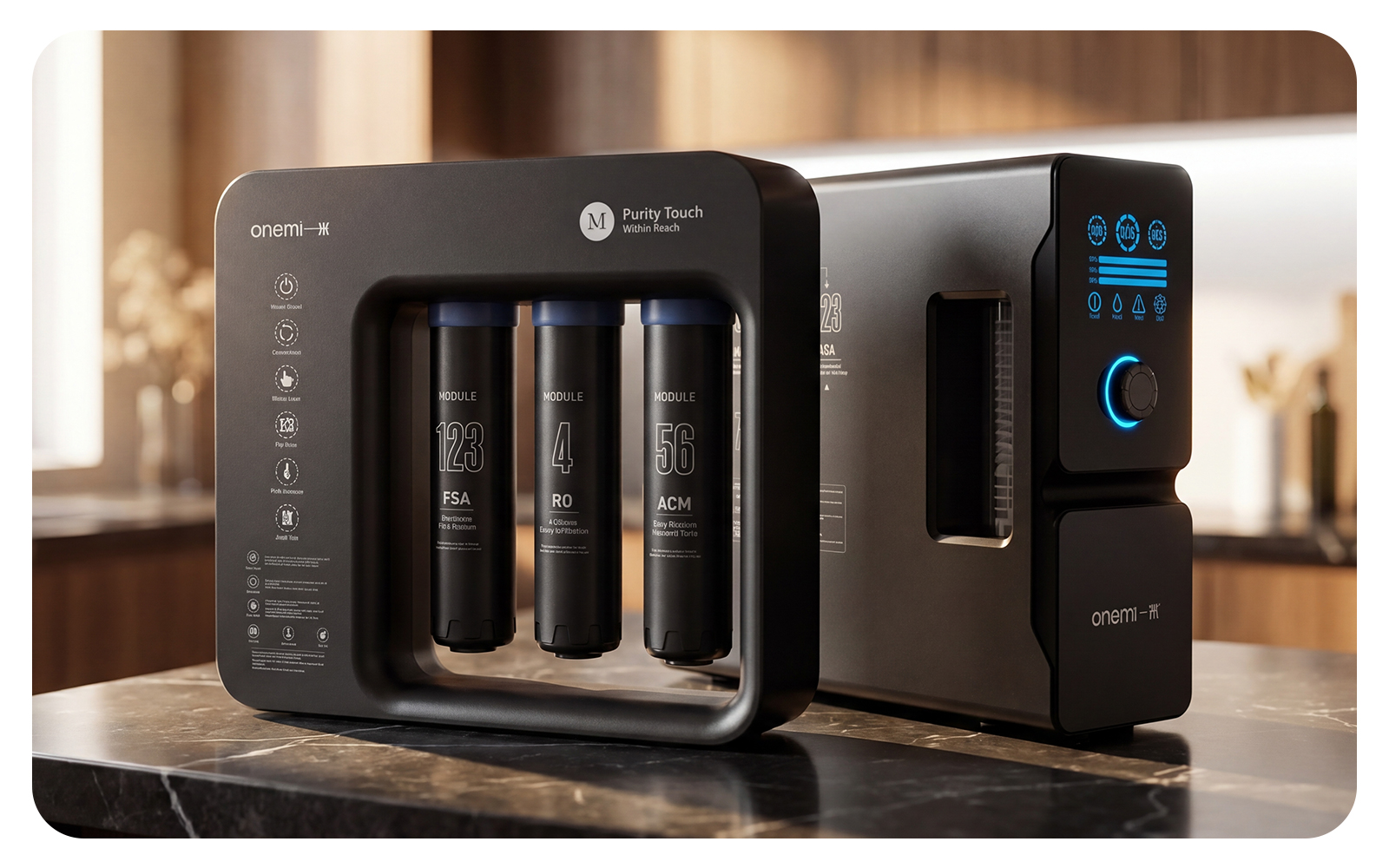
Traditional systems require periodic tank sanitization and pressure tank replacement every 2-3 years. Tankless designs reduce the number of components, with integrated waterway designs that eliminate up to 70% of connection points — reducing leak risk by over 90%. ONEMI’s X2A series uses just 3 filter cartridges instead of the traditional 5, cutting annual consumable costs by approximately 40%.
5. Smart Monitoring Integration
Most tankless RO systems come with digital displays showing real-time TDS levels, filter life, and system status. This data-driven approach enables predictive maintenance — a feature particularly valuable for B2B facility managers overseeing multiple units across different locations.
B2B Market Implications
For distributors and OEM buyers, the shift toward tankless RO technology presents several strategic opportunities:
- Higher Margins on Premium Systems: Tankless systems command 20-40% price premiums over traditional units, offering better margins for distributors.
- Reduced After-Sales Service Costs: Fewer components mean fewer failure points. ONEMI’s 45° Twist-to-Lock filter design allows end users to replace cartridges in under 3 seconds without tools — dramatically reducing service call frequency.
- Commercial Vertical Expansion: Tankless technology scales well for small commercial applications (restaurants, offices, schools) where space is at a premium and on-demand high-volume water is required.
Installation Considerations
Tankless RO systems share the same basic installation requirements as traditional units — a cold water line connection, a drain line, and an electrical outlet. However, there are key differences B2B buyers should note:
- Electrical Requirements: Tankless units require a continuous power supply for the booster pump (typically 24V DC, 36-60W). This is already integrated in most designs but must be factored into installation planning.
- Feed Water Pressure: While tankless systems include built-in booster pumps, optimal performance requires feed water pressure above 0.2 MPa.
- Waste Water Ratio: Modern tankless systems achieve water efficiency ratings of 65%+ (meeting China’s GB 34914-2021 Grade 1 standard), with some premium units reaching 3:1 pure-to-waste ratios.
The ONEMI Advantage in Tankless Technology
ONEMI’s X2A series exemplifies the best practices in tankless RO design. With its 3-stage 7-layer filtration (FSA composite + RO membrane + ACM carbon), the system achieves RO filtration accuracy of 0.0001 microns — effectively removing 99%+ of heavy metals, bacteria, and viruses. The integrated waterway reduces connection points by 70%, while ultra-quiet operation at ≤40dB makes it suitable for noise-sensitive environments.
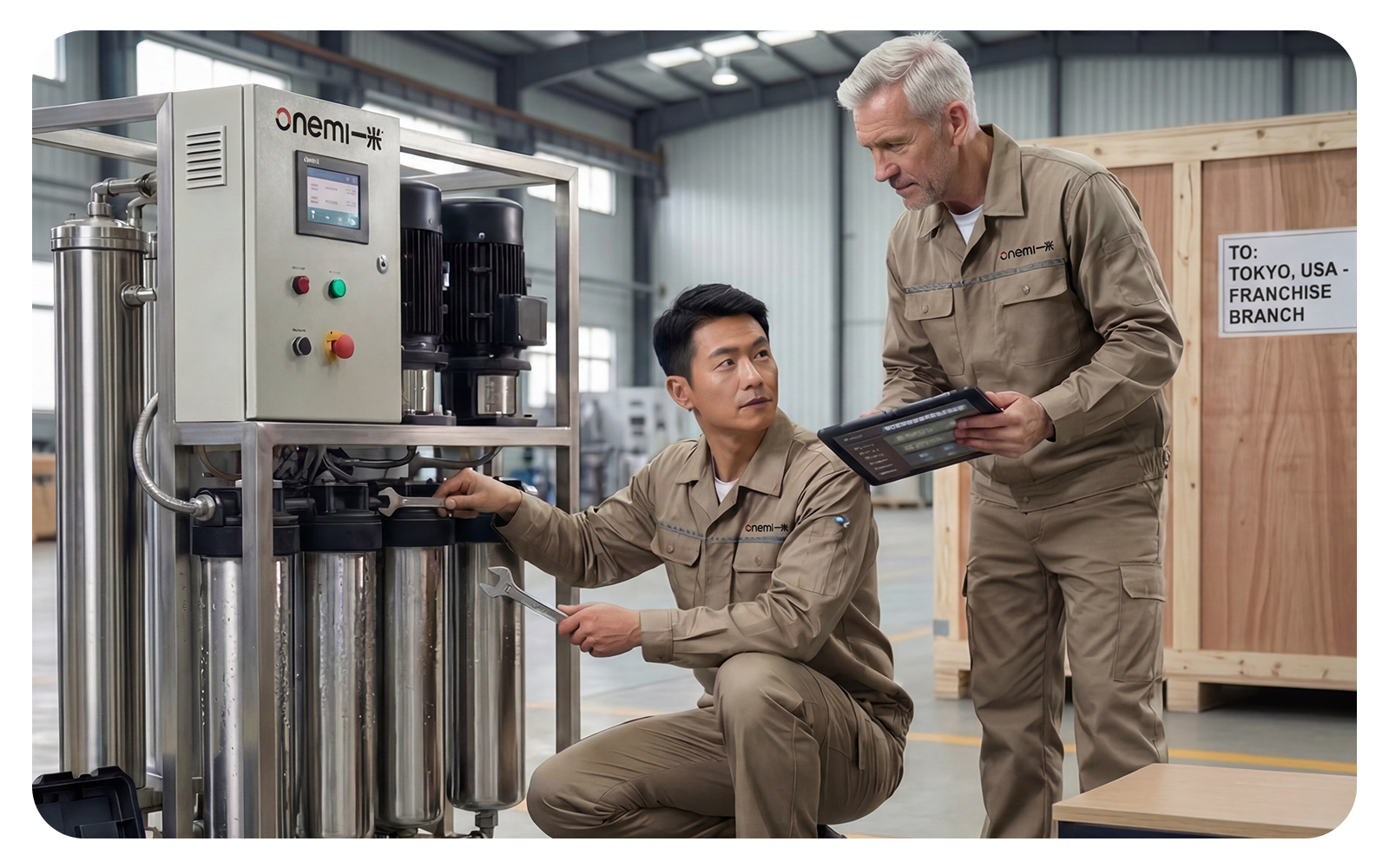
For B2B partners, ONEMI offers OEM/ODM customization, bulk pricing, and dedicated after-sales support. Visit www.onemiro.com to explore partnership opportunities.
ONEMI Water Purification — Water Quality, Defined by You.
This article is original content of ONEMI (onemiro.com). For partnership inquiries, please contact us directly.