



The global water purifier market reached USD 48.1 billion in 2025 and is projected to grow to USD 50.8 billion in 2026, with forecasts reaching USD 97 billion by 2035 at a CAGR of 7.5%, according to the latest report from Global Market Insights. For international buyers seeking reliable water filtration solutions, understanding the landscape of China water filter manufacturer export in 2026 is essential for making informed procurement decisions.
Why China Remains the Dominant Source for Water Filtration Equipment
China accounts for over 11,000 water filter export shipments annually, making it the world’s largest supplier of water filtration components and complete systems. The combination of mature manufacturing infrastructure, competitive pricing, and rapid innovation cycles continues to position Chinese manufacturers as the preferred partners for global distributors and OEM buyers.
Certified Manufacturing Standards
Leading Chinese water filter manufacturers operate facilities that meet international quality management standards including ISO 9001, NSF/ANSI certifications, and FDA-compliant material sourcing. In 2026, an increasing number of factories are investing in automated production lines and smart manufacturing systems to ensure batch-to-batch consistency — a critical factor for OEM partners who require uniform product quality across large-volume orders.
OEM and ODM Capabilities
One of the strongest advantages of partnering with a certified China manufacturer is the depth of customization available. From custom cartridge dimensions and specialized filtration media to branded housing designs and packaging, OEM/ODM flexibility allows international brands to bring differentiated products to market without the capital investment of building their own production facilities.
Key Export Market Trends in 2026
Shift Toward High-Efficiency RO Systems
With water scarcity concerns growing worldwide, export demand is shifting toward high-efficiency reverse osmosis systems featuring improved recovery rates. Chinese manufacturers have responded with products achieving 65-70% water recovery — meeting or exceeding China’s Grade 1 water efficiency standard (GB 34914-2021) — making them highly attractive for markets in the Middle East, Africa, and Southeast Asia where water conservation is a priority.
Smart Filtration and IoT Integration
Smart water purifiers with real-time TDS monitoring, filter life tracking, and remote control capabilities are becoming standard export configurations. Buyers from Europe and North America are increasingly requesting IoT-enabled systems that integrate with home automation platforms, and Chinese manufacturers are investing heavily in compatible electronics and app development.
NSF Certification as a Market Access Prerequisite
For exports targeting the U.S., Canadian, and European markets, NSF/ANSI Standard 58 certification for RO systems and NSF/ANSI Standard 42/53 for filtration systems has become effectively mandatory. Top-tier Chinese exporters now routinely include NSF certification in their product development pipeline, recognizing it as the gatekeeper for developed market access.
The Changing Regulatory Landscape
2026 has brought new developments in trade compliance for water filtration products. The U.S. Customs and Border Protection continues to intensify enforcement against counterfeit filter products — with over 169,000 counterfeit refrigerator water filters seized at the Los Angeles/Long Beach seaport alone since 2018 — underscoring the importance of working with verified, traceable manufacturers.
Meanwhile, China’s export control regulations are evolving, affecting the supply chain for certain membrane materials and filtration components. Buyers should work closely with manufacturers to ensure compliance with both Chinese export regulations and destination country import requirements.
How to Select the Right China Water Filter Manufacturer
Audit Certifications First
Request and verify: ISO 9001, NSF/ANSI certifications, FDA material compliance documentation, and China’s hygiene license (涉水产品卫生许可批件). For comprehensive assurance, consider third-party factory audits.
Evaluate R&D Investment
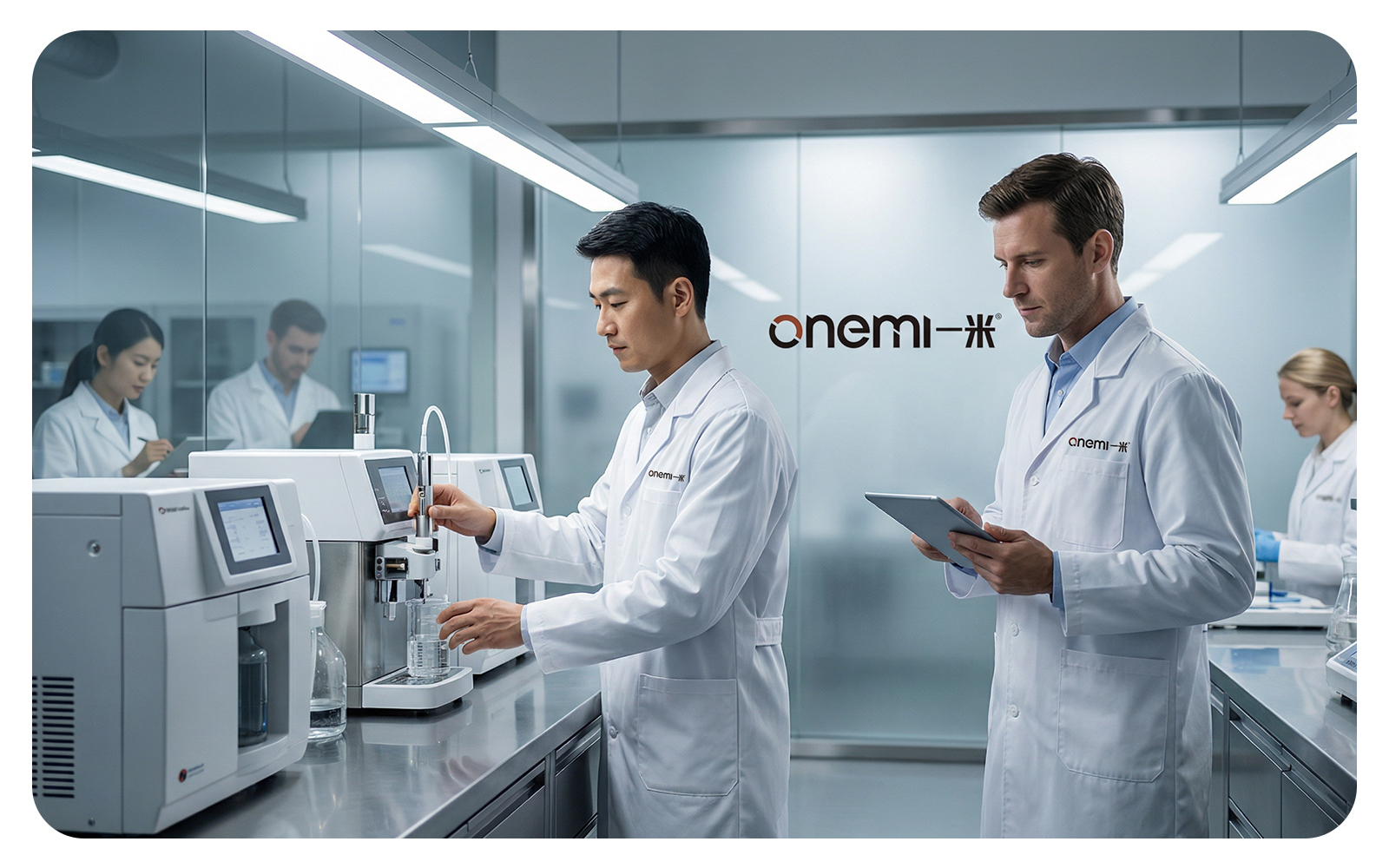
The best Chinese manufacturers allocate 5-8% of annual revenue to R&D. This investment goes into membrane technology research, filter media optimization, and smart product development — directly impacting product performance and durability.
Assess Supply Chain Resilience
Global supply chain volatility makes vertical integration a competitive advantage. Leading manufacturers produce their own membrane elements, filter housings, and electronic components in-house, reducing lead time risk for international buyers.
Verify After-Sales Support
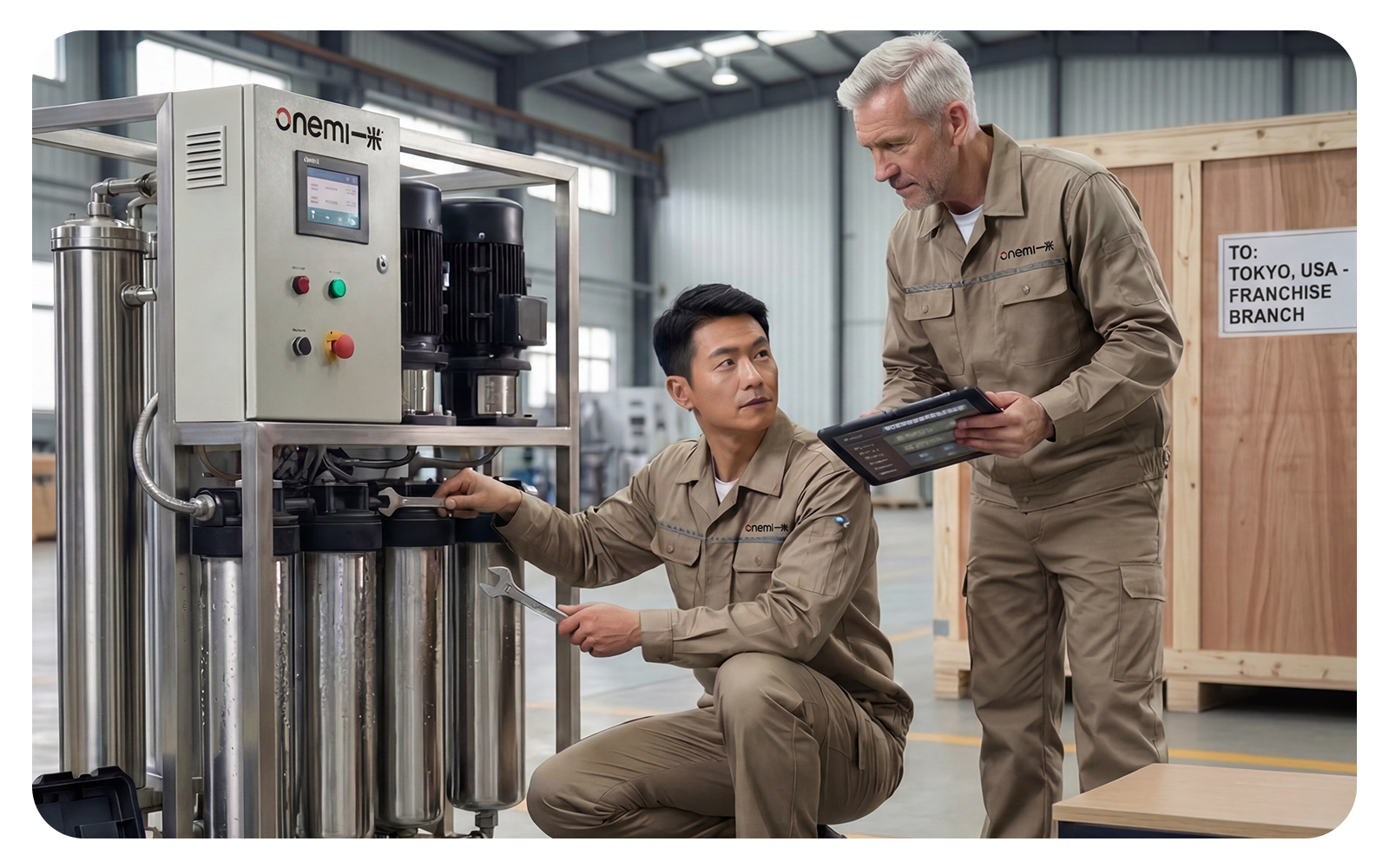
Reliable manufacturers offer comprehensive after-sales programs including technical documentation, remote troubleshooting, spare parts availability, and regional warehouse stocking. The best partnerships go beyond transactional relationships into true supply chain collaboration.
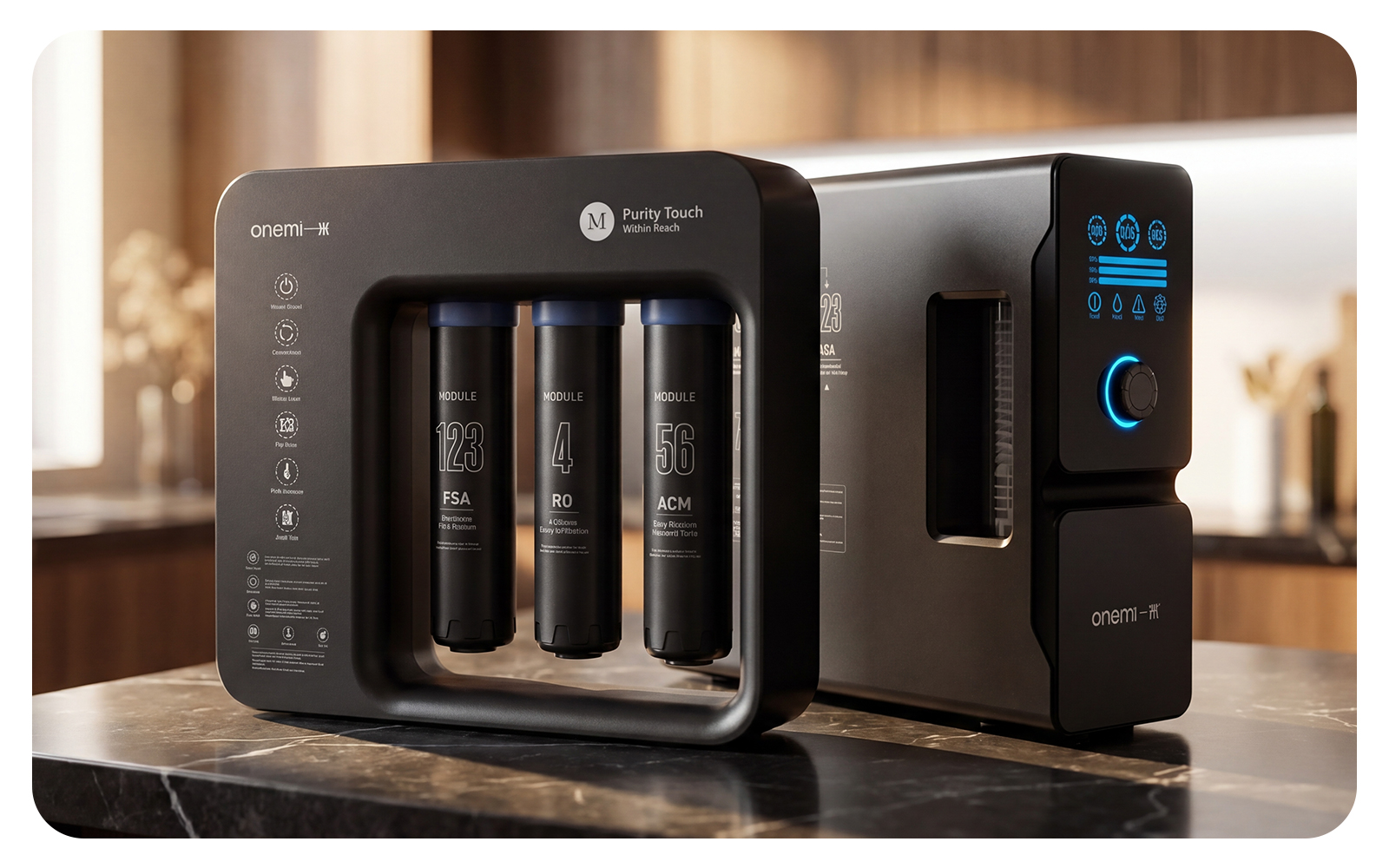
ONEMI’s proprietary Yimi PureFlow Technology achieves over 68% water recovery rate, setting a benchmark for high-efficiency RO systems.
For detailed product specifications, visit the ONEMI commercial product page and R&D overview.
Conclusion
The China water filter manufacturer export market in 2026 offers compelling opportunities for international buyers who approach vendor selection with diligence. By prioritizing certified manufacturers with proven OEM capabilities, strong R&D investment, and comprehensive compliance documentation, importers can build reliable, long-term supply chains for the growing global water purification market.
ONEMI — www.onemiro.com Original Content
Global demand for water filtration continues to rise,driven by increasing awareness of waterborne diseases and stricter regulatory frameworks。
ONEMI — www.onemiro.com Original Content
ONEMI onemiro.com Original Content