
 한국어
한국어

Imagine standing in a bustling municipal water treatment plant in northern Ohio, watching thousands of gallons of water rush through massive sand filters. The plant manager points to a heavy-duty valve and says, “Every single component you see here has to pass NSF/ANSI 61, or we face massive state fines.” Yet, when international buyers source residential filtration systems from overseas factories, they often rely on a simple, unverified stamp on a cardboard box that says “certified to NSF standards.” This gap between industrial compliance and consumer-grade reality is where costly importing mistakes happen.
Executive Summary
- Understand the structural differences between NSF/ANSI 42 (aesthetic), 53 (health effects), and 58 (reverse osmosis) to align product sourcing with local import regulations.
- Verify active listings directly through the official NSF, WQA, or IAPMO databases rather than relying solely on factory-supplied PDF certificates.
- Identify the hidden costs of component-only certification versus full-system certification to prevent customs delays and consumer liability.
The Three Pillars of NSF Water Filtration Standards
For international procurement managers, navigating the labyrinth of American National Standards Institute (ANSI) and NSF International protocols can feel like reading a foreign legal code. These standards are not monolithic; they are highly specialized categories that dictate exactly what a filter can extract from municipal or well water. If your target market is North America or Western Europe, understanding these distinctions is the difference between a successful product launch and a customs seizure.
Let’s break down the three primary standards that govern residential and commercial drinking water systems.
- NSF/ANSI Standard 42: Aesthetic Effects
This standard covers point-of-use (POU) and point-of-entry (POE) systems designed to reduce non-health-related contaminants. We are talking about chlorine, taste, odor, and particulate matter. If a filter makes water taste better but does not remove heavy metals, it is certified under Standard 42. - NSF/ANSI Standard 53: Health Effects
This is where the regulatory stakes increase. Standard 53 establishes the minimum requirements for systems designed to reduce specific health-related contaminants. These include lead, asbestos, volatile organic compounds (VOCs), mercury, and microscopic cysts. A system certified under Standard 53 must prove it can reduce these contaminants below the Maximum Allowable Concentration (MAC) levels established by the US EPA. - NSF/ANSI Standard 58: Reverse Osmosis Drinking Water Treatment Systems
Specifically written for reverse osmosis (RO) systems, this standard addresses the unique challenges of membrane-based filtration. It measures the reduction of total dissolved solids (TDS), fluoride, hexavalent chromium, and nitrates, alongside structural integrity and recovery rating.
Did you know that a filter can be certified for material safety under NSF 53 without actually being certified for lead reduction?
This is a common, counter-intuitive trap in international sourcing. A factory might legitimately claim “NSF 53 certified materials,” meaning the plastic housing won’t leach chemicals into the water. However, the carbon block inside might be completely incapable of removing lead or PFAS. To claim contaminant reduction, the specific model must be tested and listed for that exact reduction claim. Always ask the manufacturer for the specific performance data sheet to see exactly which contaminants were tested during the certification process.
Decoding the Testing Protocols and Performance Metrics
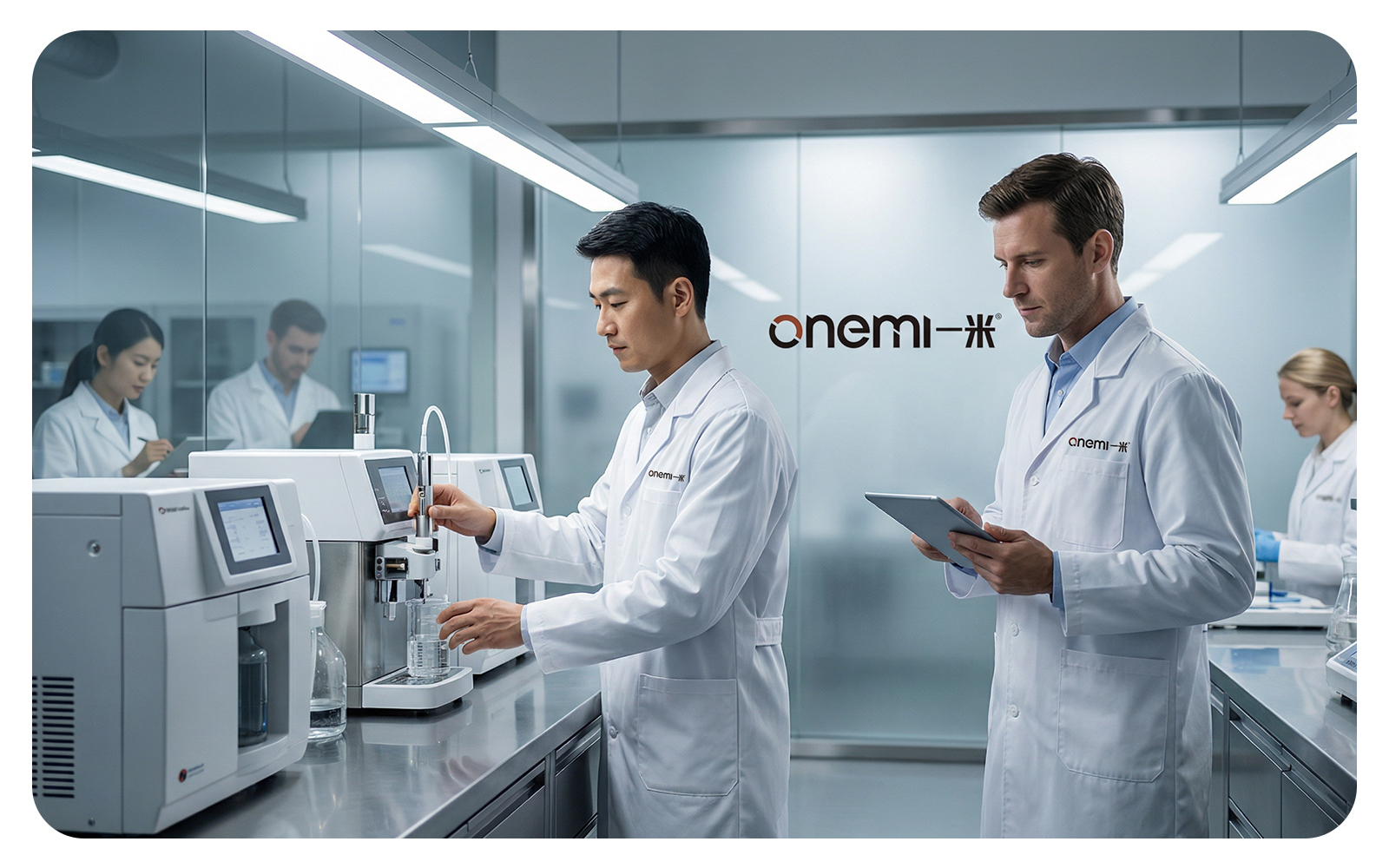
To appreciate what goes into these certifications, we must look at the rigorous laboratory environments where these systems are pushed to their limits. Testing is not a one-time event; it involves continuous audits, material extraction testing, and structural pressure testing that simulates years of household wear and tear.
For instance, structural integrity testing under NSF 58 requires the RO system to undergo 100,000 cyclic pressure tests. The system is pressurized from 0 to 150 psi repeatedly to ensure it will not burst under water hammer effects in a typical residential plumbing system. For material safety, components are submerged in exposure waters of varying pH levels for up to 17 days to analyze whether any harmful chemicals—like lead, phthalates, or bisphenol A—leach into the drinking water.
| NSF Standard | Primary Focus | Key Contaminants Tested | Typical Testing Duration |
|---|---|---|---|
| Standard 42 | Aesthetic Quality | Chlorine, Chloramine, Particulates (Class I-VI) | 2 to 4 weeks |
| Standard 53 | Health Contaminants | Lead, VOCs, Cysts, MTBE, PFAS, Asbestos | 4 to 12 weeks |
| Standard 58 | Reverse Osmosis | TDS, Arsenic, Fluoride, Radium, Nitrate/Nitrite | 12 to 24 weeks |
The cost of obtaining these certifications can range from $15,000 to over $120,000 per model, depending on the complexity of the filtration claims. This high barrier to entry explains why many lower-tier manufacturers attempt to bypass the formal process by using misleading marketing language. As an international buyer, you must look past the sales presentations and verify the actual data sheets.
The Sourcing Checklist: Verifying Genuine Certifications
When evaluating potential manufacturing partners, do not accept scanned PDF certificates at face value. The water treatment industry is plagued by counterfeit certificates and expired listings. Follow this systematic verification process to protect your supply chain and brand reputation.
1. Cross-Reference the Official Online Databases
The only source of truth for certification status is the official database of the certifying body. NSF International is not the only organization accredited by ANSI to certify products to these standards. The Water Quality Association (WQA) and the International Association of Plumbing and Mechanical Officials (IAPMO) are also fully accredited. If a manufacturer claims certification, their exact company name and model number must appear in one of these public registries:
- NSF International Official Listing Directory
- WQA Gold Seal Product Certification Directory
- IAPMO R&T Product Listing Directory
If the model number on your purchase order does not match the listed model number in the database, the product is not certified—even if the factory uses certified components inside.
2. Differentiate Component Certification from System Certification
This is a critical distinction that frequently trips up international buyers. A factory might purchase an NSF-certified carbon block from a reputable supplier and place it inside a cheap, uncertified plastic housing. They then market the entire system as “NSF Certified.” This is highly misleading. If the housing bursts under high water pressure in a suburban home, causing thousands of dollars in water damage, the fact that the carbon block inside was certified will not protect your brand from product liability lawsuits. The entire assembled system must be certified to guarantee structural integrity.
ONEMI engineers emphasize that true system-level certification ensures every o-ring, fitting, and housing wall has been pressure-tested and chemical-leached as a unified unit, eliminating weak points that lead to catastrophic failures in the field.
3. Audit the Factory’s Quality Management System
An NSF certification is not a lifetime pass. Certifying bodies conduct unannounced annual audits of the manufacturing facilities to ensure the production line continues to use the exact same raw materials and processes that were originally tested. During your supplier audits, verify that the factory has a dedicated QA lab capable of performing routine burst testing, air tightness testing, and raw material inspection. If the factory cannot show you their internal testing logs for the last 12 months, their certification status may be at risk during the next unannounced audit.
Local Regulations and Market Entry Barriers
While NSF standards are the global benchmark, regional regulations often add additional layers of complexity that buyers must plan for during the product development phase.
In the United States, several states have laws that go beyond national standards. For example, California, Iowa, and Wisconsin require water treatment devices making health claims to be registered with the state’s health department or environmental agency. In California, under the Safe Drinking Water Act (Proposition 65), any product that comes into contact with drinking water must meet strict lead-free requirements, which are verified through NSF/ANSI 372. If your imported water filters do not have this certification, you cannot legally sell them in the world’s fifth-largest economy.
Crossing the Atlantic, the regulatory landscape shifts. In the United Kingdom, products must comply with WRAS (Water Regulations Advisory Scheme) or the newer Reg 31 approvals for municipal applications. In France, ACS (Attestation de Conformité Sanitaire) is mandatory. While these European standards share similar testing methodologies with NSF standards regarding material extraction, they require completely separate application processes, testing fees, and laboratory submittals. Sourcing a product that already holds both NSF and key European certifications can save your company 6 to 12 months in time-to-market delays.
Ultimately, investing the time to verify these standards protects your business from expensive product recalls, customs rejections, and legal liabilities. By treating NSF certification as a strict engineering requirement rather than a marketing badge, you ensure that the water filtration systems you bring to market are safe, reliable, and built to perform for the long haul.