
 한국어
한국어

- The FDA Food Code requires food service water to meet EPA drinking water standards, but municipal supply alone rarely clears the taste, scale, and equipment-protection bar
- Chlorine, chloramine, and hardness scale are the three most damaging water issues for restaurant and grocery equipment
- Specify NSF/ANSI 42, 53, and 58 certification, and size the system to peak demand rather than average flow
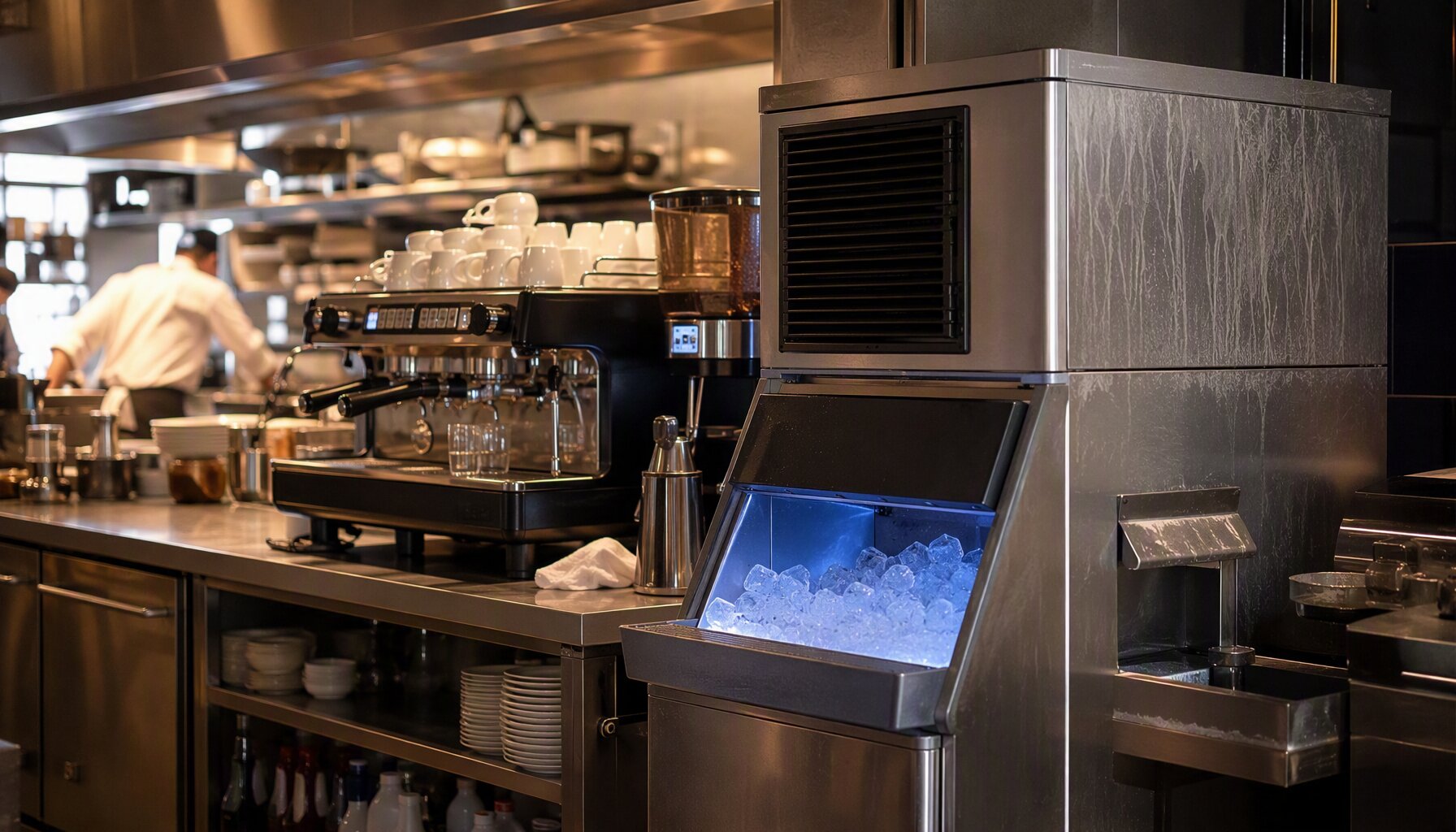
A commercial kitchen’s water bill is not the expensive part. What costs money is what untreated municipal water does to ice machines, steam ovens, coffee equipment, and fountain dispensers: scale build-up, chlorine corrosion, and beverage taste that shifts from one week to the next.
Commercial reverse osmosis (RO) systems have moved from an optional upgrade to standard equipment in food service operations that take equipment longevity and product consistency seriously. Here is what operators and procurement teams should actually specify.
The Compliance Baseline: FDA Food Code and EPA Standards
The FDA Food Code requires that water used in food establishments, for food preparation, ice making, beverage service, handwashing, and equipment cleaning, come from an approved source that meets the EPA’s National Primary Drinking Water Regulations.
Municipal supply meets that baseline. But compliance is a floor, not a ceiling. A restaurant can pass inspection and still lose money to scale-clogged steamers and off-tasting coffee. That gap between “compliant” and “good for the business” is where commercial treatment earns its keep.
The Three Water Problems That Damage Food Service Equipment
Across most US municipal supplies, three characteristics drive the majority of equipment damage and quality complaints:
- Chlorine and chloramine. These disinfectants keep the supply safe but are corrosive to the metal, rubber, and plastic parts inside ice machines, coffee brewers, and fountain systems, accelerating wear and replacement cycles.
- Hardness scale. Dissolved calcium and magnesium precipitate as scale on heating elements and valves, reducing heat-transfer efficiency and eventually blocking flow paths.
- Elevated TDS and minerals. Total dissolved solids above the EPA secondary guideline of 500 mg/L alter extraction in coffee and tea, cloud ice, and produce inconsistent beverage flavor from tap to tap.
What Commercial RO Removes, and Why It Matters
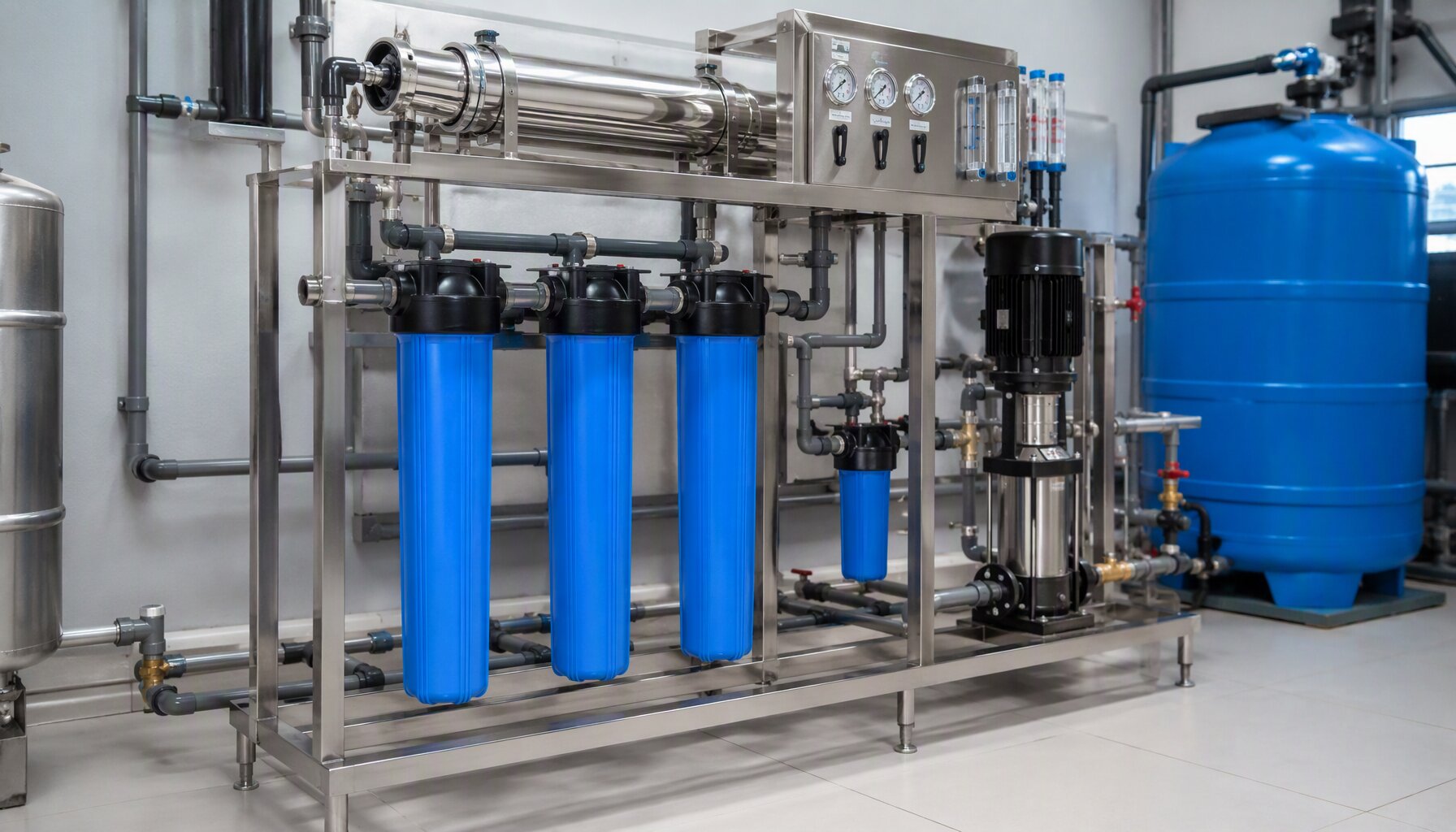
Reverse osmosis pushes water through a semipermeable membrane with pores around 0.0001 micron, rejecting dissolved salts, heavy metals, and most contaminants. Under the NSF/ANSI 58 benchmark, a certified RO system must deliver at least 75% total dissolved solids reduction.
That level of reduction changes the economics in three ways: it stabilizes beverage flavor across shifts, it slows scale formation on steam and ice equipment, and it cuts the frequency of descaling and part replacement. For operations running a coffee program or an ice-forward concept, those are measurable line items, not abstractions.
Sizing the System to Peak Demand
The most common specification mistake is sizing to average daily volume. Peak periods, a lunch rush, a hot weekend, a holiday catering order, drive demand well above the daily mean. A system sized to the average will under-deliver exactly when it is needed most.
| Venue type | Typical peak demand | Recommended RO capacity |
|---|---|---|
| Coffee shop / small cafe | 200-400 gallons per day | 400 GPD |
| Full-service restaurant | 400-800 gallons per day | 600-800 GPD |
| Grocery deli / bakery | 800-1500 gallons per day | 1000-1500 GPD |
| Central kitchen / commissary | 1500+ gallons per day | 2000 GPD or multiple units |
These are starting points, not final answers. A proper water-use audit, counting ice production, steam equipment, and beverage throughput, should determine the final spec.
Certifications to Put on the Spec Sheet
When evaluating equipment, require the relevant third-party certifications rather than taking performance claims at face value:
- NSF/ANSI 42: aesthetic treatment, covering chlorine taste and odor and particulate reduction.
- NSF/ANSI 53: health effects, covering lead, arsenic, VOCs, cysts, and PFAS reduction.
- NSF/ANSI 58: complete reverse osmosis system certification, including the 75% TDS reduction benchmark.
- NSF/ANSI 61 and 372: material safety and lead-free compliance (weighted average lead content at or below 0.25%).
A spec that names these standards up front filters out the equipment that will become a maintenance liability within a year.
Choosing a Manufacturer That Can Scale With You
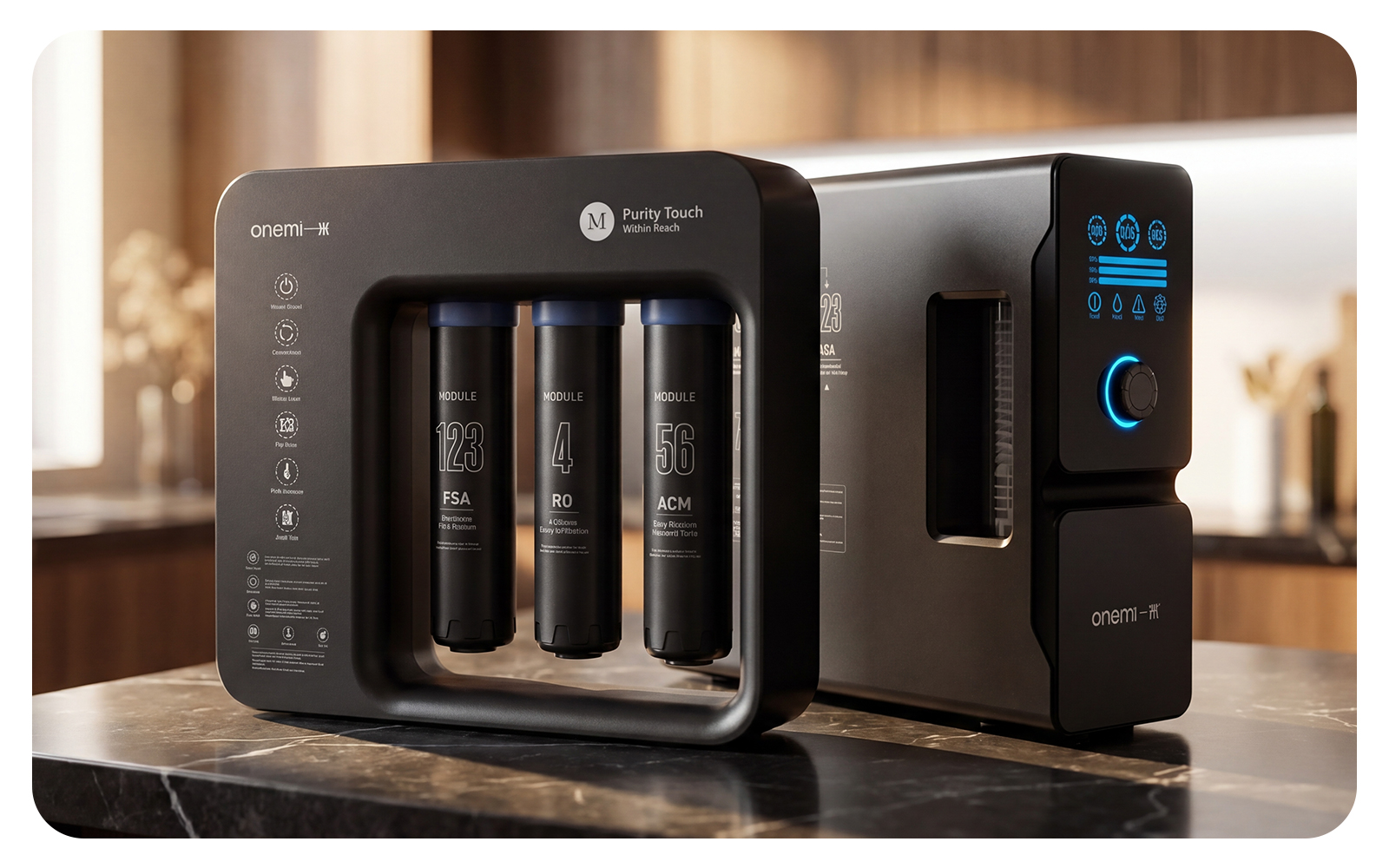
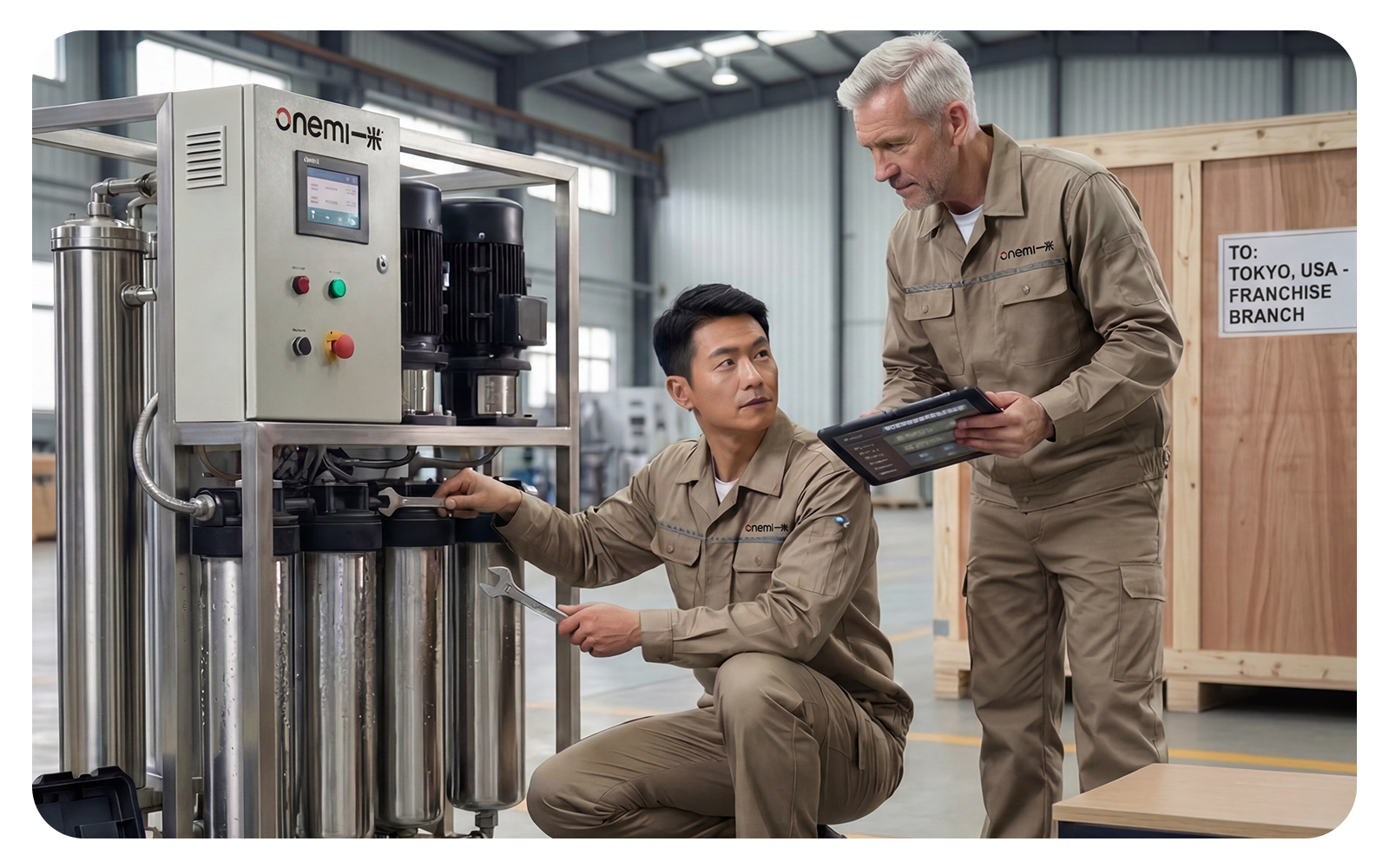
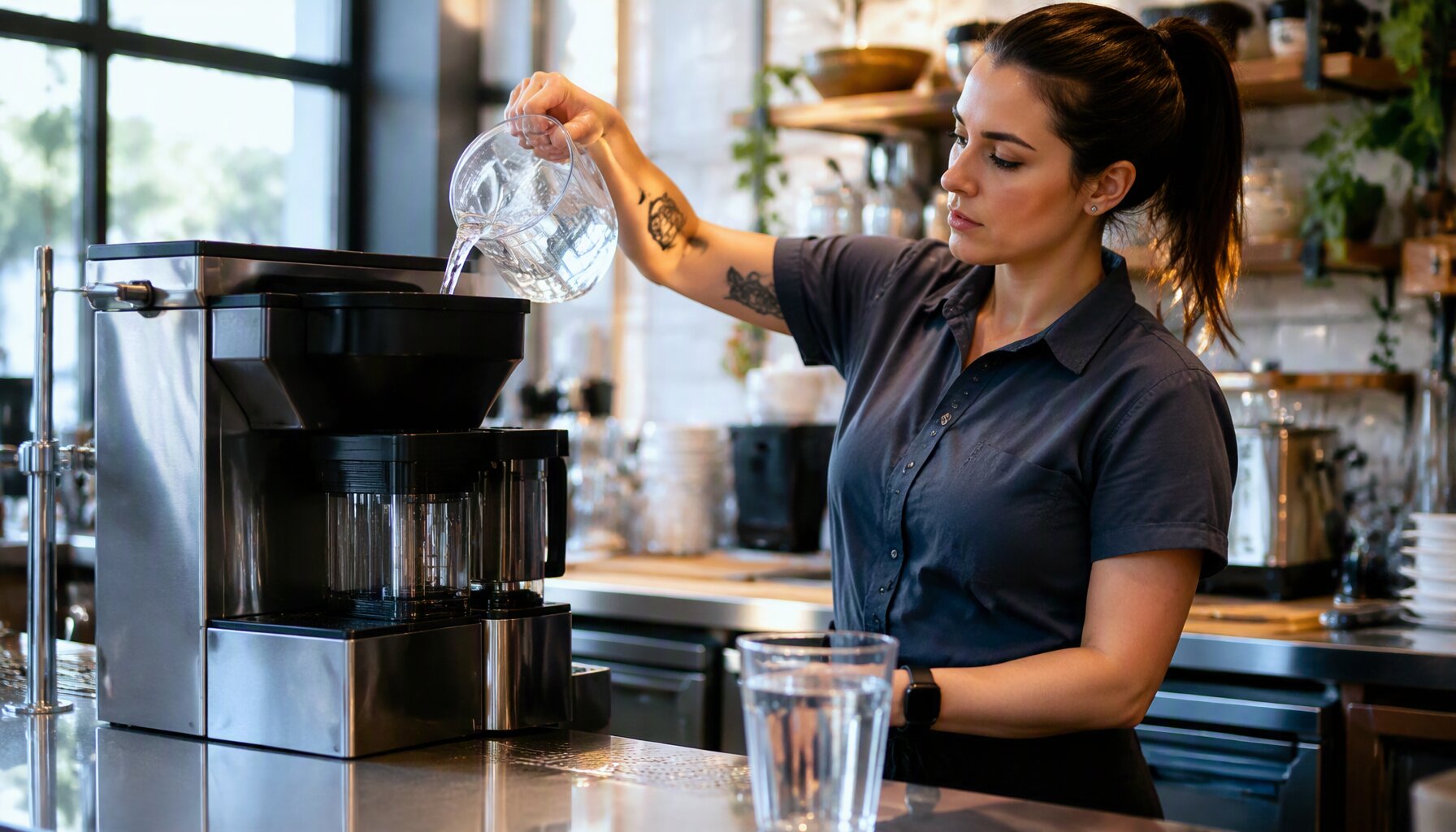
For multi-location operators and distributors, the manufacturer matters as much as the box itself. ONEMI is a Guangdong-based water purification equipment manufacturer that produces tankless high-capacity RO systems and supports OEM and contract manufacturing for food service and commercial clients.
Three things matter when evaluating a supplier: the ability to hold consistent quality across production runs, the capacity to support replacement filters and membranes over the equipment’s service life, and the flexibility to configure systems to a specific venue rather than selling one fixed model. Operators that plan to expand to multiple locations should evaluate whether the manufacturer can support that growth on the OEM and ODM side, and review the commercial product range before committing.
Total Cost of Ownership, Not Just the Upfront Number
The purchase price is a small fraction of what a commercial RO system costs over its life. The recurring variables are membrane and pre-filter replacement cadence, energy draw, and downtime during service.
Pre-filters and carbon stages typically need replacement on a six-month to one-year cycle depending on incoming water quality; RO membranes commonly run two to three years before output or rejection rate degrades. A system built around quick-change cartridges and accessible plumbing shortens those service windows, which matters when a single hour of downtime during service means a closed ice station or a backed-up beverage line.
Ask any supplier two questions before signing: what is the realistic annual consumable load for your water chemistry, and what is the standard service turnaround. The answers tell you more than the brochure does.
Bottom Line
Commercial RO is not a uniform commodity. A system specified for a coffee shop will under-serve a grocery deli, and a unit that lacks the right certifications will quietly transfer its cost into maintenance and lost consistency.
Start from peak demand, name the certifications in the spec, and choose a manufacturer that can support replacement parts and expansion over the long term. The water quality was never the hard part; the discipline to specify it correctly is.