

 한국어
한국어

- The global water purifier market hit $34.60 billion in 2025, with emergency and portable filtration segments growing faster than the overall market as climate-driven disasters intensify procurement demand from governments, NGOs, and institutional buyers.
- NSF/ANSI 53 and 58 certification is the non-negotiable baseline for North American emergency procurement bids; manufacturers without certified product lines are locked out of FEMA contracts and state-level disaster response tenders.
- B2B buyers evaluating emergency water filter suppliers should prioritize multi-stage systems combining mechanical filtration (0.2 micron), activated carbon adsorption, and UV or chemical disinfection. Single-technology products fail to address the full spectrum of floodwater contaminants.
Emergency water filtration has stopped being a niche camping accessory category. It is now a procurement vertical with its own supply chain logic, certification requirements, and institutional buyer behavior. When a hurricane makes landfall in Florida, when floods overwhelm municipal treatment plants in Southeast Asia, when wildfires contaminate groundwater in California, the first thing relief agencies deploy is not food or shelter. It is potable water. And behind every pallet of emergency water filters sits a procurement decision that OEMs and wholesalers either win or lose based on product certification, production capacity, and supply chain reliability.
For water treatment equipment manufacturers in Guangdong, Zhejiang, and Fujian, this represents a market that did not exist at scale ten years ago. Climate change has made extreme weather events more frequent and more destructive. The World Meteorological Organization reported that the number of weather-related disasters increased fivefold between 1970 and 2020. In 2025 alone, the United States experienced 28 separate billion-dollar weather and climate disasters, according to NOAA. Each of those events triggered emergency water procurement. Each procurement cycle represents orders that B2B suppliers can capture, if their product lines are built for the purpose.
The Emergency Filtration Market by the Numbers
The broader water purifier market provides context. Mordor Intelligence valued the global water purifier and filter market at $34.60 billion in 2025, projecting growth to $52.39 billion by 2031 at a compound annual growth rate of 7.14%. But the emergency and portable segments within that total are growing faster. While the overall market is driven by residential replacement cycles and urbanization, the emergency segment is driven by disaster frequency, a variable that is trending upward.
The emergency water filter market breaks into three procurement channels, each with distinct buyer behavior and product requirements:
- Government procurement (45-50% of volume): FEMA in the United States, national civil protection agencies in Europe, and disaster management authorities across Asia and Latin America. These buyers issue tenders with strict technical specifications, require NSF or equivalent certification, and typically order by the container load. Lead times are compressed, with 72-hour emergency response windows as standard, so suppliers maintaining buffer inventory win these contracts.
- NGO and humanitarian procurement (25-30%): UNICEF, WHO, the Red Cross/Red Crescent movement, and smaller NGOs. These buyers prioritize portability, ease of use without training, and multi-pathogen protection. The WHO released updated Guidelines for Drinking Water Quality: Small Water Supplies in July 2026, which now serve as the reference specification for humanitarian water filter procurement globally.
- Institutional and commercial buyers (20-25%): Hospitals, schools, hotels in disaster-prone regions, and corporate emergency preparedness programs. These buyers purchase pre-disaster as part of business continuity planning. Their specifications are less urgent but more detailed, covering documented filter life, maintenance schedules, and integration with existing plumbing.
Contaminant Profiles: What Emergency Filters Actually Need to Remove
To sell emergency water filters at scale, B2B suppliers need to understand the contaminant matrix that disaster conditions create. Standard municipal tap water has a known profile. Emergency water does not. A flood event in an urban area introduces a contaminant cocktail that no single filtration technology can address alone. Understanding this matrix is what separates suppliers who win institutional contracts from those who compete on price alone.
Biological Pathogens: The Immediate Threat
Floodwater and surface runoff during disasters carry microorganisms from overwhelmed sewage systems, animal waste, and decaying organic matter. The US Centers for Disease Control and Prevention identifies the following as post-disaster water risks: E. coli, Salmonella, Giardia, Cryptosporidium, hepatitis A virus, and rotavirus. These range in size from 0.02 microns (viruses) to 20 microns (protozoan cysts). A filter rated at 0.2 microns absolute will capture bacteria and protozoa but will miss most viruses. This gap is one that relief agencies actively test for during product evaluation.
This is why the most competitive emergency filtration products on the institutional market are multi-barrier systems. Mechanical filtration handles bacteria and cysts. Chemical disinfection (chlorine dioxide, iodine, or mixed oxidants) or UV irradiation handles viruses. Activated carbon addresses taste and chemical adsorption. A single-stage hollow fiber membrane filter, no matter how well marketed, will not pass a WHO or FEMA technical evaluation for comprehensive emergency use.
Chemical Contaminants: The Overlooked Layer
Disaster conditions do not just introduce biological threats. Floodwater picks up pesticides from agricultural land, petroleum products from damaged fuel storage, and industrial solvents from flooded factories. Wildfires deposit ash, heavy metals, and carcinogenic compounds into watersheds. Damaged infrastructure can leach lead from old pipes and chromium from industrial sites into drinking water supplies.
The US Geological Survey documented elevated levels of benzene, toluene, and xylene in floodwater samples following Hurricane Harvey in 2017. After the 2023 Maui wildfires, Hawaii Department of Health detected volatile organic compounds in water distribution systems serving the affected areas. These are not theoretical concerns. They are documented contamination events that define the technical requirements for emergency filtration products.
Activated carbon adsorption is the minimum barrier for chemical contaminants. For suppliers targeting the premium institutional segment, ion exchange media adds a second layer of protection against dissolved heavy metals. The most advanced portable systems combine sediment pre-filtration, activated carbon, ultrafiltration or RO membrane, and UV disinfection in a single integrated unit, essentially miniaturizing municipal treatment processes into a field-deployable package.
Certification: The Gatekeeper for Institutional Procurement
If there is one factor that separates the emergency filtration suppliers who compete on six-figure government contracts from those who sell single units on Amazon, it is certification. The institutional procurement ecosystem runs on third-party verification. B2B buyers evaluating emergency water filter suppliers should treat certification as a binary filter: either the product line has it, or the supplier is not in consideration.
NSF/ANSI Standards: The North American Baseline
For the US and Canadian markets, NSF International certification under the relevant ANSI standards is the non-negotiable entry requirement for any government or institutional procurement:
- NSF/ANSI 42: Aesthetic effects, including chlorine taste and odor reduction and particulate reduction. This is the minimum standard for any drinking water treatment device in North America.
- NSF/ANSI 53: Health effects, covering reduction of specific contaminants including lead, Cryptosporidium, Giardia, VOCs, and as of 2024, PFAS (PFOA and PFOS to below 20 ppt). This is the standard that emergency procurement RFPs most frequently cite.
- NSF/ANSI 58: Reverse osmosis systems, requiring minimum 75% TDS reduction. Relevant for higher-capacity emergency RO units designed for field hospitals and base camps.
- NSF/ANSI 61: Materials safety, ensuring that all components in contact with drinking water do not leach harmful contaminants.
- NSF/ANSI 372: Lead content compliance, with a maximum weighted average lead content of 0.25% in wetted surfaces. Mandatory for products sold in the US under the Safe Drinking Water Act.
- NSF/ANSI 401: Emerging contaminants, covering 15 pharmaceuticals, BPA, and other incidental contaminants. Increasingly referenced in disaster response specifications where pharmaceutical contamination is a concern.
The EPA 2024 PFAS National Primary Drinking Water Regulation set enforceable Maximum Contaminant Levels for PFOA and PFOS at 4 parts per trillion (ng/L) each. While this regulation applies to public water systems rather than point-of-use devices, the institutional procurement ecosystem has absorbed the 4 ppt figure as a de facto performance benchmark. Emergency filter suppliers who can demonstrate PFAS reduction to below 4 ppt, even though not legally required for point-of-use devices, gain a significant competitive advantage in the bidding process.
EPA Guidelines and FEMA Procurement Standards
FEMA procurement specifications for emergency water treatment equipment reference the EPA Guide Standard and Protocol for Testing Microbiological Water Purifiers. This protocol requires a 6-log reduction of bacteria, 4-log reduction of viruses, and 3-log reduction of protozoan cysts. Suppliers who cannot produce third-party test reports demonstrating these log reductions should not expect to compete for FEMA contracts.
The EPA 2024 Lead and Copper Rule Improvements reduced the lead action level from 15 ppb to 10 ppb and mandated the replacement of all lead service lines within ten years. While this is a municipal compliance requirement, it has downstream effects on emergency procurement. When lead pipes fail during earthquakes or flooding, emergency water filters deployed to affected areas must be capable of lead reduction. NSF/ANSI 53 certification for lead reduction has become a standard requirement in post-disaster water equipment RFPs.
WQA Gold Seal and IAPMO Certification
The Water Quality Association Gold Seal program and IAPMO R&T certification provide alternative pathways to North American market access. Both are ANSI-accredited certification bodies that test to the same NSF/ANSI standards. For suppliers who find the NSF certification process prohibitively expensive or slow, WQA Gold Seal certification often provides a faster route to market while maintaining equivalent credibility with institutional buyers. The key is ensuring that the certifying body is ANSI-accredited, since procurement officers check this detail.
International Equivalents for Global Tenders
Suppliers targeting emergency procurement beyond North America need to map their certifications to local requirements:
| Region | Required Certification | Equivalent NSF Standard |
|---|---|---|
| European Union | CE marking per EU Drinking Water Directive 2020/2184; materials tested to EN 14898 | NSF/ANSI 53, 61 |
| United Kingdom | WRAS approval for materials in contact with drinking water | NSF/ANSI 61 |
| Australia/New Zealand | WaterMark certification to AS/NZS 3497; AS/NZS 4348 for water softeners | NSF/ANSI 42, 53 |
| Japan | JIS S 3201 for household water purifiers; Ministry of Health approval | NSF/ANSI 42 |
| Middle East / GCC | GCC Standardization Organization (GSO) certification; SASO for Saudi Arabia | NSF/ANSI 53 |
Suppliers who invest in mapping their product lines across multiple certification frameworks gain access to a broader range of emergency procurement tenders. A product line certified to NSF/ANSI 53 and carrying CE marking can compete for contracts from FEMA, the European Civil Protection Mechanism, and UN agencies simultaneously.
Product Architecture: What Emergency Filter Systems Look Like in 2026
The emergency water filtration product landscape has evolved significantly in the past three years. The market is no longer dominated by simple straw filters and gravity bags. Institutional buyers now expect integrated systems that address the full contaminant matrix and provide verifiable performance data. For OEMs and wholesalers sourcing from Chinese manufacturers, understanding the product categories and their technical differentiators is essential for competitive positioning.
Category 1: Personal Portable Filters (Straw and Pump Systems)
This remains the highest-volume category by unit count. Products like hollow-fiber membrane straws and hand-pump filter systems serve individual users during evacuation and immediate post-disaster conditions. The technical benchmark for competitive products in this category is 0.1-0.2 micron absolute pore size, minimum 1,000-gallon (4,000-liter) filter life, and multi-pathogen performance verified by independent laboratory testing.
For B2B buyers, the critical specification is not the technology type but the test report. A hollow-fiber membrane filter rated at 0.2 microns will capture 99.9999% of bacteria and 99.9% of protozoan cysts, but will not reliably capture viruses. If the procurement specification requires viral reduction, as most institutional tenders do, the product must include a chemical or UV disinfection stage. Suppliers offering straw filters alone for institutional procurement are not competitive.
Category 2: Portable Batch Treatment Systems
These are gravity-fed or pump-driven systems that treat water in 3-10 liter batches. They serve small groups (families, emergency shelter pods, field clinics) and represent the fastest-growing segment in the NGO procurement channel. The product architecture typically combines a sediment pre-filter, an activated carbon stage, a hollow-fiber or ceramic ultrafiltration membrane, and often a chlorine or UV post-treatment stage.
The competitive differentiator in this category is not the filtration technology, since most suppliers offer similar membrane specifications, but the system integration. Products that can treat turbid source water without pre-filter clogging, products that include a cleanable or replaceable pre-filter, and products that provide visual indicators of filter life or treatment completion command premium pricing from institutional buyers. NGOs operating in field conditions value reliability and foolproof operation above theoretical filtration performance.
Category 3: Mobile High-Capacity Systems
These are vehicle-mounted or skid-mounted systems producing 500-5,000 liters per day. They serve field hospitals, refugee camps, and military deployments. The technology stack is essentially a miniaturized municipal treatment plant: multimedia filtration, activated carbon adsorption, reverse osmosis or nanofiltration membranes, and UV disinfection, all integrated with pumps, power supply, and control systems into a deployable package.
This category is where Chinese manufacturers have a structural advantage. The supply chain for RO membranes, pressure vessels, pumps, and control systems is concentrated in Guangdong and Zhejiang provinces. A manufacturer with in-house RO membrane production and system integration capability, as opposed to sourcing membranes from third parties, can deliver mobile high-capacity systems at 40-60% of the cost of US or European equivalents. The certification barrier remains the primary obstacle for market entry, not the manufacturing cost or quality.
Category 4: Point-of-Entry Emergency Systems
A newer category driven by post-disaster recovery rather than immediate response. These are whole-house or whole-building filtration systems installed after infrastructure damage to treat water at the point of entry until municipal treatment is restored. The product specification overlaps with standard whole-house water filtration: sediment pre-filters, activated carbon tanks, UV sterilizers, and in some cases RO units for drinking water points.
For OEM suppliers, this category is attractive because it leverages existing whole-house filter production lines. The incremental product development required, such as ruggedized housings, quick-connect fittings for rapid deployment, and pre-assembled skid configurations, is modest compared to the price premium that emergency-rated products command.
Supply Chain Considerations: What Institutional Buyers Actually Evaluate
Beyond certification and product specifications, institutional emergency water filter procurement involves a set of supply chain requirements that many first-time B2B entrants to the market underestimate. The following factors determine whether a supplier advances from the technical evaluation phase to the commercial negotiation phase.
Production Capacity and Buffer Inventory
Emergency procurement is, by definition, surge demand. A hurricane or earthquake does not give suppliers six months notice. FEMA emergency contracting regulations allow for non-competitive awards when unusual and compelling urgency exists, which means the supplier who has product in stock, certified, packaged, and ready to ship, wins the contract. The supplier who can manufacture but needs eight weeks of lead time does not.
For OEMs evaluating whether to enter the emergency filtration market, the economics work like this: maintaining buffer inventory of 5,000-10,000 certified units adds approximately 8-12% to unit cost, but enables participation in emergency tenders that typically carry 15-25% price premiums over standard commercial orders. The inventory investment is the price of market access, and the premium pricing more than covers it over a multi-year contract cycle.
Packaging and Logistics Compliance
Institutional buyers evaluate packaging and logistics as rigorously as product performance. Emergency water filters must be packaged for containerized shipping, palletized at standard dimensions (48 x 40 inches for US-bound shipments), and labeled with lot numbers, manufacturing dates, and certification marks visible on the exterior carton. UN agencies additionally require packaging that can withstand air-drop deployment in humanitarian operations.
Suppliers who treat packaging as an afterthought lose contracts at the logistics evaluation stage. The packaging specification should be developed in parallel with the product, not retrofitted after the fact. This is a point where OEM buyers evaluating Chinese manufacturers should probe specifically: request photographs of export packaging, verify palletization standards, and confirm that lot traceability systems are in place.
Regulatory Documentation Package
Every institutional tender requires a documentation package that goes far beyond the product datasheet. The minimum package includes:
- Third-party test reports from an ISO 17025 accredited laboratory demonstrating performance against the EPA Guide Standard (or equivalent local standard)
- Certificate of analysis for all materials in contact with drinking water
- NSF/ANSI certification certificates with scope of certification clearly stated
- ISO 9001 quality management system certificate for the manufacturing facility
- Material Safety Data Sheets for any chemical components (disinfectants, preservatives)
- Product lifecycle documentation: filter replacement intervals, storage conditions, shelf life
- Country of origin certification for customs compliance
Suppliers who cannot produce this documentation package within 48 hours of an RFP issuance are not operationally ready for institutional procurement. OEMs evaluating Chinese manufacturing partners should verify documentation readiness as part of the supplier qualification process, requesting the package upfront rather than during contract negotiation.
Regional Market Dynamics
United States: The Largest Institutional Buyer
The US emergency water filtration market is driven primarily by FEMA procurement and state-level emergency management agencies. As of the 2026 hurricane season, NOAA forecasts above-average Atlantic hurricane activity, which historically drives an increase in pre-positioned emergency water filter inventory. FEMA 2025 fiscal year budget allocated $29.5 billion to the Disaster Relief Fund, a portion of which funds water purification equipment procurement.
State-level dynamics also matter. Florida emergency management regulations require designated hurricane shelters to maintain potable water reserves or on-site treatment capability. California Office of Emergency Services has expanded its earthquake preparedness water specifications following the 2024 update to building code seismic requirements. Texas, Louisiana, and the Carolinas maintain prepositioned emergency water equipment in coastal warehouses during hurricane season.
The EPA Safe Drinking Water Act framework provides the regulatory backbone, but the real procurement specifications come from FEMA Logistics Management Directorate and the individual state emergency management agencies. Suppliers should monitor FEMA procurement forecast, published quarterly on SAM.gov, for advance notice of upcoming emergency water treatment equipment tenders.
European Union: Civil Protection and Climate Adaptation
The EU Civil Protection Mechanism (rescEU) has expanded its emergency water filtration reserves following the 2023-2024 flooding events in Germany, Belgium, and Italy. The European Commission allocated additional funding for prepositioned emergency water treatment capacity as part of the EU Adaptation Strategy. For suppliers, the relevant procurement pathway is through rescEU tenders published on the EU Funding and Tenders Portal.
CE marking under the EU Drinking Water Directive 2020/2184 is the minimum certification requirement. The Directive came into full force in January 2026, replacing the previous 98/83/EC framework, and introduced new requirements for materials in contact with drinking water. Suppliers whose products were certified under the old Directive should verify compliance with the 2020/2184 requirements, since procurement officers are actively screening for this transition.
Southeast Asia and the Pacific: The Growth Frontier
The WHO July 2026 release of updated Guidelines for Drinking Water Quality: Small Water Supplies is particularly relevant for Southeast Asian and Pacific Island markets. These regions experience the highest frequency of climate-related disasters per capita and have the most fragmented municipal water infrastructure. The Philippines, Indonesia, and Vietnam each experience multiple typhoon or flood events annually that trigger emergency water procurement.
Procurement in this region flows through three channels: national disaster management agencies (which often have dedicated water equipment budgets), ASEAN Coordinating Centre for Humanitarian Assistance, and direct procurement by international NGOs operating in the region. The certification requirements are less standardized than in the US or EU, but WHO prequalification or equivalent performance documentation is increasingly required.
ONEMI Manufacturing Capabilities for Emergency Water Filtration
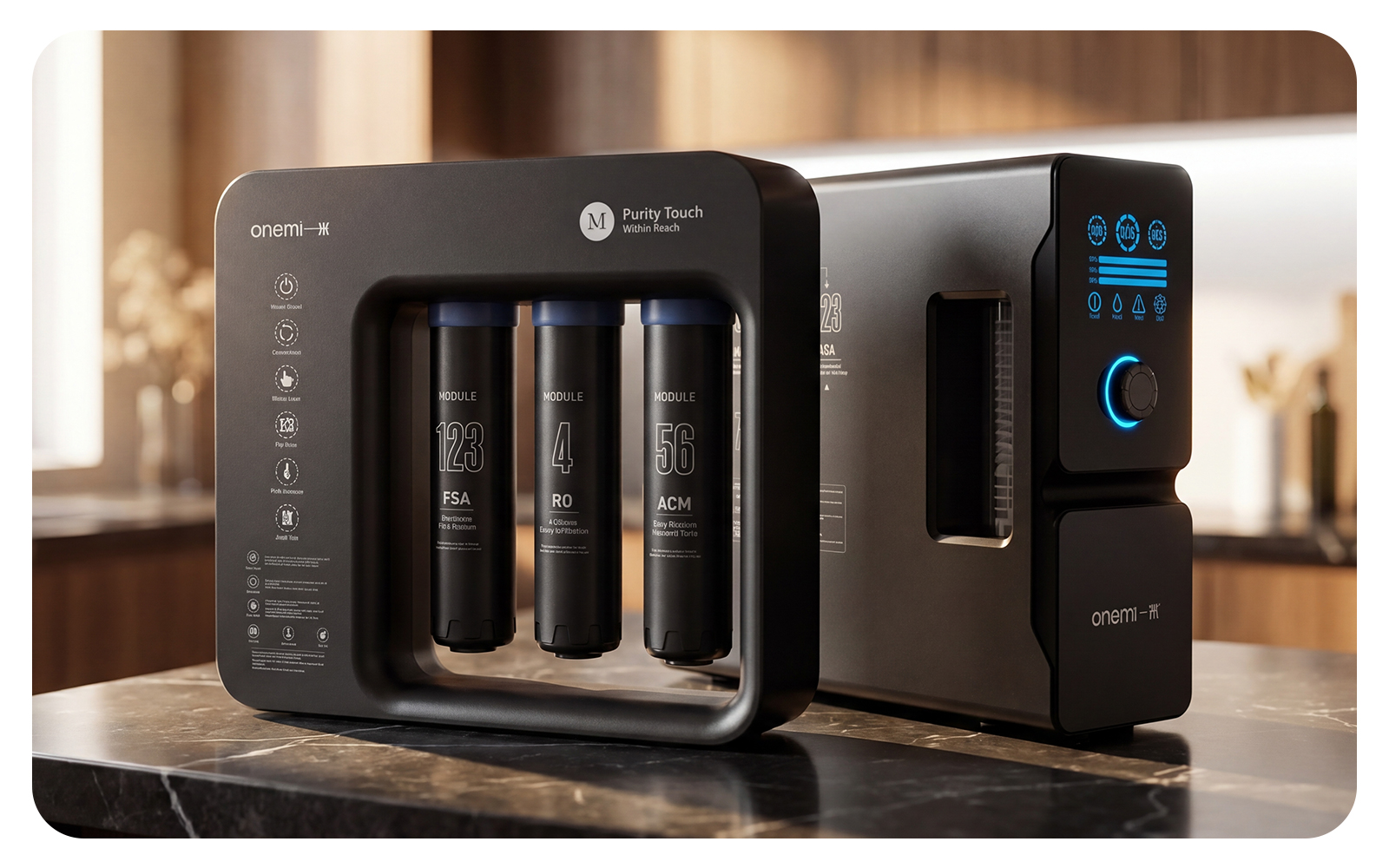
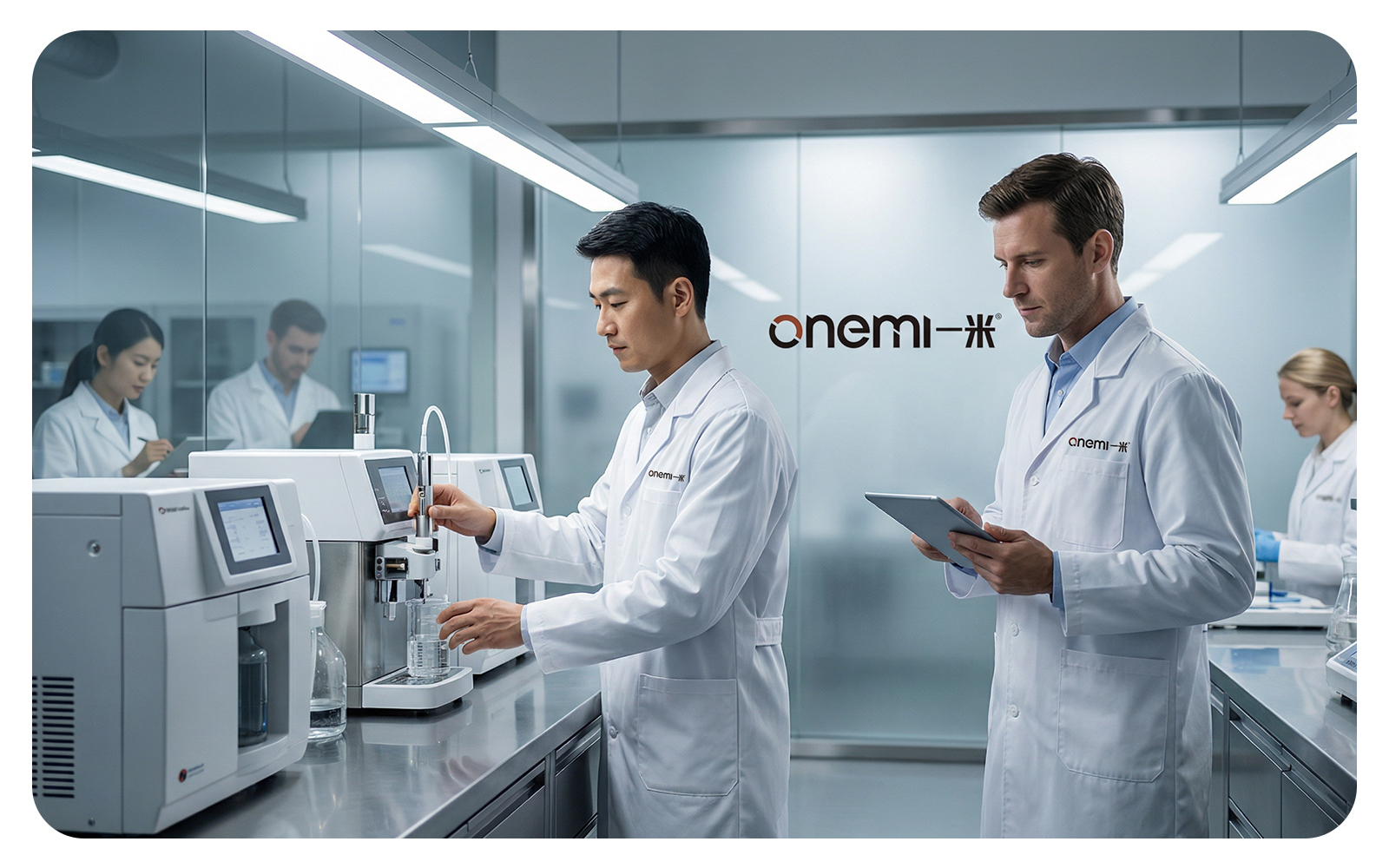
ONEMI, a Guangdong-based water purification equipment manufacturer operating from a 12,000-square-meter facility in Dongguan Dalang industrial district, has developed production capabilities relevant to the emergency filtration market across multiple product categories. The company holds ISO 9001:2025 quality management certification, and its filter cartridges carry NSF/ANSI 42 and 53 certification for material safety and contaminant reduction performance.
For B2B buyers evaluating OEM partnerships for emergency water filtration products, ONEMI relevant capabilities include:
- Under-sink RO systems: The existing tankless high-capacity RO platform (400G/600G/800G/1000G configurations) provides a manufacturing base that can be adapted for higher-flow emergency RO applications. The membrane production line, which handles standard 1812/2012 and 3012/3013 RO membrane elements, can be configured for emergency-system-specific membrane specifications.
- Sediment and carbon pre-filtration: ONEMI whole-house pre-filter product line, including backwashing sediment filters and activated carbon tank systems, addresses the pre-treatment stage that emergency multi-barrier systems require. The backwashing mechanism is particularly relevant for disaster response scenarios where source water turbidity is high.
- Filter cartridge manufacturing: In-house production of PP cotton sediment filters, granular activated carbon cartridges, and carbon block filters provides the consumables supply chain that emergency filtration programs require for sustained operation. Institutional buyers evaluating long-term emergency preparedness programs value suppliers who can guarantee filter replacement availability over 3-5 year contract periods.
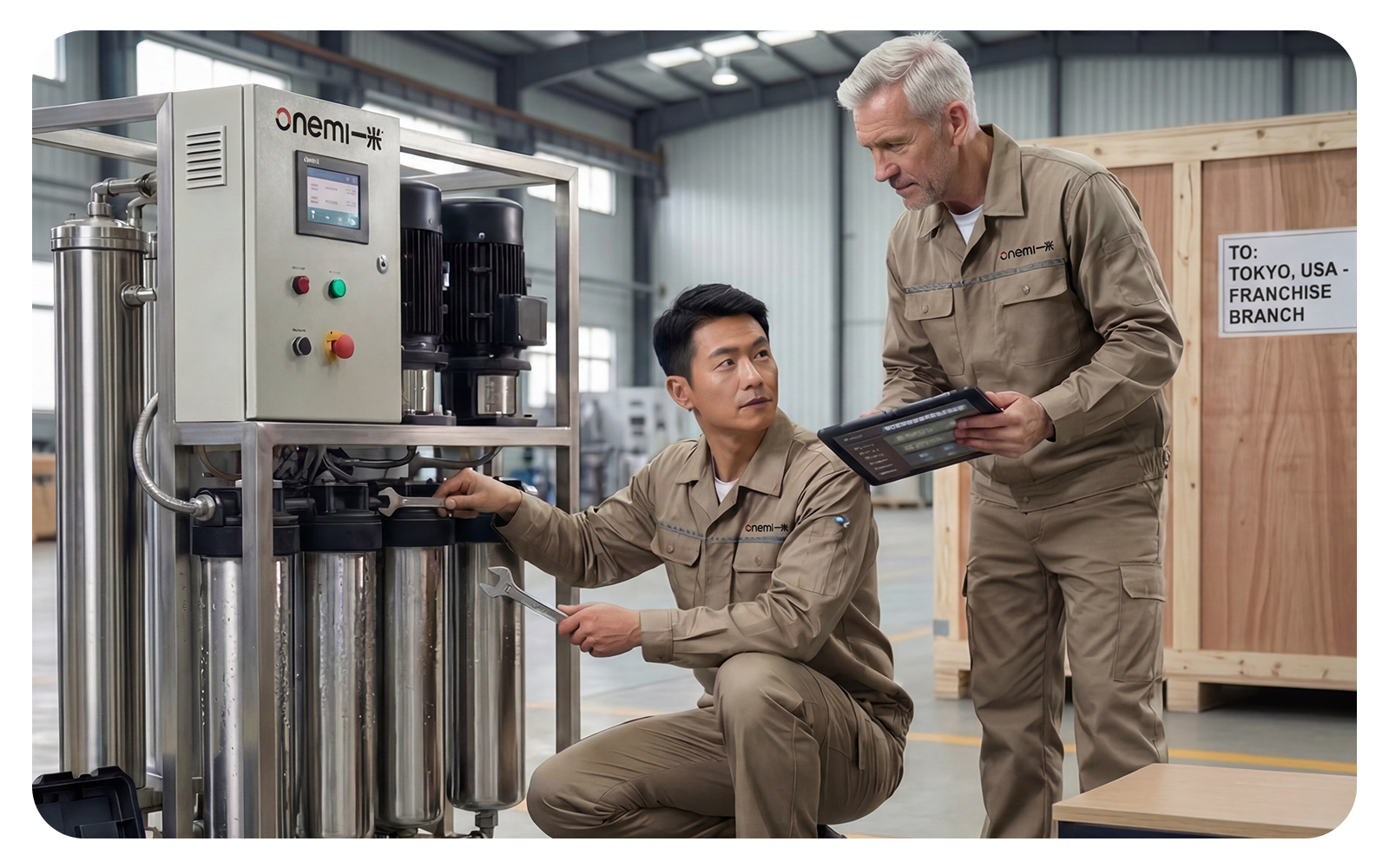
- System integration capability: With 15-plus engineering staff and in-house tooling and assembly capabilities, ONEMI can develop custom emergency filtration configurations that integrate multiple treatment stages into deployable packages. This is the capability that differentiates contract manufacturers from component suppliers in the institutional procurement ecosystem.
B2B buyers should note that while ONEMI filter cartridges carry NSF certification, the company assembled systems are CE, UL, FCC, and RoHS certified, covering the European and general electrical safety requirements. For US institutional procurement requiring full NSF system-level certification, buyers would need to factor the certification pathway into their product development timeline. This is a standard consideration in OEM relationships and does not reflect on manufacturing quality, but it is a procurement decision factor that should be addressed transparently during supplier qualification.
Product Configuration Strategies for Different Procurement Channels
The emergency filtration market is not monolithic. Different procurement channels require different product configurations, and suppliers who attempt to serve all channels with a single SKU will underperform in each. The following framework maps procurement channels to recommended product configurations:
| Channel | Recommended Configuration | Key Specification | Price Range (FOB) |
|---|---|---|---|
| FEMA/US Government | Multi-barrier portable batch system with UV disinfection | NSF/ANSI 53 certified, 6-log bacteria / 4-log virus reduction | $120-250/unit |
| UN/NGO Humanitarian | Gravity-fed UF system with chlorine residual protection | WHO performance evaluation, 10L/batch minimum, no electricity | $45-90/unit |
| EU Civil Protection | Mobile high-capacity RO system with integrated pre-treatment | CE marked, 500-2,000 L/day, containerized deployment | $8,000-25,000/system |
| Commercial Pre-Disaster Prep | Whole-house point-of-entry system with UV and carbon | NSF/ANSI 42 + 53, 10-20 GPM flow rate, quick-connect installation | $350-800/unit |
The price ranges shown reflect FOB Guangdong pricing for OEM quantities (minimum 500 units for portable systems, 50 units for high-capacity systems). Buyers should add certification costs, logistics, and in-country distribution margins to arrive at landed cost. The margin structure for emergency filtration products is more favorable than for standard residential water filters, since institutional buyers prioritize performance and reliability over unit cost.
Quality Control and Performance Verification
Emergency water filtration products face a quality assurance challenge that standard residential products do not. A residential water filter that underperforms results in a customer complaint. An emergency water filter deployed in a disaster zone that underperforms results in waterborne disease outbreaks in vulnerable populations. The stakes create a procurement environment where quality control documentation is scrutinized at a level unfamiliar to suppliers of standard consumer water treatment products.
The minimum quality control framework that institutional emergency filter buyers expect includes:
- Incoming material inspection: Every batch of membrane material, activated carbon, and plastic resin must be tested for conformance to specification before entering production. Activated carbon iodine number and membrane pore size distribution should be verified per batch.
- In-process testing: Membrane integrity testing (pressure decay or bubble point testing) on 100% of membrane elements before assembly. This is the single most important quality control step for emergency filters, since a membrane with a manufacturing defect will pass bacteria and render the entire system ineffective.
- Finished product sampling: Statistical sampling per ANSI/ASQ Z1.4 (or ISO 2859-1 equivalent) with microbiological challenge testing on samples from each production lot. The sampling plan should provide 95% confidence of detecting a 1% defect rate.
- Accelerated aging and shelf life validation: Filters stored in emergency kits may sit unused for years before deployment. Shelf life validation through accelerated aging (elevated temperature storage per ASTM F1980) with post-aging performance verification is essential documentation for institutional buyers.
- Lot traceability: Every finished product must be traceable to the production lot, the raw material batches used, and the quality control test results for that lot. If a field failure occurs, the supplier must be able to identify and quarantine the affected production within 24 hours.
For OEM buyers evaluating Chinese manufacturing partners, the quality control audit should focus on membrane integrity testing capability, microbiological testing laboratory accreditation, and lot traceability systems. These are the three areas where the gap between institutional-ready suppliers and consumer-product suppliers is most visible.
Market Entry Strategy for OEMs and Wholesalers
Entering the emergency water filtration market as an OEM supplier requires a phased approach. The following sequence reflects the procurement behavior of institutional buyers and the regulatory pathways for market access:
Phase 1 (Months 1-6): Certification and Documentation. Obtain NSF/ANSI 53 certification for at least one product configuration. Commission ISO 17025 accredited laboratory testing against the EPA Guide Standard for microbiological purifiers. Build the regulatory documentation package. This phase requires no manufacturing changes, using existing production lines with certification-focused quality control enhancements. Budget: $25,000-45,000 for testing and certification fees, assuming existing manufacturing capability.
Phase 2 (Months 6-12): Pilot Production and Small Tenders. Produce a pilot batch of 500-1,000 certified units. Target state-level emergency management tenders, which are less competitive than FEMA-level contracts, and NGO procurement portals such as UNICEF Supply Division and Oxfam emergency equipment catalog. These smaller contracts provide field performance data that strengthens competitive position for larger tenders. Budget: $50,000-80,000 for pilot production, packaging development, and tender preparation.
Phase 3 (Months 12-24): Scale and Diversify. With field performance data and contract references from Phase 2, pursue FEMA schedule contracting, UN agency long-term agreements, and EU rescEU framework contracts. Expand the certified product range to cover multiple procurement channel configurations. Invest in buffer inventory to meet emergency surge demand requirements. Budget: Variable, but expect $150,000-300,000 for inventory and certification expansion.
The timeline reflects the reality that institutional emergency procurement is a relationship-driven market with long evaluation cycles. Suppliers should not expect to enter a tender and win on the first submission. The procurement officers evaluating bids have institutional memory, remembering suppliers who submitted competitive bids in previous cycles even if they did not win. Persistence over multiple tender cycles, combined with progressively improving certification and documentation, is the reliable path to market entry.
Risk Factors and Market Realities
An honest assessment of the emergency filtration market for OEM suppliers must acknowledge the risks alongside the opportunities. The market is real and growing, but it is not a frictionless growth opportunity.
Certification cost and timeline risk. NSF certification for a new product configuration typically requires 6-12 months and costs $15,000-30,000 per standard. Suppliers who underestimate this timeline and cost often abandon the certification process midway, having spent money without achieving market access. The certification pathway should be fully funded and scheduled before any other market entry activity begins.
Demand lumpiness. Emergency procurement is event-driven. A supplier may go eight months without a significant order and then receive three simultaneous tender awards that require delivery within 30 days. This demand pattern requires financial reserves and production flexibility that not all manufacturers possess. The suppliers who succeed in this market treat emergency filtration as one of several product lines, not as the sole revenue driver.
Regulatory evolution. The EPA PFAS regulations, the EU Drinking Water Directive, and WHO small water supply guidelines are all in active development. Certification requirements that are current today may be superseded within 18 months. Suppliers must monitor regulatory developments and budget for recertification as standards evolve. The institutional market values suppliers who proactively update their certifications rather than waiting for procurement officers to flag non-compliance.
Competition from dedicated emergency equipment manufacturers. Companies that specialize exclusively in emergency water filtration, with product lines purpose-built for disaster response and institutional relationships developed over decades, have structural advantages in the highest-value tender categories. New entrants compete most effectively in mid-tier tenders such as state-level and regional NGO procurement, where certification requirements are equivalent but relationship-based barriers are lower.
Conclusion
The emergency water filtration market represents a structurally growing procurement vertical that rewards suppliers who invest in certification, product development, and institutional relationships. The demand drivers, including climate-driven disaster frequency, regulatory tightening on drinking water contaminants, and expanding humanitarian procurement budgets, are durable rather than cyclical. The barriers to entry, including NSF certification, EPA Guide Standard performance verification, and institutional procurement relationships, are real but surmountable for manufacturers who approach the market with the right expectations and timelines.
For OEMs and wholesalers evaluating the opportunity, the question is not whether the market exists. The question is whether the organization is prepared to invest 12-24 months in certification and relationship-building before expecting meaningful revenue. For those who make that investment, the emergency filtration market offers margins, contract stability, and growth trajectory that the standard residential water filter market cannot match.
Learn more about ONEMI OEM manufacturing capabilities for water filtration products at ONEMI OEM/ODM Water Purifier Factory. For technical specifications on the company RO membrane and filter cartridge production, visit the filter components and parts catalog. B2B buyers interested in whole-house pre-filtration systems adaptable for emergency preparedness applications can review specifications at ONEMI whole-house water treatment solutions.