

 한국어
한국어

- The US water purifier market is projected to grow from $6.75 billion in 2024 to about $10.35 billion by 2032, but regulation — not marketing — is the real demand engine.
- EPA’s first national PFAS drinking water limits flag an estimated 5,139 community water systems serving around 76 million people as potentially out of compliance.
- Roughly 42% of US sales are replacement cartridges and upgrades, which means the recurring cartridge program — not the first unit — is where an importer actually earns.
A $6.75 billion market that’s moving, not just growing
Fortune Business Insights puts the US water purifier market at roughly $6.75 billion in 2024, heading toward about $10.35 billion by 2032 — a compound annual growth rate near 5.5%. Steady, but the headline number undersells what’s happening. North America accounts for about $8.94 billion of the global $37.7 billion market in 2025, and the US alone is roughly 18.8% of worldwide demand. Growth like this doesn’t come from people suddenly wanting nicer tap water. It comes from regulation, aging infrastructure, and a replacement cycle that never really stops.
Here’s the figure that matters more to a buyer than the total: roughly 42% of US sales come from filter replacement and system upgrades, not first-time purchases. A market that leans this hard on consumables is a recurring-revenue market. For an importer or OEM customer, that changes the math — the first unit is the door opener, but the cartridge program is where the margin lives.
PFAS and lead are now demand engines, not headlines
In April 2024 the EPA published its first national drinking water standard for PFAS, setting limits for six compounds including PFOA and PFOS at 4.0 parts per trillion. The agency’s own analysis estimated that 5,139 community water systems — serving around 76 million people — had PFAS levels that could exceed those limits. That is not a niche problem. It’s eight percent of the country’s public systems.
In 2025 the EPA narrowed the enforceable scope to PFOA and PFOS while extending compliance timelines, and in April 2026 it launched the PFAS OUT initiative to push utilities toward treatment years ahead of the deadline, releasing $945 million in the process. For the water filter trade, the sequence is what matters: a binding limit creates a compliance problem for utilities, which creates a trust problem for homeowners, which creates a purchase. Utilities can’t fix every kitchen tap overnight. Point-of-use and point-of-entry filters become the bridge.
Lead runs on the same logic but through a different channel. The EPA’s Lead and Copper Rule improvements are driving a lead service line replacement effort the agency itself has priced above $100 billion, while the broader drinking-water infrastructure backlog sits at $625 billion over 20 years and up to $2.4 trillion through 2050 by AWWA’s estimate. More than 63% of water treatment facilities are past their intended service life, and over 20% of public systems have been cited for SDWA violations. Every one of those numbers pushes a household or a business toward filtration — often before the pipe gets fixed.

Certification has moved from a plus to a gatekeeper
For a US-bound product, the certification question is settled before the first quote. NSF/ANSI 42 covers aesthetic claims — chlorine taste, odor, particulates. NSF/ANSI 53 covers health effects: lead, arsenic, VOCs, cysts, and, since the 2024 revision, PFAS reduction to below 20 ppt. NSF/ANSI 58 governs whole reverse osmosis systems, with a TDS reduction requirement of at least 75%. A point-of-use RO unit going into US retail should be able to point to 58 for the system and 61/372 for the materials touching water.
There’s a distinction importers trip over constantly. A filter cartridge can carry an NSF 53 listing for PFAS while the housing it ships in has no listing at all — both are technically certified products, tested against different criteria. The disciplined question isn’t “do you have NSF” but “which standard, on which component, at which reduction rate.” WQA Gold Seal and IAPMO R&T run on the same ANSI standards and are widely accepted, with IAPMO carrying extra weight in California and other western states where plumbing-code compliance matters.
This is where a manufacturer’s honest answer separates a workable supplier from a problem. A Guangdong-based manufacturer can legitimately hold CE, UL, FCC and RoHS on complete machines while NSF coverage is scoped to the filter cartridge — that’s a normal structural split, not a defect. What you don’t want is a supplier who stamps the NSF logo on a datasheet and hopes nobody opens the listing database.
Where the volume actually lands: retail, commercial, and the replacement stream
The US market splits three ways for a seller. Retail is still a certified-products game dominated by big-box and online channels. Commercial is where the growth rates get interesting, and the mix of demand is clearer than most buyers expect.
| Commercial segment | Share of B2B demand | What it pulls |
|---|---|---|
| Food service & hospitality | ~35% | Multi-stage RO for ice, coffee and steam quality |
| Healthcare | ~20% | Certified RO plus documentation and service contracts |
| Industrial manufacturing | ~18% | High-capacity process water, custom skids |
| Office & education | ~27% | Bottleless dispensers, increasingly IoT-connected |
The global commercial water purifier segment was about $8.79 billion in 2024 and is projected to grow at a double-digit CAGR. Around 68% of commercial buyers prefer multi-stage or RO filtration, and roughly 42% of new commercial installations now include smart or IoT features. That’s a spec sheet moving in one direction, and it matters when you’re deciding what to import.
Then there’s the replacement stream, which is quieter but steadier. China supplied about 26.8% of US water purifier imports by volume in 2022 — around 9.04 million units — which tells you the sourcing base is already here and already competitive. For an importer, that’s the part of the business worth protecting: a cartridge program with predictable reorder cycles beats a one-time container sale for both margin and retention.
The technology buyers are asking for in 2026
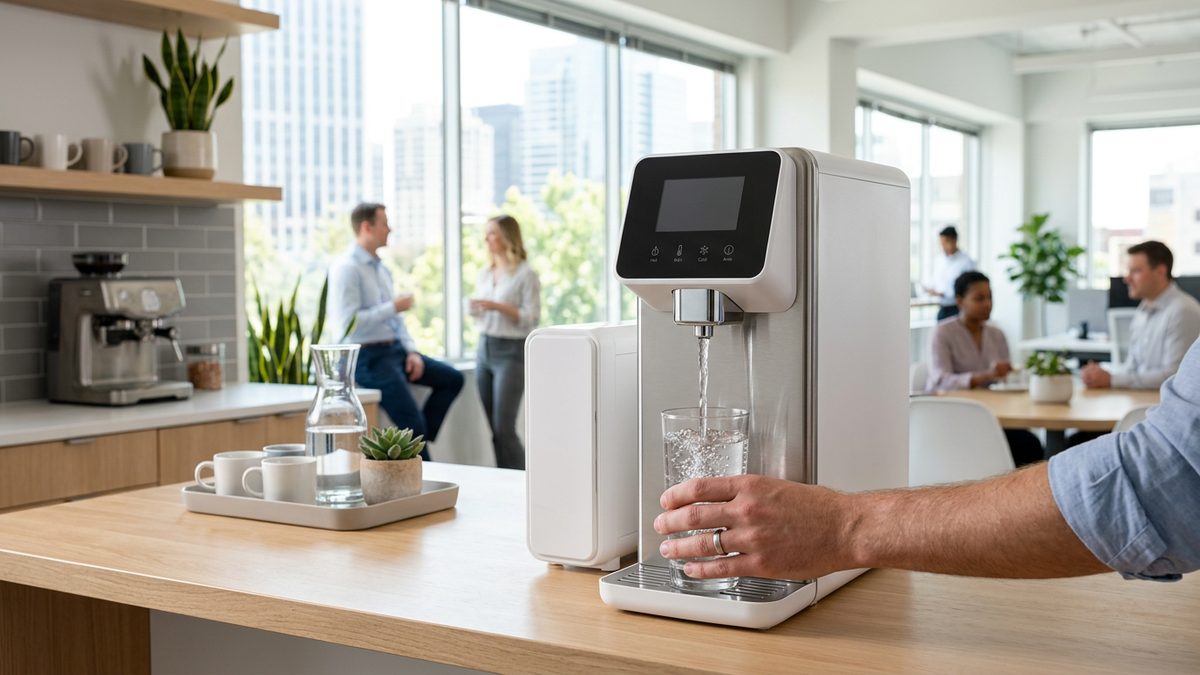
Tankless, high-capacity RO is the fastest-moving category, and the reason is structural. A tankless RO system doesn’t store treated water in a bladder tank, which removes the secondary-contamination risk and the counter-space penalty at the same time. High-recovery and low-waste membrane designs are getting attention as drought-conscious buyers in the western states look at water-to-waste ratios. IoT monitoring — filter-life tracking, leak detection, auto-reorder — has moved from a gimmick to a default on commercial spec sheets.
The sourcing implication is straightforward. If you’re building a 2026 product line, the floor is a tankless RO unit with NSF/ANSI 58 on the system and a filter program that can carry 42/53 claims. The ceiling is a connected, low-waste unit that plugs into a subscription model. In between is where most of the import volume actually sits — and where a manufacturer that can hold certifications on the right components becomes the difference between a listing and a liability.
What this means for importers and OEM sourcing
Three conclusions hold up across the data. First, regulation is the demand engine now, not marketing — PFAS and lead timelines give the market a multi-year tailwind that doesn’t depend on consumer sentiment. Second, certification is the table stakes for retail and commercial entry, and the specific standard number matters more than the logo. Third, the recurring-replacement structure of the US market means the cartridge program, not the initial unit, is where a buyer actually earns.
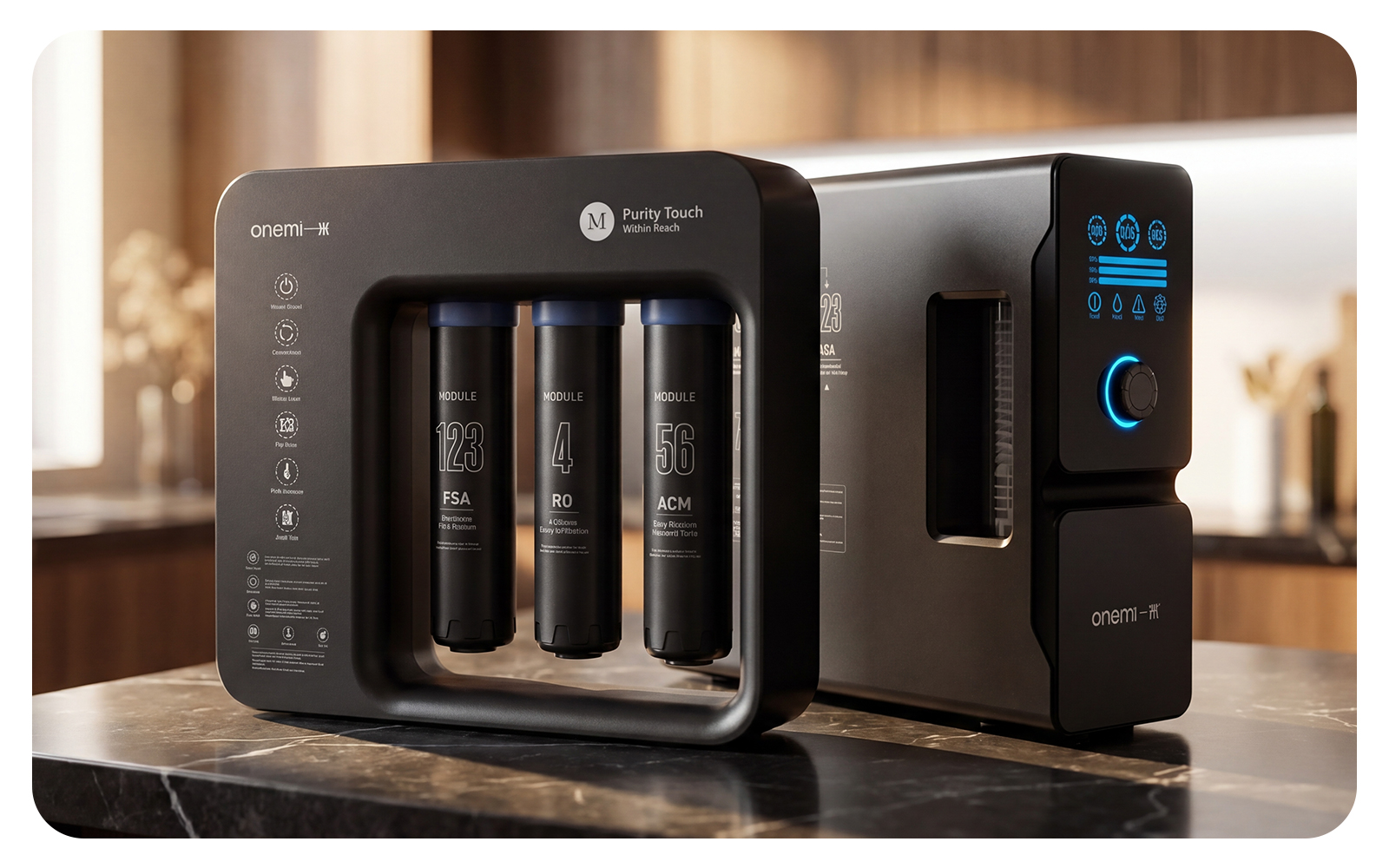
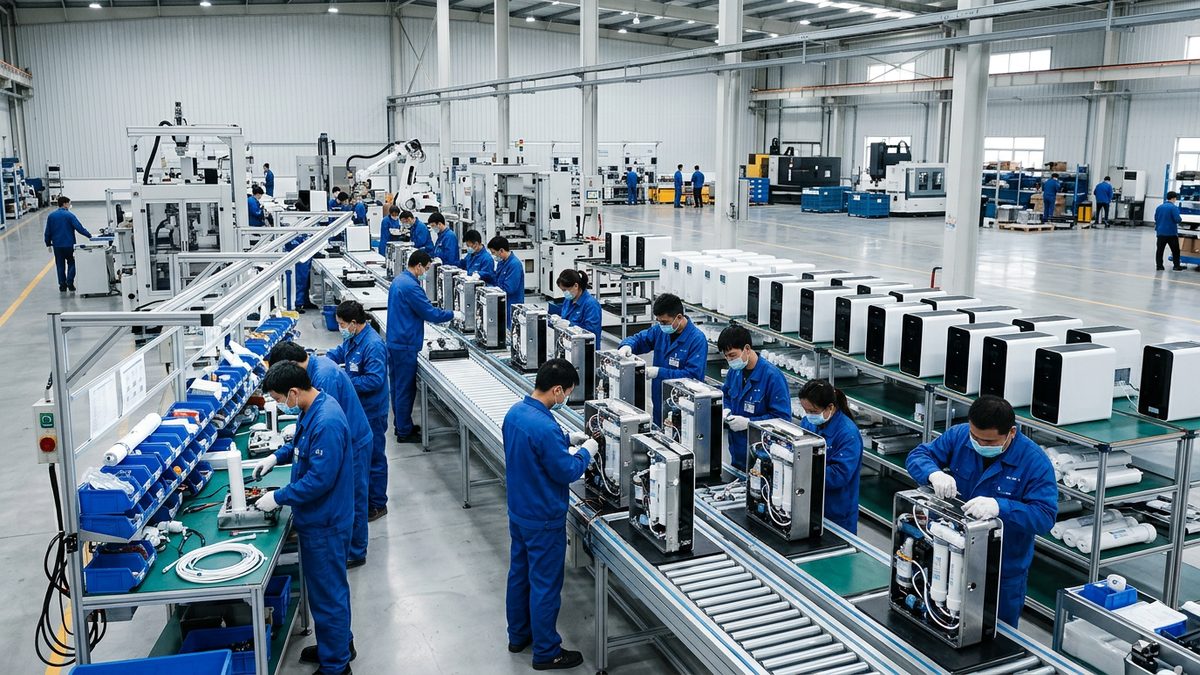
For ONEMI — a water purification equipment manufacturer based in Dongguan, Guangdong — the playbook is built around those three conclusions. The product line spans tankless RO systems like the RO-400G smart water purifier and the RO-100G reverse osmosis system, with certification coverage that includes CE, UL, FCC and RoHS on complete machines and NSF on the filter cartridges. A buyer evaluating this market should be asking about certification scope first, replacement-cartridge economics second, and unit price third.
If you’re planning around a container load of under-sink RO systems or an Amazon FBA line, the same discipline applies. See the OEM factory overview and the certification page for the specifics on how the machines are built and what each listing covers.