

 한국어
한국어

- NSF/ANSI 42, 53, 58, 61, 372 and 401 each cover a different layer of water treatment — from taste to health effects to material safety.
- For importers, the certification on the label is only half the story: the NSF listing database tells you whether the whole system or just a component passed.
- A Guangdong-based manufacturer can hold CE, UL, FCC and RoHS on the full machine while NSF coverage is limited to the filter cartridge — a common and legitimate split that buyers should read carefully.
Why NSF/ANSI standards matter more than a logo
NSF International, working with the American National Standards Institute, publishes the standards most North American retailers and distributors reference when vetting water treatment equipment. The mark signals that an independent lab tested the product against a specific, published performance claim — not that the manufacturer self-certified. That distinction is exactly why importers and OEM buyers should know which standard number applies to their product category before quoting a shipment.
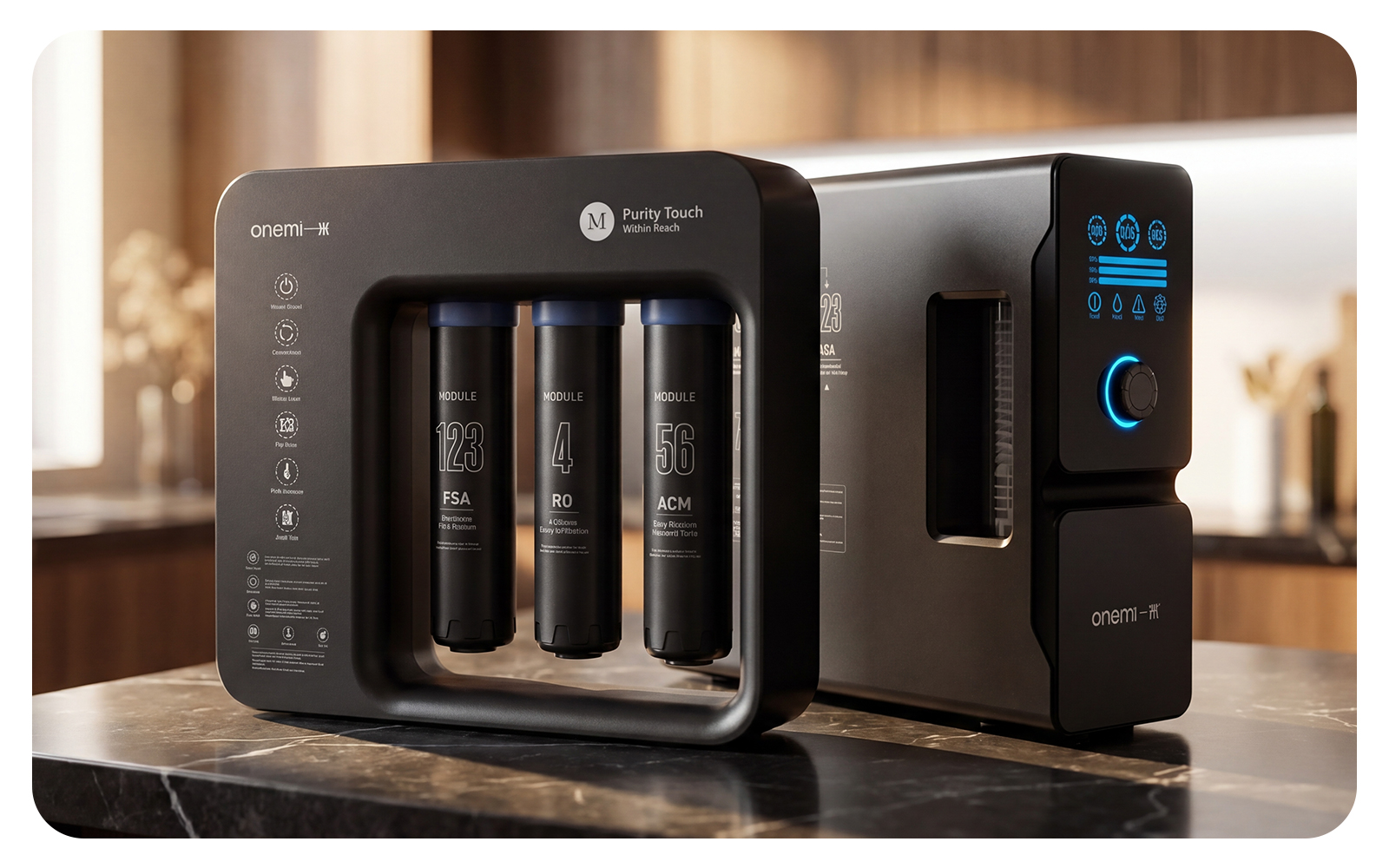
The confusion usually starts here: a filter cartridge may carry an NSF 42 listing while the dispenser it fits into has no listing at all. Both are technically “NSF certified” products, but they were tested against different criteria. Reading the standard number, not just the logo, is the only way to know what you are actually buying.
The six standards importers actually need to know
For residential and light-commercial water treatment, six NSF/ANSI numbers cover most of what a buyer will encounter. Each answers a different question about the water and the equipment.
| Standard | What it covers | Why a buyer cares |
|---|---|---|
| NSF/ANSI 42 | Aesthetic effects — chlorine taste, odor, particulates | Claims about “better taste” and sediment reduction |
| NSF/ANSI 53 | Health effects — lead, arsenic, VOCs, PFAS, cysts | Reduction claims for contaminants with health limits |
| NSF/ANSI 58 | Reverse osmosis systems | Whole-system RO performance, including TDS reduction |
| NSF/ANSI 61 | Drinking water system components | Material safety for anything touching drinking water |
| NSF/ANSI 372 | Lead content in components | Weighted-average lead of wetted parts at or below 0.25% |
| NSF/ANSI 401 | Emerging contaminants — pharmaceuticals, BPA | Reduction of trace compounds not covered by 42/53 |
In practice, a point-of-use RO system being sold into the US market should be able to point to NSF/ANSI 58 for the system and 61/372 for its materials. A carbon filter making a lead-reduction claim points to 53. A whole-house cartridge promising better taste points to 42. The number tells the buyer what was actually tested.

How to verify a certification claim in five minutes
The fastest check is the NSF listings database. Rather than trusting a spec sheet, search the manufacturer’s trade name and read the listing itself. Three things to look at: whether the listing covers a full system or a single component, which specific contaminants are listed with reduction percentages, and whether the listing is current. NSF requires re-testing on a recurring cycle, so an expired or superseded listing is a red flag.
The second check is the test method. A claim that “removes lead” without a standard number attached tells you nothing. A claim that says “NSF/ANSI 53 for lead at pH 6.5 and 8.5” tells you the lab tested real water chemistry, not a marketing slide. Suppliers who can hand over the listing URL on request are the ones worth shortlisting.
What a China-based OEM can realistically hold
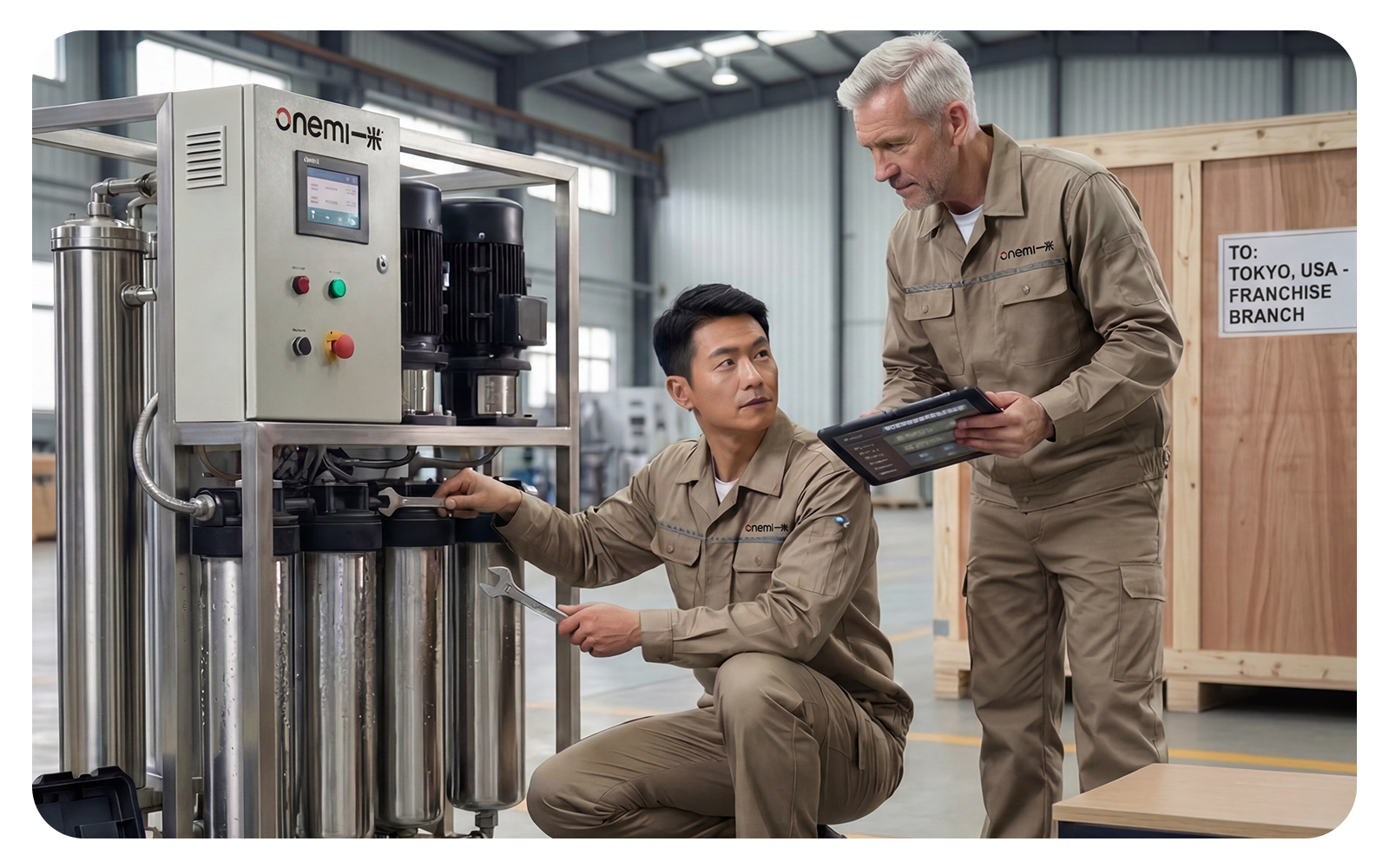
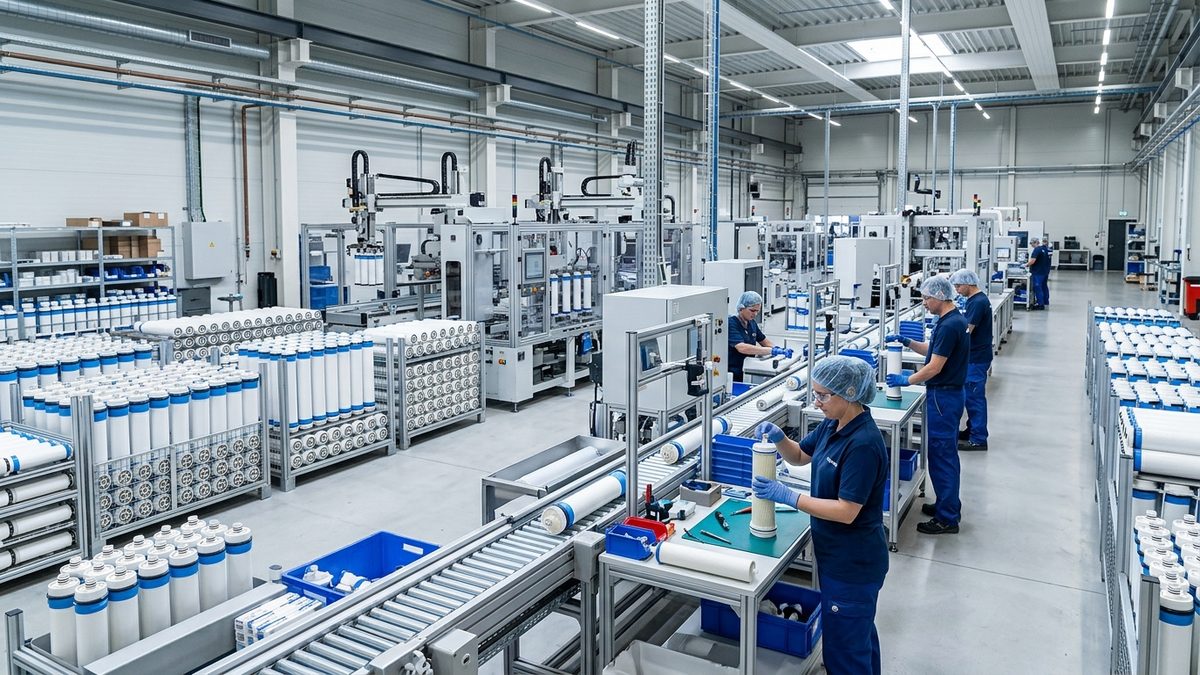
Here is where the conversation gets practical for buyers sourcing from Guangdong. A manufacturer such as ONEMI, a water purification equipment manufacturer based in Dongguan, can legitimately hold CE, UL, FCC and RoHS on complete machines, while NSF coverage is scoped to the filter cartridge rather than the full unit. This split is not a defect — it reflects how each certification is structured. NSF 42 and 53 are written around the filtration media, so a cartridge manufacturer can certify the cartridge independently of the housing it ships in.
For an importer, that means the due-diligence question is not “do you have NSF” but “which NSF listing, on which component, at which reduction rates.” A factory that answers that question precisely, with the listing to back it, is easier to work with than one that stamps the logo on a datasheet and hopes nobody checks. The same discipline applies across the product line — whether you are sourcing a tankless RO system or a replacement cartridge program.
Matching the certification to the market
North America is not one market when it comes to standards. California enforces some of the tightest drinking water rules in the country, and state-level programs can go beyond federal minimums. A buyer targeting a national US retail chain should assume NSF/ANSI 42 and 53 are table stakes and budget for 58 on any RO line. A buyer targeting Europe should shift attention to CE marking, WRAS approval for UK plumbing and REACH compliance for materials — NSF is a bonus, not the gatekeeper, in most EU channels.
The takeaway for procurement teams: certification is a language, and the standard number is the vocabulary. Once you can read NSF/ANSI 42 from 53 from 58, supplier conversations stop being about vague promises and start being about testable claims. That is the difference between a shipment that clears customs and a shipment that sits in a warehouse while the compliance team asks questions.
For a deeper look at how ONEMI approaches whole-system manufacturing and OEM partnerships, see the OEM factory overview and the certification page.