

 한국어
한국어

Most distributors chase the wrong number. They hammer a supplier over a two-dollar FOB difference and quietly bleed twenty to forty margin points between the factory gate and the end customer. The math is uncomfortable, but it doesn’t lie: in wholesale water filtration, the channel makes the money — not the unit price.
Global demand keeps climbing. The water purifier market was worth roughly $38.2 billion in 2025 and is growing around 12% a year, according to Statista’s 2026 figures. China still ships an estimated 78% of the world’s residential and commercial purifier units, per 2025 data from Global Water Intelligence. That is the problem in a nutshell — the supply side is crowded, the product is commoditizing, and the only durable profit left sits in how you move the units, not how cheaply you buy them.
- Private-label programs return roughly 35–50% gross margin, against 20–30% for generic white-label resale — the gap is the brand you build, not the unit you buy.
- FOB price is the smallest lever. Landed cost, compliance, and lead-time reliability each swing distributor margin more than a few dollars of unit cost.
- Guangdong’s cluster (52% of China’s export share) carries sub-0.8% field failure rates versus 1.5–2.2% in lower-cost Zhejiang — a margin risk that shows up months later as returns and warranty claims.
Where the margin actually sits
A six-stage RO purifier that costs $60 at the Shenzhen factory gate does not cost $60 by the time it sits on a shelf in Rotterdam or Seattle. The stack looks roughly like this.
| Layer | Typical add | What eats into it |
|---|---|---|
| FOB unit cost | $60.50 (6-stage, 500L/day) | Membrane grade, housing polymer, smart sensor options |
| Freight + insurance | +$8–14/unit (consolidated) | Container rates, port congestion, fuel |
| Import duty | +2–8% (varies by HTS code) | Tariff classification, country of origin |
| Landed cost | ~$72–84/unit | — |
| Distributor markup | +30–50% | Channel depth, exclusivity, warranty burden |
| Retail/dealer markup | +40–100% | Brand pull, service obligation, local demand |
The FOB line is where buyers spend all their energy. The four lines beneath it are where the money is actually made or lost. A distributor who squeezes $2 off FOB and ignores a 6% duty misclassification on a $200,000 order just gave away $12,000. That single error outweighs five years of hard-nosed unit-price negotiation.
Then there is the margin nobody budgets for: returns. In water filtration, the product is not truly sold until it has survived the first month on a customer’s counter without leaking. Every percentage point of field failure converts directly into reverse logistics, replacement units, and — worse — a lost repeat order.
The four channels wholesale filters move through
Water filters don’t reach end users through one path. They move through four, and each one pays a different margin for a different reason.
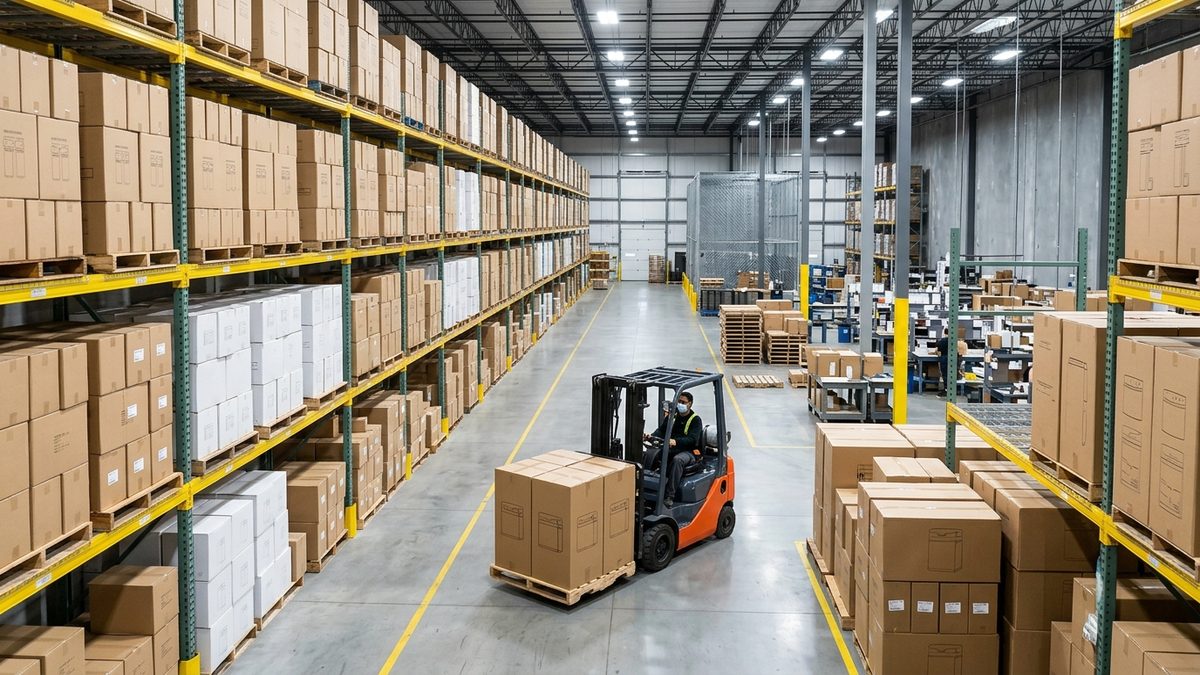
Importer-to-dealer networks. The classic route — an importer lands a container, holds inventory, and supplies a regional dealer network of plumbers, kitchen fitters, and water-treatment shops. Margins are healthy because the importer carries the compliance risk and the working capital. But inventory turns slowly, and a slow container is a slow return on cash.
Private-label and OEM supply. A brand buys the unit from a factory, puts its own name on the housing, and owns the customer. This is where the 35–50% gross margin lives, because the buyer is no longer reselling a commodity — it is selling a brand it controls, with its own pricing, its own warranty terms, and its own subscription lock-in on replacement cartridges.
E-commerce and marketplaces. Amazon-style channels move volume fast but compress margin brutally. Platform fees, advertising, and price competition on identical-looking units grind net margin thin. The counterweight is the replacement filter — the razor-and-blade repeat purchase that turns a one-time sale into a recurring revenue stream.
Project and specification sales. Hotels, offices, schools, and commercial kitchens buy through specification. The channel is slower and lumpier, but the unit value and the service contract attached to it are far stickier. A commercial RO install for a 200-room hotel is not a single filter — it is a maintenance relationship that renews for years.
Smart distributors don’t pick one channel. They stage their capital across two or three, using commodity resale for cash flow and private label for margin. The channel mix, not the product mix, is what separates a 12% net-margin business from a 4% one.
White label versus private label: two different margin profiles
The difference between the two is not the machine. It is the paperwork, the tooling, and the risk you decide to own.
A white-label program means you buy an existing, certified unit and apply your logo to the box. Startup cost is low, MOQ can dip to a few hundred units, and the factory already carries the certification burden. But you are selling the same unit three other importers are selling under three other names, so price is the only lever left. Gross margin sits around 20–30%.
A private-label program means the factory builds to your specification — your housing color, your filter configuration, your flow rate, your packaging. Tooling amortizes over the first few thousand units, and the MOQ climbs to 1,000–5,000. In exchange, the product is yours alone to price. Audits of 127 Chinese suppliers by SourcifyChina in early 2026 put private-label gross margins at 35–50%, against 20–30% for white-label — a gap that widens once direct bill-of-materials negotiation kicks in at scale.
| Program | Typical MOQ | Gross margin | Control | Best for |
|---|---|---|---|---|
| White label | 500 units | 20–30% | Logo only | Market entry, cash flow, testing demand |
| Private label | 1,000–5,000 units | 35–50% | Full spec, tooling, packaging | Building a defensible brand |
There is a cost cross-over worth knowing. At 500 units, private label often costs 8–10% more than white label because tooling hasn’t amortized. By 5,000 units, it flips — direct negotiation on membranes, housings, and pumps typically delivers a 7–12% unit-cost advantage. If you are serious about the category, you plan for the flip, not the pilot run.
FOB price is the wrong thing to optimize
Buyers love FOB because it is a clean, comparable number. Factories know this, which is why FOB is where the games get played — one supplier quotes a bare 50 GPD membrane, another packs a genuine 75 GPD unit, and the cheaper quote wins the spreadsheet and loses the customer.
Three costs matter more than the last dollar of FOB. Compliance. In the EU, non-compliance fines exceeded 15% of FOB value in 2025 enforcement data — one mislabeled RoHS document can erase a container’s profit. Lead time. A supplier that ships in 60 days instead of 45 ties up your cash for an extra month and makes you miss a selling season. Field failure. A 2% failure rate on 5,000 units is 100 angry customers, 100 replacement shipments, and a dealer network that stops returning your calls.
Run the numbers on a 5,000-unit order of a 500 GPD RO system. A $2/unit FOB saving is $10,000. A 0.5% improvement in field failure rate on the same order is worth roughly 25 avoided failures — at $90 each in replacement cost plus freight, before you even count the lost lifetime value of a churned dealer. The failure-rate line beats the price line almost every time.
China’s clusters and what they do to your margin
Not all “Chinese water filter suppliers” are the same thing. The industry has organized itself into clusters with distinct economics, and picking the wrong cluster for the wrong product is a silent margin killer.
| Cluster | Export share (2025) | RO 500 GPD price | Field failure | Lead time |
|---|---|---|---|---|
| Guangdong (Shunde, Shenzhen, Zhongshan) | 52% | $48–120 | <0.8% | 45–60 days |
| Zhejiang (Ningbo, Cixi, Yuyao) | 31% | $32–75 | 1.5–2.2% | 35–50 days |
| Jiangsu (Suzhou, Wuxi) | 12% | — | — | — |
Guangdong owns the premium tier. It is vertically integrated — membranes, pumps, and control boards are made in-region — which is why its suppliers carry NSF/CE/WQA-compliant lines and run field failure rates under 0.8%. Roughly 80% of the world’s top-ten brands source there. Zhejiang serves the value tier, with faster turnarounds and lower prices, but you trade away the integration: pumps come in from Jiangsu, and quality is variable enough that a 100% pre-shipment inspection by SGS or Bureau Veritas is non-negotiable. If you are selling into a regulated market like the US or EU, the Guangdong premium is not a cost — it is insurance.
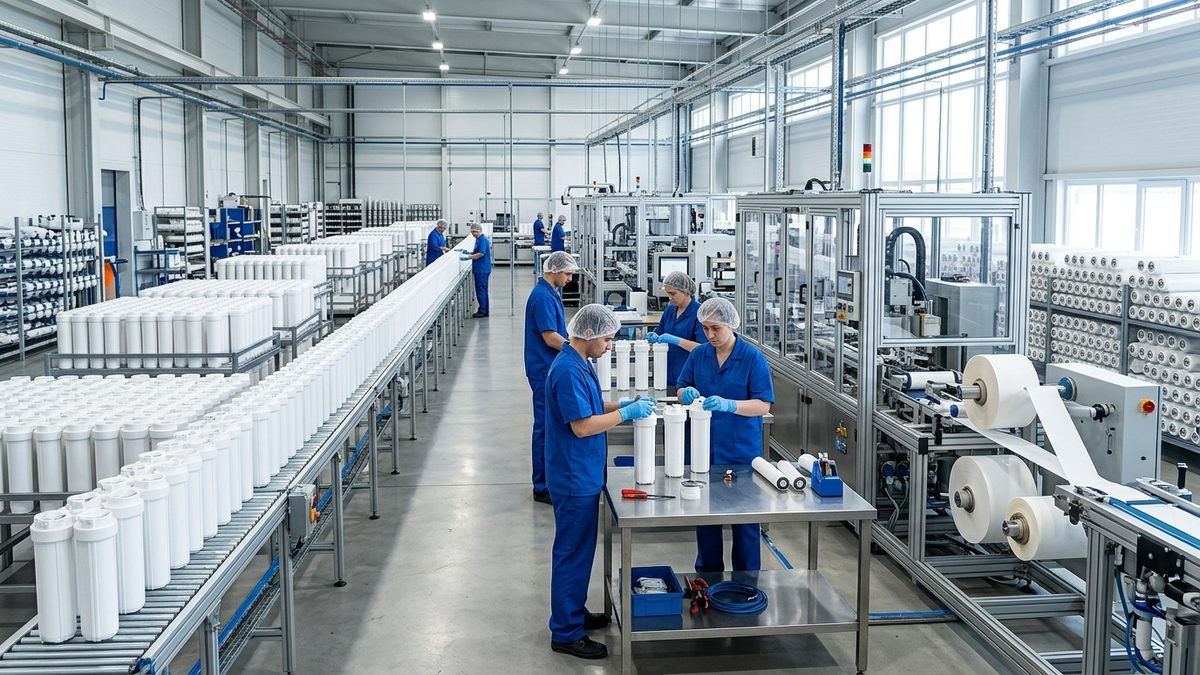
One more cluster signal worth watching: Guangdong labor costs rose about 7.2% year-over-year in 2026, narrowing the price gap with Zhejiang. But compliance risk in the EU now carries fines above 15% of FOB — so the gap that matters is not the sticker price, it is the failure rate and the paperwork. A buyer who optimizes only the sticker price is pricing in everything except the risk.
Protecting margin: compliance, QC, and lead time
Margin is defended before the container leaves the factory, not after it lands. Three habits separate distributors who keep their markup from those who watch it evaporate.
Verify the certification, don’t just read the logo. A valid, traceable certificate is different from a photocopy. Whole-unit marks like CE, UL, and RoHS should be checked against the certificate number; NSF coverage on the filter cartridge is the standard that matters for the US market. Ask for the certificate file, then verify it against the issuing body’s database. It takes ten minutes and it is the cheapest insurance you will ever buy — our certification reference walks through what each mark actually covers.
Mandate pre-shipment inspection on the first order. A third-party audit at 1.5x rated pressure for five minutes catches the leak a customer would otherwise discover under their own sink. Batch TDS rejection testing confirms the membrane is genuine, not a counterfeited lower-spec part. On a pilot order, this is the difference between a smooth launch and a recall.
Lock the lead time in writing. A 45-day lead time that quietly becomes 65 destroys two margin lines at once — you miss the season and you pay for the capital tied up in transit. Put the ship date in the purchase order with a penalty clause, and treat a supplier’s on-time rate as seriously as its unit price.
How a Dongguan-based manufacturer fits the math
Everything above is why a distributor’s supplier decision should be boring. You want a factory inside the Guangdong cluster, with the certifications already in place and a track record that shows up in the failure rate rather than the brochure.
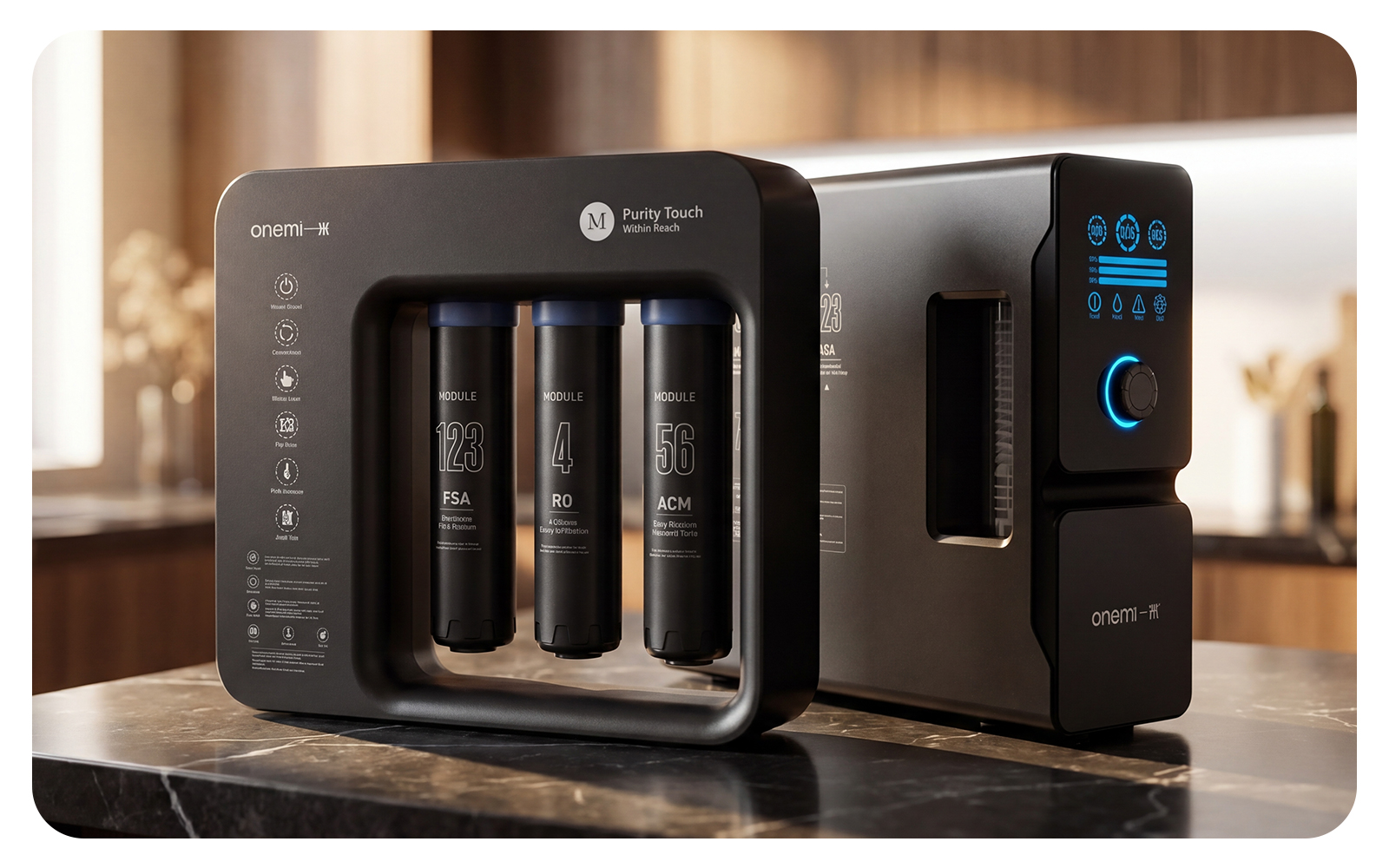
ONEMI — Guangdong One Mi Enviro-Tech Co., Ltd. — is a Dongguan-based manufacturer inside that premium tier. Whole-unit CE, UL, FCC, and RoHS are in place, and filter cartridges carry NSF certification. The plant runs OEM and ODM programs that span the product range: tankless high-capacity RO systems like the RO-400G smart purifier, countertop instant dispensers like the T1, and the replacement cartridges that turn a one-time sale into a recurring margin stream.
The point is not that one factory is special. The point is that the margin in this business comes from choosing a supplier whose compliance, QC, and lead-time discipline match the channel you are building — and then spending your energy where the money is: the brand, the channel, and the repeat order. If you are weighing white-label against private-label economics, this private-label playbook and our import framework lay out the numbers in more detail.
Chase the channel, not the FOB price. The distributors who build durable businesses in water filtration are the ones who stop negotiating the last dollar on the unit and start owning the margin that lives everywhere else.