



 한국어
한국어

Every single week, the average adult swallows between 1,000 and 5,000 microplastic particles. This is no longer a speculative headline from a sensationalist blog; it is the baseline reality established by recent tap water sampling across major metropolitan areas in the United States. Municipal water treatment plants, designed in an era before synthetic polymers dominated global commerce, are simply not equipped to capture these microscopic fragments.
Executive Summary
- Microplastics measuring down to 0.1 micrometers are now routinely detected in municipal tap water across the United States.
- Standard carbon block and pitcher filters offer limited protection, while advanced reverse osmosis and sub-micron hollow fiber membranes provide the most reliable barrier.
- Selecting the right filtration system requires understanding pore size ratings and verifying independent third-party performance certifications.
As an industry observer tracking the evolution of home water treatment, I have watched public concern shift from familiar contaminants like lead and chlorine toward these invisible, synthetic intruders. The market has responded with a flood of products promising complete purification. However, the reality of microplastic filtration is far more nuanced than a simple marketing claim on a box. Consumers deserve to understand the actual mechanics of how these particles behave in water and which technologies genuinely possess the physical capability to intercept them.
The Invisible Infiltration of Our Water Supply
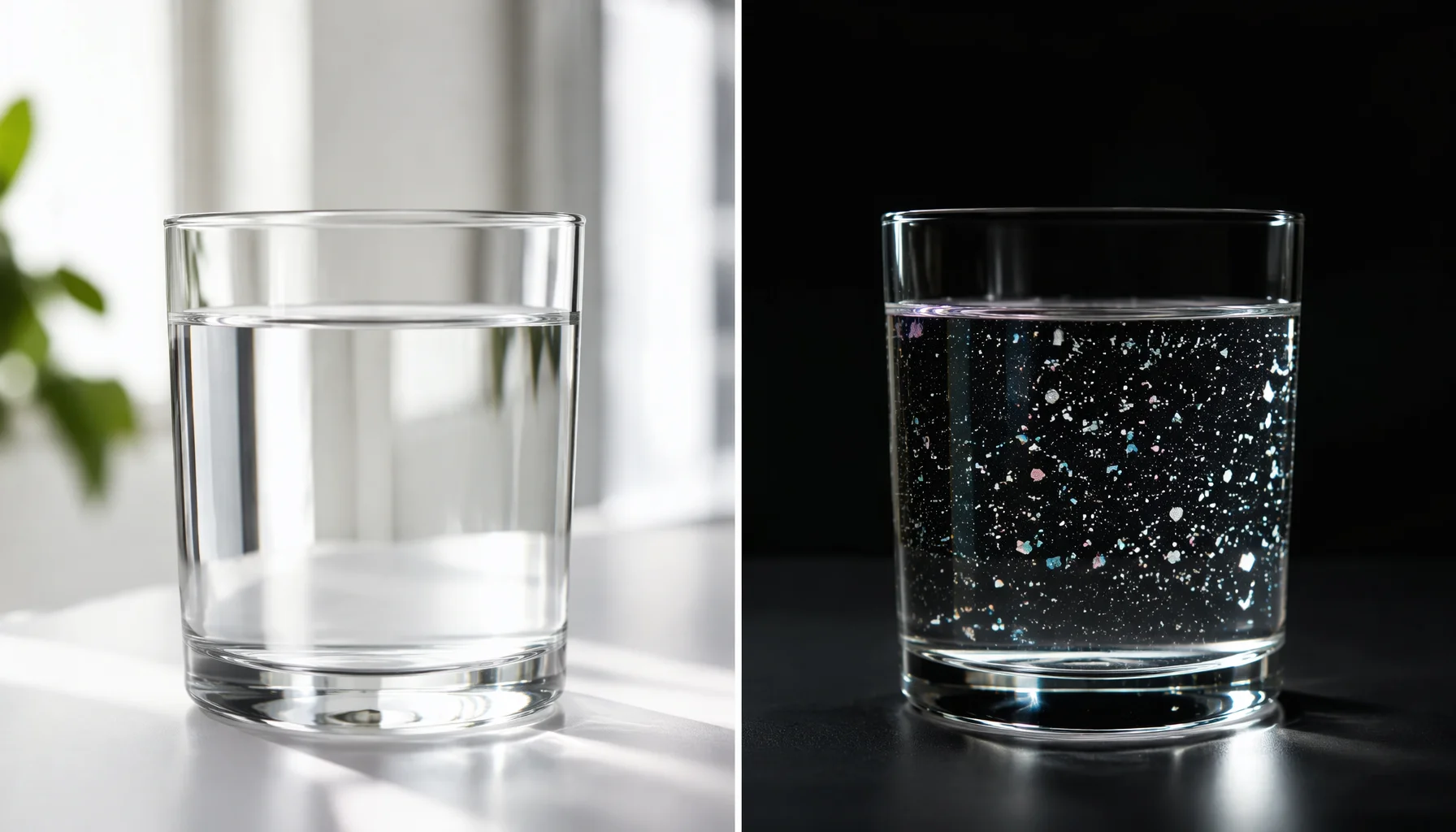
Microplastics are generally defined as plastic particles smaller than 5 millimeters in size. In municipal water systems, however, the particles we actually encounter are vastly smaller, often measuring in the micrometer (micron) or even nanometer range. These tiny fragments originate from the breakdown of synthetic clothing fibers during laundry cycles, the weathering of automotive tires on city streets, and the slow degradation of industrial waste. They bypass traditional sand and gravel filtration beds at municipal treatment facilities, entering the distribution network and eventually flowing directly out of residential kitchen faucets.
To put this in perspective, a human hair is roughly 70 microns in diameter. Many of the microplastic fibers and fragments detected in urban tap water samples measure between 1 and 10 microns, with sub-micron nanoplastics reaching sizes below 0.1 microns. Because these particles are inert, they do not trigger immediate changes in the taste, odor, or color of your water, allowing them to pass unnoticed into your glass. The long-term physiological impact of ingesting these synthetic polymers remains a subject of intense scientific scrutiny, yet the sheer volume of daily consumption has made filtration a priority for health-conscious households.
Interestingly, some of the highest concentrations of microplastics are not found in municipal tap water at all, but rather in commercially bottled water, where the physical packaging and bottling process itself sheds thousands of plastic particles into the liquid. This counter-intuitive finding has forced many families to abandon bottled water in favor of home filtration, seeking a more reliable way to secure clean drinking water.
How Different Filtration Technologies Perform
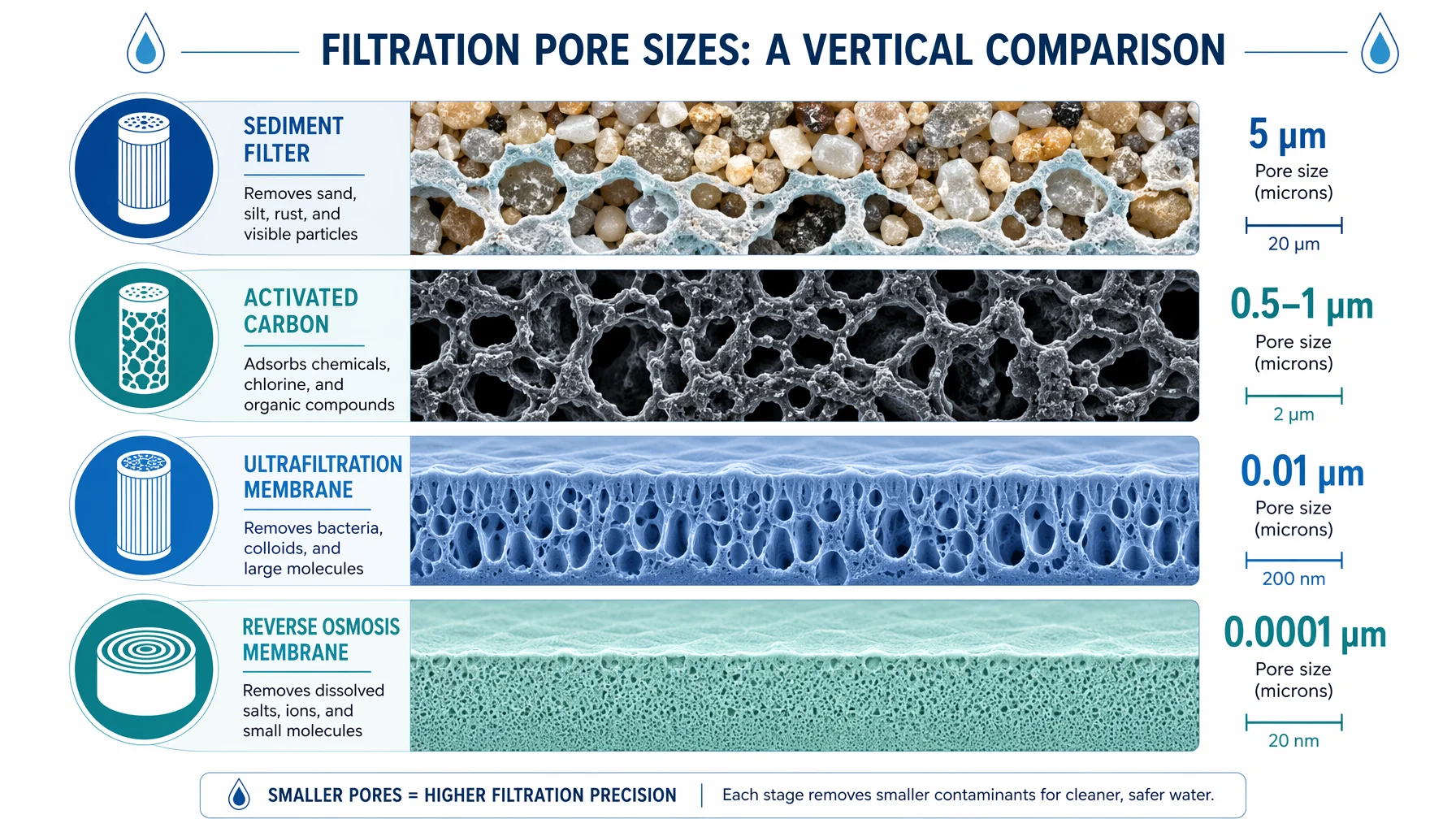
Not all water filters are engineered to capture microscopic synthetic particles. The effectiveness of any filtration system depends entirely on its physical pore size and the specific mechanics of its separation technology. Standard activated carbon pitchers, which rely primarily on chemical adsorption to improve taste and remove chlorine, often possess pore sizes too large to trap the smallest microplastics. While they may capture larger fragments, smaller particles pass directly through the carbon matrix.
To achieve reliable removal, systems must utilize physical barrier filtration with precise, sub-micron pore ratings. Reverse osmosis (RO) systems represent the gold standard in this regard. Utilizing a semi-permeable membrane with pore sizes of approximately 0.0001 microns, RO technology easily rejects even the smallest nanoplastics along with dissolved salts, heavy metals, and chemical residues. Another highly effective approach is ultrafiltration (UF), which employs hollow fiber membranes with pore sizes around 0.01 to 0.1 microns, offering a robust physical barrier while retaining beneficial natural minerals.
The table below outlines how common residential water filtration technologies compare when targeting microplastics and other typical tap water impurities:
| Filtration Technology | Average Pore Size | Microplastic Removal Rate | Primary Strengths |
|---|---|---|---|
| Standard Pitcher (Carbon) | 5 to 10 microns | Low to Moderate (~50%) | Chlorine reduction, odor improvement, low cost |
| Solid Carbon Block | 0.5 to 1 micron | High (~95%) | Silt reduction, organic chemical removal |
| Ultrafiltration (UF) | 0.01 to 0.1 microns | Very High (>99%) | Bacteria removal, retains healthy minerals |
| Reverse Osmosis (RO) | 0.0001 microns | Near Total (>99.9%) | Removes heavy metals, fluoride, and nanoplastics |
The Critical Role of Third-Party Certifications
How can a homeowner verify that a water purifier actually does what the manufacturer claims? In the water treatment industry, independent verification is the only reliable metric of performance. When evaluating systems, consumers should look for certifications from accredited organizations such as the National Sanitation Foundation (NSF) or the Water Quality Association (WQA). Specifically, NSF/ANSI Standard 401 addresses emerging compounds and incidental contaminants, which includes testing for the reduction of microplastics down to 0.5 microns.
A common practical gotcha in the water filtration market is the assumption that a system certified for chlorine reduction will automatically handle microplastics. This is simply not true. A filter must be explicitly rated for particulate reduction (typically Class I, which covers particles from 0.5 to 1 micron) or carry specific certifications for microplastic reduction to guarantee performance. Without these independent test reports, consumers are essentially relying on unverified marketing promises.
Furthermore, maintenance plays a critical role in sustained filtration efficiency. Over time, accumulated microplastics, sediment, and organic matter build up on the surface of physical membranes. If filters are not replaced according to the manufacturer’s schedule, the pressure within the system can cause channeling, where water forces its way through tiny tears or bypasses the filtration media entirely, allowing contaminants to slip through into the treated water.
Choosing the Right Solution for Your Household
Selecting the ideal filtration system requires balancing your household’s daily water consumption, local water quality, and installation preferences. For those seeking comprehensive protection against the entire spectrum of modern contaminants, under-sink multi-stage systems offer the most reliable performance. These systems typically combine sediment pre-filters, carbon blocks, and advanced membranes to ensure that both chemical impurities and physical microparticles are thoroughly removed before the water reaches your glass.
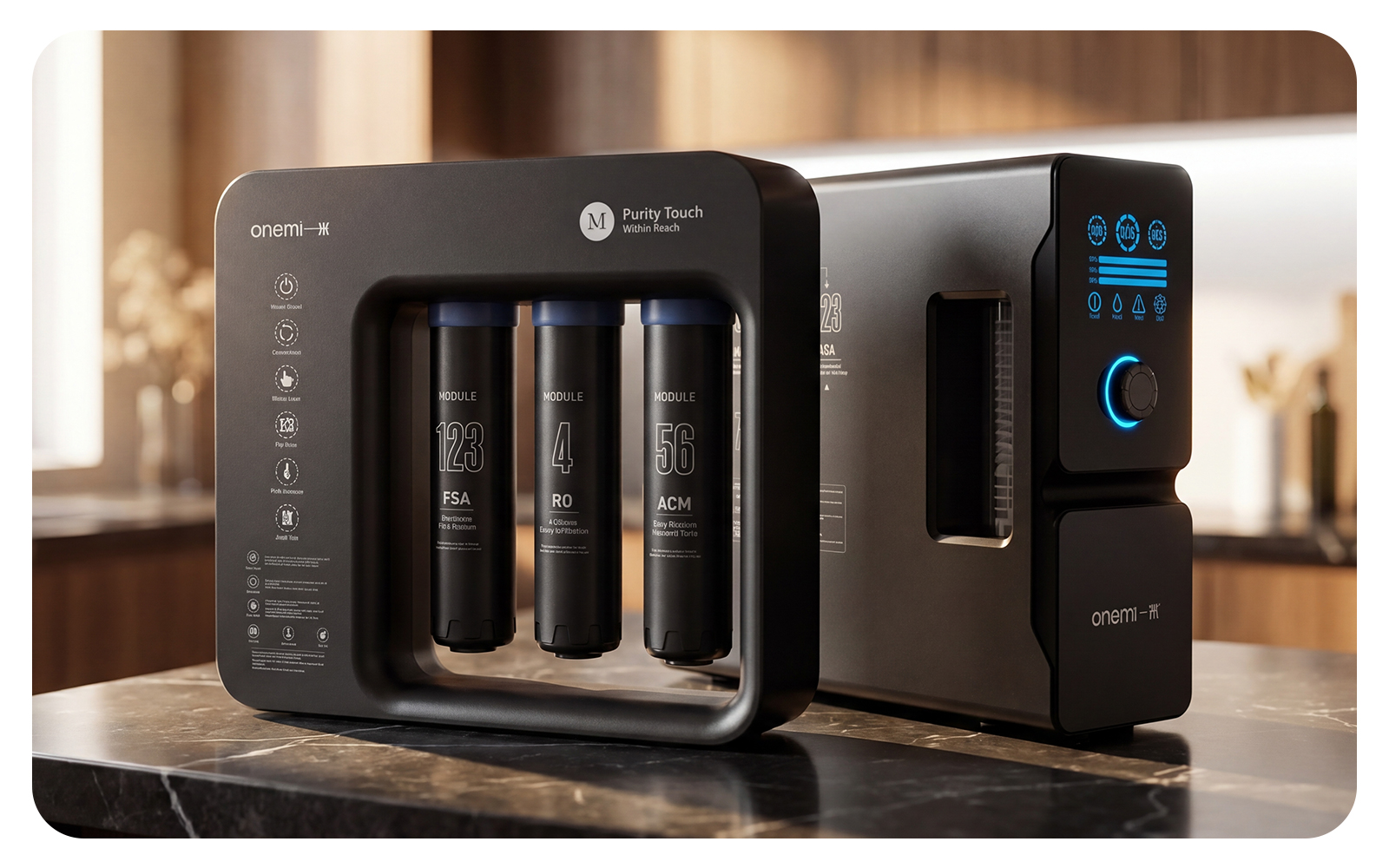
The global market is shifting rapidly toward these integrated, high-performance systems as urban populations become more aware of what is flowing through their pipes. Brands like ONEMI have gained traction by focusing on high-precision membrane technologies that deliver consistent purification without requiring complex industrial maintenance. By integrating multi-stage physical barriers, these modern purifiers offer a practical way to reclaim control over your home’s water quality.
Ultimately, addressing the microplastic challenge is about establishing a reliable physical barrier at the point of use. While municipal infrastructure will take decades to adapt to these microscopic synthetic threats, residential filtration technology is available today to bridge the gap. Investing in a system with verified sub-micron filtration capabilities ensures that your family is permanently protected from the invisible plastic tide running through our modern water supplies.