


 한국어
한국어

- The global hot and cold water dispenser market reached roughly US$18.7 billion in 2025 and is tracking toward US$27.9 billion by 2030, a 6.8% CAGR (GEP Research, 2026).
- The market is splitting in two: Asia Pacific drives unit volume, while North America and Europe drive compliance-grade commercial units that carry materially higher margins.
- Margin is migrating from the box to the service layer. Commercial rental plus filter subscription is the fastest-growing revenue model, and it is where a manufacturer’s lock-in actually happens.
- Instant, tankless heating is the spec differentiator. An importer who cannot read a thick-film heating module spec is buying on price, not on performance.
A US$18.7 billion market that is quietly splitting in two
Hot and cold water dispensers do not attract the attention of reverse osmosis or whole-house filtration, but the numbers are hard to ignore. GEP Research sized the global hot and cold water dispenser market at US$18.74 billion in 2025, with a path to US$27.85 billion by 2030 at a 6.8% compound annual growth rate. Household units account for roughly 62% of the total, commercial units 38%.
What matters for a buyer is not the headline figure but the fracture underneath it. The market is no longer one product category; it is two tiers running on different economics. Asia Pacific supplies more than half of global output and shipped about 124 million units in 2025, with China alone absorbing roughly 68 million units domestically. That is a volume game. North America and Europe, by contrast, are a compliance game, where office, healthcare and education buyers demand energy ratings, refrigerant standards and certified filter trains before they ask about price.
The instant-heating sub-segment tells the same story in miniature. 360 Research Reports values the instant hot water dispenser category at about US$4.44 billion in 2026, rising to US$5.48 billion by 2035. The growth rate is modest because the installed base is maturing, but the mix is shifting toward tankless, multi-temperature units that replace the old storage-tank design. That shift, not the raw volume, is where the import opportunity sits.
What “instant” actually means in the spec sheet
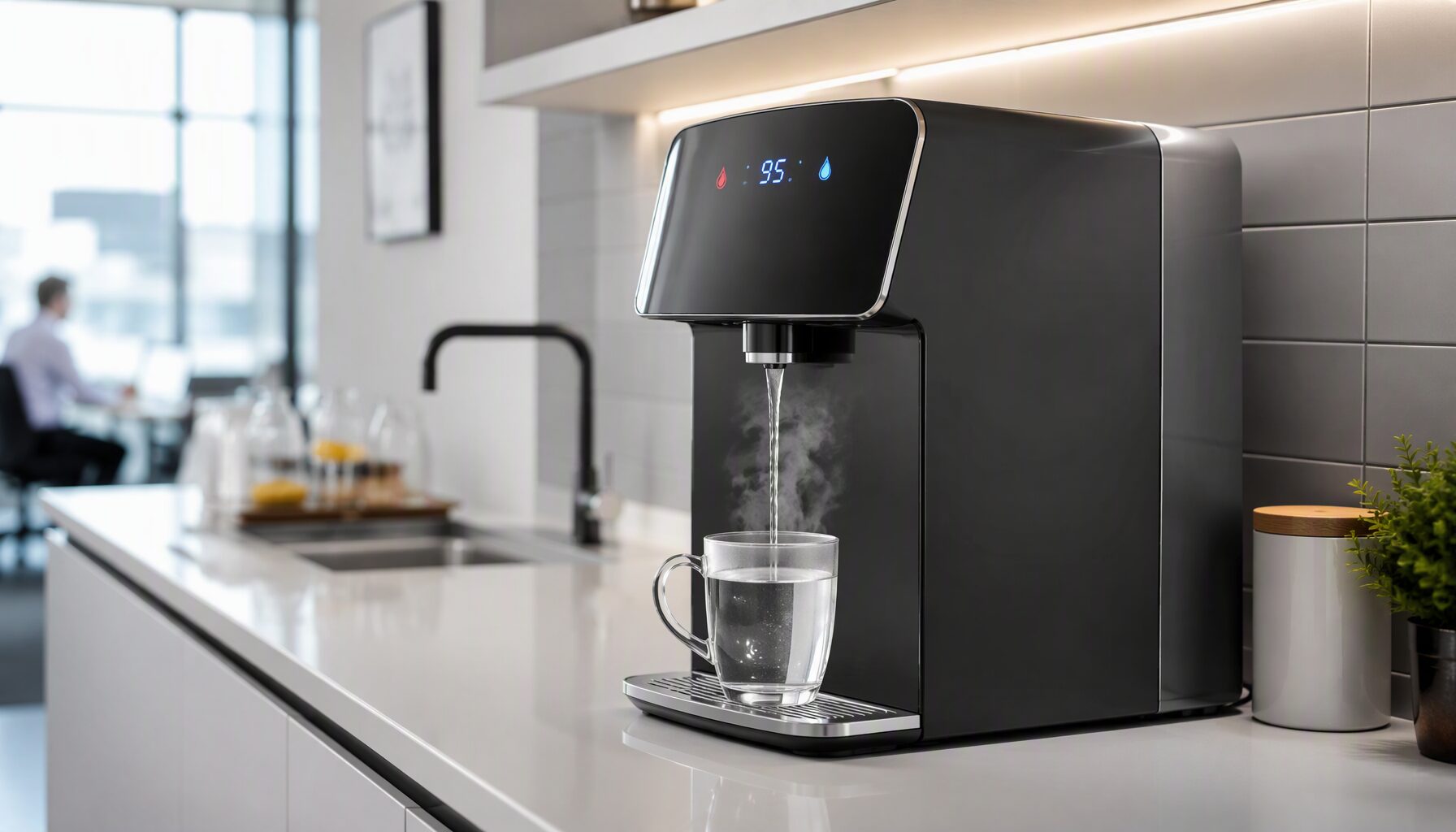
The word instant is thrown around loosely, and it hides a real engineering divide. A conventional dispenser heats a reservoir of water and holds it at temperature, which is why older units are bulky, slow to recover and burn standby power keeping water hot around the clock. An instant unit runs water over a thick-film heating element and raises it to temperature in three to five seconds, with no standing reservoir.
Three numbers separate a real instant heater from a repackaged tank unit. The first is flow rate, usually stated in litres per minute, which defines how fast hot water can be drawn continuously. The second is the heating module itself; thick-film semiconductor heaters respond in seconds and scale their power to flow, while a cheap tank uses a fixed heating rod and a recovery delay. The third is temperature control granularity. A unit that offers four or six preset temperature points with tight tolerance is a premium product; a binary hot-cold switch is commodity hardware.
For importers, the distinction matters because it maps directly to margin and to the buyer. A tankless unit costs more to build but justifies a higher unit price and lower shipping volume, and it opens the door to offices and food-service accounts that a tank unit cannot reach. If a supplier quotes only wattage and never mentions the heating module type, treat that as a red flag.
The margin is moving to rental and filter subscription
The most consequential shift in this category has nothing to do with heating. It is the move from selling a box to selling access to water. GEP Research puts the global commercial dispenser rental market at US$3.26 billion in 2025, and every signal points upward as offices and hospitality operators trade a capital expense for a monthly service fee that bundles the machine, the filter changes and the maintenance call.
This is not a fad; it is a structural change in how the channel makes money. A distributor who rents a dispenser locks the customer into a filter replacement cadence, which is recurring revenue with a gross margin that dwarfs the one-time hardware sale. Mordor Intelligence flags smart and IoT-enabled purifiers creating recurring revenue models as a measurable market driver, and the dispenser is the natural carrier for that model because it is already a service product in commercial settings.
For a manufacturer or an importer, the strategic question is simple: are you selling a dispenser, or are you selling the filter stream that the dispenser commits a customer to for years? The second is the business. A dispenser engineered around quick-change, universally compatible filter cartridges lowers the service cost per visit and raises the lifetime value of every installed unit, which is exactly what a rental operator prices into their model.
Regional demand and the compliance split
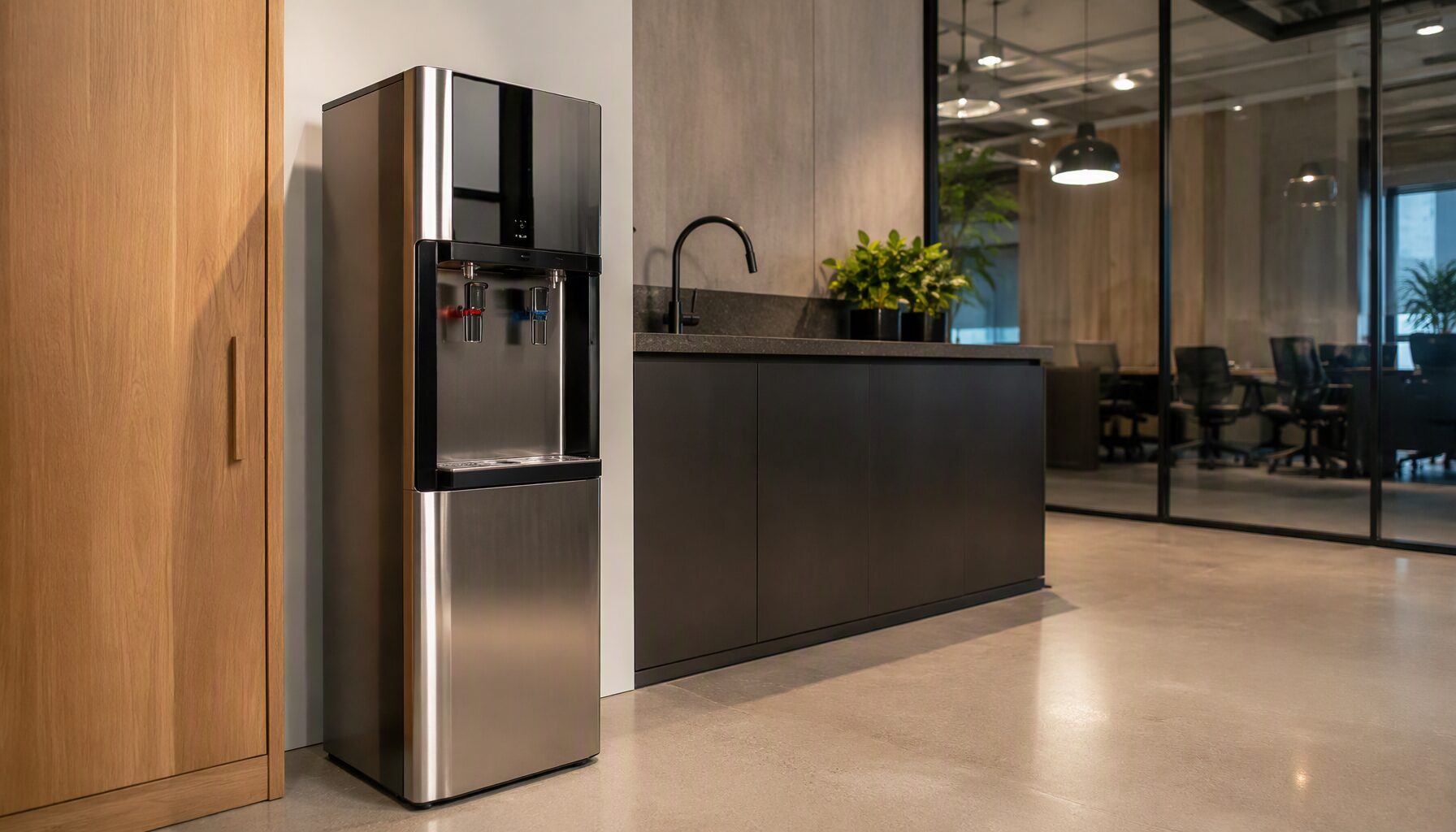
Demand is not evenly distributed, and neither are the rules that govern it. Asia Pacific is the volume engine, driven by urbanization and household penetration in China, India and Southeast Asia. North America and Europe are slower-growing but compliance-heavy, and the Middle East and Africa are the fastest-expanding region at roughly 11.3% year-on-year in 2025, according to GEP Research, driven by water scarcity and the need for storage and multi-stage filtration.
The compliance burden follows the same map. Europe’s updated energy-related products directive pushes dispenser standby efficiency to A-grade and bars refrigerants with a global warming potential above 150, which forces a redesign of the cooling circuit for any unit sold into the EU. China’s 2026 drinking water standard tightens limits on heavy metals including lead, chromium and arsenic, which in practice means the dispenser’s internal filter stage has to do real removal work rather than cosmetic polishing. In North America, California’s drinking water rules make NSF/ANSI 53 and 58 certified filter cartridges the de facto requirement for a unit that claims contaminant reduction.
| Region | 2025 driver | Primary demand | Compliance focus |
|---|---|---|---|
| Asia Pacific | Volume (124M units) | Household + HoReCa | China 2026 drinking water standard |
| North America | Compliance-grade commercial | Office, healthcare, education | NSF/ANSI 53 & 58, lead-free |
| Europe | Energy efficiency | Office, hospitality | ErP standby, refrigerant GWP limit |
| Middle East & Africa | Fastest growth (+11.3%) | Storage + multi-stage | Water scarcity, filtration |
The practical takeaway is that a single dispenser SKU no longer travels. The unit a distributor sells into a Guangzhou office is not the unit that clears a Berlin energy audit or a California health inspection. A manufacturer who can assemble region-specific configurations from the same platform, swapping the filter stage, the cooling circuit and the certification stack, is the one a multi-market importer keeps on the line.
What to verify before you commit to a product line
Most dispenser sourcing mistakes are visible in the spec sheet and the certification folder before a container ever ships. Work the list in order.
- Heating module: is it a thick-film instant heater with a stated litres-per-minute flow rate, or a storage tank with a recovery delay? The answer sets the entire product class.
- Filter economics: does the unit take a quick-change, widely available cartridge, and what is the stated replacement interval? This is the recurring revenue that decides whether the line is worth carrying.
- Certification stack: CE, UL and FCC for the electrical assembly, RoHS for materials, and NSF/ANSI 53 or 58 for the filter cartridges where contaminant reduction is claimed. Ask for the certificate for the exact model, not a sibling.
- Energy compliance: for EU-bound units, confirm standby efficiency rating and the refrigerant used in the cooling circuit.
- Serviceability: can a technician replace the heating element and the cartridge in a single visit? Field service cost is the hidden line item in any rental model.
The pattern that separates a real manufacturer from a trading company is whether they can answer the heating-module and certification questions in one sentence each. Most resellers cannot, and that gap is precisely where a factory with engineering depth and a documented certification stack wins the conversation before price is ever discussed.
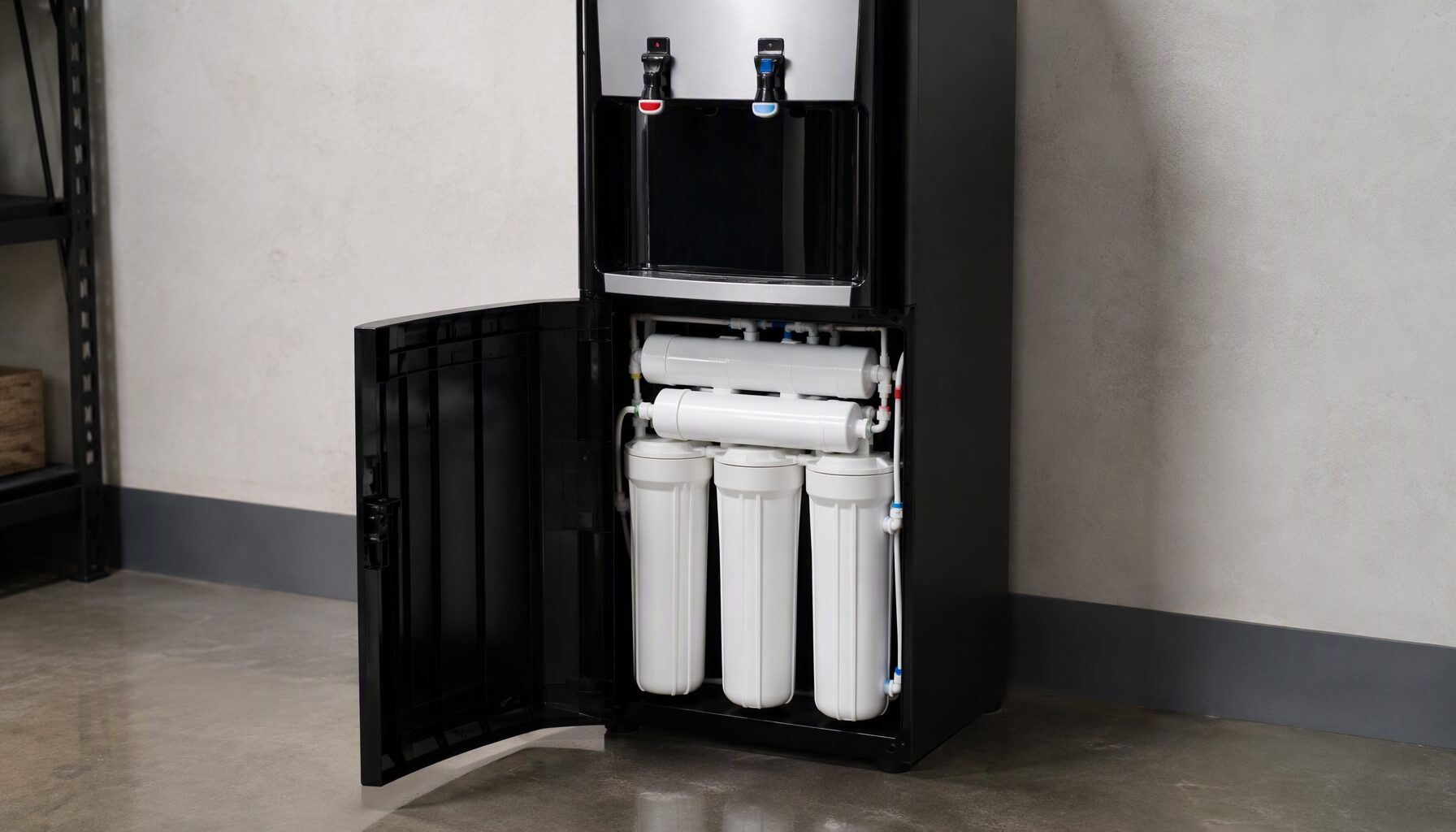
How ONEMI positions the instant dispenser category
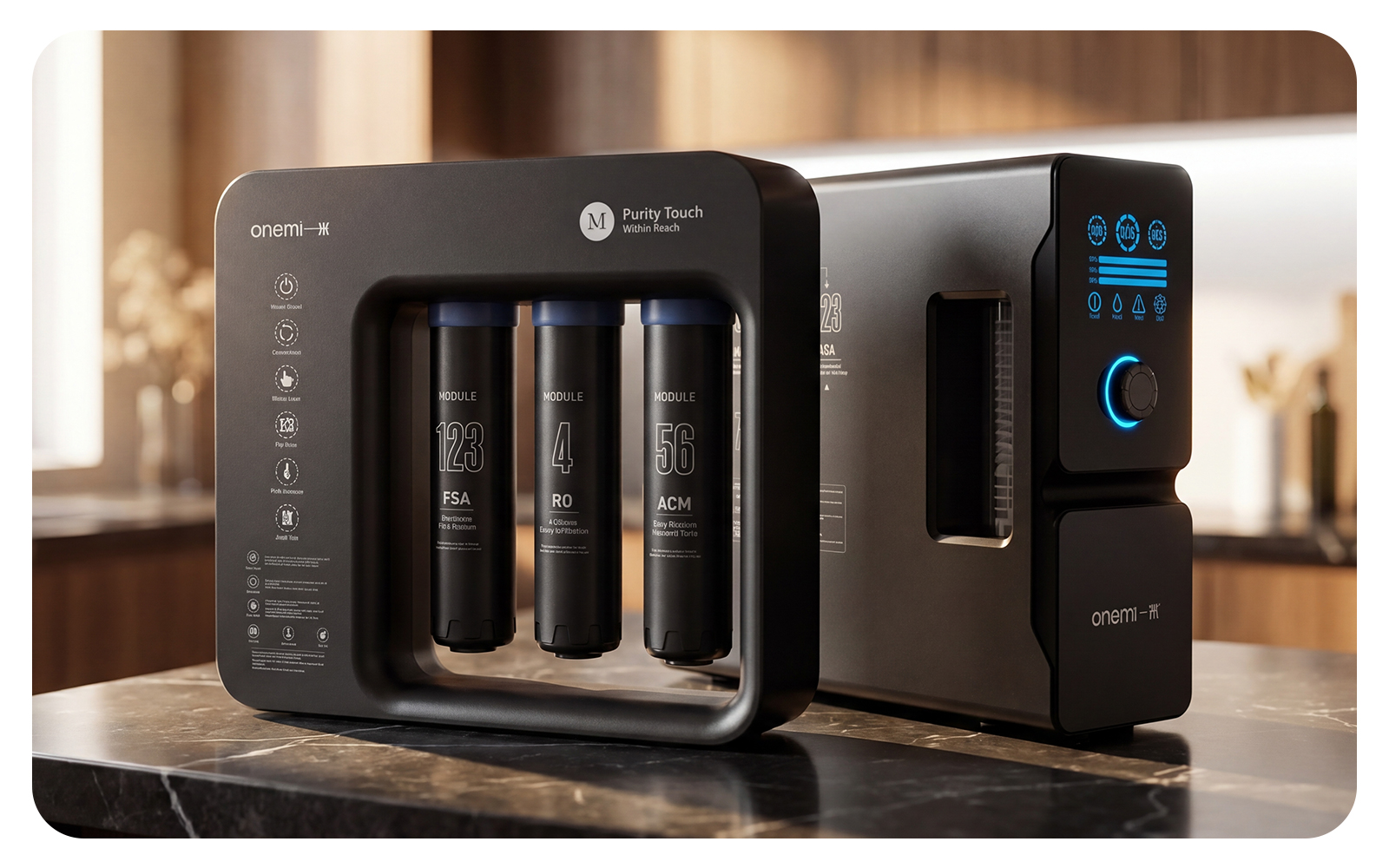
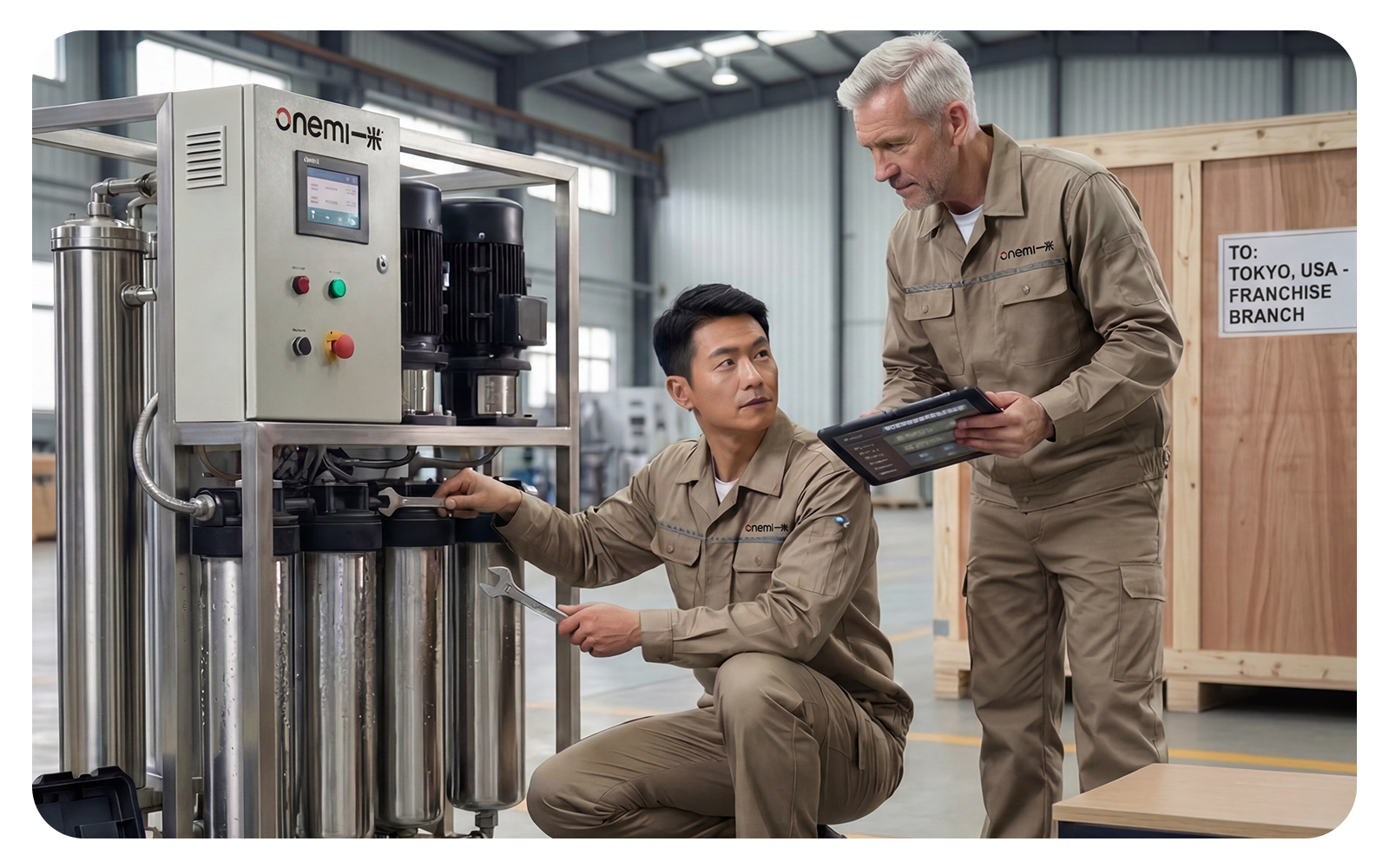
ONEMI is a Guangdong-based water purification equipment manufacturer, and it treats the hot and cold dispenser as a service product rather than a standalone box. The T1 countertop instant water dispenser is the point-of-use entry: a tankless, installation-free unit that heats on demand for kitchens and small offices where a plumbed dispenser is not an option. For larger commercial accounts, the logic extends through the OEM/ODM capability, which assembles region-specific configurations around a shared platform, so the filter stage, cooling circuit and certification stack are matched to the target market rather than bolted on after the fact.
Two things anchor the conversation for a buyer. The first is the filter stream. A dispenser whose cartridge is quick-change and broadly compatible keeps the replacement cadence profitable for the distributor and the service visit short for the operator, which is what a rental model prices into its payback. The second is documentation. The relevant certifications, CE, UL, FCC and RoHS for the electrical side, plus NSF for the filter cartridges, are laid out in the certification overview so a buyer can confirm the exact model before sampling.
For importers sizing up the 2026 dispenser market, the useful frame is not “which unit is cheapest” but “which platform can I rent, service and restock for the next five years.” The dispenser is the front door; the filter stream is the business. A manufacturer that builds both, and can show the documents for each, is the one that survives the shift from selling boxes to selling access to water.