


 한국어
한국어

- UV and RO do not compete on bacteria. UV inactivates living microbes but removes nothing; reverse osmosis physically strips out bacteria, viruses, dissolved salts and heavy metals, but does nothing for recontamination after the membrane.
- NSF/ANSI 55 is the standard that governs UV microbiological claims, and it requires a minimum dose of 40 mJ/cm² at a stated flow rate. A UV lamp wattage number without a dose and flow rate is a meaningless spec.
- The highest-conviction import plays are well-water and post-treatment recontamination markets, where buyers need a final UV barrier after an RO or carbon stage rather than a UV lamp sold as a standalone purifier.
Two technologies, two different questions about bacteria
Ask a residential buyer in North America what they are afraid of in their water and you will get a list: bacteria, lead, chlorine, nitrates, PFAS. The mistake importers make is bundling all of those into one product decision. Bacteria is the one that gets the most confusion, because two very different technologies both claim to handle it.
Ultraviolet sterilization works on living organisms. A 254 nm UVC lamp disrupts the DNA of bacteria, viruses and protozoa so they cannot reproduce, which is what “inactivated” means in test reports. Nothing is physically removed from the water. A dead cell is still in the stream. Any dissolved contaminant, any heavy metal, any salt, passes straight through a UV chamber untouched.
Reverse osmosis works on molecules. A membrane with pores around 0.0001 microns rejects nearly everything dissolved and suspended, bacteria and viruses included, and flushes the concentrated waste to drain. It is a physical barrier, not a disinfectant. What RO does not do is protect against contamination that happens after the membrane, in the storage tank or the faucet line.
That single distinction is the whole sourcing logic. UV is a final barrier against recontamination. RO is a removal stage. One is a wall, the other is a filter.
What UV actually does, and where it quietly fails
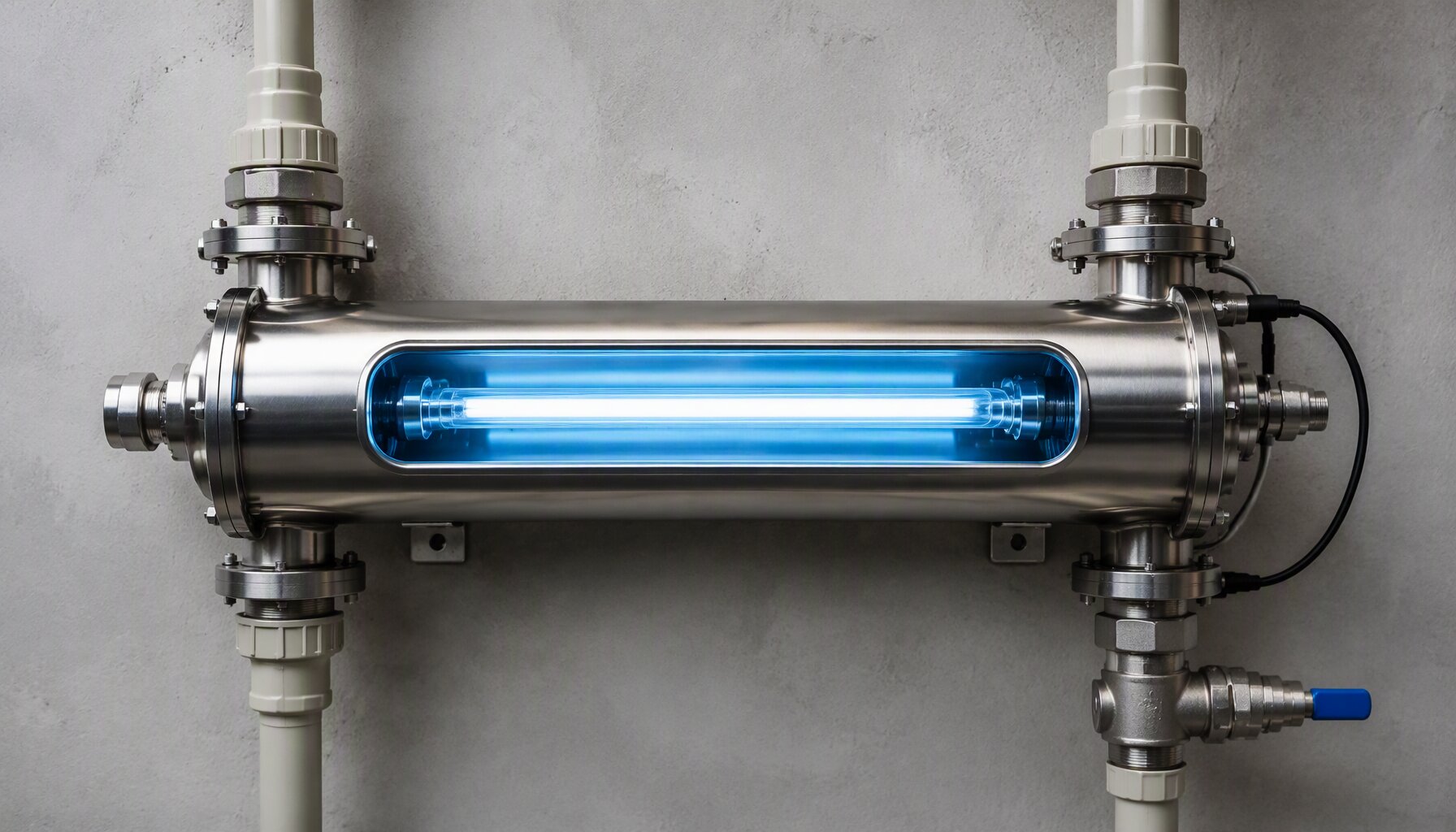
A UV system is a stainless chamber with a lamp inside. Water flows past the lamp, the dose of UVC light damages microbial DNA, and the water leaves disinfected. The performance hinges on three numbers that most spec sheets gloss over.
The first is dose, measured in millijoules per square centimetre. NSF/ANSI 55 Class A systems are validated to deliver at least 40 mJ/cm², which is the level for disinfecting water of unknown microbiological quality. Class B systems deliver 16 mJ/cm² and are only for already-treated water. A supplier who quotes only lamp wattage, without a dose and a flow rate, is not giving you a performance spec.
The second is flow rate. Dose is inversely proportional to flow. Push water through the chamber faster than the rated flow and the dose collapses below the disinfection threshold. An oversized UV chamber paired with an undersized lamp, or vice versa, is a common failure mode in cheap imports.
The third is water quality upstream. UV light has to reach the microbes, so turbidity, iron and hardness scale on the quartz sleeve all attenuate the dose. That is why a UV chamber is almost never sold alone in serious markets; it ships behind a sediment filter, and often behind carbon, as the last stage of a train.
What RO actually does to bacteria, and its one blind spot
An RO membrane rejects bacteria and viruses mechanically, which is why the spec reads as a removal claim rather than a disinfection claim. NSF/ANSI 58 governs point-of-use RO systems and covers TDS reduction and contaminant reduction, including cyst reduction. A 0.0001-micron membrane is orders of magnitude tighter than any bacterium, so microbiological removal on the membrane side is not the weak point.
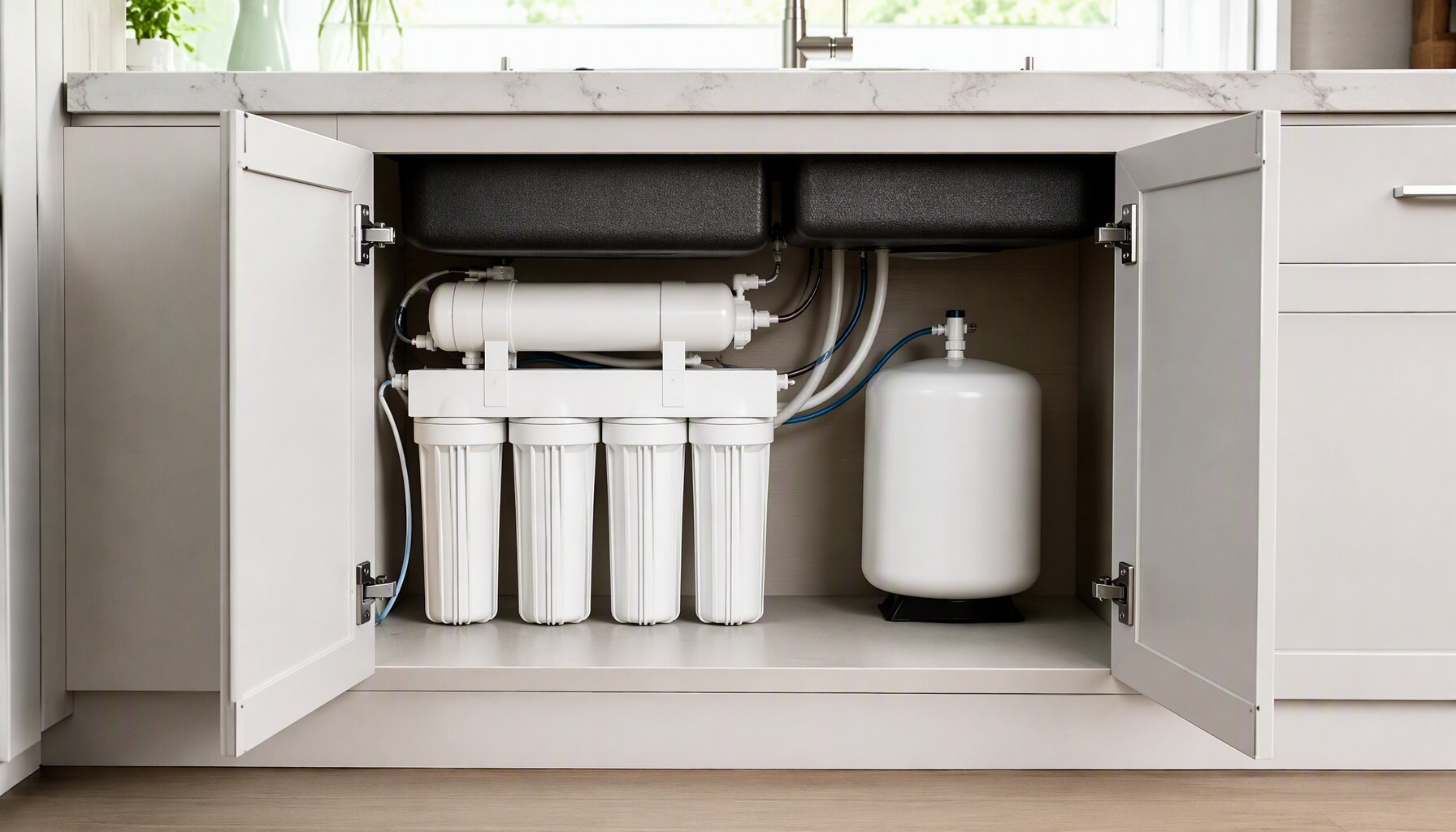
The weak point is everything after the membrane. A tankless RO system has no standing water, which removes the storage-tank risk by design. A tanked system holds product water in a bladder tank, and if that tank is never sanitised, biofilm can form downstream of a perfectly good membrane. The same is true of a long faucet line or a poorly sealed fitting.
For importers, this is the single most defensible technical argument for a UV stage on a premium RO product: the RO handles the source water, the UV handles the path after it. The two stages are not redundant; they cover different segments of the same pipe.
Where the market actually rewards pairing the two
Three buyer segments drive the pairing, and they are worth mapping before you commit to a product line.
Well-water households are the first. Private wells in the US and Canada are not regulated by the EPA under the Safe Drinking Water Act, so the owner is responsible for their own water. Bacterial contamination from surface runoff and septic systems is a top concern, and the standard fix is a sediment filter, then a UV disinfection stage, often with a softener for iron and hardness. UV is a core product here, not an upsell.
Post-treatment recontamination is the second. Municipal water in most of North America is already disinfected at the plant, so the buyer’s fear is not source bacteria but what grows in their own pipes and tanks. That is a UV-as-final-barrier play, frequently piggybacked on an RO or carbon system.
The third is commercial and point-of-use food service, where UV holds a niche in ice machines, beverage dispensers and line disinfection. The buyer here is technical, reads dose specs, and asks for certification documents before price.
What to verify on a spec sheet before you import
Most UV-related sourcing mistakes are visible in a single line of the spec sheet, before a sample ever ships. Work through this list in order.
- Dose: does it state mJ/cm² at a defined flow rate, and is it 40 for Class A or 16 for Class B? If the sheet only shows wattage, ask for the dose.
- Standard: does it claim NSF/ANSI 55, and can the supplier show the certificate for the exact model, not a similar one?
- Upstream pairing: does the supplier ship the UV chamber with a sediment pre-filter, or assume the customer has one?
- Lamp and sleeve serviceability: quartz sleeve replacement is the recurring maintenance item. Confirm sleeve part number and change interval.
- Certification stack: for the broader system, CE and RoHS for the electrical side, and NSF/ANSI 58 if an RO membrane is in the train.
The pattern that separates a commodity reseller from a manufacturer is whether they can answer the dose question in one sentence. Most cannot. That gap is exactly where a factory with real engineering support wins the conversation, because a buyer who has been burned once will lead with the dose question on the next order.
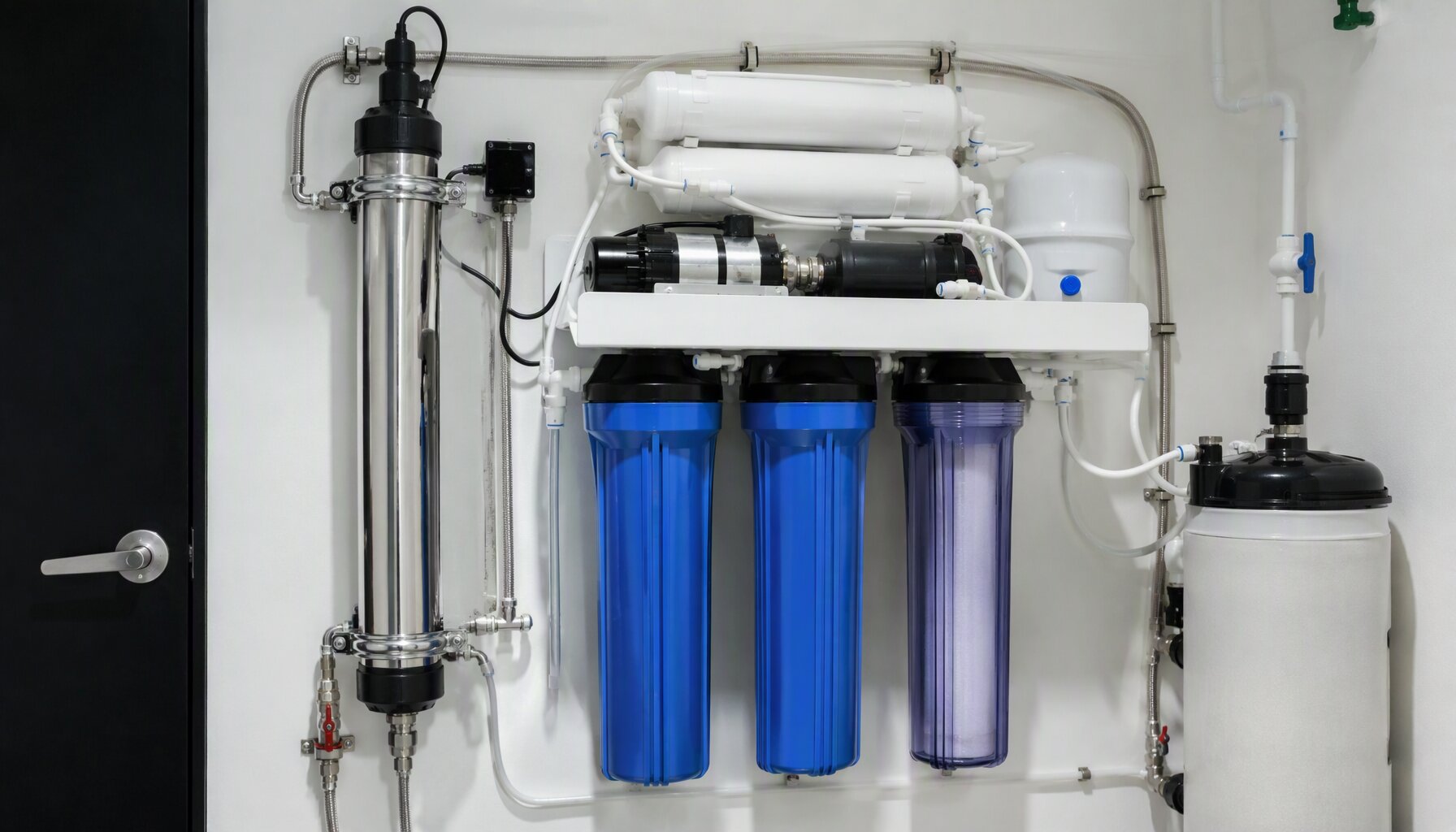
How ONEMI positions UV and RO in the same product family
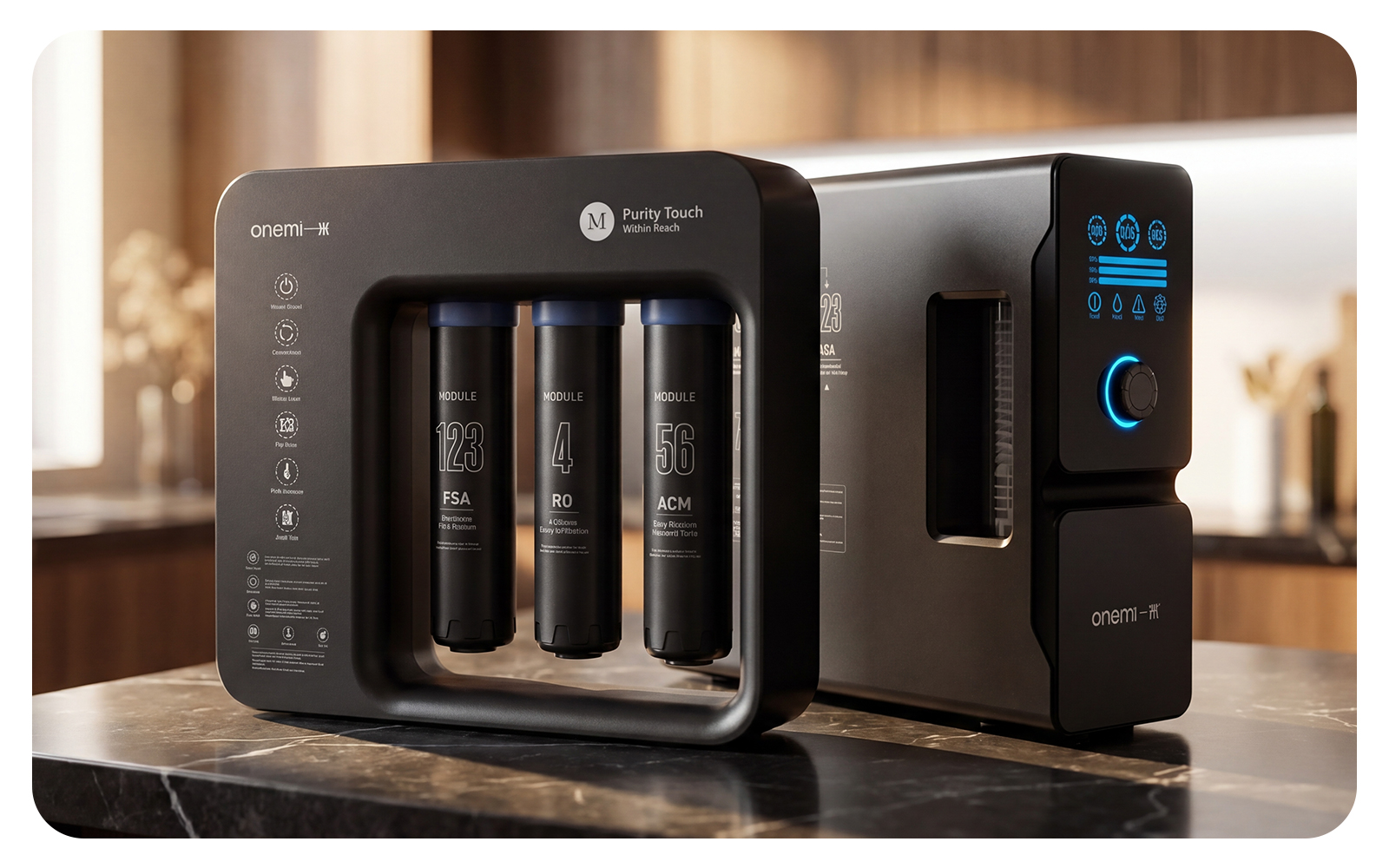
ONEMI is a Guangdong-based water purification equipment manufacturer. In practice, the company treats UV and RO as stages in a system rather than competing SKUs. A high-capacity RO unit such as the 400G smart under-sink RO system handles removal of dissolved contaminants; where a customer needs a final disinfection barrier, the UV stage is added downstream rather than sold as a lone purifier. The entry 100G RO system follows the same stage-based logic for smaller point-of-use applications.
For OEM and ODM buyers, the relevant decision is not “UV or RO” but which combination of stages matches the target market’s water profile. A well-water market wants sediment, softening, and UV. A municipal market wants carbon and RO, with UV as an optional final barrier. The OEM/ODM capability spans the full train, which is what lets a brand assemble a market-specific stack instead of a one-size product.
Certification is the other half of the conversation. The relevant documents are covered in the certification overview: CE, UL and FCC for the electrical assembly, RoHS for materials, and NSF for the filter cartridges where applicable. A buyer who asks for the dose on a UV stage and the certificate on the RO membrane is asking the two questions that matter, and they are the two questions worth answering before price is ever discussed.