

 한국어
한국어

- The EPA’s 500 mg/L figure for total dissolved solids is a Secondary Standard, an aesthetic guideline for taste and scale, not an enforceable health limit. Importers who grasp that distinction can position RO systems on facts instead of scare tactics.
- NSF/ANSI 58 is the standard that governs TDS reduction claims on point-of-use reverse osmosis systems. A TDS performance claim is only as credible as the test protocol behind it.
- TDS creep, the dissolved-solids spike in the first glass after a system sits idle, is a real engineering problem that separates commodity RO units from premium ones, and it is the spec importers rarely ask about.
The 500 mg/L line is a taste threshold, not a safety limit
Total dissolved solids, or TDS, is the sum of mobile charged ions dissolved in water: calcium, magnesium, sodium, bicarbonates, sulfates, chlorides, and trace metals. It is measured in milligrams per litre, and 1 mg/L is interchangeable with 1 ppm in most field work. A handheld TDS meter does not identify what is in the water; it only estimates how much dissolved material is there. That single limitation is why the number gets misused more than any other metric in water purification.
The United States Environmental Protection Agency does not regulate TDS as a health contaminant. TDS has no Maximum Contaminant Level in the National Primary Drinking Water Regulations, the enforceable list that caps lead at 0.010 mg/L and arsenic at 0.010 mg/L. Instead, TDS sits in the Secondary Standards as a nuisance chemical, with a recommended ceiling of 500 mg/L. The EPA is explicit about what that ceiling means: it is set for taste, odour, colour, and scale formation, not for health. Water at 600 mg/L is not dangerous. It is more likely to taste flat or mineral, leave spots on glassware, and build scale inside a water heater.
The World Health Organization draws the palatability lines even more precisely. In the WHO Guidelines for Drinking-water Quality, water below 300 mg/L is generally rated excellent in taste, 300 to 600 mg/L is good, 600 to 900 mg/L is fair, and above 1,200 mg/L becomes unpalatable to most people. Most municipal supplies in the United States run between 100 and 400 mg/L depending on source, with groundwater skewing higher than surface water.
For an importer, this distinction is commercial, not academic. When a distributor tells an end customer that a system is needed because tap water is “above 500 and therefore unsafe,” the claim is false, and it erodes trust the moment a well-informed buyer checks it. The accurate pitch is about taste, scale, and mineral consistency, and it happens to be a stronger pitch because it is true.
What NSF/ANSI 58 actually requires on TDS
If TDS is the number buyers ask about, then NSF/ANSI 58 is the standard that makes a TDS claim defensible. NSF/ANSI 58 covers point-of-use reverse osmosis drinking water treatment systems, and its scope statement names total dissolved solids reduction as one of the core purposes of the technology. A system listed to this standard has been tested for TDS reduction under a defined challenge protocol, not simply marketed with a rejection percentage pulled from a membrane datasheet.
The baseline expectation under NSF/ANSI 58 is at least 75% TDS reduction. That is the floor, not the ceiling. Higher-rejection thin-film composite membranes routinely exceed 90%, and a 400 or 600 gallon-per-day residential membrane can push finished-water TDS well below 50 mg/L when the feed water is in a typical municipal range. The difference between a claimed 75% and a tested 95% is exactly the kind of detail that separates a commodity box from a unit a brand can stand behind.
It helps to keep the standards taxonomy straight. NSF/ANSI 42 covers aesthetic effects, chlorine taste and odour and particulate. NSF/ANSI 53 covers health effects, lead, arsenic, VOCs, and now PFAS reduction. NSF/ANSI 58 is specific to reverse osmosis and is where TDS reduction lives. NSF/ANSI 372 caps the lead content of wetted components at a weighted average of 0.25%, and NSF/ANSI 401 covers emerging contaminants such as pharmaceutical residue. When a spec sheet lists all five, the manufacturer is signalling a complete system, not a membrane sold in a housing.
The practical sourcing question is not “does it reduce TDS” but “what test report backs the number.” A rejection rate quoted from a membrane vendor is not the same as a system-level certification. The system-level test accounts for the pressure vessel, the flow restrictor, the recovery rate, and the pre-filtration, all of which change the real-world reduction figure. Ask for the listing and the report, and treat a bare membrane spec as directional rather than binding. Our certification summary lists the standards that apply to ONEMI systems.
Regional TDS changes the product you should ship
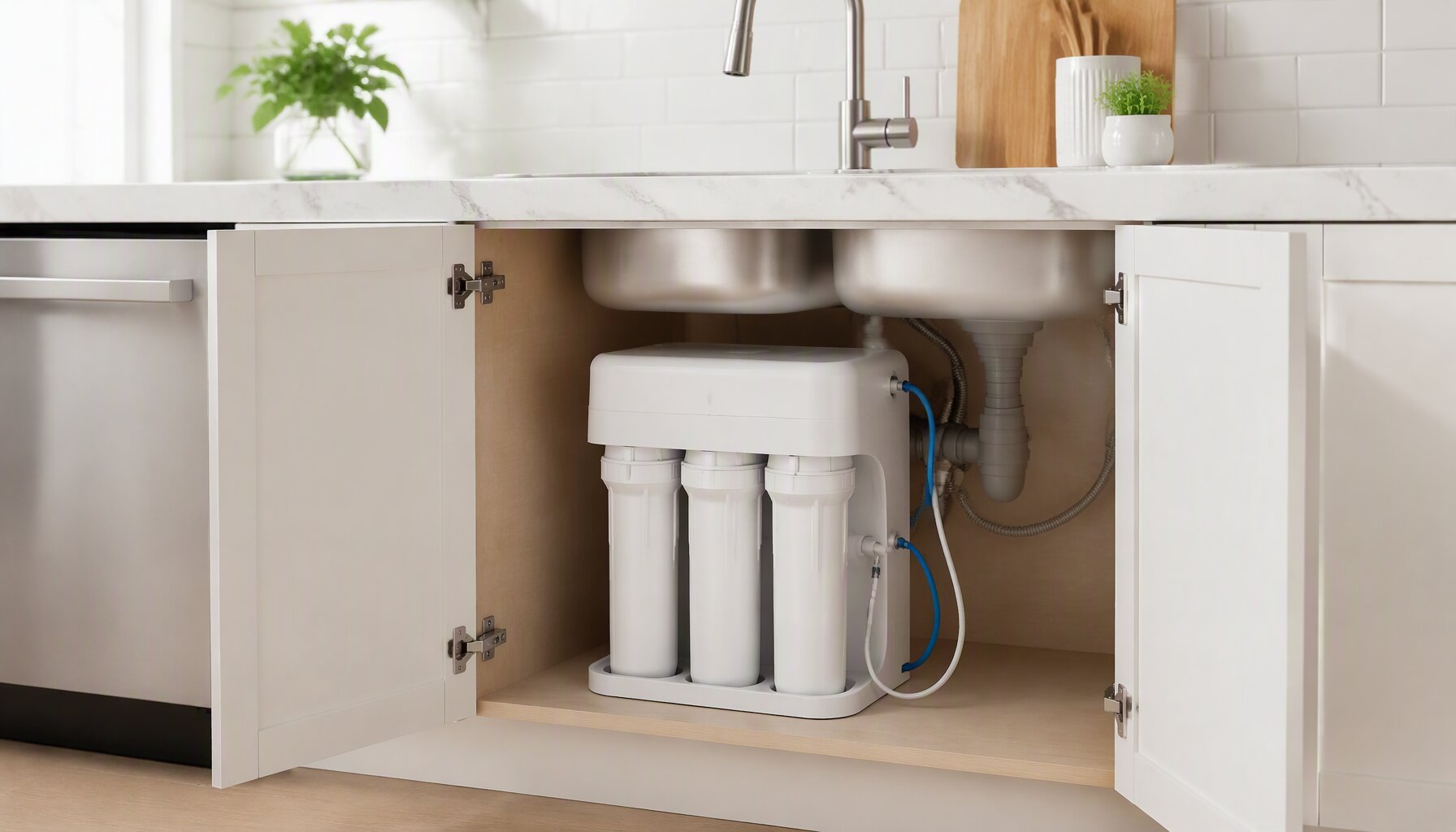
Feed-water TDS is not uniform across a market, and a single SKU does not perform the same everywhere. Surface water from a reservoir might run 80 to 150 mg/L. Groundwater from limestone aquifers in the American Southwest can exceed 350 mg/L. City water reports from Phoenix routinely land in the 250 to 350 mg/L range, Las Vegas above 300 mg/L, and San Antonio around 280 to 300 mg/L, all driven by mineral-rich source geology. New England and the Pacific Northwest, by contrast, often sit below 80 mg/L.
That spread matters because high feed TDS puts real stress on an RO system. A membrane rated for 75% rejection on 100 mg/L feed leaves roughly 25 mg/L behind, perfectly acceptable. The same membrane on 400 mg/L feed leaves closer to 100 mg/L, which a picky customer will notice in taste and a TDS meter will display in seconds. High-TDS regions need higher-rejection membranes, and they generate more scale on the pre-filters, which shortens cartridge life unless the pre-treatment is sized for it.
The USGS estimates that roughly 85% of US households experience some degree of hard water, classifying 0 to 60 mg/L as soft, 61 to 120 as moderately hard, 121 to 180 as hard, and above 180 as very hard. Hardness and TDS are not identical, but they travel together in mineral-heavy water, and an importer selling into a hard-water region is really selling two things: a RO system for the drinking water, and a pre-filtration story for the scale.
| Source water profile | Typical TDS range | Membrane strategy |
|---|---|---|
| Surface water, soft regions | 50–150 mg/L | Standard membrane, 75%+ rejection is plenty |
| Typical US municipal | 150–400 mg/L | High-rejection membrane, 90%+ recommended |
| Southwest hard-water groundwater | 300–500 mg/L | High-rejection membrane plus oversized pre-filtration |
| Brackish well water | 1,000–5,000 mg/L | Commercial RO or two-pass, residential units unsuited |
An importer who ships one configuration everywhere is leaving performance on the table in hard-water markets and overselling capability in soft ones. Matching membrane and pre-filtration to the target region is the difference between a product line and a real programme. The ONEMI RO-400G ships with a high-rejection membrane sized for mineral-heavy municipal feed water.
TDS creep is the spec nobody asks about
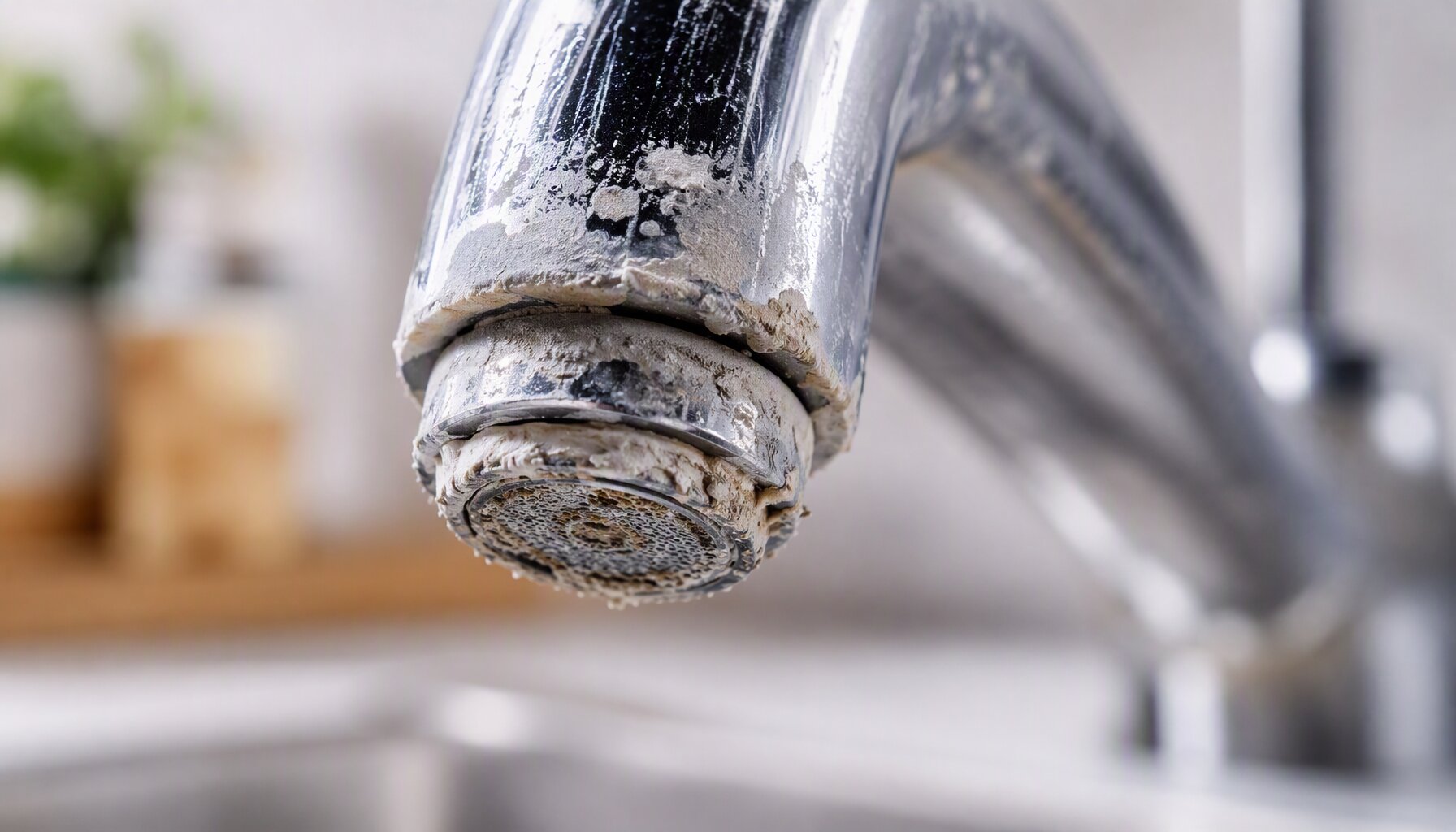
Here is the counter-intuitive detail most sourcing conversations skip entirely. When a reverse osmosis system sits idle, the feed side and the permeate side slowly equilibrate through the membrane. Dissolved solids migrate across, and the first glass poured after an overnight pause can carry measurably higher TDS than the water the system produced minutes after its last run. This is TDS creep, and it is the reason a meter reading right after a long idle can alarm a customer who just spent money on a purifier.
The engineering fix is not exotic. An automatic flush valve that rinses the membrane with permeate or feed water after each production cycle, or before the next draw, keeps the permeate side from stagnating. Systems with this feature hold the first-glass TDS flat instead of letting it spike. It adds a handful of components and a modest cost, and it is almost never visible on a marketing spec sheet.
For an importer, TDS creep is a useful sorting tool. A factory that can explain its flush strategy, and quote the idle-time TDS recovery curve, understands membrane hydraulics. A factory that only quotes a static rejection number does not. Premium brands increasingly build the feature in because it is cheap insurance against a support ticket from a customer with a TDS meter and a morning habit.
TDS meters turn a spec into a sales conversation
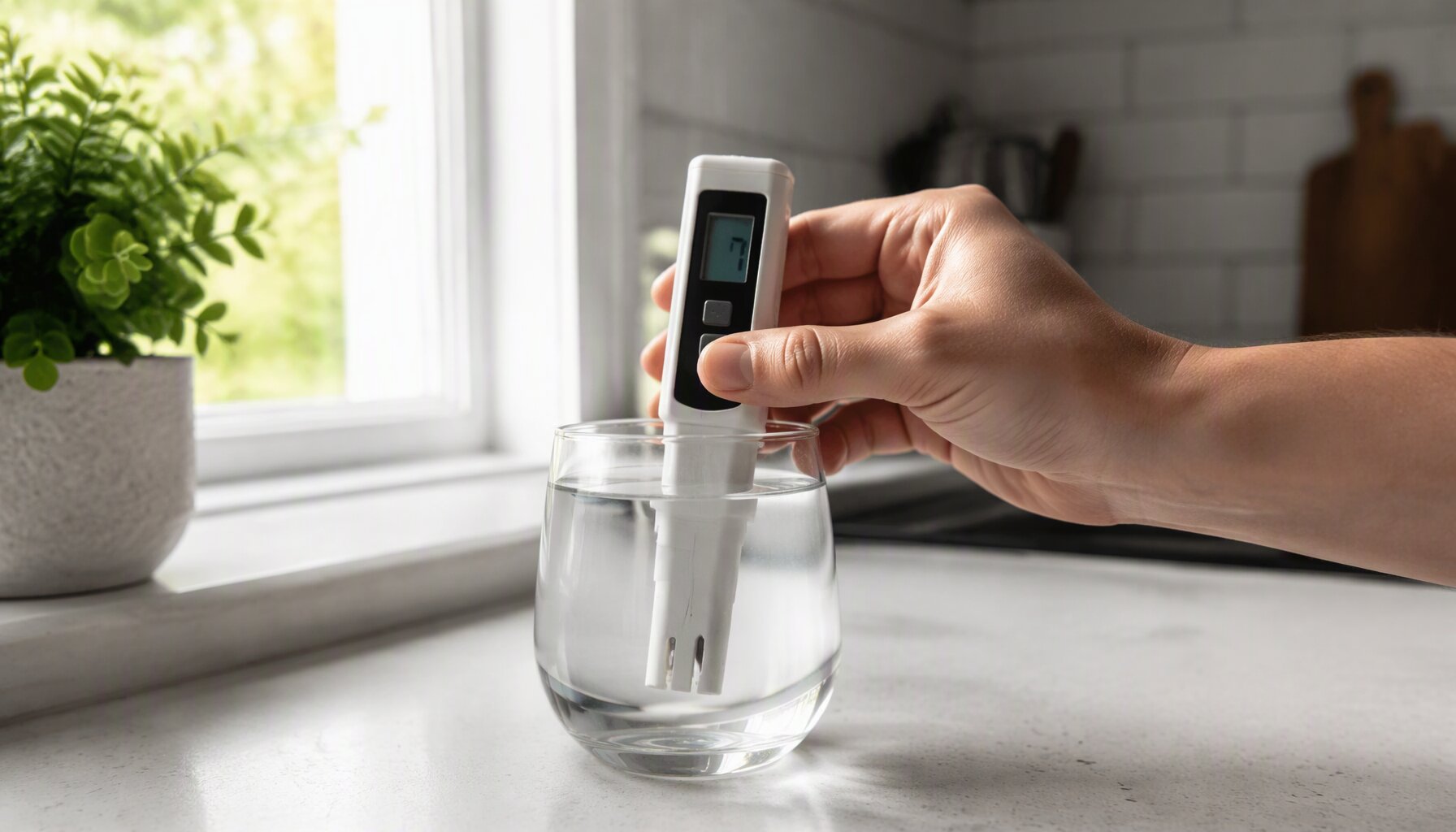
The cheapest tool in the category is also one of the most effective sales instruments. A handheld TDS meter costs a few dollars at the factory gate and turns an abstract promise into a visible before-and-after. A distributor who meters the tap water in front of a customer, runs it through a demo unit, and meters the output has closed the sale with evidence rather than adjectives.
That same logic is moving into the product itself. Smart faucets and control panels now display real-time TDS, so the end user can watch the number drop from a few hundred to a few dozen on the first run. The display is not a gimmick; it reinforces the filter-change cycle. When the output TDS begins to climb, the membrane is fouling or the filter is spent, and the customer can see it before the taste changes. This converts a passive consumable into an actively managed one, which is the foundation of a replacement-driven aftermarket.
The numbers support the emphasis. Fortune Business Insights sizes the US water purifier market at roughly $6.75 billion in 2024, growing toward $10.35 billion by 2032 at a 5.5% compound annual rate. A meaningful share of that revenue is replacement and upgrade demand rather than first-time equipment, and any feature that makes replacement predictable, like a TDS display that shows when the membrane is fading, feeds directly into that recurring line.
One caveat belongs in every importer’s training deck: a TDS meter does not detect pathogens, lead, or PFAS. It only estimates dissolved solids. Selling on TDS alone overpromises, and it leaves the door open for a competitor to walk in with a full contaminant story. The meter is the hook; the certification and the test data are the close. A system like the ONEMI RO-100G gives installers a fixed reference point for before-and-after metering.
How to verify a TDS claim before you order a container
Before committing to a purchase order, a buyer should be able to answer four questions about any RO system’s TDS performance without flipping through a brochure.
First, what does the system-level test show? A membrane rejection rate is not a system result. The listing under NSF/ANSI 58, or an equivalent third-party report, is the number that matters. Second, what is the membrane type and its rated rejection under the feed-water conditions the target market actually has? A membrane spec quoted at 500 ppm sodium chloride challenge does not translate to a hard-water region without adjustment. Third, is there a flush or anti-creep mechanism, and what does the idle recovery curve look like? Fourth, how does the pre-filtration stage hold up under scale-forming water, and what is the expected cartridge interval?
These four questions separate a factory that assembles components from one that engineers a water treatment system. They also map cleanly onto a sourcing conversation. A manufacturer that answers them directly, with documents, is one a brand can build a multi-year line around rather than a one-time shipment.
The TDS conversation rewards the importer who treats the number as a specification rather than a slogan. The 500 mg/L line is a taste threshold, the 75% reduction is a certification floor, and the idle-time recovery curve is a quality marker. Put those three together and a buyer is no longer guessing, which is the entire point of sourcing well. Importers building a private-label line can start that conversation on our OEM and ODM manufacturing page.