


 한국어
한국어

- A main-inlet sediment pre-filter is the lowest-cost product in whole-house water, but it carries the highest attach rate to higher-margin softeners and RO systems downstream.
- NSF/ANSI 42 is the table-stakes certification for US retail and plumber channels; filter cartridge claims that skip it get pulled at the first distributor review.
- US infrastructure spend is pushing sediment filtration into new construction and lead-service-line replacement projects, where spec sheets matter more than price per unit.
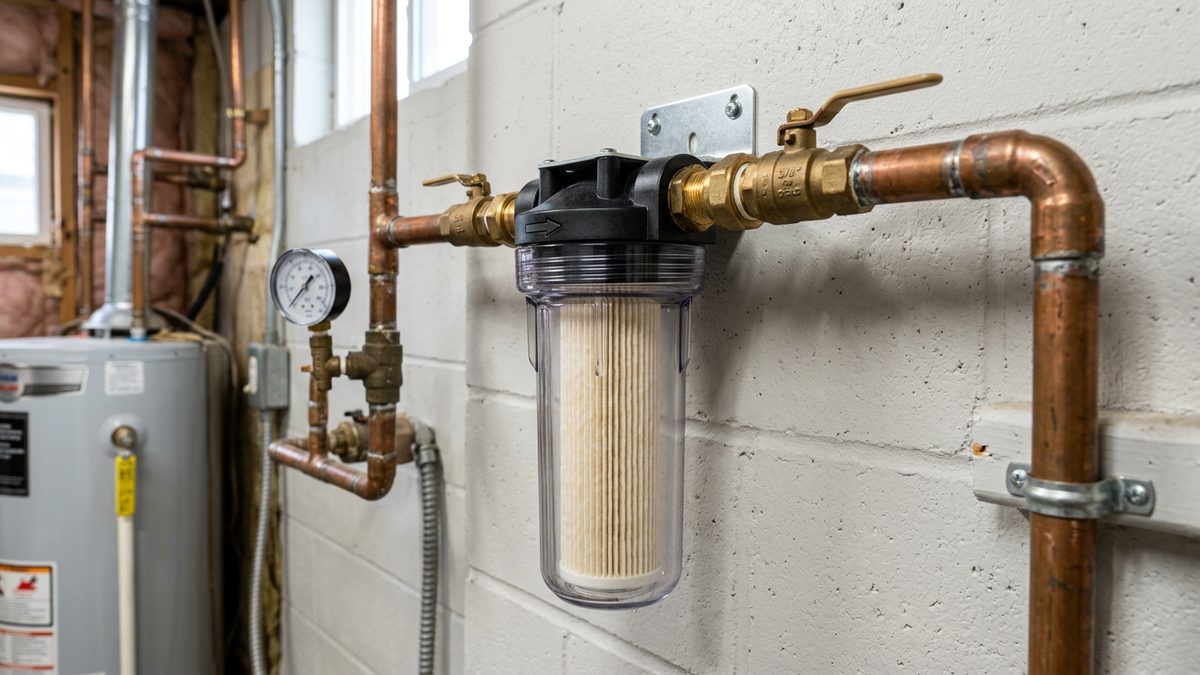
Whole-house water filtration in the US has a quiet entry point: the sediment pre-filter bolted to the main inlet. It does not remove lead, it does not soften water, and it costs less than almost anything else in the category. That is precisely why it matters to an importer. It is the first device a contractor installs on a whole-house job, and the one that creates the account for every filter the customer buys afterward.
Why a Commodity Product Is the Account Opener
A sediment pre-filter sits at the point where the municipal or well line enters the building. It catches sand, silt, rust flakes and pipe scale before they reach a water heater, a softener, or a point-of-use RO unit. By itself it solves nothing dramatic, but it protects everything downstream, and US plumbers treat it as step one of any whole-house spec.
For an importer the logic is simple. The pre-filter carries the lowest unit price and the lowest warranty risk in the category, which makes it the natural first SKU in a US distribution relationship. The customer who buys a pre-filter this year is the one who upgrades to a softener or a carbon backwash system next year, and that is where the margin actually lives.
The Spec US Buyers Actually Check
US distributors and plumber supply houses do not buy a sediment filter on brand alone. They check the cartridge’s micron rating, the housing’s flow capacity, and the certification. The workhorse of the category is a spun polypropylene cartridge rated 5 to 20 microns, sized to a standard 10-inch or “Big Blue” 20-inch housing, with a 1-inch inlet suited to a whole-house flow rate of roughly 20 to 35 gallons per minute.
The certification gate is NSF/ANSI 42, which covers the aesthetic effects a sediment filter claims to reduce — particulate and turbidity. A cartridge that claims particle removal without an NSF/ANSI 42 listing will be dropped at the first distributor review, because the largest US retail and plumber channels use the listing as a pass-fail filter. Materials that contact drinking water also sit under NSF/ANSI 61, and lead content in wetted parts under NSF/ANSI 372.
US Infrastructure Spending Is Pulling Demand
The demand story is not just replacement. The EPA’s most recent Drinking Water Infrastructure Needs Survey puts the 20-year need at roughly $625 billion, and the Lead and Copper Rule Improvements finalized in 2024 set a ten-year clock to pull the country’s roughly nine million lead service lines. Every one of those replacement projects is a chance to add a main-inlet sediment stage, because contractors protecting a new line want a cheap first barrier upstream of any treatment gear.
Fortune Business Insights sized the US water purifier market at about $6.75 billion in 2024, growing toward $10.35 billion by 2032 at a 5.5% CAGR. Sediment pre-filters are the least glamorous slice of that number, but they are also the slice with the shortest sales cycle and the strongest repeat purchase, since the cartridge itself is a consumable replaced every six to twelve months.
Backwash vs. Cartridge: The Two SKUs to Carry
A US importer building a sediment line should understand the two form factors, because they sell to different buyers:
| Type | How it cleans | Maintenance | Buyer |
|---|---|---|---|
| Spin-down / backwash filter | Flushes trapped sediment to drain | Manual or automatic flush, no consumable | Well water, heavy-sediment homes |
| Cartridge filter (spun PP or pleated) | Replaceable element traps particles | Cartridge swap every 6-12 months | Municipal supply, retail and plumber channel |
The cartridge type is the higher-volume repeat-purchase SKU and the one most US importers lead with, because the consumable drives recurring revenue. The backwash type carries no consumable but wins on well-water and high-sediment municipal accounts where a homeowner does not want to open the housing every six months. A supplier that can offer both, in standard 10-inch and 20-inch form factors, covers the full channel rather than half of it.
What ONEMI Builds for the US Main Inlet
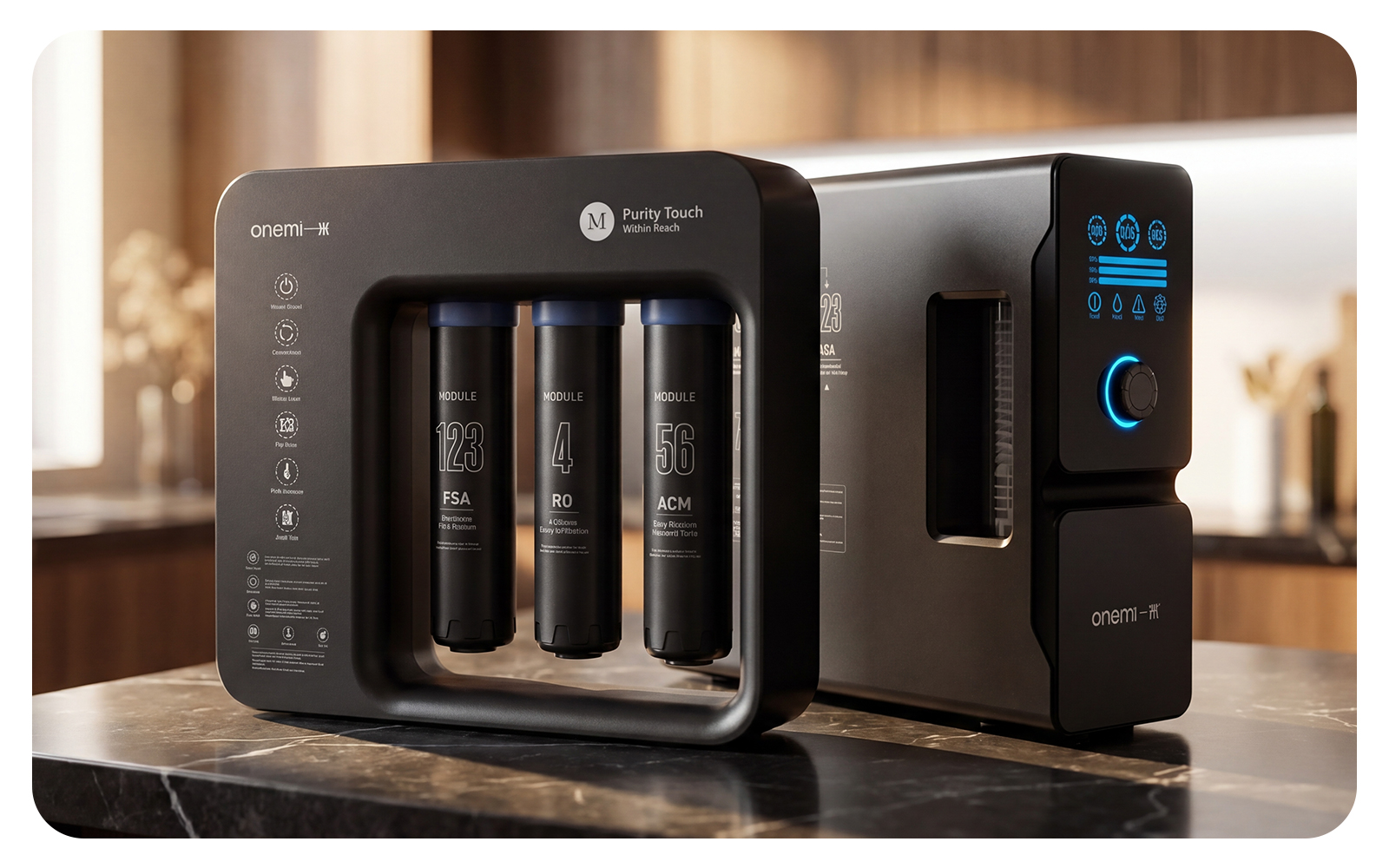
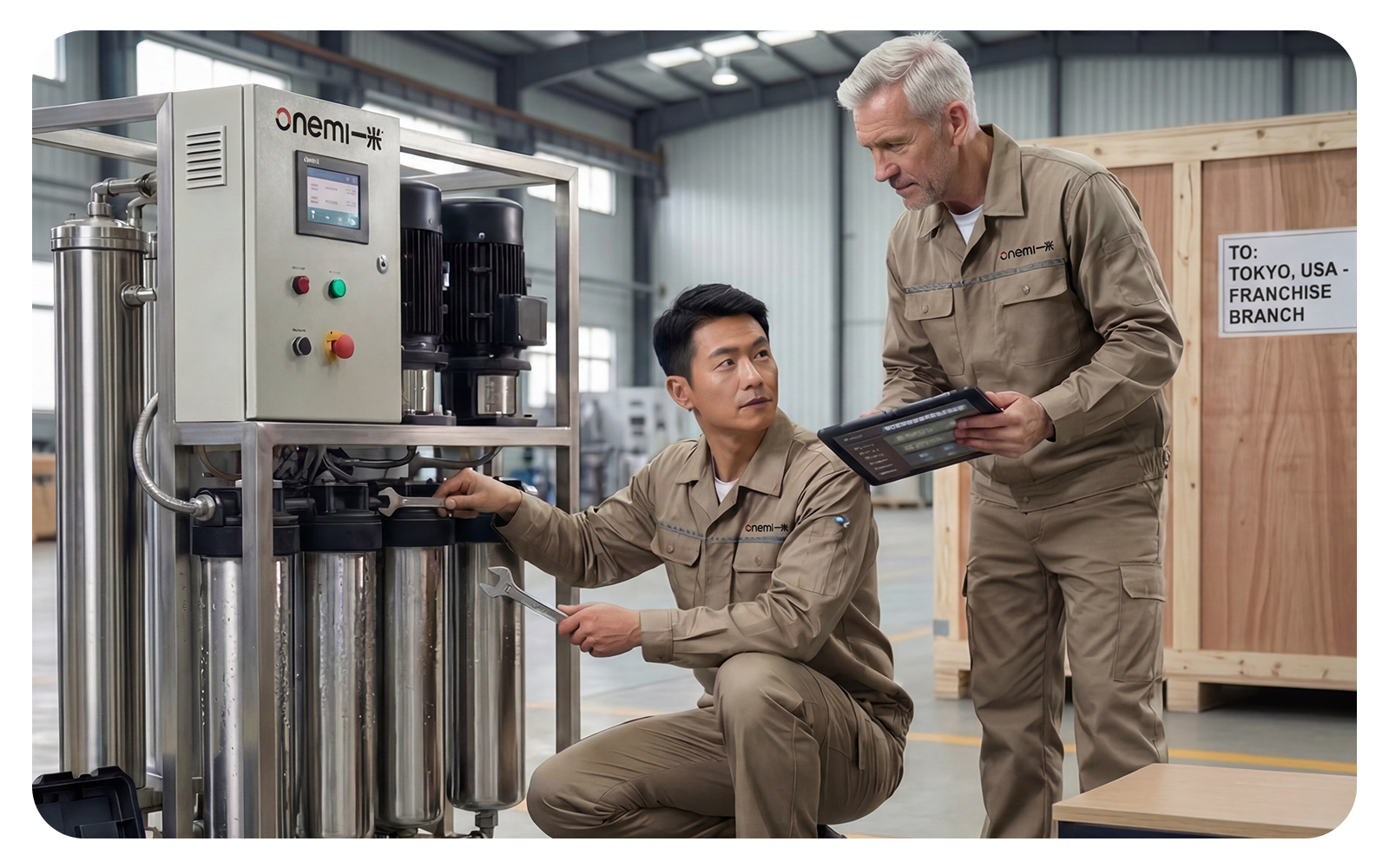
ONEMI is a Guangdong-based water purification equipment manufacturer. On the sediment line, the relevant capabilities are a 5-to-20-micron polypropylene cartridge range, spun and pleated options, and housings sized to both 10-inch residential and 20-inch whole-house flows, built for a 1-inch inlet and an NSF/ANSI 42 and 61-ready material set. The point for an importer is a single source for the pre-filter and the OEM/ODM softener or backwash carbon system that follows it, so the account does not fragment across three factories. A countertop or under-sink unit like the instant dispenser then becomes the point-of-use upsell on the same invoice.

The Margin Is in the Follow-On, Not the Pre-Filter
No importer gets rich selling sediment cartridges alone. The pre-filter is the entry product; the margin lives in the softener, the backwash carbon system, and the point-of-use RO that the same customer buys once the main-inlet stage is in place. A US distribution strategy that treats the sediment filter as a loss-leader and the whole-house system as the sale is a strategy that compounds, because every pre-filter installed this year is a softener prospect next year.
The sediment pre-filter is not the most exciting product in the catalog. It is the one that starts the conversation, clears the certification bar without drama, and keeps the cartridge reorder coming every six months. For an importer building a US whole-house line, that is a better first step than a high-end system with a long sales cycle and a longer payback.