
 한국어
한국어

- Europe’s instant drinking machine market reached roughly USD 945 million in 2025, inside a global category projected to grow to USD 8.11 billion by 2032.
- Smart, connected models now account for more than 65% of global shipments — this is a spec-first category, not a price-first one.
- The repeatable margin sits in filter replacement revenue, not the FOB unit price.
Europe is the quietest growth story in the instant water dispenser category. The headline numbers point at Asia-Pacific, so most importers are still staring at the wrong market. Look closer at Europe and the picture shifts: a category moving away from kettles and bottled coolers toward plumbed, connected, instant-heating machines — and a channel that has not yet consolidated around a handful of brands.
Market research firm pmarketresearch puts Europe’s instant drinking machine market at roughly USD 945 million in 2025, inside a global category it expects to climb from USD 4.64 billion to USD 8.11 billion by 2032 at an 8.3% CAGR. GEP Research’s 2026 figures go further on the technology side: smart, connected models have crossed 65% of global shipments. Europe holds about 27% of the global instant hot water dispenser market, according to 360 Research Reports.
The implication for an importer is straightforward. This is no longer a “cheap kettle with a tap” category. It is a compliance-heavy, spec-driven, software-touching category. The buyers who win it will treat certification and filter economics as seriously as unit cost.
Inline, Countertop, or Bottleless: What Actually Ships to Europe
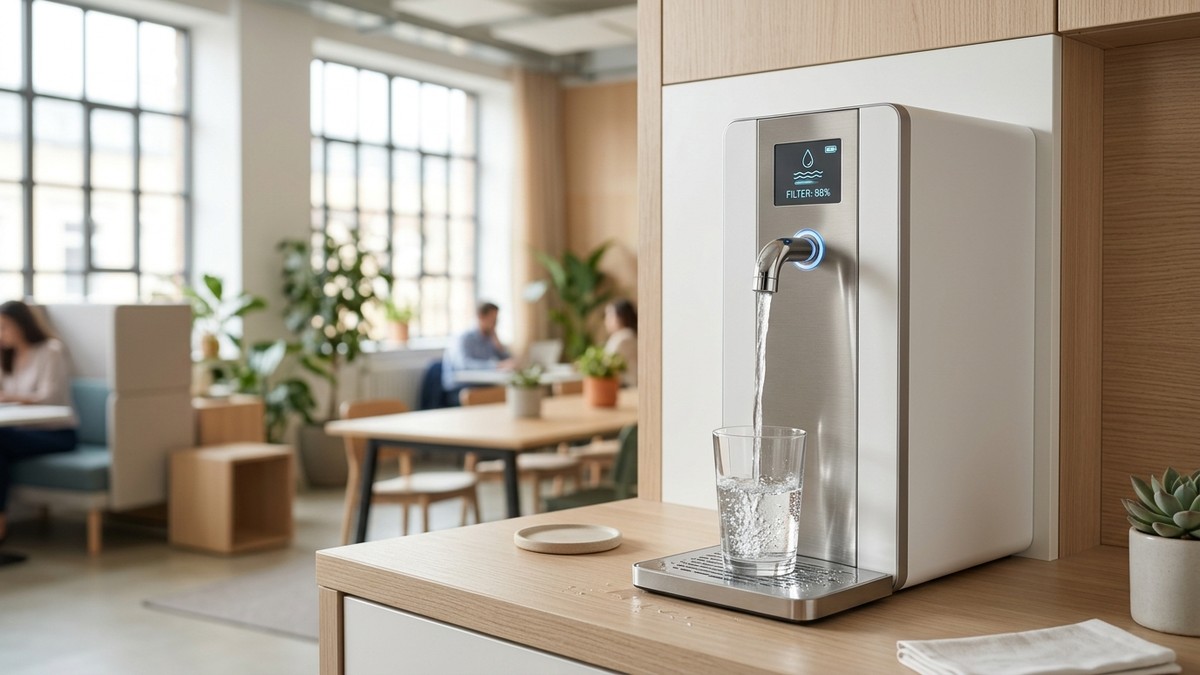
Three form factors dominate European B2B inquiries, and they are not interchangeable. Inline dispensers — often called plumbed units — tap directly into the mains and deliver hot, cold, or ambient water on demand. Countertop instant dispensers heat water in seconds from a refillable tank, with no plumbing at all. Bottleless coolers replace the 19-litre bottle with a plumbed filtration unit that feeds a chilled or heated tap.
The split matters because it changes the certification burden, the install complexity, and the aftermarket revenue profile. A machine that needs no plumbing faces a lighter compliance path. A machine wired into the mains water supply inherits every drinking-water materials rule the EU can throw at it.
| Form factor | Water source | Installation | Filter aftermarket | Typical buyer |
|---|---|---|---|---|
| Inline (plumbed) | Mains | Plumbed | High — 2-stage to RO | Offices, HoReCa, builders |
| Countertop instant | Refillable tank | None | Moderate | Apartments, rental, boutique office |
| Bottleless cooler | Mains + filtration | Plumbed | High | Corporate floors, gyms |
The Compliance Stack That Clears a Container at EU Customs
CE marking is the floor, not the ceiling. A dispenser with a heating element and a control board falls under the Low Voltage Directive and the EMC Directive. Connect it to the mains water supply, and the Drinking Water Directive 2020/2184 and its materials rules apply to every wetted part. RoHS 2011/65/EU covers hazardous substances in the electronics; REACH covers the chemical safety of the plastics and elastomers that touch the water.
On the energy side, the EU’s eco-design framework keeps tightening standby-power limits for instant water heaters. GEP Research notes the latest revision cut standby consumption limits by roughly 30%. An importer shipping machines built to the older standard risks a container that clears the port but fails a market-surveillance audit six months later.
The practical checklist is short and non-negotiable: a CE declaration of conformity with a complete technical file, RoHS test reports, REACH SVHC declarations for wetted components, and — for anything connected to the mains — materials tested to the relevant member-state drinking-water approvals. Importers who skip the technical file to save a few cents on the unit discover the cost lands elsewhere, at the border or in the showroom.
Why the Margin Lives in the Filter, Not the Unit
The unit price is a race to the bottom. The filter schedule is not. A plumbed dispenser with a two-stage carbon-plus-sediment system typically needs a filter change every six months of office use; an RO-equipped inline unit on a harder supply cycles its membrane and pre-filters on a different schedule entirely. Every change is a reorder, and every reorder is margin that a one-time box sale does not capture.
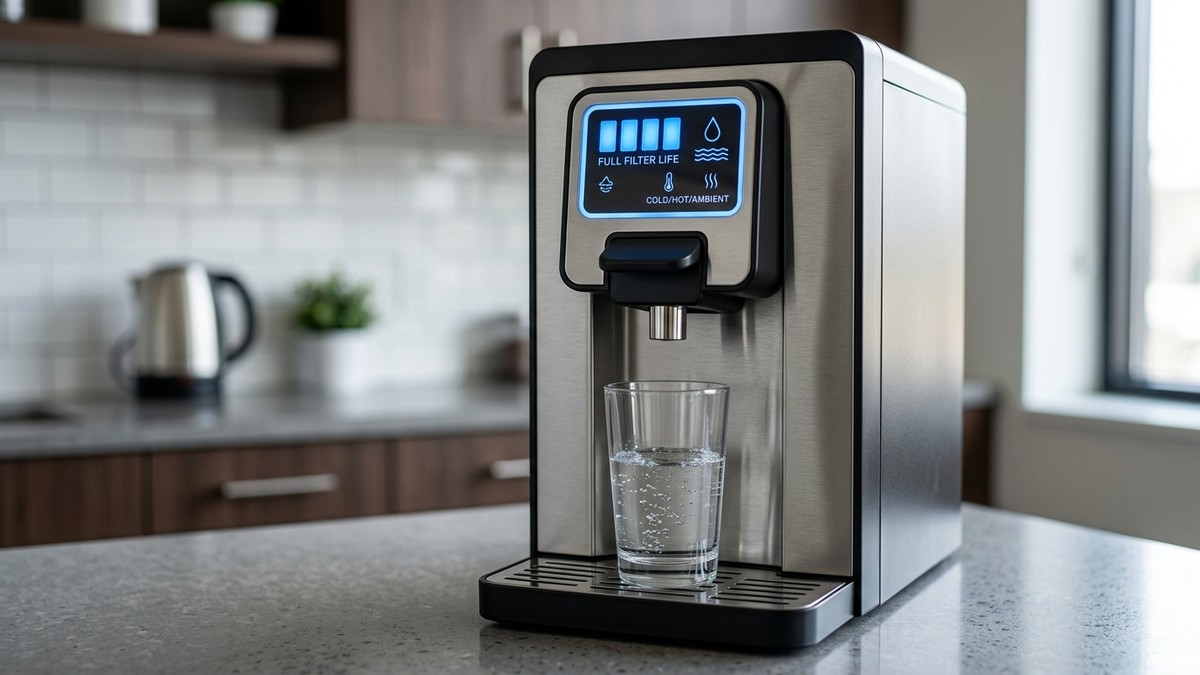
This is why the smarter European distributors stopped competing on FOB price and started competing on aftermarket lock-in. A machine that reports its own filter life through a display or an app converts a one-off purchase into a recurring relationship. The hardware becomes the customer-acquisition cost; the cartridge becomes the business.
Instant Heating Is the Quiet Energy Argument
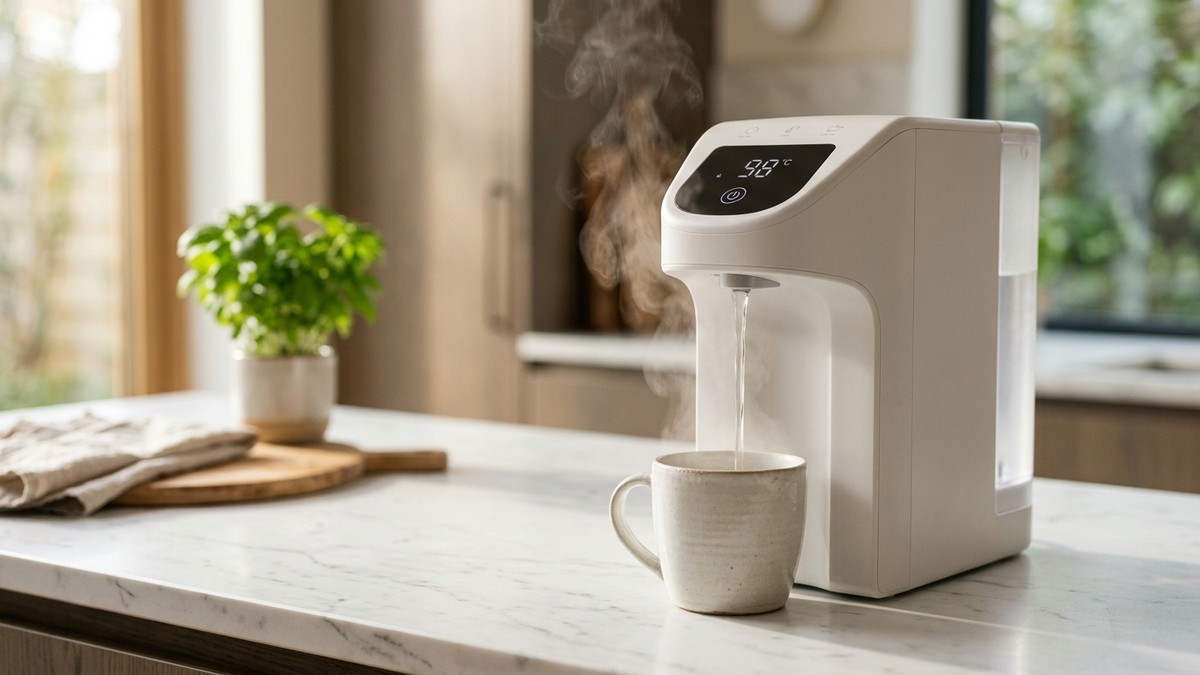
European buyers pay some of the highest electricity prices in the developed world, so a dispenser that keeps a tank of water hot around the clock is a hard sell against one that heats on demand — a point that already shows up in UK office energy calculations. Tankless instant heating — thick-film or metal-sheath elements that raise water temperature in seconds — removes the standing thermal loss entirely.
The difference is measurable. A conventional hot tank cycles its element constantly to hold water at 85–95°C. An instant-heating unit draws power only for the few seconds of a pour. For an office running 40 pours a day, that is the difference between a machine idling at 50–80 W around the clock and one that averages a fraction of that. Over a three-year service life the energy cost can exceed the hardware cost — which is exactly the calculation a facility manager runs before signing a multi-site rollout.
| Metric | Hot tank | Instant heating |
|---|---|---|
| Standby draw | 50–80 W continuous | Near zero when idle |
| Heat-up | Pre-heated, always ready | 3–5 seconds per pour |
| Energy profile | Constant | On-demand |
What to Ask a Dispenser Factory Before You Order
A factory that quotes a low unit price but cannot produce a CE technical file is not cheaper — it is deferred cost. The questions that separate a real manufacturing partner from a trading company are specific:
- Can you provide the CE declaration of conformity with the full technical file, including LVD and EMC test reports?
- Do your wetted components carry RoHS and REACH SVHC documentation?
- What is the heating element’s rated lifetime in cycles, and what is the standby power draw?
- What is the filter replacement interval, and can you supply cartridges on a recurring basis?
- What is the MOQ for a private-label run, and the lead time on a container to Rotterdam or Hamburg?
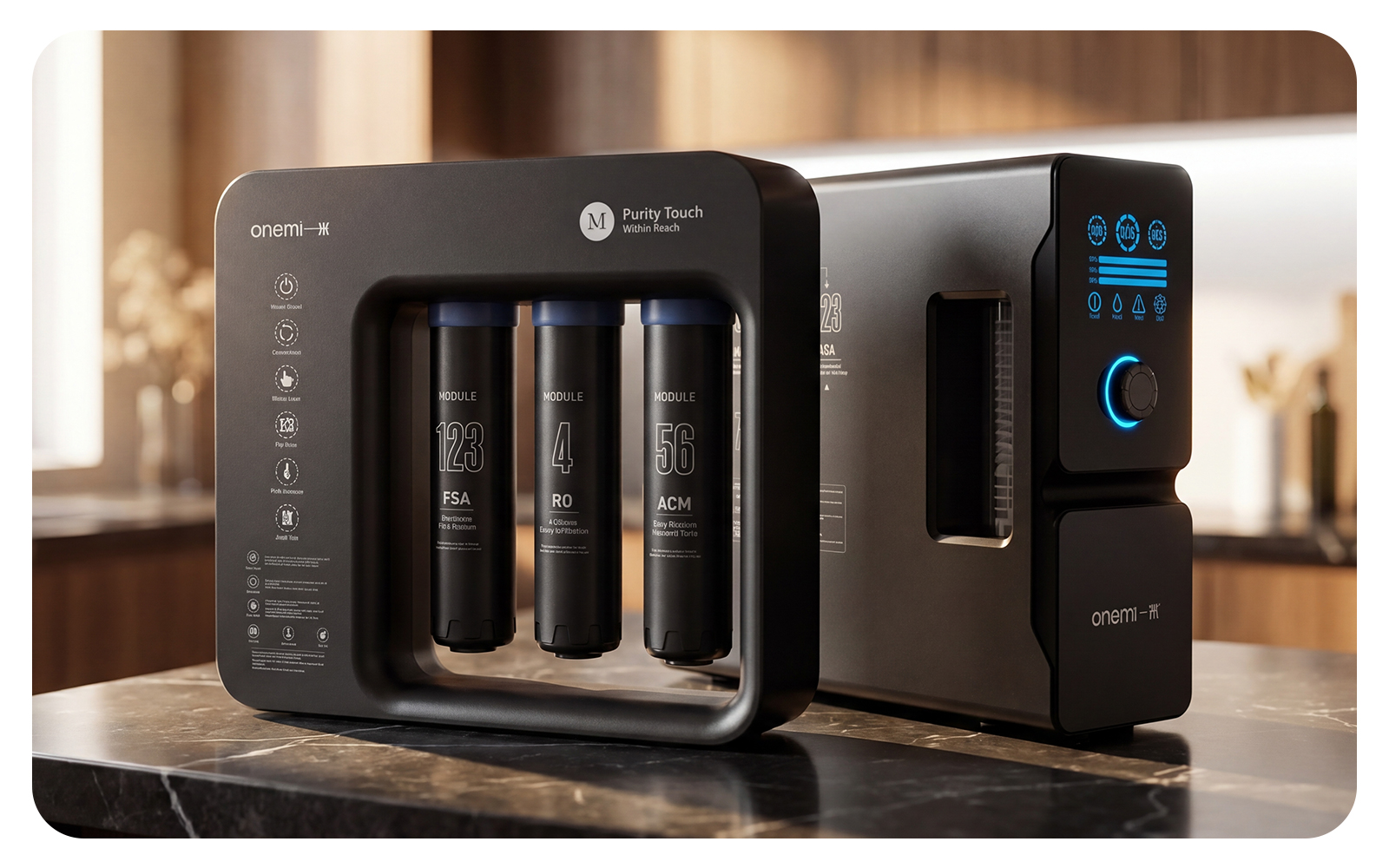
ONEMI, a Guangdong-based water purification equipment manufacturer, works from the same checklist. Its instant dispenser line runs from the T1 countertop instant hot water dispenser — no installation required, with a filter replacement cycle of four to six months — through to plumbed hot-and-cold units built for office and HoReCa deployment. Whole-machine certifications cover CE, UL, FCC and RoHS, with NSF held on the filter cartridges rather than claimed on the machine.
For a European importer, the pattern is worth stating plainly. The winning play is not the cheapest machine in the container. It is a machine that clears compliance on the first audit, earns its keep on the energy bill, and keeps generating filter orders for years after the box leaves the warehouse.