


 한국어
한국어

- Instant hot and cold dispensers heat water on demand, so a UK office pays for the cup it uses, not a kettle boiling a full pot every time.
- WRAS approval is the non-negotiable gate for any dispenser plumbed into a UK building’s water supply.
- The saving shows up in the meter: the Energy Saving Trust puts an instant hot tap at roughly 0.07 kWh per use, against a full kettle boil nearer 0.1 kWh.
Walk into most UK offices and the kitchen still runs on a kettle — boiled, refilled, boiled again, with nobody quite sure how much water was needed the first time. The Energy Saving Trust estimates three quarters of people boil more water than they use. Across a floor of forty desks making tea four or five times a day, that habit quietly turns into real money on the electricity bill. The fix is not a faster kettle. It is a dispenser that heats only what is drawn, the moment it is drawn.
The Office Kettle Is a Quiet Energy Drain
A full boil of a 3 kW kettle costs around 3.7 pence at 24.5 p/kWh, and that is before you account for the water that gets poured away because it was overfilled. Run that five times a day, every working day, and a single kettle passes £65 a year without anyone noticing. Multiply it across a building and the numbers stop being trivia.
The deeper problem is the pattern, not the appliance. A kettle is built to boil a fixed volume. An instant dispenser is built to heat a cup. One is batch heating, the other is on-demand — and on-demand is almost always cheaper when demand is scattered through the day.
What “Instant” Actually Means for a Dispenser
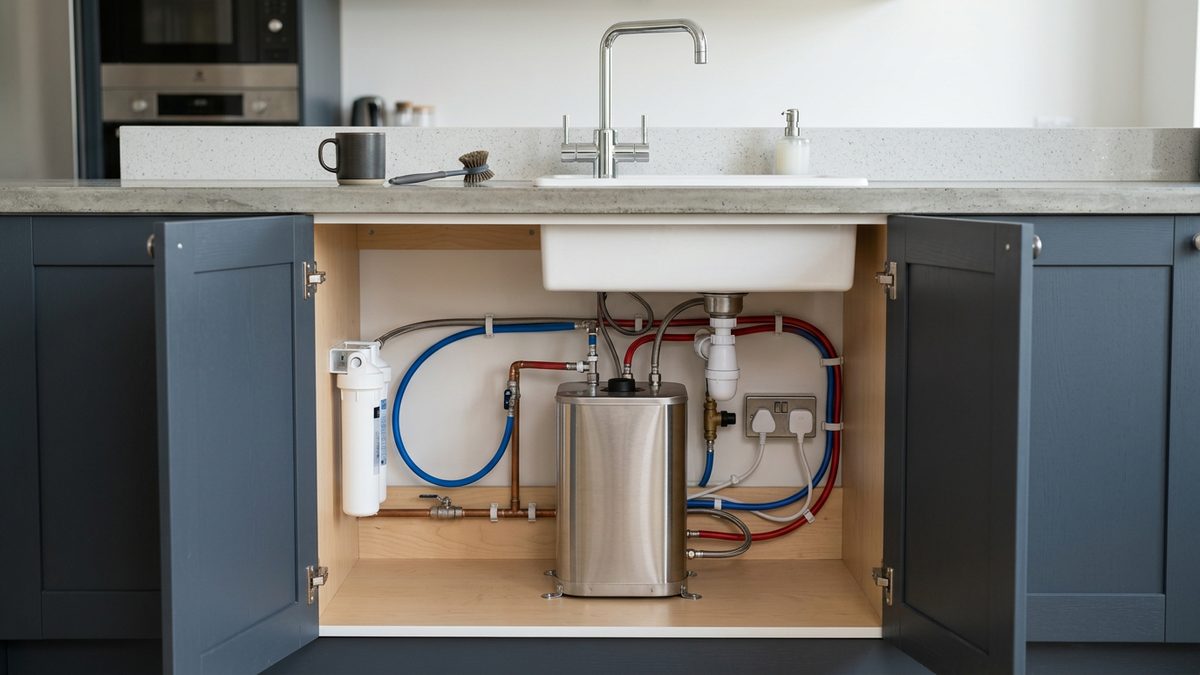
An instant hot and cold dispenser keeps a small, insulated volume of water near boiling and reheats only the water that replaces what you pour. The Energy Saving Trust figures an instant hot tap uses about 0.07 kWh per use — close to 70% less than repeatedly boiling a full kettle. The cold side runs off the mains, so there is no refrigerated reservoir idling away watts around the clock the way a bottled cooler does.
That idle load is the part buyers miss. A bottled water cooler keeps a tank cold permanently, whether anyone is in the office or not. A plumbed-in instant dispenser has almost no standby draw on the cold side and a very small one on the hot side. Over a year, the difference is a few hundred kilowatt-hours, not a few pence.
WRAS Is the UK Gatekeeper
Any dispenser connected to a UK building’s water supply has to satisfy the Water Supply (Water Fittings) Regulations 1999, which is what WRAS approval certifies. It covers the materials that touch drinking water — tested to BS 6920 for taste, odour, metal migration and microbial growth — plus the mechanical performance and backflow protection of the fittings. Large retailers and every UK water company treat WRAS as the entry ticket, not a nice-to-have.
For an importer sourcing a dispenser for the UK market, WRAS is the line you do not cross. A unit that is not approved can be refused connection at the mains. That is a commercial risk, not a cosmetic one, and it is exactly the kind of gate a supplier should clear before you commit to volume.
The Energy Math vs Kettles and Bottled Coolers
Put the three options side by side and the difference is mostly in how each one wastes energy:
| Option | How it heats/cools | Main energy waste | UK compliance |
|---|---|---|---|
| Kettle | Full-pot batch boil | Overfilling, repeated reboils | N/A (not plumbed in) |
| Bottled cooler | Refrigerated tank, 24/7 | Permanent standby cooling | Delivery only, no mains hookup |
| Instant plumbed dispenser | On-demand heat, mains cold | Small hot-side standby | WRAS + BS 6920 |
The instant dispenser is the only one of the three that removes the structural waste — the overfilled kettle and the always-on cooler — rather than just making it slightly more efficient. That is the argument facilities managers actually respond to, because it is the one that survives a meter reading.
What to Spec for a UK Office
When you source a dispenser for the UK market, lock these before you place the order:
- WRAS approval on the water-contact materials and fittings, with a test report you can read — not a logo pasted on a PDF.
- On-demand heating with an insulated hot tank, sized to the floor’s peak tea-rush demand rather than the daily average.
- Mains-fed cold with no refrigerated reservoir, to kill the standby load.
- Boil-dry and child-safe tap controls, because a 100 °C tap in a shared kitchen is a liability if it is not guarded.
- Filter integration — a built-in stage for taste and scale makes sense in hard-water regions, which cover roughly 60% of England.
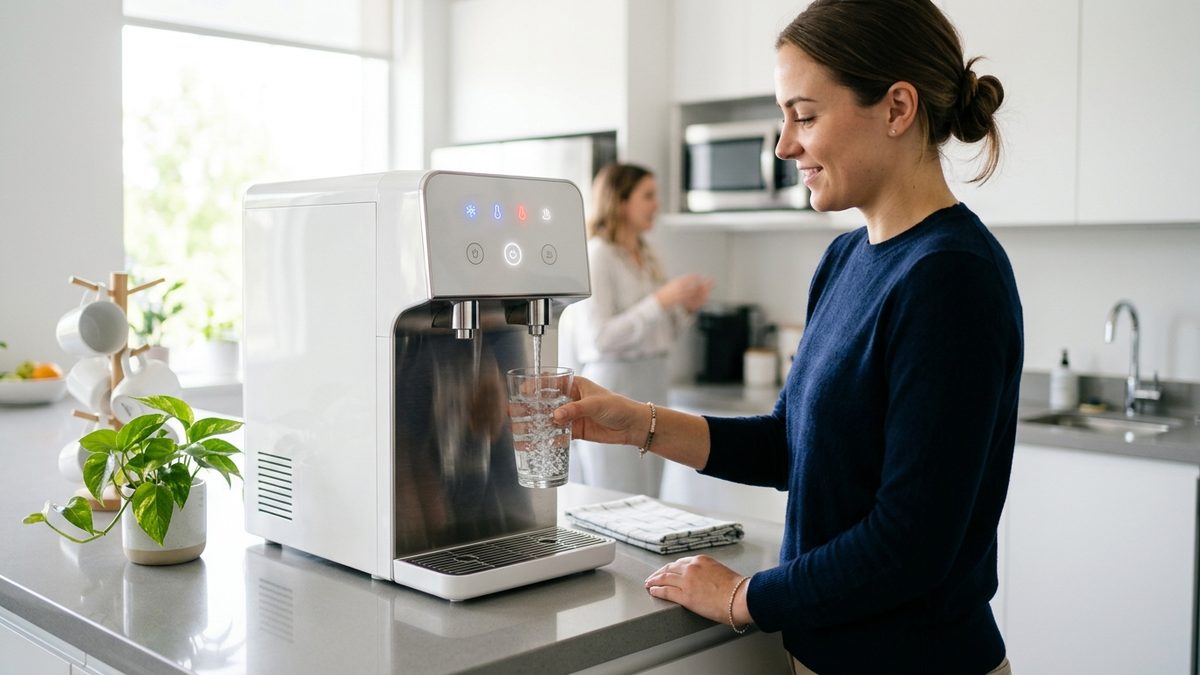
These are the same decisions an OEM or ODM run exists to make upfront, before a container leaves the factory. The countertop instant dispenser shows the on-demand principle in a smaller form, and it is a useful reference point for what “instant” should feel like under real use.
The ONEMI Position
ONEMI is a Guangdong-based water purification equipment manufacturer. On the dispenser side, we treat energy as a spec line, not a selling slogan: on-demand heating, a mains-fed cold path, and WRAS-ready water-contact materials are the baseline. A UK office that swaps a kettle-and-cooler routine for a plumbed instant dispenser stops paying for water it never drank — and a supplier that builds to that standard is the one that keeps the account.
Energy saving in an office dispenser is not a gadget feature. It is the difference between batch boiling and on-demand heating, between an always-on cold tank and a mains feed. Spec for that difference and the invoice follows the meter.