


 한국어
한국어

- Replacement cartridges were a $3.92 billion aftermarket in 2024, tracking toward $6.45 billion by 2033 (Verified Market Reports) — consumables, not hardware, carry the lifetime margin.
- Four standards set the compliance baseline for any cartridge line: NSF/ANSI 42, 53, 61 and 372, plus 58 for RO membranes.
- Private-label consumables with a controlled interface convert a one-time filter sale into a multi-year repeat-purchase relationship.
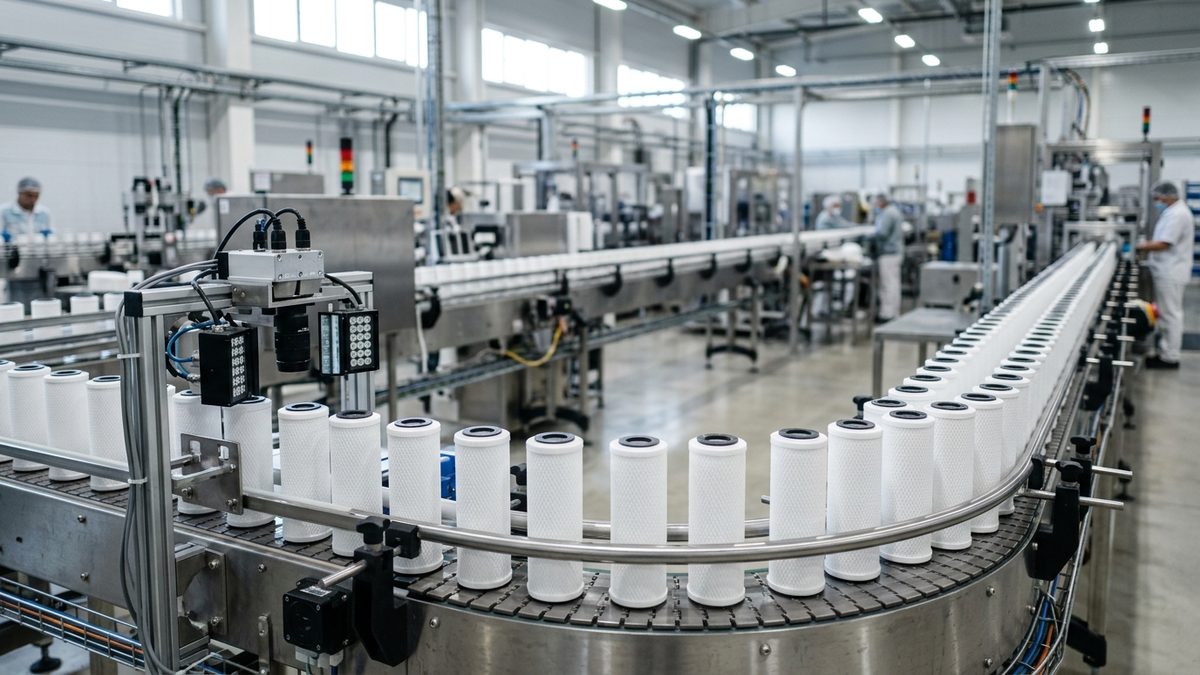
Most of the money in water filtration never shows up on the hardware invoice. A retailer sells an under-sink RO system once, collects a margin, and moves on. The cartridge inside that machine gets swapped every six to twelve months for the next decade. Run the arithmetic and the consumable is worth three to four times the machine over its service life. That is the case for treating filter cartridges as a product line in their own right, not an accessory bundled behind the main unit.
The Aftermarket Is the Business, Not an Add-On
Replacement water filters and cartridges were a $3.92 billion market in 2024, on pace to reach $6.45 billion by 2033 at a 6.2% compound annual rate, according to Verified Market Reports. QYResearch puts 2025 global replacement cartridge sales at RMB 5.835 billion, rising to RMB 8.896 billion by 2032. The two firms slice the market differently but land on the same conclusion: the consumables stream compounds while the hardware stream stays lumpy and competitive.
Why this matters to an importer or retailer is structural. A water purifier is a durable good sold into a saturated field where factory-gate prices have been squeezed for a decade. A replacement cartridge is a recurring purchase with a captive customer — the buyer already owns the housing, so they have no realistic choice but to come back. Retention runs higher and acquisition cost runs lower than any new-machine sale. That is the quiet advantage of the aftermarket, and it is why serious brands build the P&L around the refill rather than the box.
None of this works if the cartridge fails early or leaks. A cheap melt-blown polypropylene element that blinds out in three weeks erodes the trust the whole program depends on. The economics hold only when the consumable meets spec cycle after cycle. That is where media selection and certification become the real sourcing criteria, ahead of unit price.
Cartridge Types and What Drives Replacement Cost
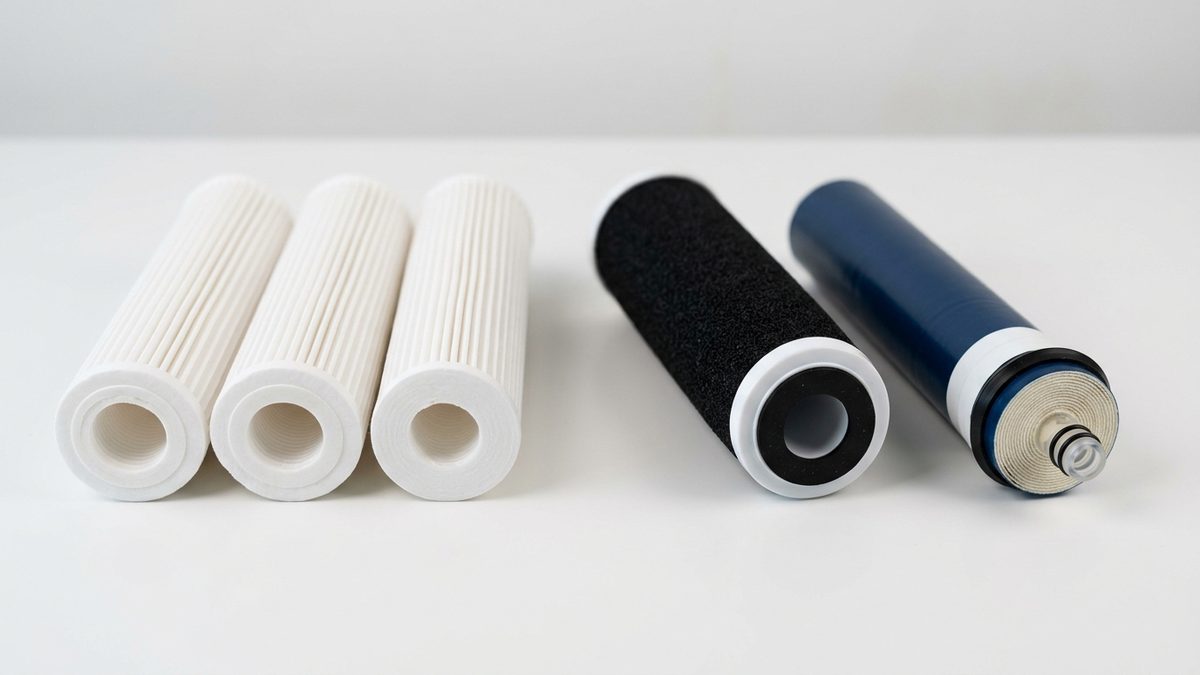
Replacement cartridges split into four families, each with a different lifespan and a different cost driver. Understanding the spread matters because a retailer’s recurring-revenue model depends on how often each stage turns over.
| Cartridge stage | Typical media | Replacement cycle | Primary cost driver |
|---|---|---|---|
| Sediment pre-filter (PP) | Melt-blown or string-wound polypropylene, 5 or 1 micron | 3-6 months | Dirt loading capacity, depth |
| Carbon block (CTO) | Coconut-shell or coal-based activated carbon | 6-12 months | Iodine number (900-1,100 mg/g) |
| RO membrane | Thin-film composite, 0.0001 micron | 24-36 months | GPD rating, rejection rate |
| Post carbon / mineralizing | Granular carbon, mineral media | 6-12 months | Media grade, flow-path design |
The table tells a sourcing story most buyers miss. The two stages that turn over fastest — sediment and carbon — are the ones that carry the margin, not the RO membrane. A 400 GPD RO element might last three years, but the pre-filter in front of it ships every four months. When you source, weight your volume and your negotiation toward the high-turnover stages and treat the membrane as the anchor product that keeps the account locked in.
Material grade is what separates a cartridge that holds spec from one that does not. A coconut-shell carbon block with an iodine number of 1,000 mg/g removes chlorine and organics noticeably longer than a coal-based block at 700 mg/g, and the difference shows up in customer taste complaints — or the absence of them. Cartridges and filtration parts in a private-label program should carry a written media specification, not just a micron rating.
Certification: What Importers Verify Before Ordering
The compliance conversation in the US market runs through four NSF/ANSI standards, and any cartridge line you import should be able to name the ones it clears. NSF/ANSI 42 covers aesthetic claims — chlorine taste, odor, and particulate. NSF/ANSI 53 covers health claims: lead, arsenic, VOCs, cysts, and, since the 2024 revision, PFAS reduction to below 20 parts per trillion. NSF/ANSI 61 governs the materials that touch drinking water, and NSF/ANSI 372 caps weighted average lead content at 0.25 percent. For reverse osmosis, NSF/ANSI 58 is the system-level standard requiring at least 75 percent TDS reduction.
Two changes in the last two years shift what importers should ask for. First, the EPA’s 2024 PFAS rule set a 4 nanogram-per-liter limit for PFOA and PFOS in drinking water, which pushes buyers toward cartridges with documented PFAS removal rather than a generic “carbon filter” claim. Second, California’s Proposition 65 remains the compliance tripwire for lead and phthalates in contact materials, with a no-significant-risk level for lead of 0.5 micrograms per day. A cartridge program that clears NSF/ANSI 53 and 372 and carries the required Prop 65 warnings is far less likely to become the subject of a demand letter.
The practical test is paperwork, not promises. Ask the manufacturer for the certificate number, the issuing body, and the specific contaminant reduction table — not a marketing line about “international certifications.” Cross-check the certificate against the NSF or WQA public listings. A supplier that can hand over the certificate number on the first request is the one you want on the other end of a multi-year contract. ONEMI maintains certification documentation across its cartridge and system lines, and any buyer should expect the same transparency from whichever factory they evaluate.
Sourcing Economics: Private Label, MOQ, and the Real Cost
Unit price is the number every first-time buyer fixates on and the number that matters least over a program’s life. The real cost of a cartridge line is a stack of four things: landed cost, defect rate, lead time, and the working capital tied up in inventory. A cartridge quoted ten cents cheaper that shows up with a 3 percent defect rate and an eight-week lead time is more expensive than the one quoted slightly higher with a 0.5 percent defect rate and a four-week lead time. The cheap option forces you to hold buffer stock and absorb returns, which eats the margin twice.
Private labeling changes the arithmetic. When the cartridge carries your brand and a spec you control, you own the replacement market instead of reselling someone else’s consumable. The economics of an OEM/ODM cartridge program hinge on minimum order quantities that scale with the cartridge family — standard 10-inch drop-in cartridges typically run lower MOQs than custom quick-connect bayonet designs with proprietary locking features. Custom locking geometry also creates switching costs: once the housing is built around your bayonet, the customer’s cheapest option is to reorder from you rather than a competitor.
That last point is the quiet moat in this business. A proprietary quick-connect interface is not a filter spec; it is a retention mechanism. It converts an open aftermarket — where any compatible cartridge competes on price — into a closed one where your consumable is the path of least resistance. Retailers who treat the cartridge as a commodity leave that moat on the table. Those who spec a controlled interface build a recurring stream competitors cannot easily undercut.
Turning Cartridges Into a Recurring Revenue Program
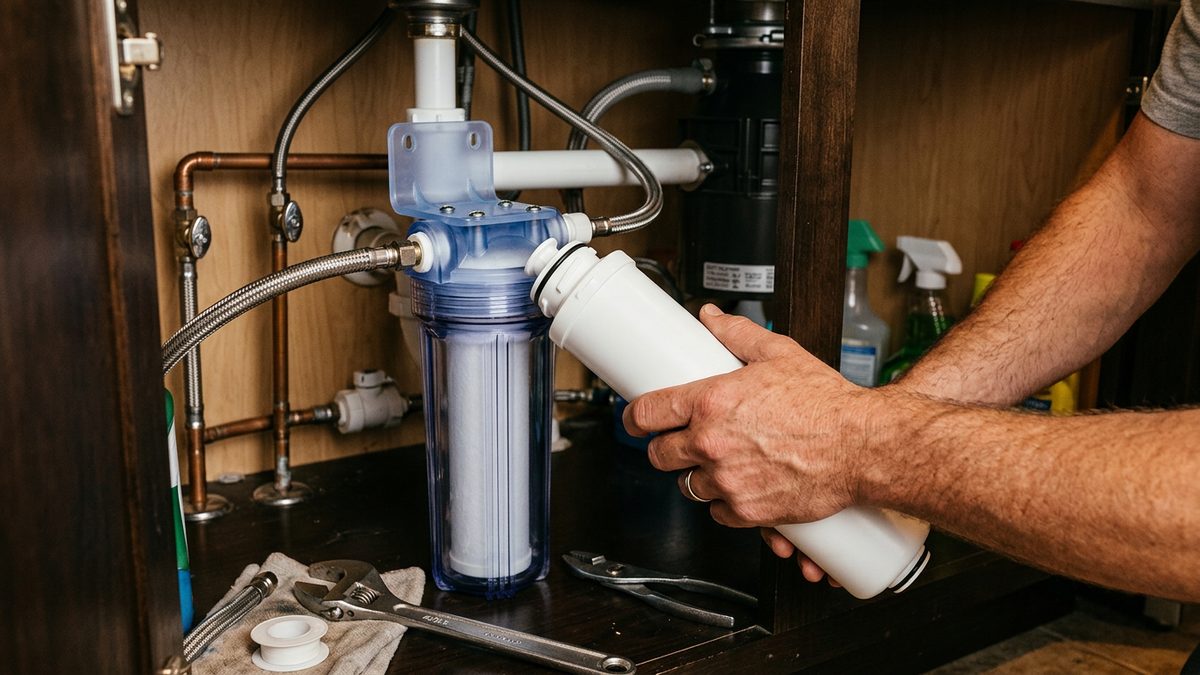
The mechanics of recurring revenue are straightforward, and the failures are almost always operational rather than conceptual. A subscription or auto-reorder program works when the replacement reminder is tied to real usage or elapsed time, the cartridge ships before the customer notices a taste change, and the housing is designed so a swap takes under two minutes. A tool-less quarter-turn cartridge keeps churn low because the customer never dreads the maintenance; a threaded housing that needs a wrench invites the customer to get around to it later, and later never comes.
For importers and distributors, the recurring-revenue question is less about the consumer and more about the channel. A distributor who stocks a compatible replacement line — sized to the installed base of machines they already sold — captures repeat business on a schedule they can forecast. The replacement economics of filter cartridges are predictable because the installed base ages on a known clock. Every thousand machines in the field generate replacement demand measured in thousands of cartridges per year, and a distributor who prices the consumable sensibly keeps that demand from leaking to a competitor.
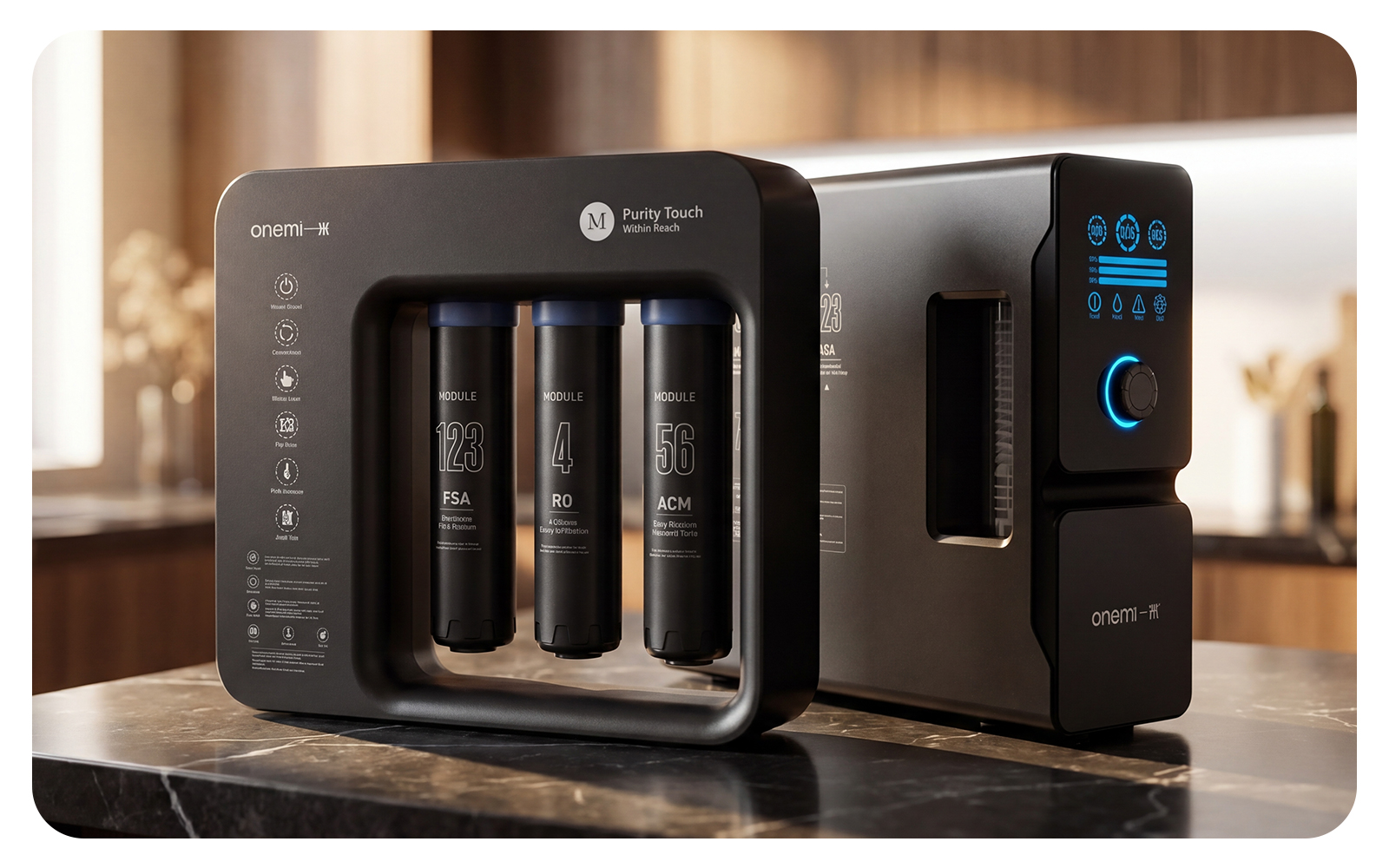
This is also where the hardware anchor earns its keep. A retailer who sells a 400 GPD RO system with three-stage pre-treatment and a clearly specified cartridge schedule has written themselves a multi-year consumable annuity. The machine is the acquisition vehicle; the cartridge is the business.
The Sourcing Decision in One Frame
If a buyer holds a cartridge spec sheet and wants to cut through to a decision, three questions do the work. Does the cartridge clear NSF/ANSI 42, 53, 61 and 372 — or 58 for RO — with certificate numbers you can verify? Is the media spec written down and held: coconut-shell carbon at a stated iodine number, polypropylene at a stated micron rating, thin-film composite at a stated rejection rate? And is the interface a commodity thread or a controlled quick-connect geometry you can build a retention strategy around?
Answer those three and the rest — price, lead time, payment terms — falls into a normal commercial negotiation. Skip them and you are not buying a consumable; you are buying a liability that wears your brand and ships on your schedule. ONEMI is a Guangdong-based water purification equipment manufacturer whose consumables line spans sediment pre-filters, carbon blocks, RO membranes, and post-filters, with the 400 GPD RO system as the anchor hardware that locks the consumable stream in place. The aftermarket rewards the operator who treats a ten-dollar cartridge with the same discipline as a four-hundred-dollar machine, because over ten years the cartridge is the one that shows up four times as often.