



 한국어
한국어

- Cartridges, not machines, carry the margin in water purification. Replacement demand accounts for roughly 42% of US water purifier sales, and connected auto-reorder turns that demand into predictable, recurring revenue.
- IoT monitoring — filter life tracking, remote diagnostics, usage telemetry — cuts churn by reminding the end user to reorder at the right moment, and gives distributors a direct channel to their installed base.
- Smart features are no longer a premium add-on. Industry surveys put smart capability in about 42% of new commercial installations, so importers who treat connectivity as optional are leaving recurring revenue on the table.
Cartridges carry the margin, not the machine
A water purifier is sold once. A cartridge is sold over and over. That single fact explains why the aftermarket, not the hardware, is where the economics of this category actually live. Fortune Business Insights sizes the US water purifier market at roughly $6.75 billion in 2024, growing to about $10.35 billion by 2032 at a 5.5% CAGR. But the headline number hides the more interesting split: industry estimates attribute close to 42% of sales to replacement and upgrade demand, not first-time equipment purchases.
For an importer or a private-label brand, the implication is uncomfortable if ignored. A distributor who sells a one-time box of hardware competes on FOB price and watches the customer walk away. A distributor who owns the replacement cycle competes on relationship and retention. The difference between those two positions is, in practice, whether the machine knows when its filter is spent and can tell someone about it.
What IoT monitoring actually does in a water filter
Strip away the marketing and a connected water filter does three concrete things. First, it tracks filter life by counting flow, runtime, or both, and flags replacement when the media is actually exhausted rather than on a fixed calendar. Second, it surfaces diagnostics — flow rate drops, pressure anomalies, a leak event — before they become warranty claims. Third, it records usage telemetry that tells the distributor how the unit is being used in the field.
Each of those has a direct commercial payoff. Filter-life tracking solves the single biggest cause of aftermarket churn, which is that the end user forgets to replace the cartridge, lets the machine degrade, and blames the product. Remote diagnostics shrink the cost of after-sales service, because a support agent can read a fault code instead of dispatching a technician. And telemetry is market research you do not have to pay a firm for: it shows which models are installed where, how hard they run, and when the installed base is due for its next cartridge.
Auto-reorder and the subscription model
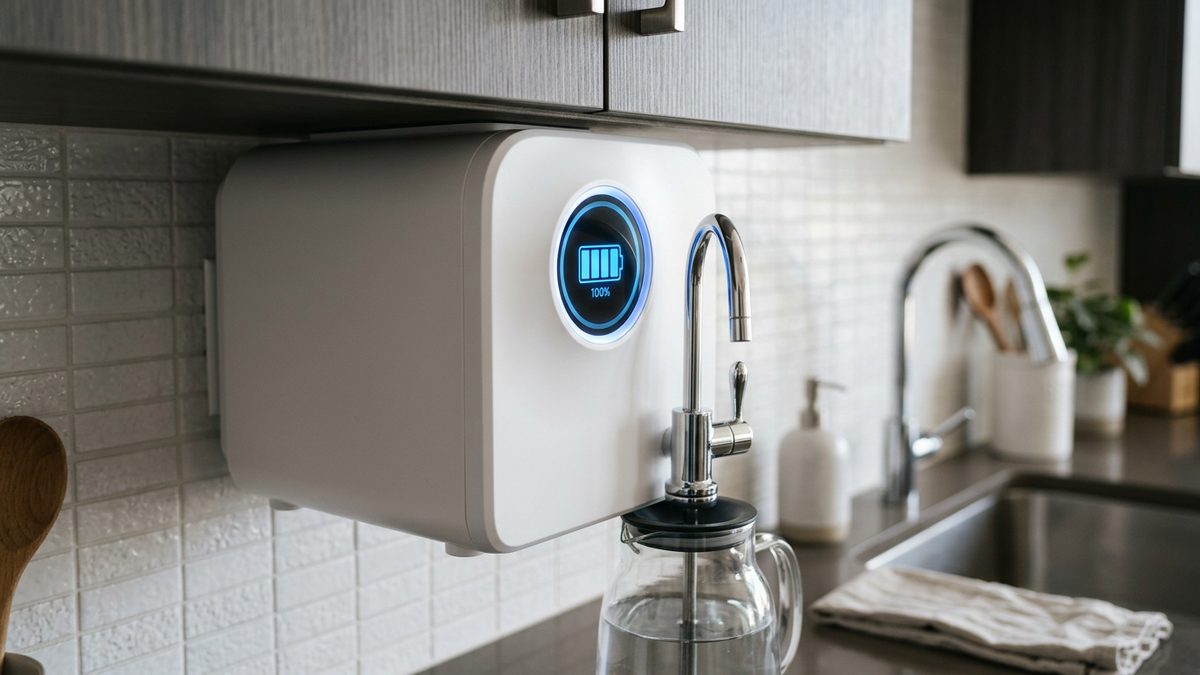
Auto-reorder is where monitoring turns into money. When a filter tracks its own life, the system can trigger a replacement order at exactly the right moment, without the customer having to remember anything. That changes the cartridge from a product the buyer has to remember to re-buy into a service they are subscribed to.
The economics stack up quickly. A cartridge that costs the distributor a few dollars to source is resold at a healthy multiple, and an auto-reorder customer re-buys it two or three times a year for as long as they keep the machine. Compute the lifetime value of one installed unit against the one-time margin on the hardware, and the recurring stream wins within the first couple of years. The point of smart connectivity is that it removes the friction that previously broke that stream: the forgotten reorder, the lapsed customer, the cartridges bought from whoever is cheapest on a marketplace.
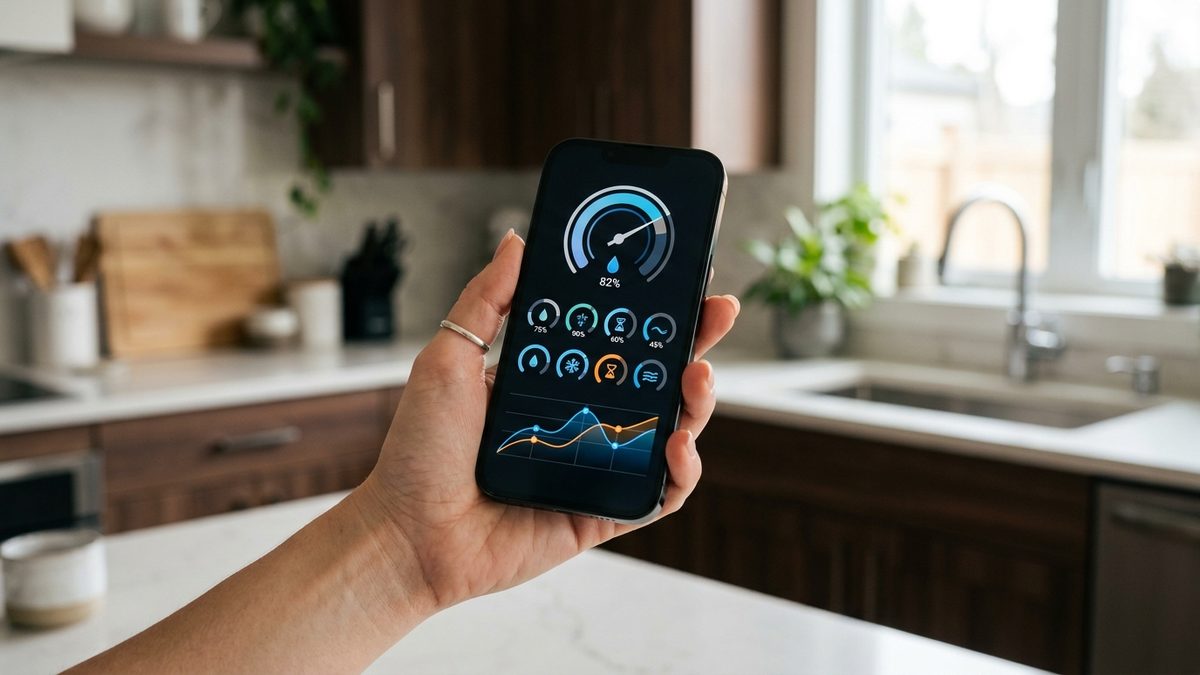
None of this requires a cloud platform you built yourself. A brand can ship a filter with onboard life tracking and a simple reorder reminder, or go further with Wi-Fi connectivity and a companion app that pushes reorder prompts and captures the sale directly. The depth of the integration is a commercial decision, not a technical barrier.
What it takes to ship a connected filter
For an importer sourcing from a manufacturer, connectivity splits into layers that are worth keeping separate. The base layer is onboard intelligence: a flow sensor or timer, a microcontroller, and a display or LED that shows remaining life. That layer works offline, is inexpensive, and delivers most of the auto-reorder value on its own. The upper layer is network connectivity — Wi-Fi or Bluetooth, an app, and a backend — which adds cost, certification surface, and support burden, but enables true remote monitoring and direct-to-consumer reorder.
The sourcing question is therefore not “smart or not smart” but “which layer, and who owns it.” A factory that already ships machines with onboard filter-life tracking lets a brand get to an auto-reorder model with almost no added complexity. A factory that can also integrate a connectivity module — and has the certification documentation to back it — lets a brand move up to full IoT when the market is ready. Most importers will be better served starting with the offline layer and adding connectivity to specific SKUs, rather than betting the whole line on an app.
Where ONEMI fits in a connected strategy
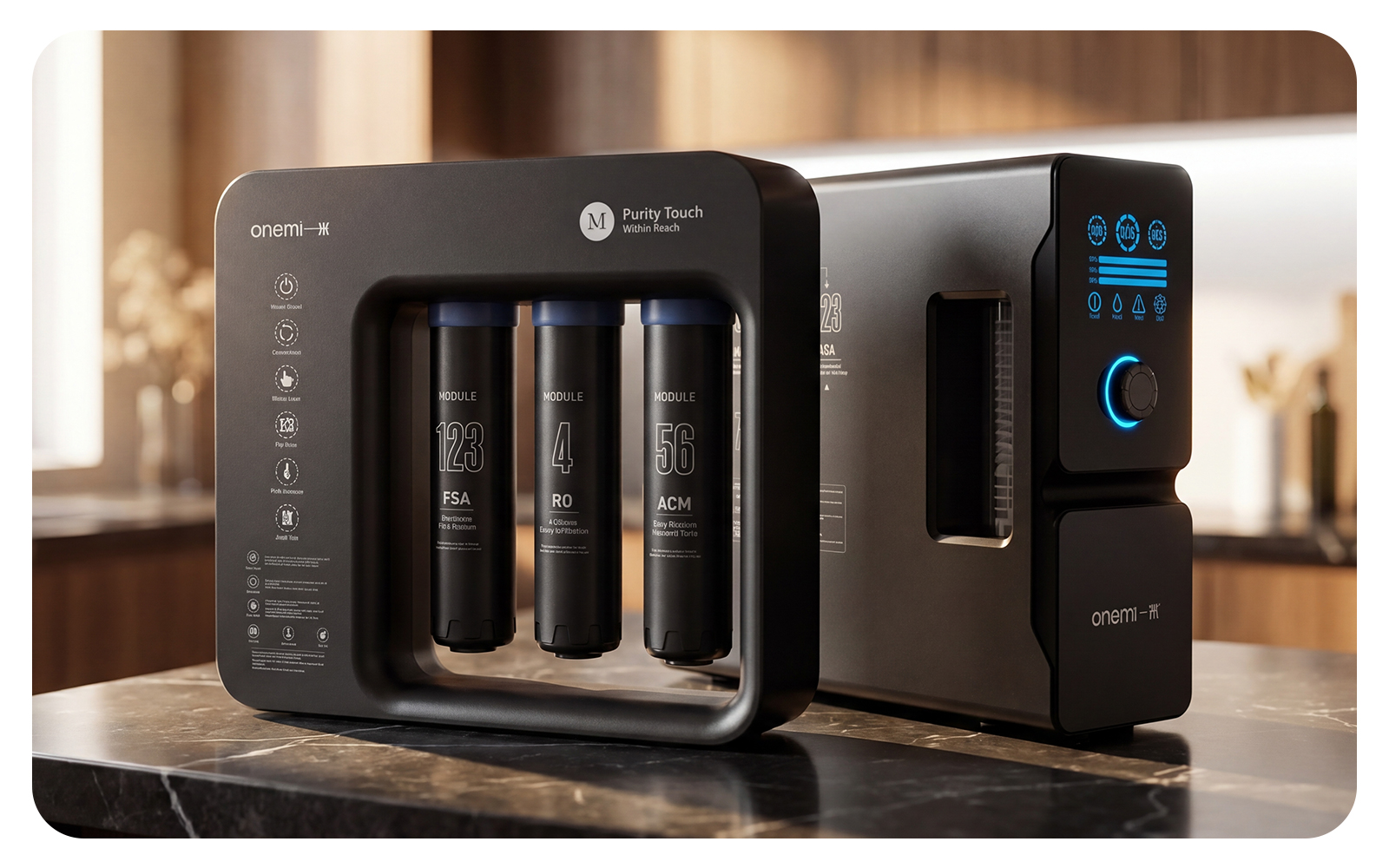
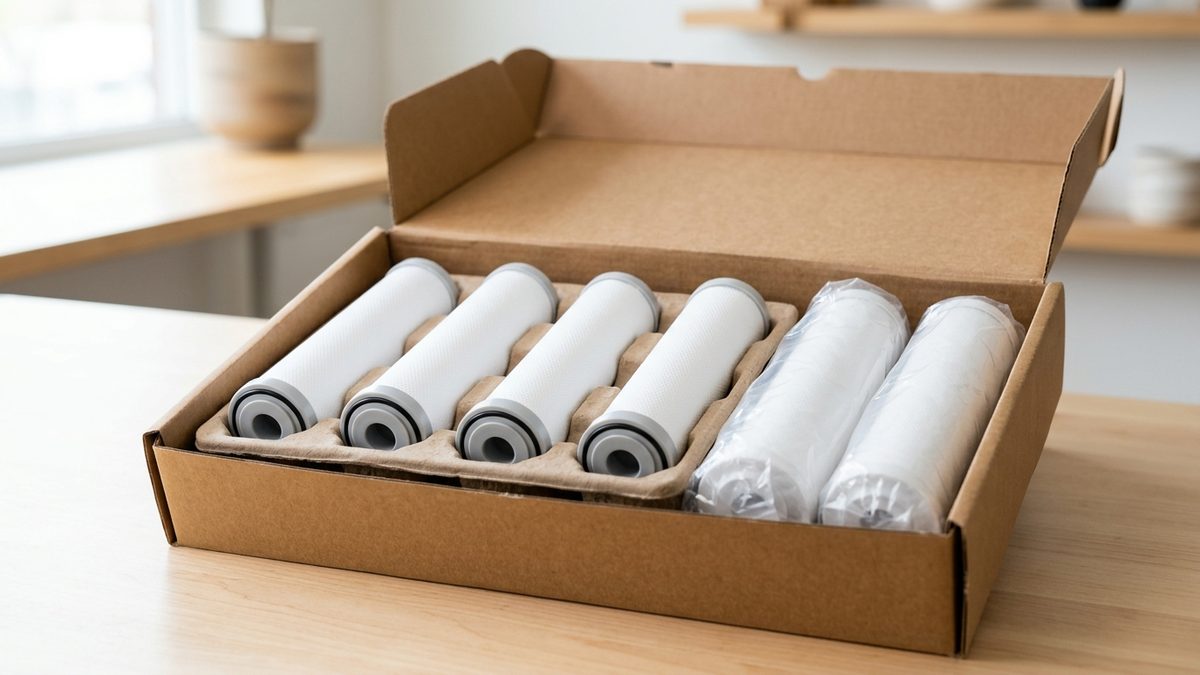
ONEMI, a Guangdong-based water purification equipment manufacturer, builds smart-capable systems around the same logic. Its tankless RO line runs onboard filter-life tracking with automatic replacement reminders and a zero-standing-water auto-flush cycle, so the machine manages its own hygiene and tells the user when a cartridge is due. The flagship RO systems carry a three-stage, seven-layer filtration stack — a composite pre-filter, the RO membrane, and a post carbon block, plus LED-UVC disinfection — which gives a brand three cartridge SKUs to monetize on a predictable replacement schedule rather than a single consumable.
On the sourcing side, the value is a platform with documented specifications. Filter life is tied to rated total purified water volume and flow, not guesswork, so a brand can print honest replacement intervals and stand behind them. For buyers building a connected product, the OEM and ODM program is the route to adding connectivity modules, custom branding, and cartridge ecosystems on top of a tested platform. Certification and compliance documentation is available through the certification page, and the OEM FAQ covers what the factory can and cannot claim on a label.
A sourcing checklist for smart filters
If connected filters are on the roadmap, run the supplier against a short checklist before committing to a purchase order:
- Confirm filter life is tracked by flow or runtime, not a fixed calendar, and that the rated replacement interval is documented against a tested total volume.
- Ask whether onboard tracking works offline or requires a network connection. Offline capability is what makes auto-reorder viable in markets with patchy connectivity.
- Separate the hardware from the software. Clarify who owns the app, the backend, and the data if you add a connectivity layer — the data rights matter more than the module cost.
- Check the certification surface for the connected SKU. A Wi-Fi module adds RF compliance (FCC in the US, CE in the EU) on top of the water-contact certifications.
- Map the cartridge ecosystem. The recurring revenue only works if the replacement cartridges are a closed, compatible set with predictable margins, not a commodity part anyone can undercut.
The distributors who win the aftermarket are not the ones with the cheapest hardware. They are the ones whose machines tell the customer, at the right moment, that it is time to buy the next cartridge — and make buying it the path of least resistance. That is what auto-reorder is, and it is the difference between selling a box once and owning a customer for the life of the product.