

 한국어
한국어

- FDA Food Code requires water used for food preparation, ice making, and handwashing to meet EPA drinking water standards — a compliance floor that keeps commercial RO demand moving.
- The global commercial water purifier market was about $8.79 billion in 2024 and is forecast to near $22.55 billion by 2031 (QYResearch), with food service and hospitality taking roughly 35% of B2B demand.
- The recurring-service model — cartridge replacement plus IoT monitoring — is where commercial RO margin actually lives: about 42% of new commercial installs now ship with smart features.
Food-service water is a spec problem, not a taste problem
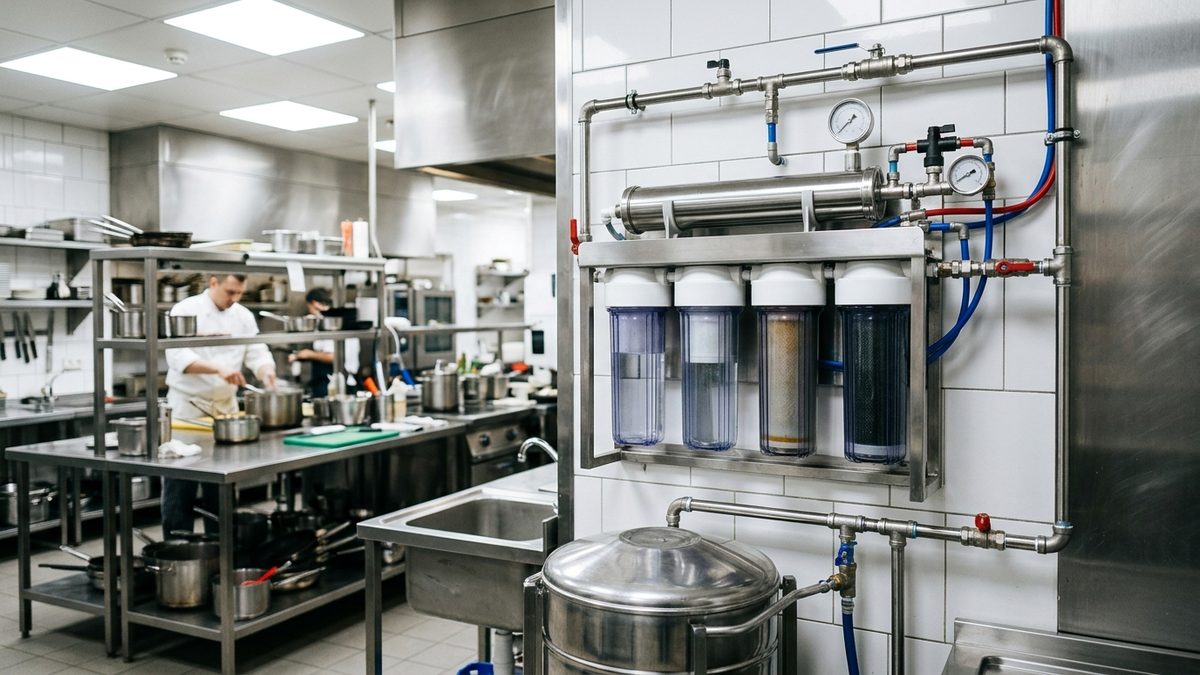
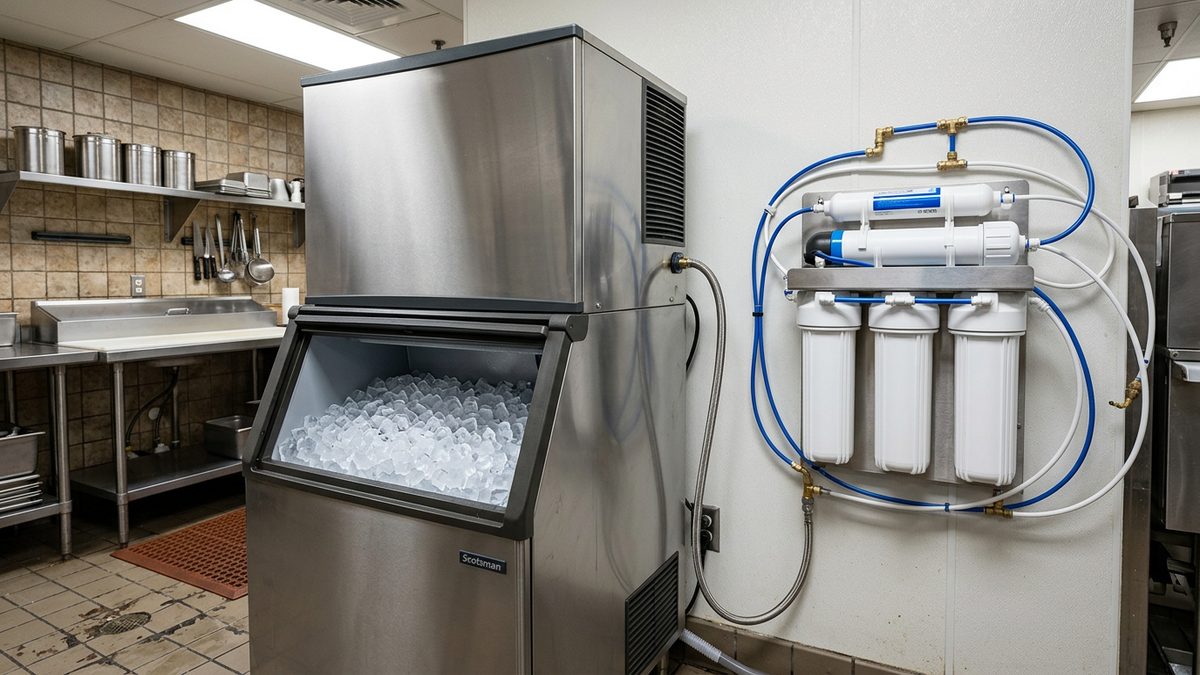
A restaurant or grocery store doesn’t buy a water system because the tap water tastes off. It buys because water is an ingredient and a piece of equipment at the same time. The FDA Food Code sets the floor: water used for food preparation, ice making, and handwashing has to meet EPA drinking water standards. That’s a compliance requirement, not a preference. A health-department inspection can cite a facility for the water feeding its ice machine just as fast as for the food in the walk-in.
Below that compliance floor sits an equipment bill. Scale and sediment shorten the life of an ice machine’s evaporator plate, a combi oven’s boiler, and the group head on an espresso machine. Chlorine and chloramine corrode fittings and dull coffee extraction. A commercial reverse osmosis system attacks the root cause by pulling dissolved solids out of the water before it reaches any of those appliances. The spec you write determines whether the system actually protects the equipment — or just adds another thing to maintain.
Where RO actually earns its place in a kitchen or store
RO isn’t the right answer for every water line in a building. It earns its place on the lines where water quality directly touches product or equipment.
- Ice machines — the classic case. Hard water scales the evaporator and forces defrost cycles that waste energy; an ice machine running on low-TDS water produces clearer cubes and needs less descaling.
- Coffee and espresso — extraction is sensitive to TDS and hardness. A stable, low-TDS feed lets a chain reproduce the same cup across locations.
- Steam and combi ovens — boiler scale is a service call. RO feed cuts limescale formation and extends boiler life.
- Produce misting in grocery — misted greens and sprayed displays look better and last longer on water that isn’t loaded with minerals and chlorine.
The point for an importer or distributor: you aren’t selling a filter, you’re selling equipment uptime and inspection-readiness. The RO unit is the tool that delivers both.
The three specs importers get wrong
Most sourcing mistakes in commercial RO come down to three numbers a buyer checks too late.
Flow rate, not just capacity. A system rated 400 GPD tells you daily production, not peak draw. A busy restaurant pulls ice water, coffee water, and steam water at the same time during a lunch rush. You need to spec peak flow against simultaneous demand, then size the storage tank or a tankless system to match. A tankless, high-capacity RO unit removes the storage-tank secondary-contamination risk and the floor-space penalty in a cramped kitchen.
Recovery rate. Recovery is the share of feed water that becomes product water — the rest goes to drain. In drought-conscious states, a low-recovery unit is a water bill and, in some municipalities, a compliance problem. A disciplined spec states the recovery ratio at a given feed pressure and TDS, not just the nominal number on the datasheet.
Certification scope. This is where importers trip constantly. A filter cartridge can carry an NSF/ANSI 53 listing while the housing it ships in carries none — both are technically certified products, tested against different criteria. The question isn’t “do you have NSF” but “which standard, on which component, at which reduction rate.”
| Spec | What a weak supplier says | What to verify |
|---|---|---|
| Capacity | “400 GPD system” | Actual permeate flow at feed temperature and pressure |
| Recovery | “High recovery” | Ratio at stated pressure/TDS, and where the reject goes |
| Certification | “NSF certified” | Standard number, component, and reduction rate from the listing database |
| Membrane | “Imported membrane” | Rejection rate, life expectancy, and replacement cost |
| Pre/post filtration | “Multi-stage” | Actual stages, media, and change-out schedule |
Certification for food service: NSF 58 plus materials is the floor
For a commercial RO unit going into US food service, the certification stack is settled before the first quote. NSF/ANSI 58 governs complete reverse osmosis systems and requires a TDS reduction of at least 75%. NSF/ANSI 42 covers aesthetic claims — chlorine taste, odor, particulates. NSF/ANSI 53 covers health effects, including lead and, since the 2024 revision, PFAS reduction to below 20 parts per trillion. Anything touching drinking water should also meet NSF/ANSI 61 for material safety and NSF/ANSI 372 for lead content.
Then there’s the local layer. The FDA Food Code sits on top of EPA drinking water standards, and individual health departments enforce it state by state. IAPMO R&T carries extra weight in California and other western states where plumbing-code compliance is checked closely, and California’s Proposition 65 adds a labeling obligation for materials on its chemical list. A buyer evaluating a supplier should ask for the listing numbers, not a logo — a Guangdong-based manufacturer can legitimately hold CE, UL, FCC, and RoHS on complete machines while NSF coverage is scoped to the filter cartridges. That’s a normal structural split. What you don’t want is a datasheet that stamps the NSF mark and hopes nobody opens the listing database.
Where the volume sits in commercial B2B
The commercial segment is growing faster than residential, and the mix is clearer than most buyers expect.
| Commercial segment | Share of B2B demand | What it pulls |
|---|---|---|
| Food service & hospitality | ~35% | Multi-stage RO for ice, coffee, steam, and fountain quality |
| Healthcare | ~20% | Certified RO plus documentation and service contracts |
| Industrial manufacturing | ~18% | High-capacity process water, custom skids |
| Office & education | ~27% | Bottleless dispensers, increasingly IoT-connected |
The global commercial water purifier market was about $8.79 billion in 2024 and is projected to reach roughly $22.55 billion by 2031, according to QYResearch — a double-digit compound annual growth rate. Industry data from Global Growth Insights puts the share of commercial buyers who prefer multi-stage or RO filtration at around 68%, and about 42% of new commercial installations now include smart or IoT features. Food service and hospitality is the largest single slice at roughly 35% of B2B demand.
For a sourcing decision, the signal is clear: the volume in commercial is moving toward certified, connected, multi-stage RO — and the buyer who specs it correctly captures the recurring cartridge and service stream that follows the initial unit.
What ONEMI ships and how to spec it
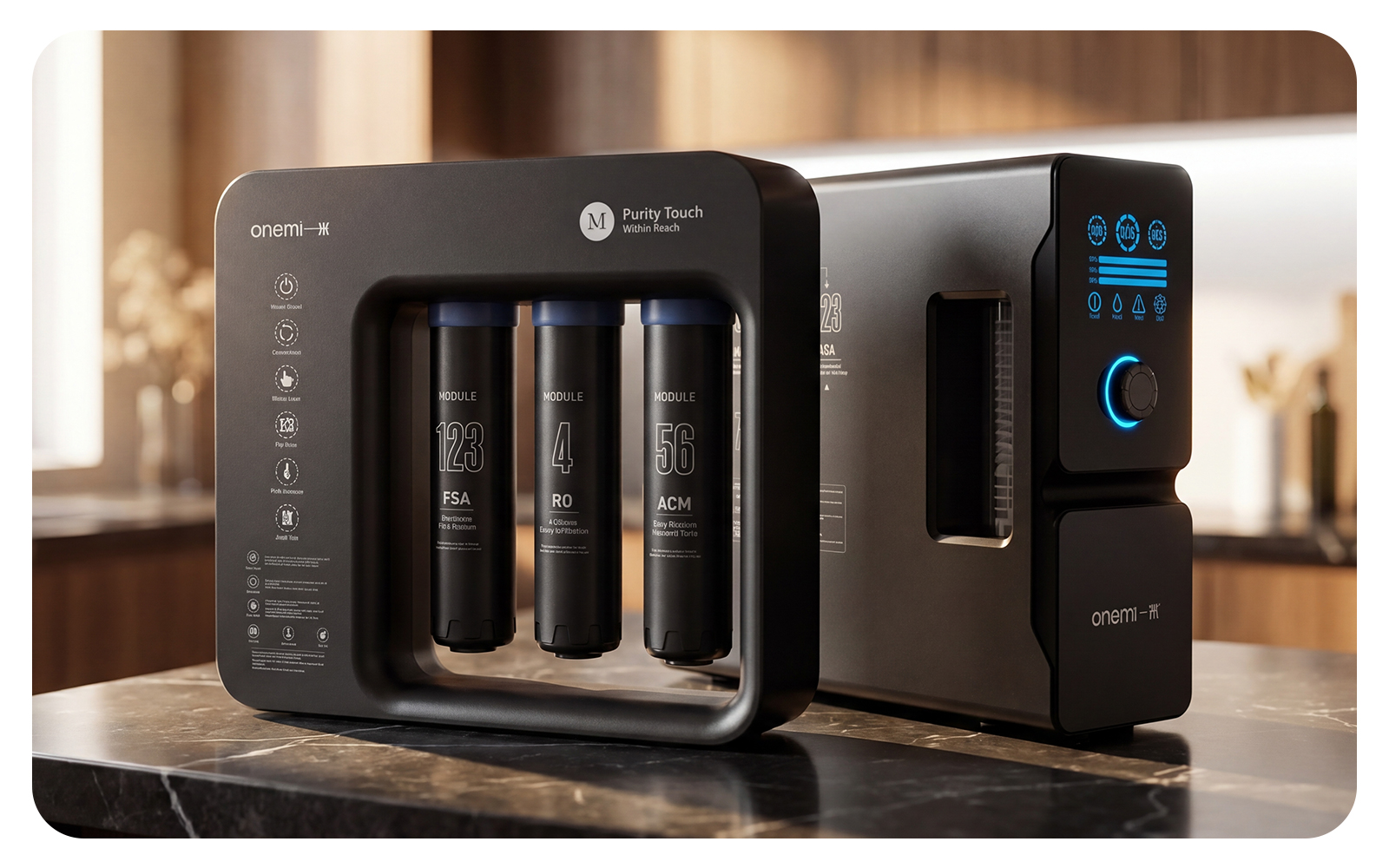
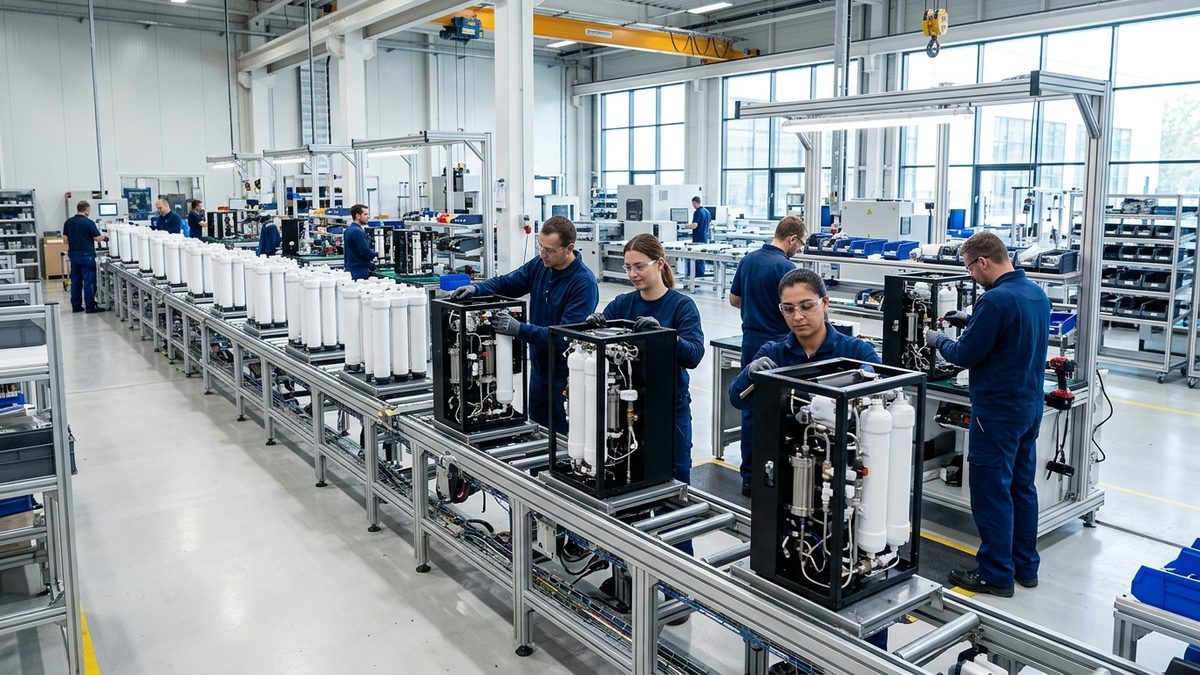
ONEMI — a water purification equipment manufacturer based in Dongguan, Guangdong — builds commercial-grade RO around the same three specs above. The RO-400G smart water purifier is a tankless, high-capacity unit sized for food-service and light-commercial draws, with certification coverage that includes CE, UL, FCC, and RoHS on the complete machine and NSF on the filter cartridges. The RO-100G reverse osmosis system covers lower-flow installations where floor space is tight.
When you spec a container load for restaurant or grocery distribution, the conversation should go in a fixed order: certification scope first, then peak flow and recovery, then cartridge cost and change-out schedule, then unit price. That order is what separates a workable supplier from a liability.
The money is in the service stream, not the first unit
Here’s the part most importers underweight. A commercial RO unit in a restaurant or grocery store is not a one-time sale. The membrane and pre-filters are consumables with predictable replacement intervals, and the facility manager who signs off on the install also owns the maintenance contract. Commercial buyers have a longer decision cycle — typically three to twelve months, moving from a facility manager through procurement to a CFO sign-off — but the account, once won, is sticky. Switching costs are high.
The shift toward connected equipment makes that recurring stream easier to defend. With IoT monitoring — filter-life tracking, leak detection, auto-reorder — the supplier sees a cartridge approaching end-of-life before the customer does, and the reorder becomes a managed event rather than a cold call. That’s the same logic that drives roughly 42% of new commercial installs to ship smart. The importer who builds a cartridge program and a service contract into the initial quote is buying a recurring revenue line; the one who quotes a bare unit price is leaving the durable part of the margin on the table.
If you’re planning around commercial RO for grocery and restaurant distribution, the same discipline applies. See the OEM factory overview and the certification page for how the machines are built and what each listing covers.