



 한국어
한국어

- Countertop filters win US rentals and compact kitchens because they need no under-sink plumbing, no drilling, and no landlord approval
- Importers must pin down flow rate, filter life, TDS reduction, and NSF certification before quoting — these four decide returns and chargebacks
- Lead-free materials (NSF/ANSI 372) and PFAS reduction (NSF/ANSI 53) are now table stakes after the 2024 Lead & Copper Rule and the EPA PFAS rule
Countertop water filters are the quiet growth story in US residential water treatment. They need no under-sink plumbing, no cabinet drilling, and no landlord sign-off — three things that make them the default choice for renters, apartment dwellers, and anyone working with a compact kitchen. For importers and brands, that same convenience is the sourcing trap: the category looks simple, but the spec sheet carries more failure points than most buyers expect.
This article breaks down why countertop is taking share, the specifications that decide returns, the certification gate, and what a manufacturer should be able to show before you place a container order.
Why countertop is winning US kitchens
The countertop segment rides three structural drivers. First, rental housing: a tenant who cannot touch the plumbing still wants filtration, and a countertop unit is the only form factor that installs in minutes without modifying the line. Second, aging municipal infrastructure keeps point-of-use demand elevated — the EPA’s 2024 Lead and Copper Rule improvements set a 10 ppb action level for lead and triggered a nationwide lead service line replacement push, which keeps lead and heavy-metal reduction top of mind for homeowners and renters alike. Third, the US market itself is expanding: Fortune Business Insights put the US water purifier market at roughly $67.5 billion in 2024, rising toward $103.5 billion by 2032 at a 5.5% compound annual growth rate.
The commercial takeaway is that countertop is not a niche accessory. It is a primary entry point for a large share of US households, and the brands that spec it correctly capture recurring filter-replacement revenue on top of the hardware sale.
The spec sheet that decides returns
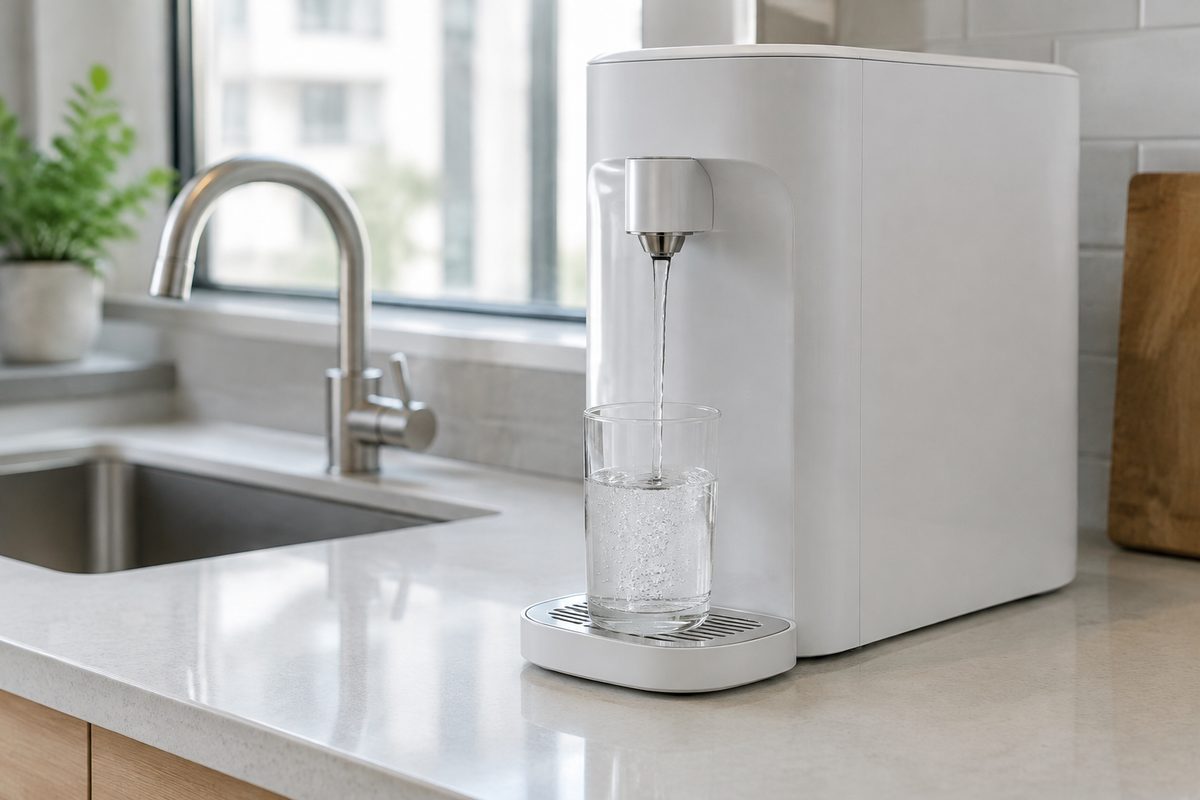
Countertop units span several distinct form factors, and each carries different spec risks. A countertop reverse-osmosis system is the highest-performance option but needs a pressurized source and produces wastewater; a gravity filter needs no electricity but delivers far lower daily output; a faucet-mount filter is the cheapest entry but fits a narrow range of tap threads.
| Form factor | Power | Key spec risk | Typical use |
|---|---|---|---|
| Countertop RO | Yes | Recovery rate, TDS reduction, wastewater | High-contaminant areas |
| Gravity filter | No | Low daily output, slow flow | Off-grid, low usage |
| Faucet-mount | No | Tap-thread compatibility | Rental quick install |
| Countertop dispenser | Yes | Heating/cooling load, filter life | Kitchen convenience |
Four numbers matter most on the import spec: rated flow rate in gallons per day, filter life in months or gallons, TDS reduction percentage for RO models, and the NSF certifications the unit actually holds. Get any of these wrong and the unit underperforms on the customer’s counter, which shows up as returns and negative reviews rather than a failed lab test.
Certification is the real gate
In the US, certification is not optional marketing — it is the mechanism retail buyers and platform compliance teams use to clear a product. NSF/ANSI 42 covers aesthetic effects like chlorine taste and odor, NSF/ANSI 53 covers health effects including lead, cysts, and PFAS, and NSF/ANSI 58 governs reverse-osmosis systems specifically. Two more standards now matter for anything that touches drinking water: NSF/ANSI 372 sets a lead-content limit on wetted components, and NSF/ANSI 401 addresses emerging contaminants like pharmaceutical residues and BPA.
The regulatory backdrop raises the bar further. The EPA’s 2024 PFAS rule set enforceable limits of 4 parts per trillion each for PFOA and PFOS, which pushes buyers toward filters with documented PFAS reduction claims. A countertop unit that cannot show NSF 53 lead reduction or a tested PFAS claim will struggle in a market where these contaminants drive the purchase decision in the first place.
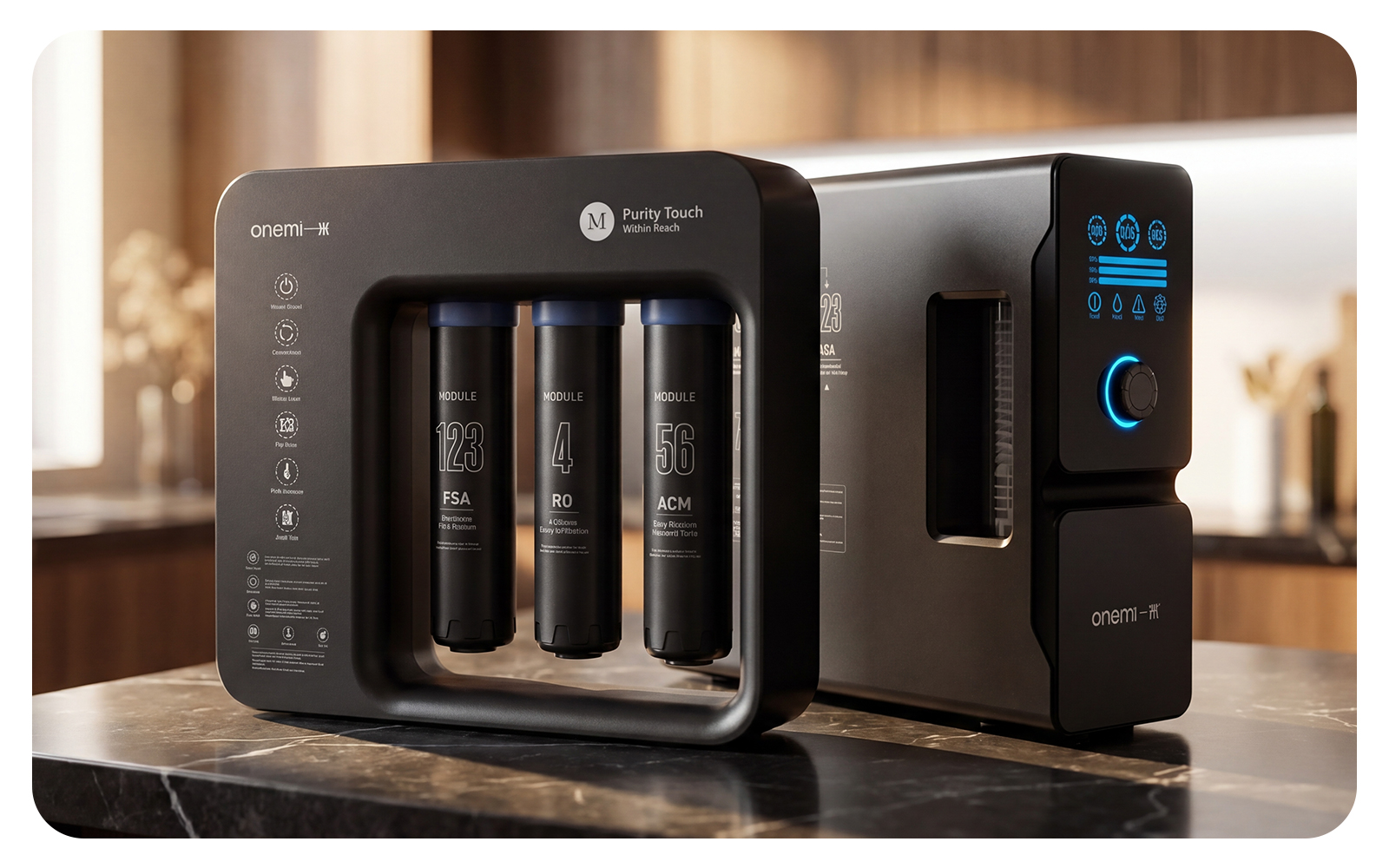
ONEMI carries CE, UL, FCC, and RoHS across its complete machines, with NSF certification on filter cartridges. Before quoting a countertop line, importers should ask a manufacturer to map every NSF claim to a certificate number that can be verified on the NSF online directory — a scanned certificate is not the same as an active listing.
Sourcing considerations beyond the unit price
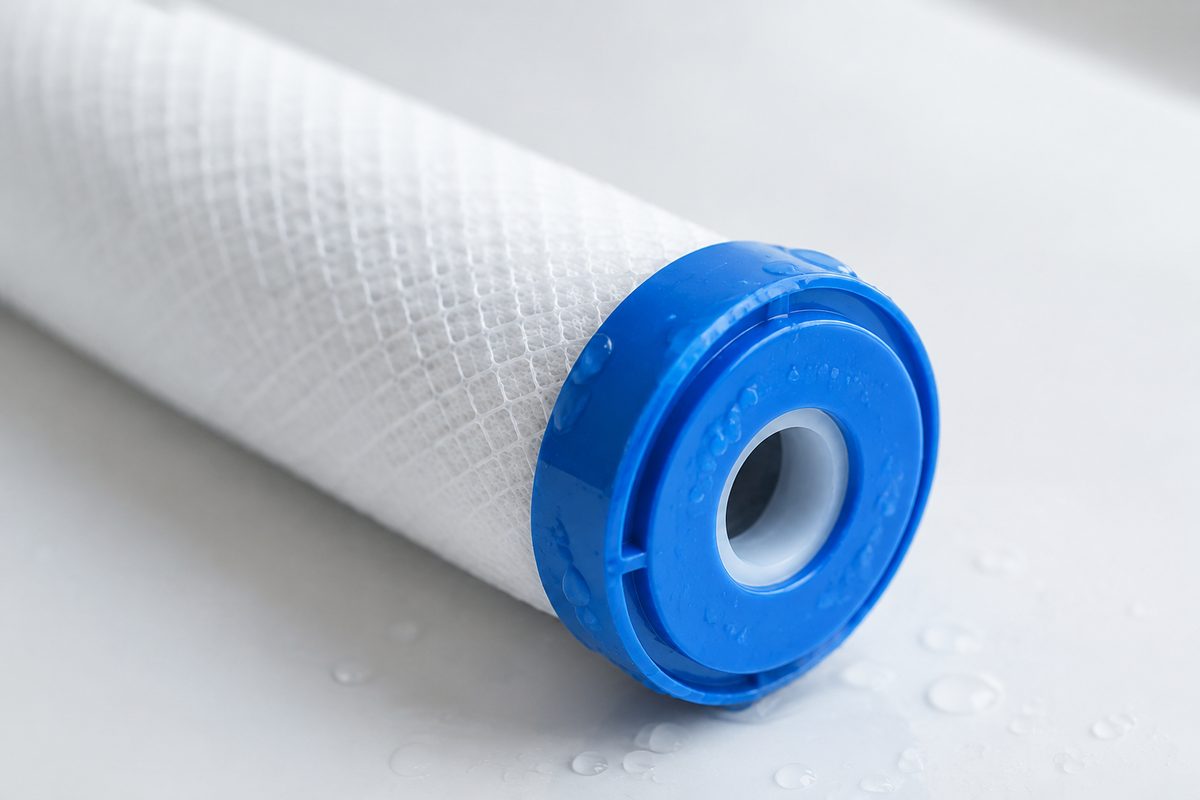
Unit price is the smallest part of the countertop sourcing decision. The real economics sit in minimum order quantity, certification transfer, materials compliance, and the recurring cartridge stream. Lead-free materials are non-negotiable once NSF 372 enters the picture, and the compact form factor means housing and fitting tolerances have to be tighter than on a full under-sink unit. Filter life is also a margin lever: a cartridge that lasts six months instead of three cuts returns and doubles the lifetime value of the same account.
For importers building a US countertop line, the questions to ask are concrete — what flow rate at what recovery, which NSF documents ship with each unit, what the annual consumables cost works out to, and whether the manufacturer can hold the cartridge spec across reorders. ONEMI’s OEM capability covers countertop systems and their consumables; details are on our OEM and ODM factory page. Certification documents we hold are listed on the certifications page, and our instant dispenser line shows the countertop form factor most US kitchens start from. For general questions, start at our FAQ.
Countertop is where US residential demand meets a form factor that fits rental and compact kitchens. Spec it tightly, certify it properly, and hold the cartridge stream — and the segment stops being an accessory and becomes a durable recurring-revenue channel.