
 한국어
한국어

- Countertop purifiers skip plumbing entirely, which makes them the only realistic filtration option for a renter who cannot cut into a landlord’s pipework — and that constraint is now a structural demand driver across export markets.
- Rental stock, compact kitchens, and short-tenancy households are pushing countertop RO and ultrafiltration ahead of under-sink systems in the markets where renting is concentrated.
- The sourcing risks are the same as any white-label line: membrane-grade honesty, cartridge lock-in strategy, and certification scope (WRAS/CE/NSF/RoHS) — not the spec printed on a catalog page.
The countertop water purifier spent years as the fallback product, the unit a buyer ordered when under-sink plumbing was not an option. That fallback is now the fastest-moving segment in a handful of export markets, and the reason is structural rather than seasonal. Renting is becoming the default tenure in the cities where water filtration is actually bought: young professionals, students, and short-tenancy households who cannot cut into a landlord’s pipework, and who want to lift their unit out and take it to the next lease. For an importer or a brand building a catalog, that constraint is the demand driver.
Why Rental Stock Is Pushing Countertop Filtration
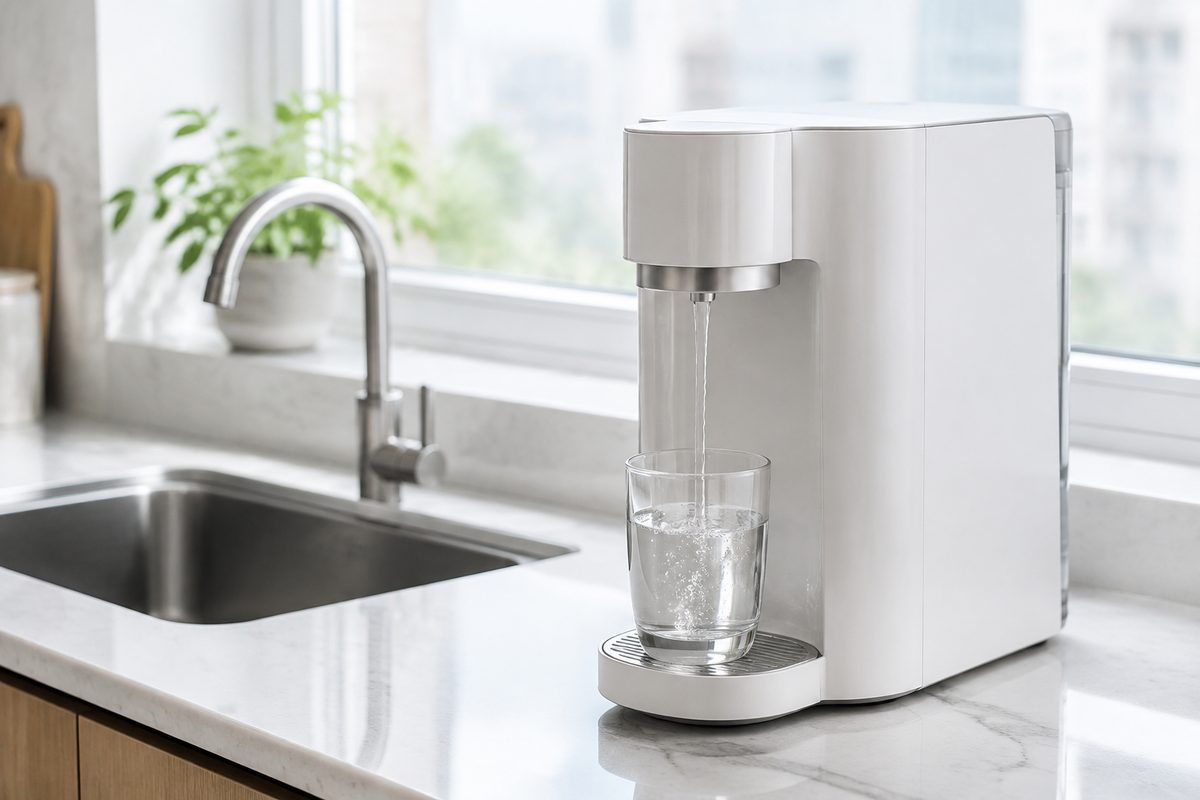
An under-sink reverse osmosis system needs a hole in the worktop for a dedicated tap, a drain saddle for the reject line, and a power point inside the cupboard. None of those belong to a tenant. A countertop unit needs a bench, a socket, and a tap nearby, and it is gone in the time it takes to unplug it. That difference is not a convenience feature; it is the entire reason the category exists, and it is why the countertop segment keeps gaining on under-sink systems in markets where renting is concentrated.
The water chemistry in those markets gives the category a second push. Roughly 60% of England’s water supply is classified as hard or very hard, which is why limescale complaints dominate and why a countertop unit that visibly filters or softens water sells on evidence the buyer can see in their own kettle. In the United States, apartment construction has tilted toward smaller footprints and higher turnover, which favours a product the tenant owns outright rather than a fixture they leave behind. The global water purifier market was valued at roughly USD 49.8 billion in 2025, with Asia Pacific holding about 41.85% of the share, according to Straits Research, and the no-plumb countertop category is where a meaningful slice of that growth now sits.
The Engineering That Separates a Rental-Ready Unit from a Countertop Clone
Not every bench-top box is the same product. A rental-ready countertop purifier is engineered around three constraints the under-sink category never has to answer: it must be moved repeatedly without leaking, it must run on a standard socket, and it must make the consumable obvious rather than hidden behind a cupboard door.
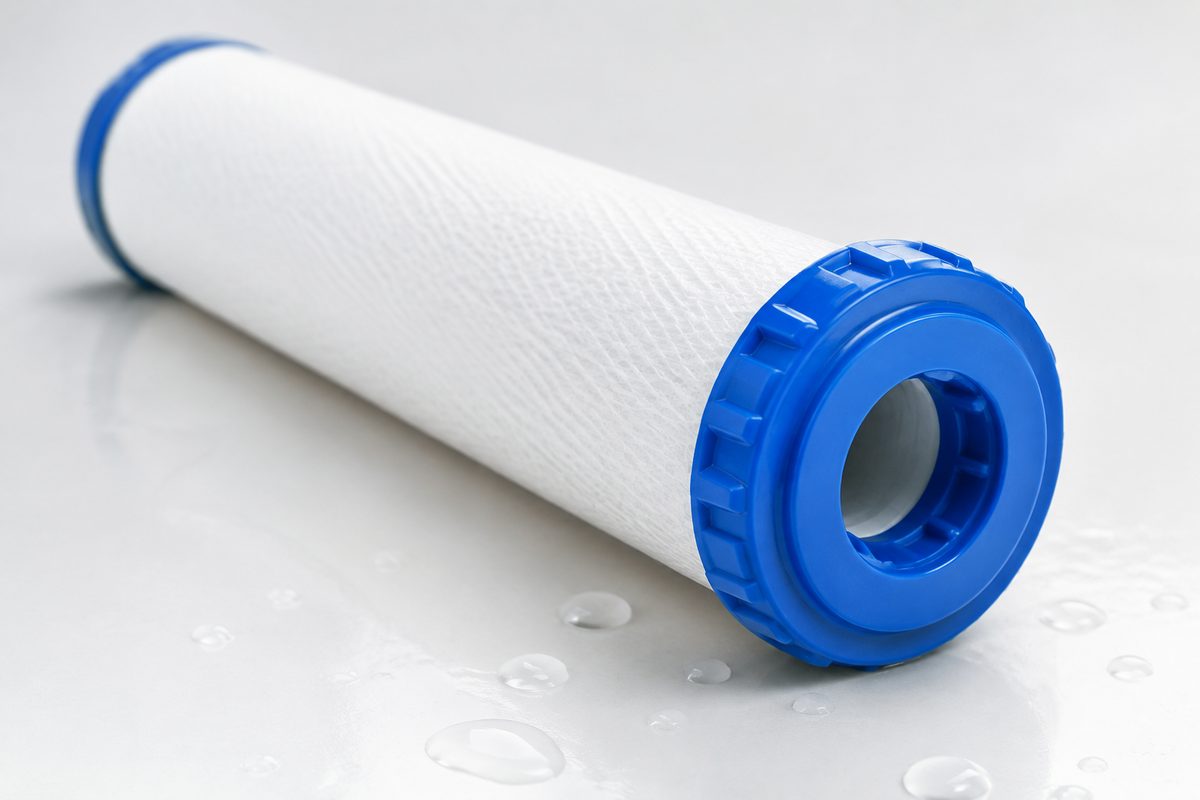
The first decision is the filtration stage, and it follows the target water, not the marketing brief. A countertop RO unit suits hard or high-TDS municipal water and rejects dissolved solids; a countertop ultrafiltration unit suits low-TDS water and runs quieter with no reject stream; a gravity unit needs no power at all and suits the off-grid or travel segment. The second decision is tank versus direct flow: a tank system stores water and is cheaper to build, while a direct-flow system delivers on demand with no sitting water but demands a stronger pump and a tighter membrane. The third is the cartridge interface, and this is where a rental brand either wins or loses on the replacement cycle.
| Type | Power | Install | Best target water | Consumable cadence |
|---|---|---|---|---|
| Countertop RO (direct flow) | Plug-in | None | Hard / high TDS municipal | 6-12 months per cartridge set |
| Countertop ultrafiltration | None or plug-in | None | Low TDS, bacteria concern | 12-24 months |
| Countertop gravity | None | None | Off-grid, travel, emergency | 2-6 months per element |
Certification Is the Gate, Not the Feature
Certification is where a white-label countertop line succeeds or stalls at the border. A unit sold into the United Kingdom must meet WRAS material standards for water-contact parts under the Water Supply (Water Fittings) Regulations 1999. A unit sold into the European Union needs CE marking. A unit sold into North America is expected to carry NSF/ANSI 42 and 53 for aesthetic and health claims, and NSF/ANSI 58 where reverse osmosis is involved. RoHS applies across the board to the electronics and control board.
The distinction buyers should hold a supplier to is this: WRAS covers material safety and plumbing compliance, not filtration performance. A supplier who claims a countertop unit is “WRAS certified to remove lead” is conflating two separate approvals — the material approval and the contaminant-reduction claim are not the same thing. On the countertop RO line specifically, ONEMI holds CE, UL, FCC, and RoHS at the whole-unit level, with NSF certification scoped to filter cartridges rather than the complete unit. The full certification scope is listed on the certifications page.
How ONEMI Approaches a Countertop OEM Run
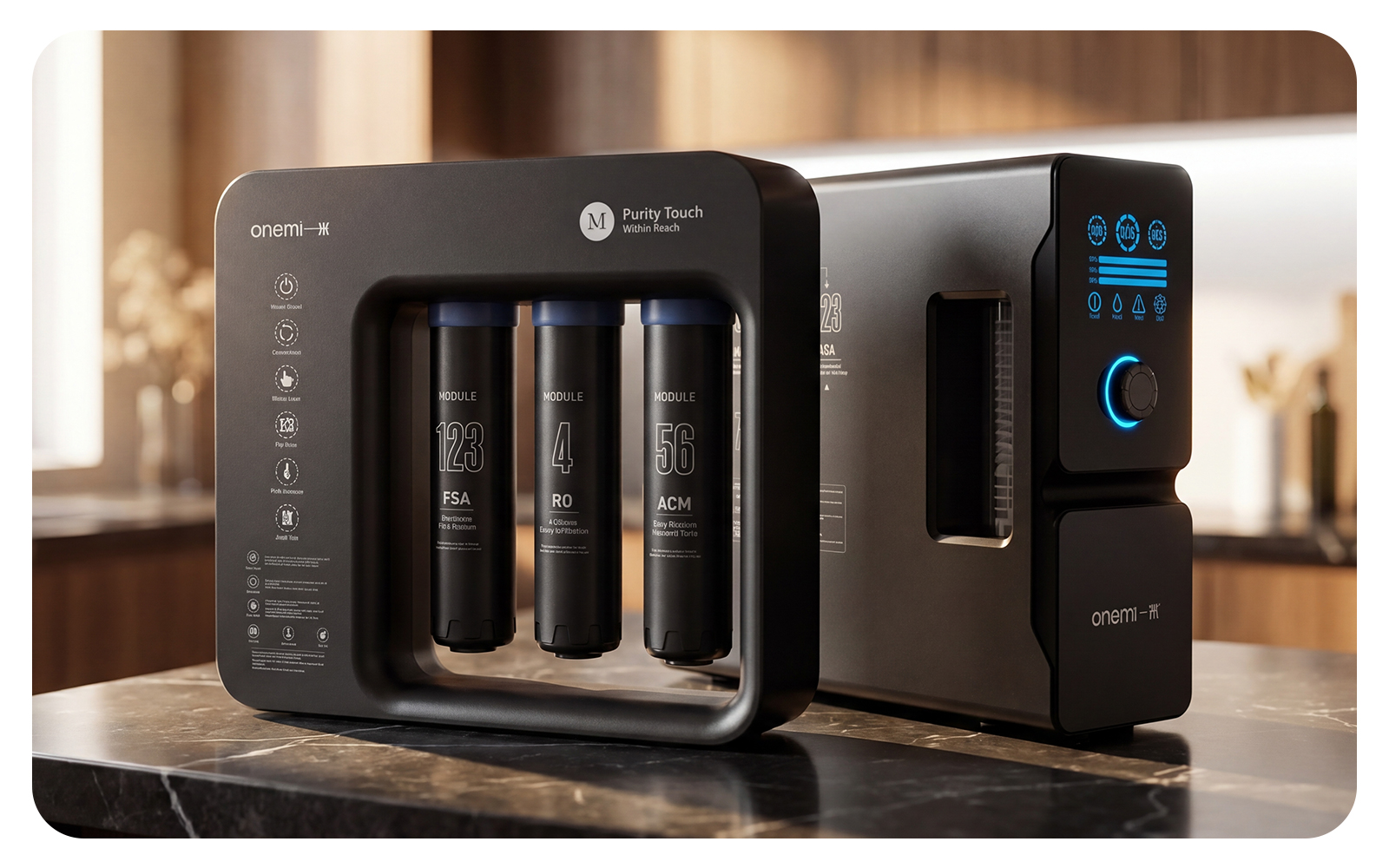
The countertop segment is where ONEMI’s no-install product line concentrates. The T1 countertop instant water dispenser is built for the rental use case: it heats and cools on demand, needs no plumbing, and its filter cartridges are front-loading so the tenant, not a technician, changes them. The full range sits in the instant water dispenser line, and the unit-level specification is on the T1 product page.
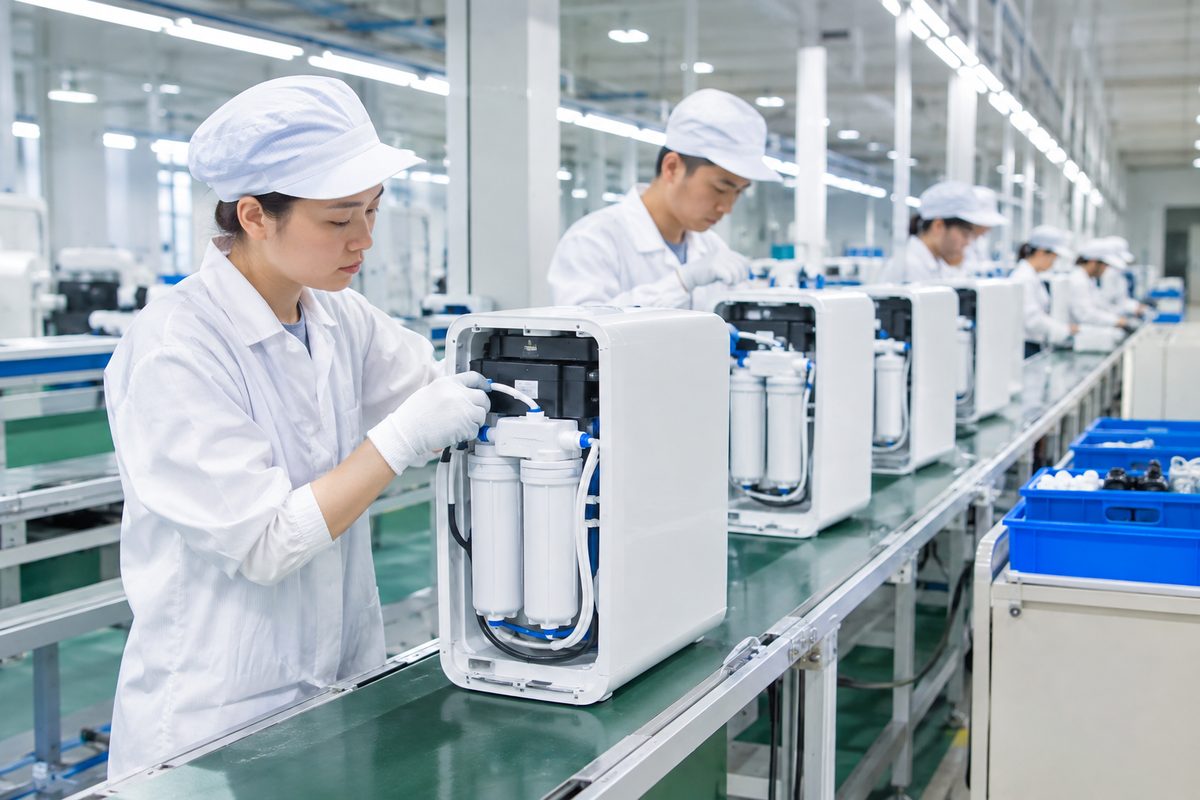
An OEM run for a countertop unit starts from the cartridge spec, not the shell. The buyer picks the filtration stage — PP sediment, activated carbon block, RO membrane, or ultrafiltration — then the housing form, then the branding and any smart feature set. ONEMI’s OEM/ODM factory page documents the sampling and pre-production steps, and the deeper sourcing logic is covered in the countertop RO B2B guide.
The Recurring Revenue Nobody Prices In
A countertop unit is a razor, and the cartridge is the blade. The margin structure of a countertop line is back-loaded: the box is sold once, the filter is sold for years. An importer who sources the box and ignores the cartridge lock-in has done half the deal. A unit sold with an honest 6 to 12 month cartridge life and a clearly priced replacement keeps the channel profitable; a unit whose membrane dies in six months and whose cartridge is a mystery destroys it.
Three checks separate a disciplined import from a warehouse full of returns. First, request the membrane material and nominal pore rating in writing, on the supplier’s letterhead, not on a catalog image. Second, confirm the housing pressure rating against the worst-case line pressure in the target market, not the average. Third, lock the cartridge dimensions and connection type so the replacement stream is not held hostage to a proprietary fit. The recurring answers to these questions live in the OEM FAQ.
The countertop category is not a premium novelty and not a fallback anymore; it is the entry point for the part of the market that cannot plumb anything in, and that part is growing. Sourcing it well comes down to knowing which water problem the unit solves, and holding the supplier to the specification that solves it rather than the sticker on the box.