


 한국어

- EPA’s Lead and Copper Rule Improvements (October 2024) tightened the lead action level from 15 ppb to 10 ppb, and lead’s maximum contaminant level goal remains zero.
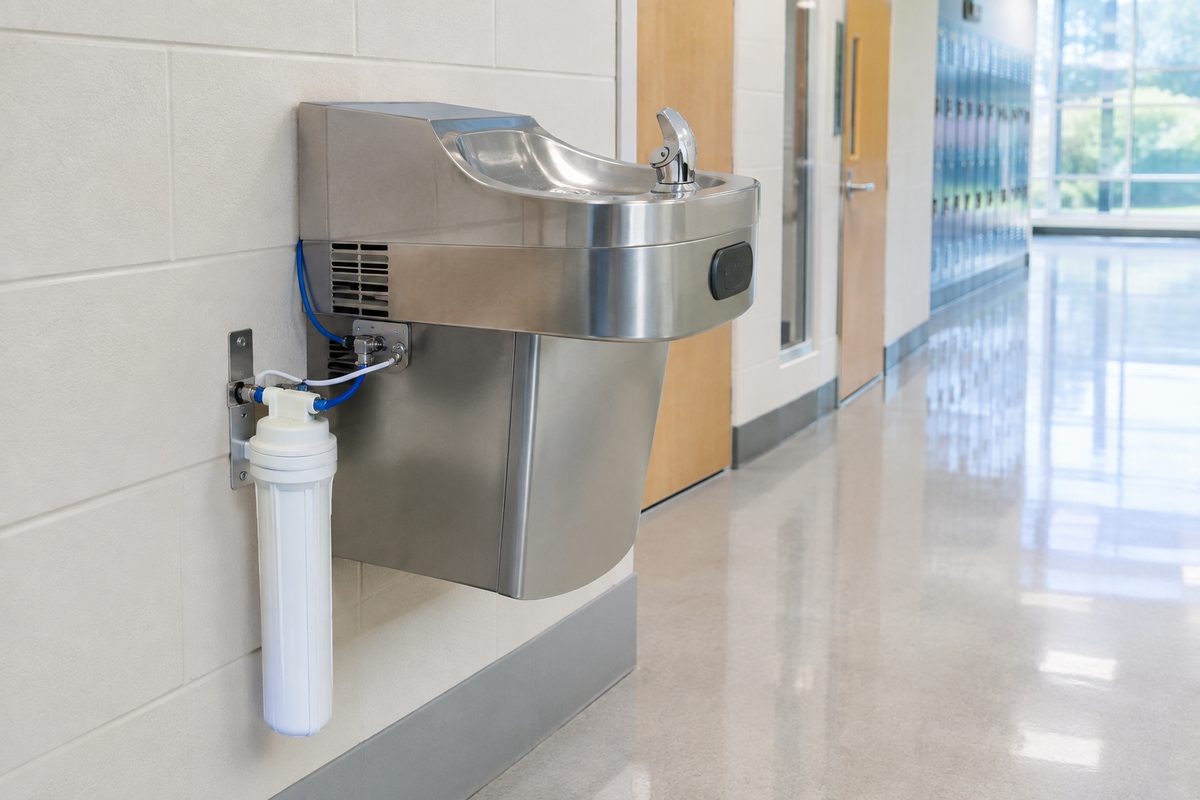
- Point-of-use systems certified to NSF/ANSI 53 for lead reduction and NSF/ANSI 372 for lead-free components are the fastest compliance path for schools with legacy plumbing.
- For distributors and OEM buyers, the education segment is shifting from commodity filters to certified, documented point-of-use systems.
Why lead in school drinking water is now a procurement issue
Lead has no safe level in drinking water. The EPA sets the maximum contaminant level goal (MCLG) for lead at zero, and children absorb lead more readily than adults. Yet a large share of US schools and child care facilities were built before the 1986 Lead Ban, which means lead solder, lead pipes, and lead-containing brass fixtures are still in service behind many drinking fountains and cafeteria taps.
The scale of the problem is systemic. Under the Lead and Copper Rule Improvements finalized in October 2024, the EPA estimates roughly 9 to 10 million homes are served by lead service lines, with a national replacement cost in the tens of billions of dollars. Schools sit inside that same infrastructure picture, but the regulatory pressure on them has historically been uneven.
Facilities guidance has relied on the EPA’s 3Ts program — Training, Testing, Taking Action — a voluntary framework rather than a hard mandate. That voluntary gap is exactly where procurement teams, distributors, and manufacturers step in: when testing reveals elevated lead, a documented, certified point-of-use filter becomes the immediate fix while pipe replacement waits years.
The 10 ppb standard and what it changes for facilities
The October 2024 rule is the material shift. For decades the lead action level sat at 15 parts per billion; the new rule moves it to 10 ppb and requires water systems to identify and replace lead service lines on a fixed, ten-year timeline. Replacement costs alone are estimated above $45 billion at the national level, and that money does not reach every school faucet quickly.
For a school building, the practical consequence is straightforward: you cannot wait for the pipe replacement program to reach your campus. A point-of-use filter installed at the fountain or kitchen tap removes lead at the point of consumption, today, for a fraction of the capital cost of repiping. The tradeoff is that the filter becomes a recurring maintenance line item — which is why the procurement decision now hinges on certified performance and predictable consumable costs rather than the lowest unit price.
The certification stack schools should require
Not every filter that claims lead removal actually does it. In the US, the standard that matters for lead reduction is NSF/ANSI 53, which certifies health-effect claims including lead, arsenic, volatile organic compounds, and cysts. A filter that only carries NSF/ANSI 42 is certified for aesthetic effects — chlorine taste, odor, and particulates — and is not evidence of lead reduction.
A complete procurement specification for school drinking water should reference the following standards:
| Standard | What it covers | Why it matters for schools |
|---|---|---|
| NSF/ANSI 42 | Aesthetic effects: chlorine, taste, particulates | Baseline, but not sufficient for lead |
| NSF/ANSI 53 | Health effects: lead, arsenic, VOCs, cysts, PFAS | The lead-reduction requirement |
| NSF/ANSI 372 | Lead content of components (≤0.25% weighted average) | Ensures the filter itself adds no lead |
| NSF/ANSI 61 | Health effects of system components | Material safety for wetted parts |
| NSF/ANSI 58 | Reverse osmosis systems | Where RO is specified for higher removal |
| NSF/ANSI 401 | Emerging contaminants: pharmaceuticals, BPA | Optional layer for health-sensitive settings |
For lead specifically, the specification should state NSF/ANSI 53 certification for lead reduction and NSF/ANSI 372 for lead-free components. Asking for both closes the two most common loopholes: a filter that does not reduce lead, and a filter whose own brass parts leach it back.
How procurement teams should evaluate point-of-use systems
Once certification is established, the evaluation turns on operating economics. The three numbers that determine total cost of ownership are flow rate, rated capacity, and filter replacement interval. A low-flow filter in a high-traffic cafeteria creates queues and a maintenance burden; a high-capacity cartridge reduces replacement frequency but costs more per cycle.
Procurement should also decide between point-of-use and point-of-entry treatment. Point-of-use filters at drinking fountains and kitchen taps target exactly where people drink, and are the standard recommendation for lead. Point-of-entry systems on the building main address the whole facility but carry higher capital cost and are usually unnecessary for a lead-only problem. For most schools, a fleet of certified point-of-use units with a documented replacement schedule is the rational default.
Sourcing compliant systems from manufacturers
For distributors and OEM buyers serving the education segment, the supplier question is no longer just price. School districts increasingly ask for test reports, certification listings, and a stable supply of replacement cartridges — because a filter that cannot be reordered reliably becomes a compliance risk the moment the cartridge expires.
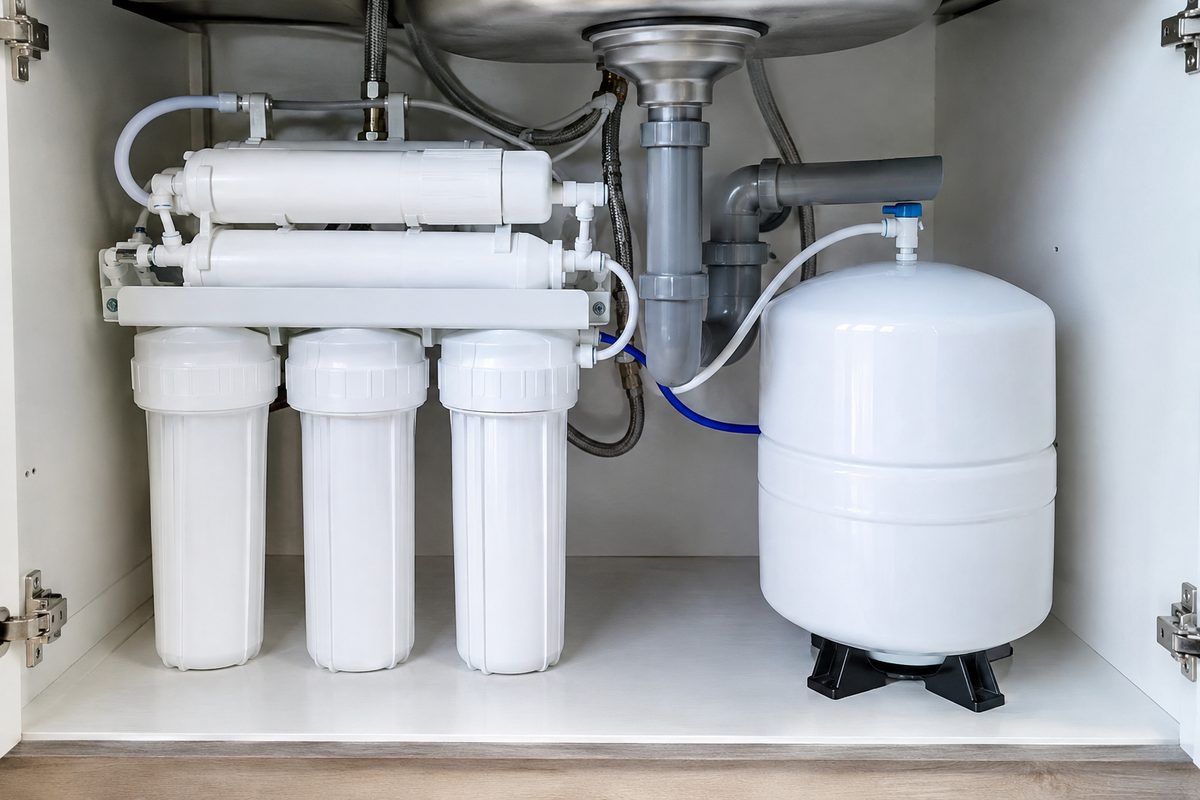
ONEMI, a Guangdong-based water purification equipment manufacturer, supplies point-of-use and under-sink systems for distributor brands across the US and EU. The filter cartridges carry NSF/ANSI 42, 53, and 372 certifications, while the complete machines are CE, UL, FCC, and RoHS compliant. The company also holds a granted US general filter cartridge structure patent, which matters for distributors looking to differentiate private-label products without design disputes.
For an OEM program aimed at schools, the working checklist is short: NSF/ANSI 53 and 372 on the cartridge, lead-free brass or plastic quick-connect fittings, a flow rate that matches the serving point, and a cartridge supply chain that can hold delivery over a multi-year district contract. Details on the under-sink line are on the under-sink RO systems page, with cartridge specifications on the filter cartridges page and the full certification list on the certifications page.
The 10 ppb rule is rolling out on a fixed timeline. Distributors who can document certified lead reduction and a stable consumables supply are the ones positioned to convert school contracts as districts move from voluntary testing to mandatory remediation.