




 한국어
한국어

- Coconut shell carbon still wins on micropore purity for trace-organics removal, but Indonesian export cuts and a price spike have made a single-feedstock spec a real procurement risk in 2026.
- The spec that actually matters isn’t the raw material label. It’s iodine number (above 900 mg/g for potable blocks), ash content (under 5%), hardness, and pore distribution.
- Reactivated carbon, wood precursors, and AI-tuned activation are moving into commercial carbon blocks, but coconut shell still holds the high-micropore edge for PFAS and small-molecule work.
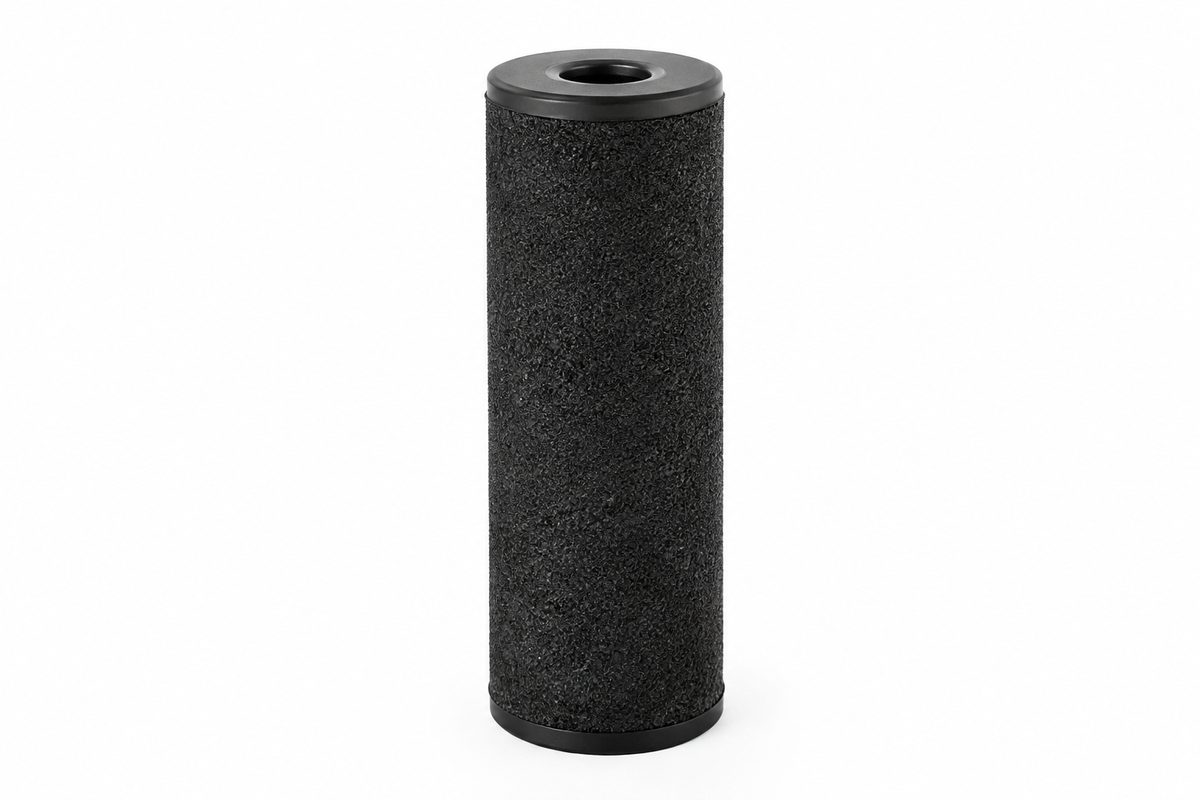
A carbon block is just activated carbon pressed into a solid cylinder around a hollow core. That sentence hides a supply chain that got complicated fast in 2026. For years “coconut shell carbon” worked as shorthand for premium — buyers wrote it into specs, factories delivered it, and the label did the selling. That shorthand is now expensive, and in some months it has been hard to find at all. Indonesian coconut-shell charcoal exports fell in volume and value in 2024, prices climbed, and the importers who treated feedstock as a fixed input are the ones watching their margin shrink.
None of this means coconut carbon stopped working. It means the sourcing conversation has to move from “which raw material” to “which performance numbers.” That shift is the whole story of carbon block media in 2026.
Adsorption is a pore-size game
The reason feedstock matters comes down to pores. Activation burns millions of microscopic channels into the carbon, and the size of those channels decides what the block catches. Contaminants don’t pass through carbon like a sieve. They stick to the pore walls through weak electrical attraction — adsorption, with a “d.” A gram of good activated carbon carries between 850 and 1,300 square metres of internal surface. Pack that into a block and the water moving through it gives up chlorine, taste compounds, and a long list of organic chemicals along the way.
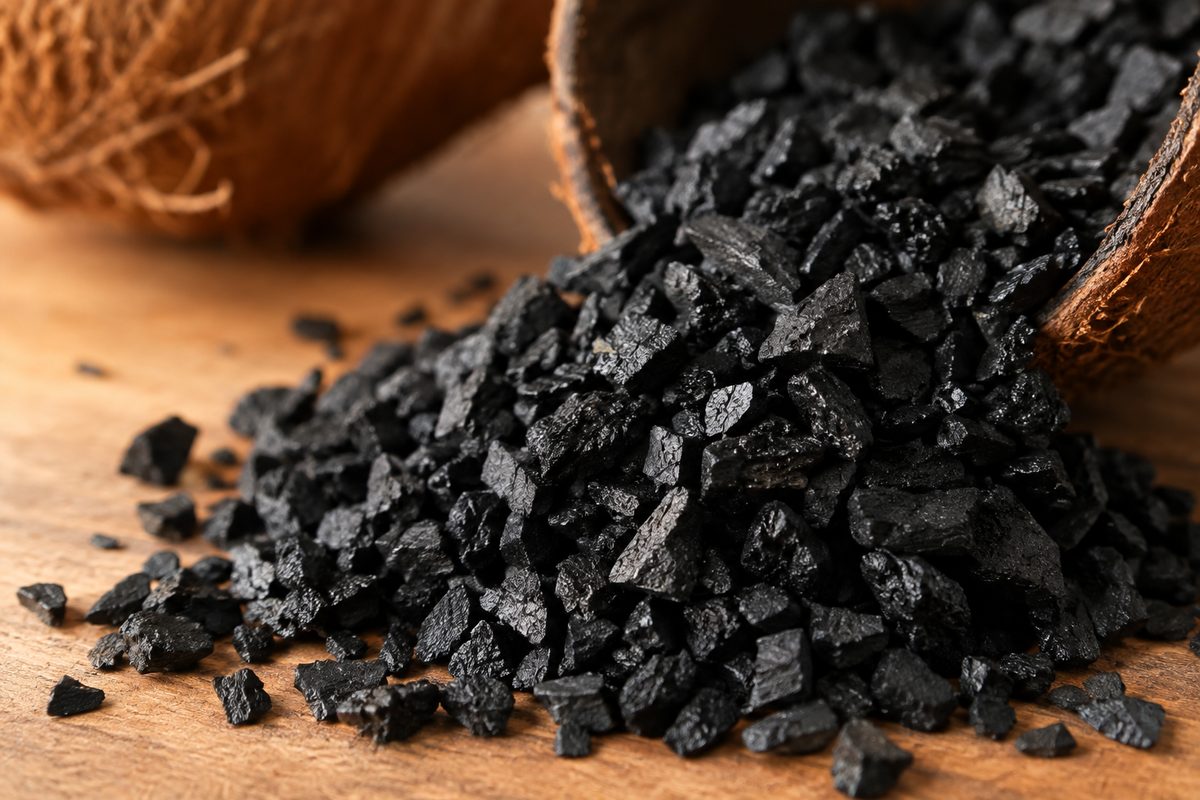
Coconut shell carbon is mostly micropores — pores under 2 nanometres. More than 85% of its volume sits in that range. That is exactly what you want for small molecules: free chlorine, chloramines, trihalomethanes, VOCs, and PFAS. Coal-based carbon spreads its pores wider, with real mesopore and macropore volume. It adsorbs larger molecules, and in high-flow systems those bigger channels act as highways that speed up adsorption kinetics. Neither is better. They are different tools, and how chlorine removal differs from the wider treatment job is worth understanding before you lock a chlorine vs chloramine removal spec.
The numbers behind the label
Here is the head-to-head that matters for a sourcing team, using commercial-grade 8×30 granular carbon as the reference point.
| Property | Coconut shell | Bituminous coal |
|---|---|---|
| Iodine number | 900–1,200 mg/g | 800–1,100 mg/g |
| BET surface area | 1,000–1,300 m²/g | 850–1,100 m²/g |
| Pore structure | >85% micropore | Mixed micro/meso |
| Hardness | 95–99% | 85–95% |
| Ash content | 2–5% | 8–15% |
| FOB price (8×30 GAC) | $1,200–$2,200/ton | $800–$1,500/ton |
| Feedstock | Renewable (coconut shell) | Fossil (coal) |
Two rows deserve attention. Ash content isn’t a cosmetic detail — it’s the non-carbon mineral residue that can leach into treated water and raise turbidity, which is why low-ash coconut carbon is the default for drinking-water blocks and why coal carbon dominates municipal and industrial beds where the contaminant load is heavier and the budget tighter. Hardness matters for block making too: a soft granule crushes under compression and turns a carbon block into carbon dust that channels and sheds fines.
Why coconut shell got scarce
The pressure on coconut shell is structural, not cyclical. Most of the world’s coconut-shell charcoal comes from Southeast Asia and South Asia, and Indonesia — a major exporter — saw shipments fall in 2024. The shells compete with charcoal briquettes and other end uses, and harvest shocks don’t help. When the US EPA’s 2024 PFAS rule pushed utilities and filter makers toward high-micropore coconut grades, demand and supply moved in opposite directions. Prices climbed, lead times stretched, and single-feedstock specs became a genuine business risk. The PFAS removal filter market has only added pressure to those same high-purity grades.
An importer who locks a spec to “coconut shell only” is buying exposure to a market they can’t control. That’s the practical argument behind the shift happening now: qualify more than one feedstock so a price spike or an export restriction doesn’t stop the line.
The sustainable synthetic shift
“Sustainable synthetic carbon” is less a single material than a direction. Three things are happening at once. First, reactivated carbon — spent media regenerated in a thermal furnace — is moving from municipal-scale GAC into commercial conversations, because it cuts cost per kilogram and answers the circular-procurement language that EU buyers increasingly write into tenders. Second, wood and other biomass precursors are being qualified as renewable alternatives, though their micropore distribution is generally weaker than coconut shell. Third, engineered activation — some of it AI-assisted control over kiln temperature and residence time — is letting producers tune pore distribution toward a target contaminant instead of accepting whatever the feedstock gives.
The honest version: coconut shell still wins on micropore purity for trace-organics work, but it no longer wins every tender. The buyers who matter now spec performance and let the feedstock follow. Mordor Intelligence puts the activated carbon market at roughly $4.16 billion in 2026, growing toward $5.47 billion by 2031, and the fastest-moving slice of that is water treatment — which means the media question isn’t going to get simpler.
What to verify on a carbon block spec
Three checks separate a carbon block that performs from one that’s priced like a commodity and behaves like one. First, ask for the iodine number, ash content, hardness, and pore distribution — not the marketing description. Iodine number is the standard proxy for micropore surface area; a drinking-water block should land well above 900 mg/g, and ash should sit under 5% for potable use. Second, pin the certification to the specific standard. In the US that’s NSF/ANSI 42 for chlorine and taste/odor reduction, and NSF/ANSI 53 for health-effect contaminants including lead, VOCs, and — since the 2024 updates — PFAS reduction into the low parts-per-trillion range. For the EU, material safety means NSF/ANSI 61 or a REACH declaration on the wetted parts. The NSF/ANSI 42, 53, and 58 breakdown spells out where each standard applies. Third, price the block over its life, not per piece. A cheap high-ash block that sheds fines and clogs a downstream RO membrane is the most expensive option you’ll ever buy.
The same logic applies to how you structure the order. A filter cartridge sourcing program that treats the carbon block as a recurring-revenue line item is one where media quality gets audited on every reorder, not just on the first sample.
Where ONEMI fits
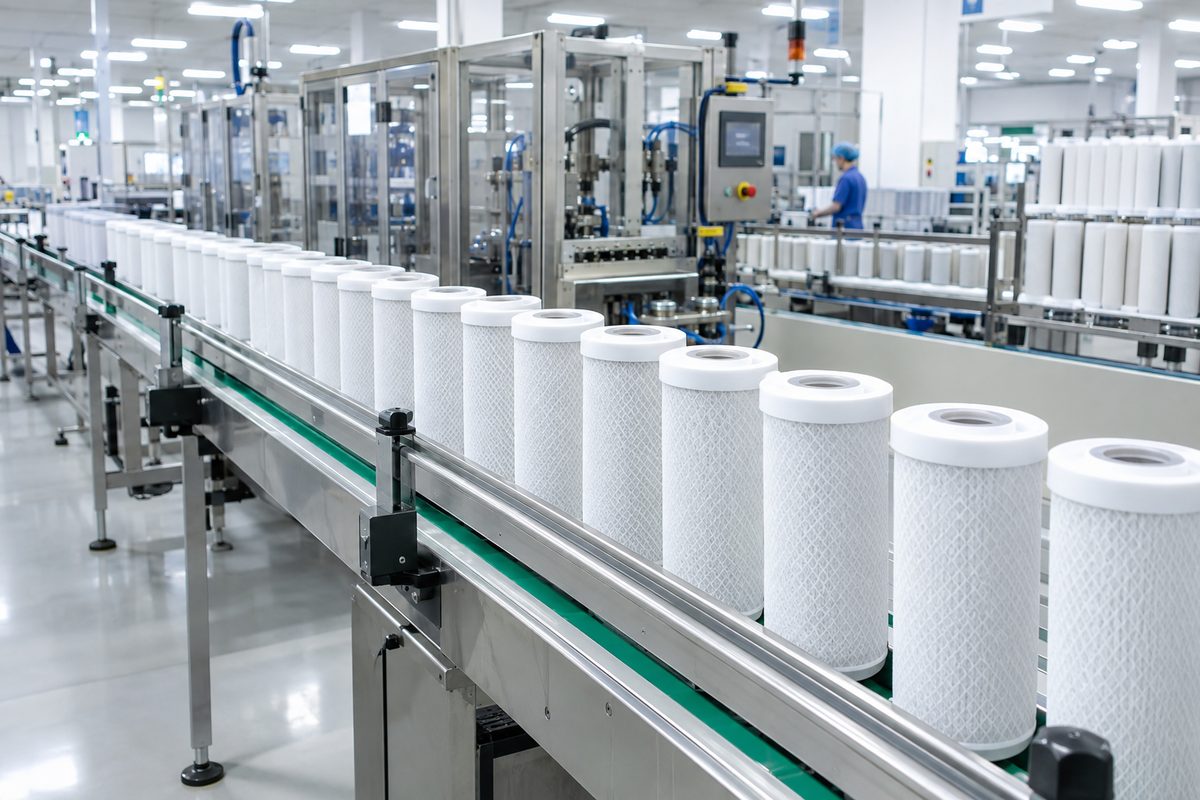
ONEMI, a Guangdong-based water purification equipment manufacturer, builds carbon block cartridges for OEM and private-label buyers, and the media conversation is now baked into the sourcing process. The practical offering is choice with documentation: coconut-shell blocks where micropore purity is the requirement, coal and reactivated grades where cost and larger-molecule removal drive the decision, and the iodine, ash, and hardness data plus NSF/ANSI 42 and 53 certification to back each grade. For a buyer reworking a single-feedstock spec, the switch isn’t a redesign — it’s a material substitution with the numbers already on the table.
The direction for 2026 is clear enough. Carbon block media is maturing from a raw-material label into an engineered spec, and the importers who read it that way are the ones who won’t get caught holding a coconut-only spec the next time the shells get scarce.