

 한국어
한국어

Executive Summary
- Standard GAC removes free chlorine but fails against chloramine—catalytic carbon is the only reliable adsorption solution for markets where chloramine is used as a secondary disinfectant
- Chloramine removal performance depends on three variables: carbon type, empty bed contact time (EBCT ≥ 6 minutes for >95% reduction), and water temperature
- Brands importing water filters for the US, UK, and Australian markets must specify chloramine-capable carbon blocks—90% of US surface water systems now use chloramine
If you’re importing water filters for the North American market, there’s one technical detail that separates a product that works from one that generates returns: chloramine.
Most factory-default carbon blocks are designed for free chlorine—the disinfectant used by roughly two-thirds of the world’s water utilities. But in the United States, the UK, Australia, and a growing number of European cities, the disinfectant flowing through pipes is chloramine: a more stable chlorine-ammonia compound that standard activated carbon struggles to remove. If your filter isn’t designed for it, your customers will taste it, smell it, and eventually return the product.
This article breaks down the chemistry, the carbon technology, and what to specify when sourcing chloramine-capable filtration from an OEM manufacturer. No brand fluff—just the engineering parameters that matter.
Free Chlorine vs Chloramine: Why Standard Carbon Isn’t Enough
Municipal water treatment plants add disinfectants to kill pathogens and prevent bacterial regrowth in distribution pipes. For decades, the standard was free chlorine (Cl₂ or HOCl)—effective, cheap, and easy to monitor. The problem: free chlorine reacts with naturally occurring organic matter in water to form disinfection byproducts (DBPs) like trihalomethanes (THMs) and haloacetic acids (HAAs), both regulated by US EPA Stage 2 DBP Rule at maximum contaminant levels of 80 µg/L and 60 µg/L respectively.
To stay under DBP limits, many utilities switched to chloramine (NH₂Cl)—a combined chlorine that produces far fewer DBPs and persists longer in distribution systems. According to EPA data, over 90% of US surface water treatment plants now use chloramine as either primary or secondary disinfectant. The UK, Australian capital cities, and systems in Germany, France, and Japan have followed similar paths.
Here’s the problem for filter manufacturers:
| Property | Free Chlorine | Chloramine |
|---|---|---|
| Chemical form | HOCl / OCl⁻ | NH₂Cl |
| Removal by standard GAC | Excellent (>99%) | Poor to moderate (40-70%) |
| Removal by catalytic carbon | Excellent (>99%) | Excellent (>95%) |
| Off-gases at room temp? | Yes (volatile) | No (stable) |
| Reduction mechanism | Reduction: HOCl + C* → HCl + C*O | Catalytic decomposition: NH₂Cl + C* → NH₃ + HCl + C* |
| NSF/ANSI 42 test protocol | Standard chlorine reduction claim | Separate chloramine reduction claim required |
The key distinction: free chlorine reduction happens via simple oxidation-reduction on any carbon surface with sufficient surface area. Chloramine requires catalytic carbon—a modified activated carbon whose surface has been treated to accelerate the decomposition of the N-Cl bond. Without this catalytic surface chemistry, chloramine molecules pass through the carbon bed largely intact.
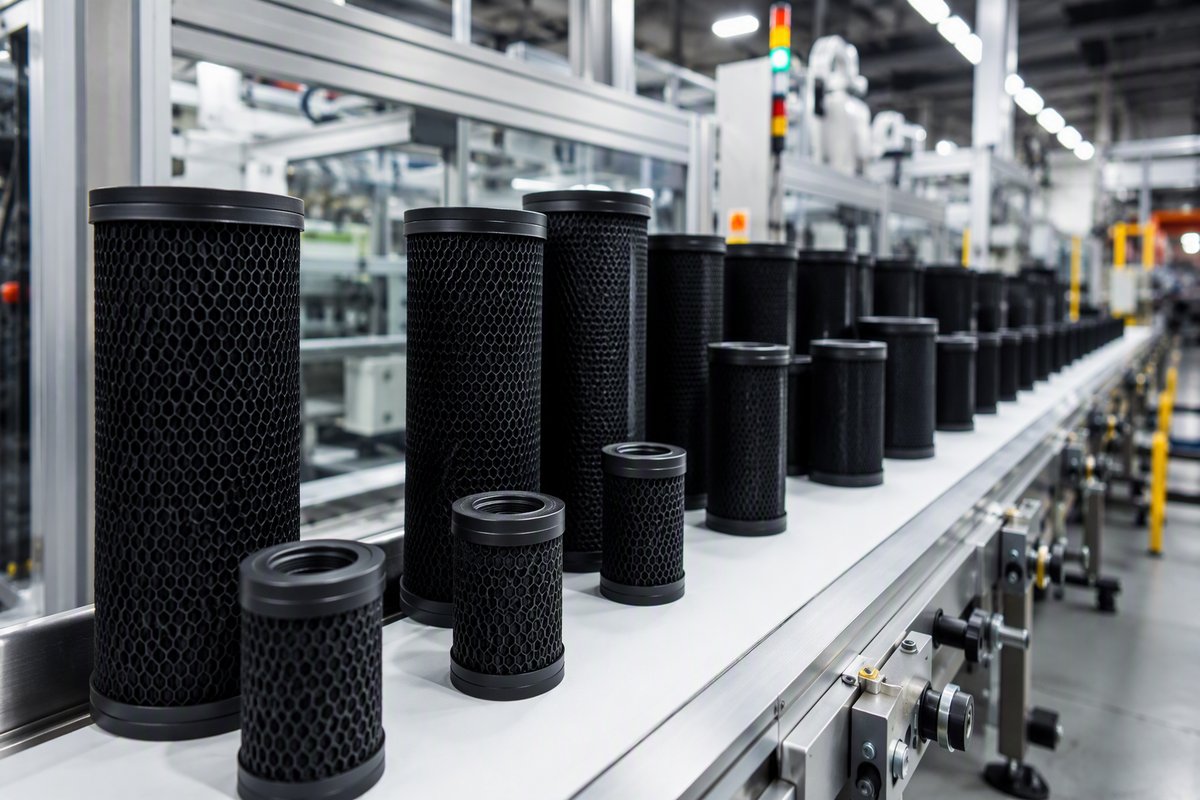
Catalytic Carbon: The Engineering Specs That Actually Matter
Not all catalytic carbon is equal. When sourcing carbon block cartridges from an OEM manufacturer, three parameters determine whether the filter will hit the >95% chloramine reduction your label promises:
1. Carbon Type: Bituminous vs Coconut vs Catalytic-Coated
Standard granular activated carbon (GAC) derived from coconut shell offers high surface area (500-1,500 m²/g) and excellent free chlorine removal through its microporous structure. But chloramine reduction on untreated GAC operates through a slow surface reaction that requires extended contact time—often 3-5x longer than what a residential flow rate allows.
Catalytic carbon is produced by subjecting bituminous coal-based carbon to a controlled high-temperature gas treatment that creates surface functional groups—specifically nitrogen-containing pyridinic and pyrrolic groups—that act as active sites for chloramine decomposition. These sites catalyze the reaction NH₂Cl + H₂O → NH₃ + HOCl, after which the liberated HOCl is reduced by the carbon surface as normal free chlorine.
Sourcing tip: Ask your carbon block supplier for the iodine number (≥1,000 mg/g for catalytic grades) and the chloramine half-life test results at the target EBCT. A reputable manufacturer will provide third-party lab data showing inlet concentration (typically 3.0 mg/L NH₂Cl), outlet concentration, and flow rate, not just a theoretical removal percentage.
2. Empty Bed Contact Time (EBCT)
EBCT is calculated as: EBCT (minutes) = Carbon bed volume (L) ÷ Flow rate (L/min). This is the single most predictive parameter for chloramine removal performance. Industry testing consistently shows:
- EBCT < 3 minutes: 50-70% chloramine reduction—acceptable for chlorine-only markets, not for chloramine
- EBCT 3-6 minutes: 80-95% reduction with catalytic carbon—acceptable for most residential point-of-use applications
- EBCT ≥ 6 minutes: >95% reduction—the target for whole-house systems and commercial applications
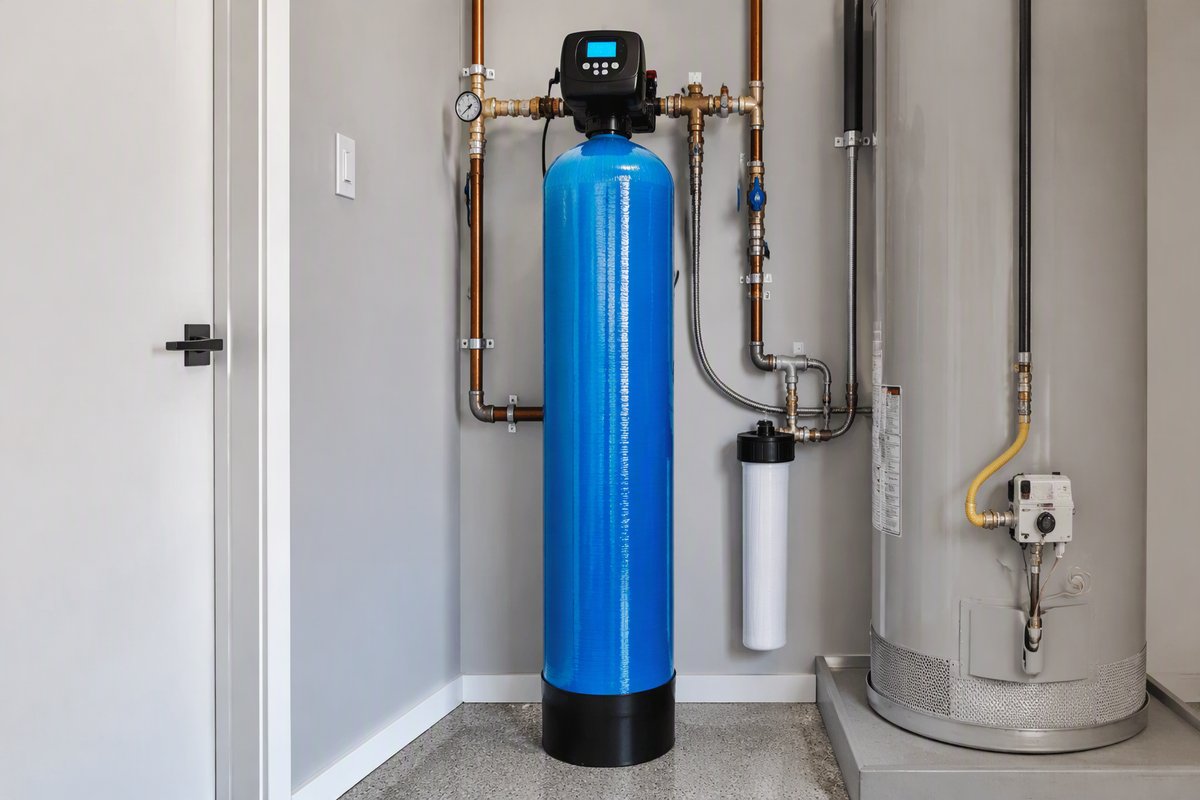
For a standard 10-inch under-sink cartridge flowing at 0.5 GPM (1.9 L/min), a catalytic carbon block with 0.5L bed volume yields EBCT ≈ 0.26 minutes—nowhere near the 6-minute target. This is why single-cartridge under-sink systems often underperform on chloramine: the cartridge simply doesn’t hold enough carbon. Whole-house backwashing tanks (10″ x 54″ with 1.5 ft³ carbon) achieve EBCT of 4-8 minutes at typical household flow rates, which explains why whole-house catalytic carbon systems dominate the chloramine-removal market.
3. Water Temperature and pH
Chloramine decomposition on catalytic carbon is temperature-dependent. At 5°C (typical winter groundwater in the northern US), reaction kinetics slow by approximately 40% compared to 20°C. If your filter specifications were tested at 20°C lab conditions but your customer is on a well in Minnesota, performance will degrade. This isn’t a product defect—it’s thermodynamics—but it becomes a customer service issue if not disclosed.
Similarly, pH above 8.5 favors chloramine stability and slightly reduces catalytic carbon efficiency. For brands targeting markets with hard, alkaline water (Arizona, Texas, South Australia), specifying slightly oversized carbon beds provides margin against these variables.
NSF/ANSI 42 and the Chloramine Reduction Claim
If your filter label says “reduces chloramine,” you need NSF/ANSI Standard 42 certification specifically for chloramine reduction—not just the standard chlorine claim. These are separate test protocols under the same standard.
NSF/ANSI 42 chloramine reduction testing requires:
- Inlet challenge concentration: 3.0 mg/L ± 10% chloramine
- Reduction requirement: effluent ≤ 0.5 mg/L throughout rated capacity
- Testing at manufacturer’s rated flow rate and capacity
- Testing through the entire filter life, not just initial performance
The critical detail: NSF 42 tests the filter’s performance at end-of-life, not just at the start. A carbon block that delivers 98% reduction at 100 gallons may drop to 85% at 800 gallons. The rated capacity on the NSF listing is the gallon count at which reduction still meets the 0.5 mg/L threshold—not the gallon count at which flow drops to unacceptable levels. These are fundamentally different failure modes, and confusing them leads to over-promising on the product label.
For brands developing private-label filters, ONEMI provides NSF/ANSI 42-compliant carbon block cartridges with documented chloramine reduction performance data. Our OEM water filter manufacturing facility produces custom-specification carbon blocks with adjustable bed volume, carbon grade, and micron rating to match your target market’s chloramine levels. Standard offerings include 5-micron and 0.5-micron solid carbon blocks using catalytic-grade media, with iodine numbers of 1,000-1,100 and independent lab validation of chloramine breakthrough curves at multiple EBCT values.
Product Architecture: Where Chloramine Filtration Fits in a Complete System
For brands building a whole-house or under-sink product line, chloramine removal isn’t a standalone feature—it’s one stage in a multi-barrier approach:
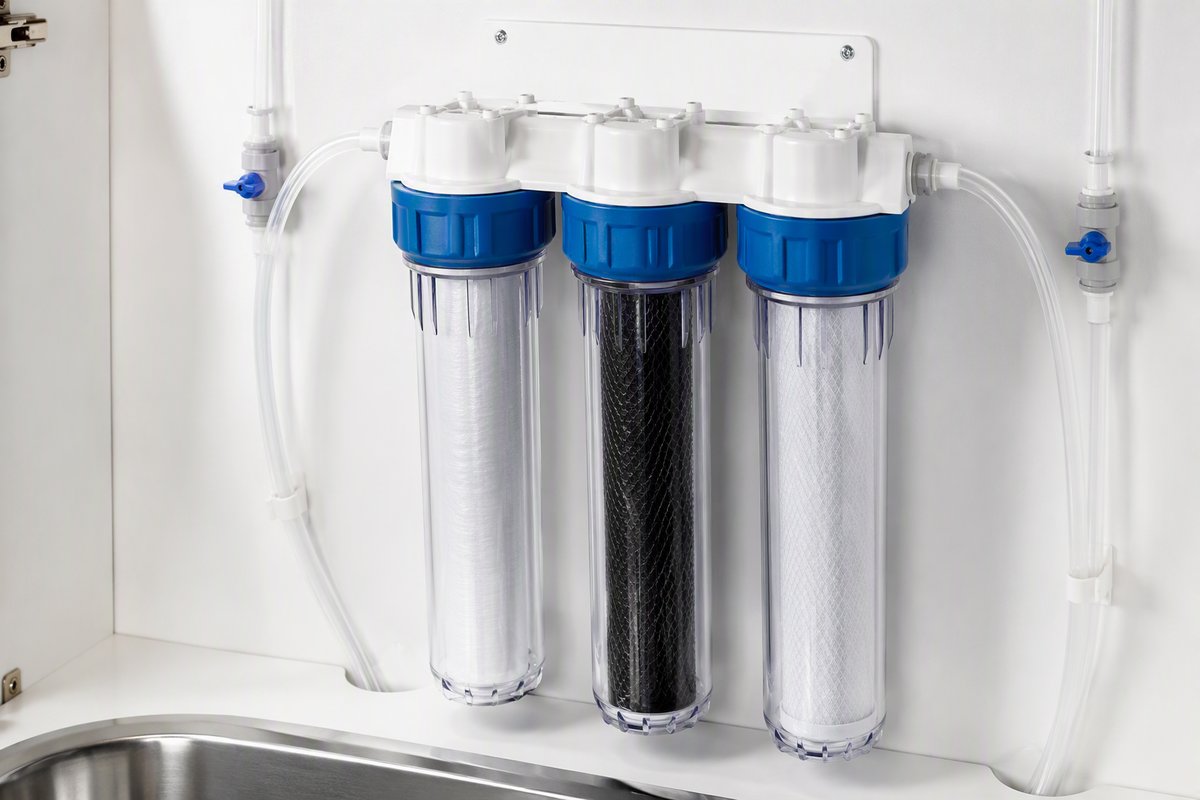
- Stage 1 – Sediment pre-filter (5-20 micron): Protects downstream carbon from particulate fouling. In chloramine-heavy water, sediment filters can accumulate biofilm because chloramine, unlike free chlorine, does not maintain residual disinfectant levels through a filter housing. This means sediment cartridges in chloramine systems need more frequent replacement.
- Stage 2 – Catalytic carbon block or GAC bed: The primary chloramine reduction stage. For under-sink: 0.5-micron catalytic carbon block, 2.5″ x 10″ minimum size. For whole-house: 1.5-2.0 ft³ catalytic GAC in a backwashing mineral tank, 10″ x 54″ or larger.
- Stage 3 (optional) – RO membrane: Reverse osmosis removes residual ammonia (the decomposition product after chloramine breakdown) and any remaining trace DBPs. In under-sink RO systems, the carbon pre-filter handles chloramine reduction before it reaches the membrane—this is critical because chloramine oxidizes polyamide RO membranes, permanently damaging them at concentrations as low as 0.1 mg/L over cumulative exposure.
- Stage 4 – Post-carbon polishing: Coconut-shell GAC for taste and odor refinement, removing any residual ammonia taste from the chloramine decomposition process.
A common mistake in product design: placing the RO membrane before adequate chloramine removal. If chloramine reaches a polyamide thin-film composite membrane, expect irreversible salt rejection decline within 200-500 hours of cumulative exposure. The carbon pre-filter isn’t a “nice to have” in chloramine markets—it’s protecting the most expensive component in the system.
Market-Specific Considerations for Importers
Different chloramine-using markets have different requirements, and a one-size-fits-all carbon specification will underperform somewhere:
United States
The EPA’s Stage 2 DBP Rule pushed most large surface water systems to chloramine. According to the American Water Works Association (AWWA, 2024 Water Utility Disinfection Survey), approximately 30% of US community water systems now use chloramine, serving roughly 40% of the population. High-adoption regions: California (Metropolitan Water District of Southern California), Texas (Houston, Dallas), Florida (Miami-Dade), Northeast corridor. Target specification: catalytic carbon with EBCT ≥ 4 minutes, testing at 3.0 mg/L NH₂Cl inlet, water temperature range 10-25°C.
United Kingdom
UK water companies have increasingly adopted chloramination, particularly Thames Water, Severn Trent, and Anglian Water. UK DWI (Drinking Water Inspectorate) regulations set a chloramine limit of 0.5 mg/L at the tap, but treatment plants dose higher to maintain residuals through aging distribution infrastructure. UK importers should specify WRAS-approved (Water Regulations Advisory Scheme) materials for all wetted components in addition to chloramine-capable carbon. BS 6920 compliance for materials in contact with drinking water is mandatory.
Australia
Australian capital cities using chloramine include Sydney, Brisbane, and Melbourne (partial). The Australian Drinking Water Guidelines (ADWG) specify a chloramine limit of 3.0 mg/L. For the Australian market, WaterMark certification (AS/NZS 3497) is the mandatory plumbing safety standard—products must carry the WaterMark license for legal installation. Importers should verify that catalytic carbon cartridges meet AS/NZS 3497 certification, not solely rely on NSF testing.
For brands developing products across multiple chloramine-using markets, ONEMI’s reverse osmosis filtration systems are configurable with market-specific carbon pre-filtration stages: catalytic carbon blocks for North American chloramine markets, standard GAC for chlorine-only markets, and WRAS/WaterMark-compliant components for UK and Australian regulatory environments.
What to Ask Your Carbon Block Supplier
Before placing a purchase order for chloramine-capable cartridges, get written answers to these six questions:
- What is the base carbon material and activation method? (Look for: bituminous coal base, high-temperature catalytic activation, iodine number ≥ 1,000)
- What is the chloramine reduction at rated flow after 80% of rated capacity? (Not “initial performance”—you need end-of-life data)
- What EBCT does this cartridge achieve at rated flow? (If they can’t calculate this, they don’t understand the product)
- Can you provide third-party lab test results showing chloramine breakthrough curves at 10°C, 20°C, and 30°C water temperatures?
- Is the carbon NSF/ANSI 42 certified specifically for chloramine reduction (not just chlorine)? Provide the NSF listing number.
- What is the minimum order quantity for custom carbon specifications (iodine number, mesh size, binder type, dimensions)?
If a supplier answers question 3 with a blank stare, walk away. Catalytic carbon isn’t a commodity—it’s an engineered material, and your supplier should know the difference between selling cartridges and specifying filtration systems.
For procurement teams evaluating OEM partners, our previous breakdown of how to vet Chinese water purifier manufacturers covers the factory audit checklist, certification verification, and production capacity metrics that apply regardless of which filtration technology you’re sourcing.
The Bottom Line
Chloramine isn’t going away. The global trend toward chloramine disinfection is accelerating as regulators tighten DBP limits and water utilities extend distribution networks. For water filter brands, this means one thing: defaulting to standard GAC is a competitive liability.
The fix isn’t complicated—it’s catalytic carbon with adequate EBCT and third-party validated performance data. But it requires asking the right questions during sourcing, not just checking the “chlorine reduction” box on a spec sheet. The brands that get this right will own the chloramine-market segments. The ones that don’t will own the return rate.