




 한국어
한국어

- The EU Drinking Water Directive sets a 0.10 µg/L limit on the sum of 20 PFAS compounds in drinking water, enforceable across member states from January 2026.
- Reverse osmosis removes 90-99% of PFAS and is one of the few point-of-use technologies that handles short-chain variants, making RO the compliance workhorse for European importers.
- Microplastics monitoring is now mandatory for UK water treatment devices (DWI, 2024), and the EU is moving in the same direction.
- The global water purifier market is on track to grow from $36.82 billion in 2026 to $52.39 billion by 2031, with Europe holding roughly 17.8% of that value.
Europe is no longer a market where a water purifier sells on taste and limescale alone. Two regulatory deadlines that landed in January 2026 have reset what “compliant” means, and importers who missed the shift are now holding stock that municipal buyers and large retailers will not accept.
The first deadline is the revised EU Drinking Water Directive, which brought PFAS into the legal text for the first time. The second is the tightening of microplastics monitoring that began in the UK and is spreading across the continent. Both point to the same commercial outcome: demand is moving toward reverse osmosis and away from single-stage carbon.
What the PFAS limit actually says
The EU Drinking Water Directive 2020/2184 sets a limit of 0.10 µg/L on the sum of 20 specified PFAS compounds, and a separate 0.50 µg/L cap on PFAS total. Those numbers became binding in member states in January 2026, after the transposition window closed.
That is a much harder standard than most importers realise. A single-stage activated carbon pitcher will reduce chlorine and improve taste, but it will not reliably hold twenty PFAS variants below 0.10 µg/L. The technologies that do are the ones a compliance-conscious buyer now has to specify. The detail on which filter media removes which PFAS class is laid out in PFAS removal water filtration technology.
On top of the drinking water limit sits the ECHA restriction proposal, which is pushing toward a near-total ban on around 10,000 PFAS substances under REACH. It is still in review, with finalisation expected in 2026, but the direction is set: fines of up to 5% of global turnover for non-compliance. That is not a soft signal, and it is already pulling procurement toward certified systems.
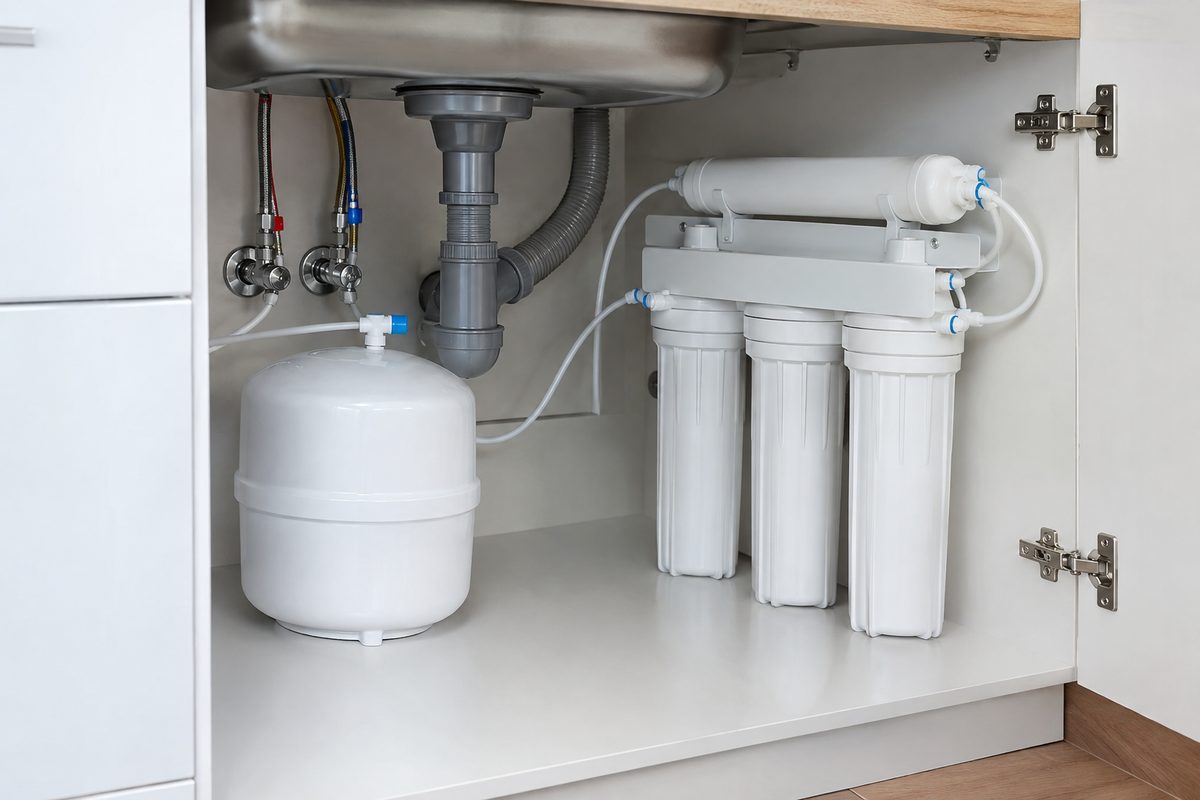
Reverse osmosis is the compliance workhorse
Why does RO win? Because it is one of the few point-of-use technologies that removes both long-chain and short-chain PFAS. Reported removal efficiency runs from 90% to 99%, depending on the membrane and the specific compound. Granular activated carbon catches long-chain PFAS well but misses short-chain variants, which is exactly the gap the new EU limits are designed to close.
The comparison matters at the sourcing level, not just the marketing level. A distributor buying for a German or French retailer needs to be able to say which standard the unit meets and which contaminants it removes, in writing, with test data. That is what separates an importable product from a warehouse liability.
| Technology | Long-chain PFAS | Short-chain PFAS | EU 0.10 µg/L compliance |
|---|---|---|---|
| Granular activated carbon | Strong | Weak | Partial |
| Ion exchange resin | Strong | Good | Generally meets |
| Reverse osmosis | Strong | Strong | Meets |
The table is the practical answer to the question importers keep asking: do I need to move my line to RO? If the target is a market where the 0.10 µg/L sum-of-PFAS limit is enforced, the answer is yes for drinking water applications. The certification groundwork is covered in the NSF/ANSI 42 vs 53 vs 58 breakdown.
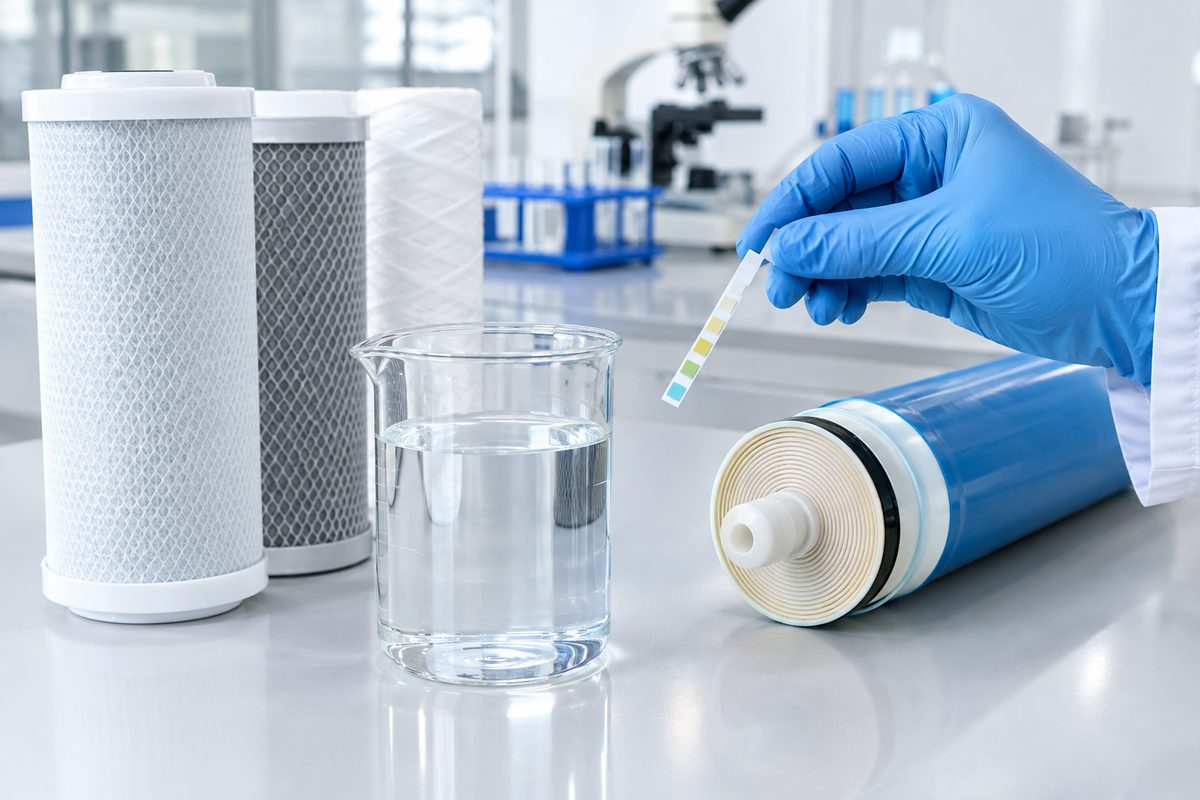
Microplastics are the second demand driver
PFAS gets the headlines, but microplastics are quietly doing more to move the consumer market. The UK Drinking Water Inspectorate made microplastics filtration efficiency testing mandatory for water treatment devices in 2024, and the EU is building microplastics monitoring into its own framework.
Microplastics behave differently from dissolved chemicals. They are particles, which means they are removed by physical sieving — membrane and depth filtration — rather than by adsorption. That plays directly to reverse osmosis and ultrafiltration, and it erodes the position of carbon-only point-of-use units. The OEM opportunity in this segment is sized in microplastics water filtration market OEM.
How the demand shift lands on sourcing
The market numbers put the opportunity in perspective. Mordor Intelligence values the global water purifier and filter market at $36.82 billion in 2026, growing to $52.39 billion by 2031 at a 7.14% CAGR. Europe holds roughly 17.8% of that, a shade over $7.5 billion in 2025, sustained by strict EU directives and an established base of premium brands.
For an importer, Europe is no longer a market to enter with a generic carbon unit and a CE mark. The entry ticket is now a documented chain: a membrane that removes PFAS to the legal limit, a physical barrier that catches microplastics, and test data for both. The compliance layer differs by country — WRAS for UK plumbing safety, DVGW for Germany, ACS for France — but the underlying technical requirement is converging on the same RO-and-membrane core. The UK under-sink RO sourcing guide walks through the WRAS side of that stack.
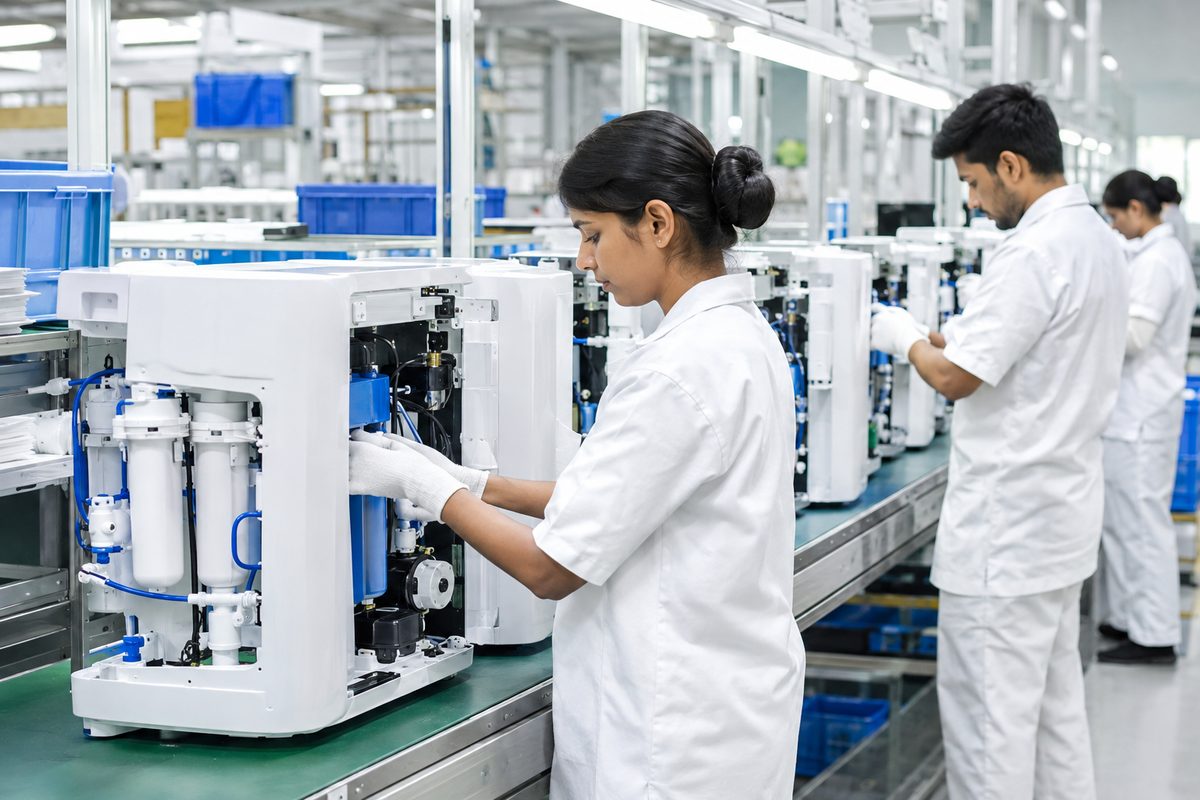
What ONEMI brings to a European line
ONEMI, a Guangdong-based water purification equipment manufacturer, runs its under-sink RO and countertop platforms on the exact specification this shift is demanding: a membrane stage sized for PFAS removal, a physical barrier for particulate and microplastic capture, and whole-machine CE, UL, FCC, and RoHS certification. NSF applies to the filter cartridge rather than the complete appliance, which is the correct scope to state and no more.
The practical sequence for an importer is to anchor on a certified under-sink RO unit, build the compliance documentation for the target member state, then expand into the countertop and whole-house tiers. Europe’s two January 2026 deadlines are not a one-off scare; they are the start of a multi-year tightening cycle, and the importers who build their line around RO and membrane filtration now are the ones who keep the shelf space when the next limit lands. For the technical install side, the under-sink RO installation reference covers the specification points a European buyer will ask about.