




 한국어
한국어

- Global water purifier sales are projected to climb from $35.6 billion in 2025 to $53.2 billion by 2032, with IoT-enabled units leading the premium segment
- Filter life monitoring converts a one-off hardware sale into recurring cartridge revenue — early adopters report roughly 25% fewer unexpected filter failures
- US importers should specify NSF/ANSI 42/53/58 cartridges, real-time TDS sensing, and firmware built for subscription billing
By 2032 the global water purifier market is projected to reach $53.2 billion, up from $35.6 billion in 2025, a compound annual growth rate of about 8.3% according to MarkNtel Advisors. The fastest-growing slice of that market is not the membrane or the housing. It is the data. Smart purifiers that monitor filter life, sense water quality in real time, and trigger automatic cartridge replenishment are turning a low-margin hardware business into a recurring revenue stream. For importers and brand owners, that shift changes what to look for in a manufacturer.
The Market Shift Behind Smart Filtration
The United States is the anchor market. Fortune Business Insights puts the US water purifier market at roughly $7.09 billion in 2025, growing at 5.5% annually to 2032. Residential installations account for about 70% of global water purifier sales, which matters because homes are where recurring revenue is easiest to capture. A consumer who buys a purifier once is a one-time margin; a consumer who subscribes to filter replacements is a multi-year cash flow.
Two forces are converging. First, the US Environmental Protection Agency has tightened limits on PFAS and other emerging contaminants, pushing utilities and homeowners toward point-of-use filtration. Second, the hardware itself is getting smarter — sensors, cloud connectivity, and app-based control are now standard features rather than premium add-ons. The result is that subscription-based filter replacement is no longer a niche model in North America; it is becoming the default way brands retain customers.
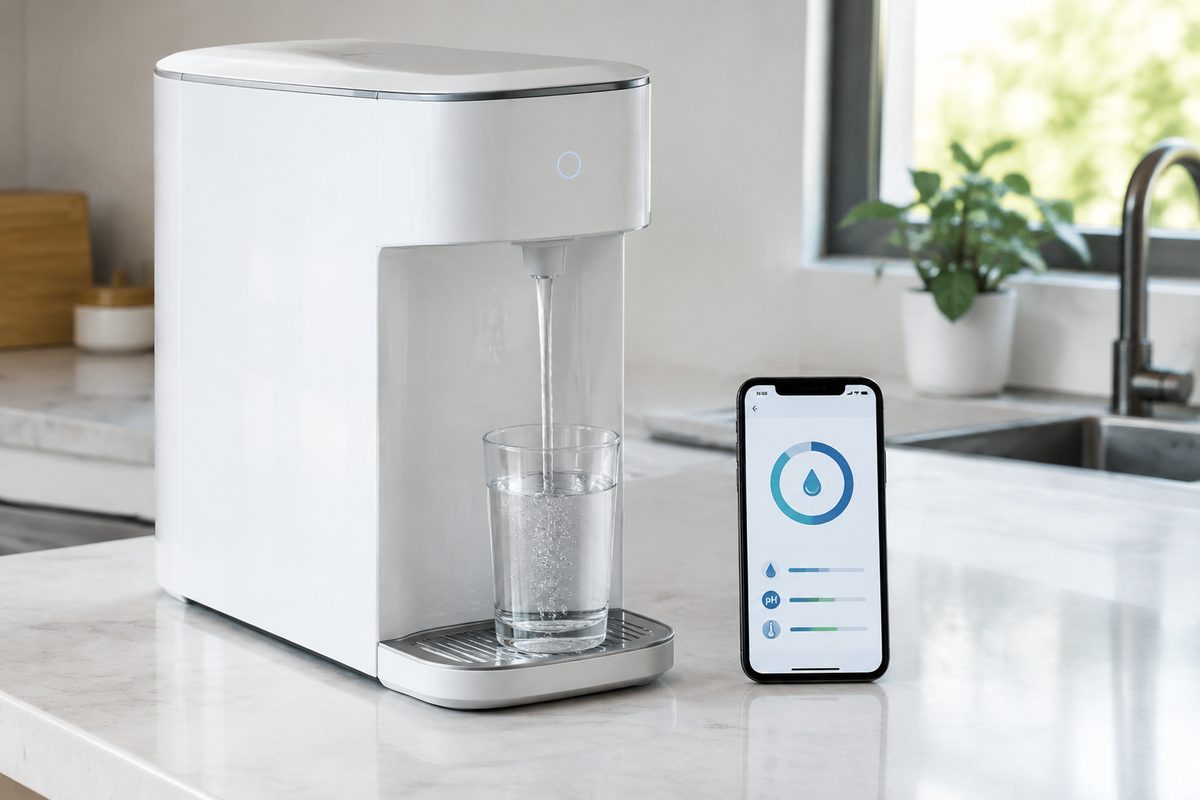
Filter Life Monitoring Changes the Unit Economics
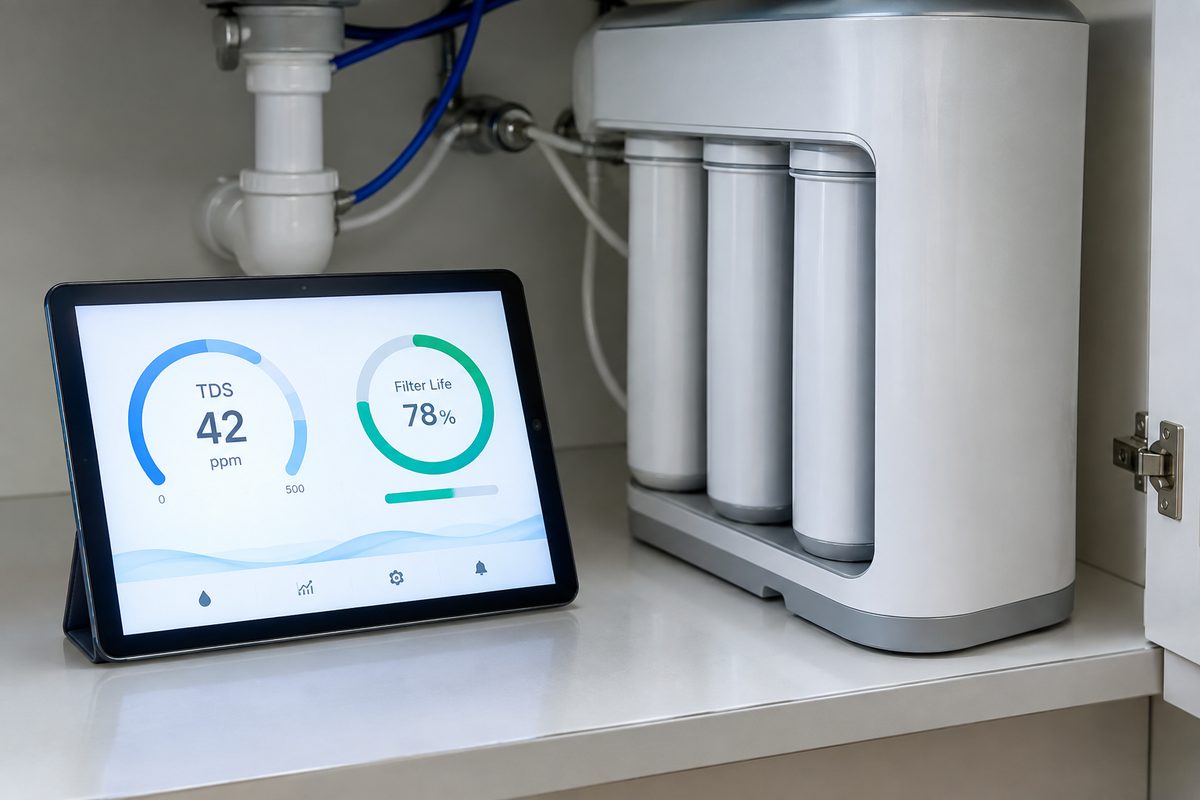
The single most consequential feature in a modern purifier is not a bigger membrane. It is accurate filter life monitoring. When a machine can count real flow volume, measure TDS in real time, and predict when a cartridge is actually spent — rather than relying on a calendar reminder — three things happen.
First, cartridge changes happen on time, not early. Consumers stop replacing filters by guesswork, which reduces waste and builds trust. Second, the machine can trigger an automatic reorder at the exact moment a filter approaches exhaustion. That is the auto-replenishment loop that turns hardware into a subscription. Third, the brand collects usage data that predicts demand and tightens inventory. Early adopters of IoT filtration report roughly a 25% decrease in unexpected filter failures, which translates directly into fewer warranty claims and higher customer retention.
A cartridge that costs a brand a few dollars to source and sells for $30 to $50 through a subscription is a very different business than a one-off $400 appliance. The subscription also flattens seasonality and gives a brand a recurring line it can underwrite and forecast. For an OEM buyer, this is the difference between selling a box and selling a relationship. More detail on how predictive maintenance reshapes the B2B offer is in this breakdown of AI-driven monitoring.
The Technology Stack Importers Should Specify
Not all “smart” purifiers are built the same. When writing a sourcing spec, there are five components that matter more than the marketing copy.
| Component | What to specify | Why it matters |
|---|---|---|
| Sensing | Real-time TDS, flow meter, optional pH/turbidity | Filter life must be measured, not guessed |
| Connectivity | Wi-Fi or Bluetooth + cloud API | Enables reorder triggers and remote support |
| Firmware | Subscription billing hooks, OTA updates | Recurring revenue needs software, not just sensors |
| Cartridges | NSF/ANSI 42/53/58 certified | US market credibility and retail compliance |
| Telemetry | Usage analytics, fleet dashboard for B2B | Predictive inventory and service planning |
The firmware layer is where most generic suppliers fall short. A purifier can have sensors and still be “dumb” if the firmware does not expose filter-remaining data to a subscription backend. Ask to see the API documentation, not just the app. The certification side is equally specific — the standards that matter for the US are NSF/ANSI 42 (aesthetic effects), 53 (health effects), and 58 (reverse osmosis systems), which importers can decode with this importer guide.
What OEM Buyers Need From a Manufacturer
Smart filtration is not something a brand can bolt on at the end. It has to be designed in. That means the manufacturer you choose needs more than an assembly line — it needs firmware engineering, sensor integration, and a certification support process. A factory that only molds housings and buys membranes will not get you to a subscription-ready product.
The practical checklist for qualifying a smart purifier OEM: in-house or partnered firmware development, a documented testing process for sensor accuracy, PCB and connectivity sourcing under one roof, and a track record of NSF/ANSI cartridge certification. US importers lean on NSF/ANSI, while European buyers face the EU Drinking Water Directive and WRAS, ACS, or DVGW approvals. A manufacturer that already navigates both regimes saves a brand months of compliance lead time. Contract manufacturing is the right model when you want to own the brand and the customer relationship while the factory owns the engineering. For a fuller picture of what to look for, see this guide to OEM water purifier manufacturing.
Where ONEMI Fits
ONEMI, a Guangdong-based water purification equipment manufacturer in Dongguan, China, builds smart under-sink RO systems for brands and importers rather than selling direct to US consumers. That positioning matters: it means the smart features are designed to be white-labeled, not locked to a factory brand.
The X1 series of tankless RO systems spans 600G, 800G, 1000G, and 1200G flux, with 0.0001-micron filtration and a 65% recovery rate that meets China’s GB 34914-2021 first-grade water efficiency standard. The integrated waterway design uses two fittings across the whole machine, which reduces leak points and supports the compact 465×161×410mm form factor importers need for under-sink retrofits. Certifications cover CE, UL, FCC, and RoHS at the system level, with NSF/ANSI certification on the filter cartridges specifically.
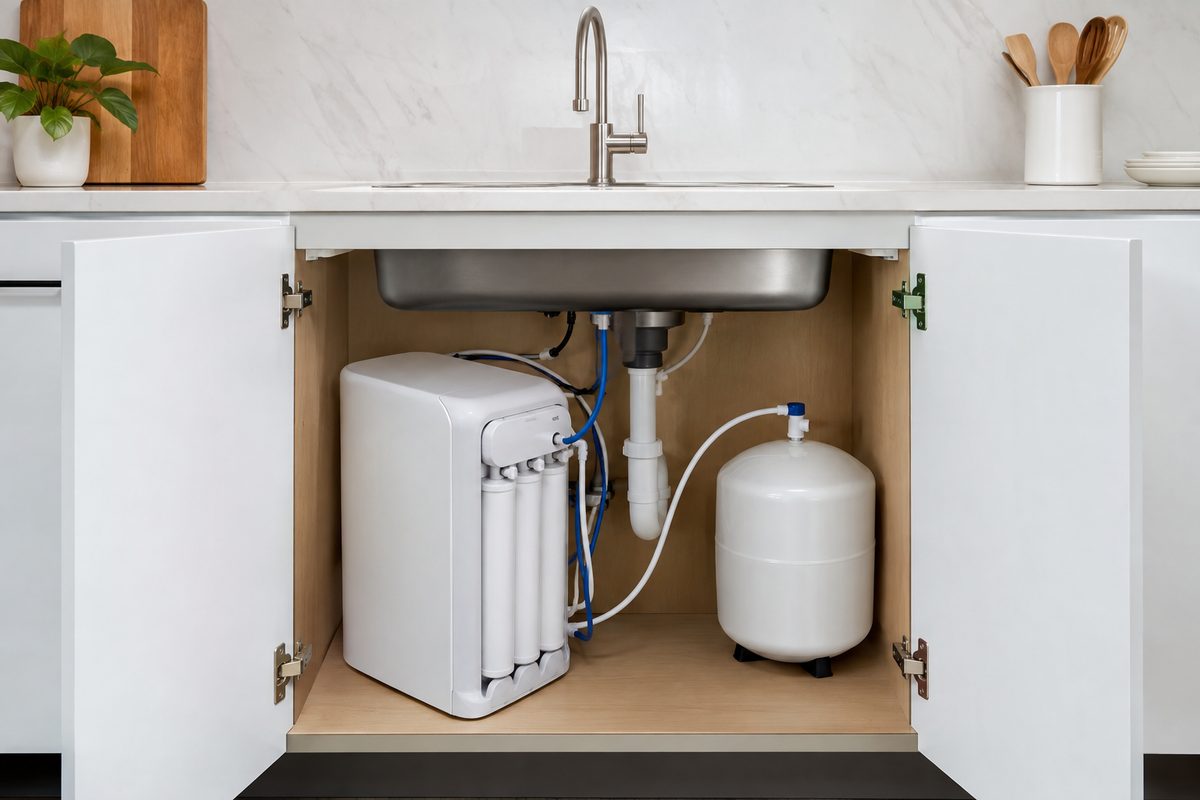
The commercial point for buyers is the recurring revenue side. Because the cartridge architecture and the sensing stack are built together, an ONEMI system can feed real filter-life data into a subscription backend. That is what turns the hardware sale into a cartridge revenue stream. The economics of cartridge sourcing as a recurring line are spelled out in this recurring revenue guide.
The Bottom Line
Smart water purifiers are not a gimmick. They are the mechanism by which a fragmented, low-margin hardware category consolidates into a recurring revenue business. The importers and brands that specify filter life monitoring, real-time sensing, and subscription-ready firmware now will own the customer relationship that pure hardware sellers cannot. For OEM buyers, the question is no longer whether to go smart — it is which manufacturer can actually deliver the software and certification stack, not just the box.