
 한국어
한국어

Picture this. It is a rainy Tuesday morning, and your Slack is blowing up. The facility manager at your regional headquarters in Chicago just reported that the newly installed water filtration systems are throwing error codes, the water tastes like a swimming pool, and local staff are refusing to drink it. Meanwhile, your procurement team is staring at a stack of conflicting compliance certificates from three different overseas manufacturers, none of which seem to align with the latest EPA standards on PFAS levels. It is a classic corporate procurement headache, and it happens more often than you think.
Buying commercial water purifiers at scale isn’t like buying office chairs. You aren’t just comparing unit prices; you are entering a multi-year marriage with a supplier’s supply chain, engineering team, and quality control process. One bad decision can lead to thousands of dollars in maintenance overhead, compliance fines, and worst of all, a massive hit to employee trust. Let us break down how to navigate this high-stakes decision without losing your mind.
Executive Summary
- Regulatory compliance is shifting rapidly, requiring suppliers to meet strict new EPA standards on forever chemicals and microplastics.
- Total Cost of Ownership (TCO) often hides massive secondary costs in proprietary filter replacements and high water-waste ratios.
- A robust procurement framework must prioritize physical factory audits and raw material traceability over simple paperwork checks.
The Hidden Trap of the Lowest Bidder

We have all been tempted by the lowest quote. When a supplier comes in with a unit price that is thirty percent lower than the competition, your budget spreadsheet looks fantastic. But in the commercial water treatment world, a cheap upfront price tag is almost always a trap. Why? Because water is highly corrosive, municipal infrastructure is aging, and cheap components fail under pressure.
Think about the actual cost of a commercial water purifier over its lifespan. The initial purchase price represents only about twenty percent of what you will actually spend. The rest goes into replacement filters, energy consumption, wastewater fees, and emergency maintenance calls. If a cheap system uses proprietary filters that cost a fortune to replace every six months, you will end up spending triple the original purchase price before the third year is out.
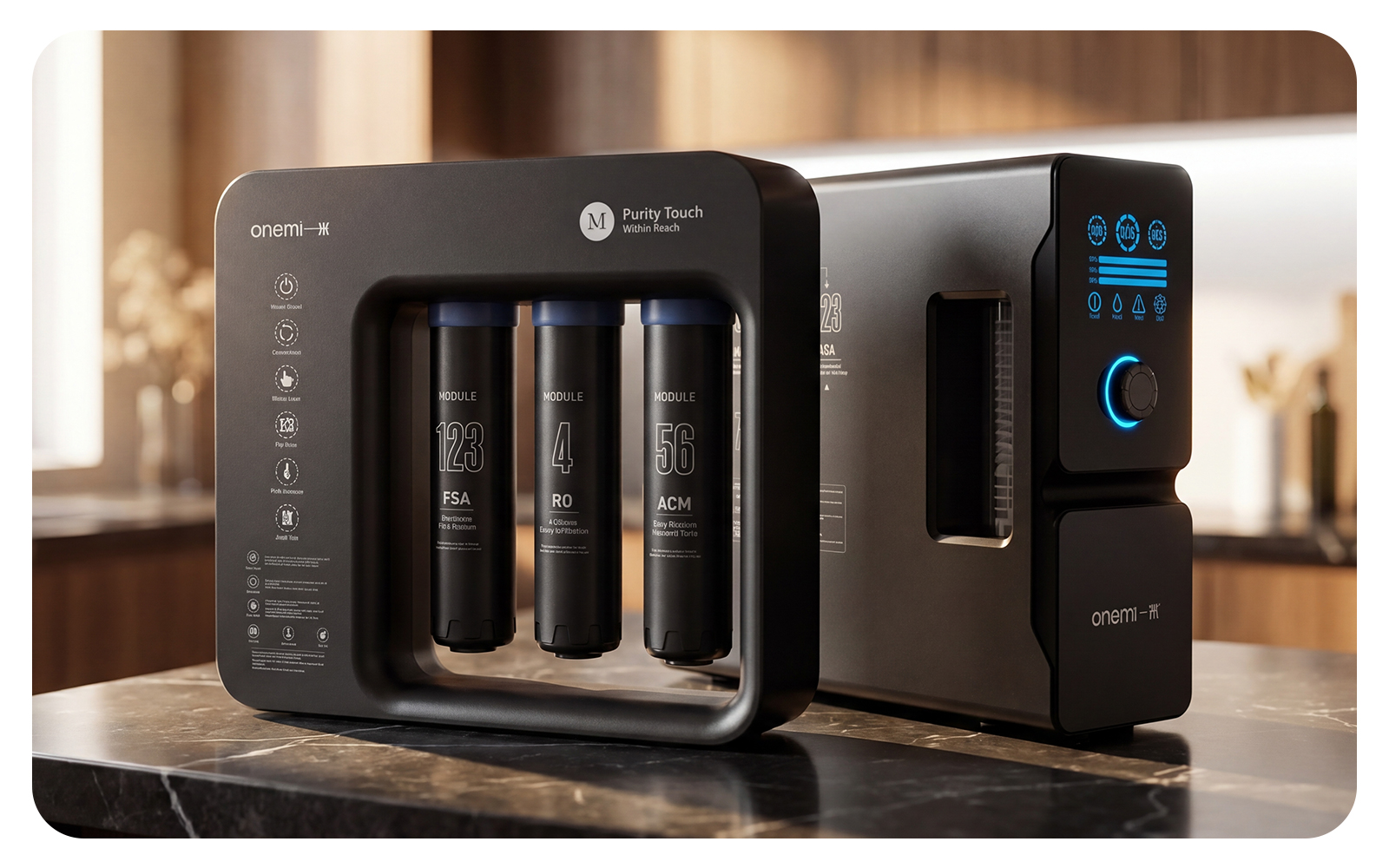
There is also the silent killer of cheap systems: water waste. Many low-end reverse osmosis systems have a recovery rate of only twenty-five percent. That means for every single gallon of purified water your team drinks, three gallons are flushed straight down the drain. In cities with rising water utility rates like Boston or Seattle, your utility bills will skyrocket, completely erasing any initial savings you secured during the bidding phase. High-quality systems, like those engineered by ONEMI, focus heavily on maximizing recovery rates to keep these operational costs under control.
Let us look at how the costs actually stack up over a five-year period for a typical office building with five hundred employees.
| Cost Category | Low-Cost Supplier (Cheap Upfront) | Premium OEM Supplier (Value-Engineered) |
|---|---|---|
| Initial Unit Cost (10 units) | $8,000 | $14,000 |
| Annual Filter Replacements | $4,500 (Proprietary, frequent changes) | $1,800 (High-capacity, long-life) |
| Estimated Water Waste (5 Years) | $6,000 (1:3 recovery ratio) | $1,500 (1:1 or better recovery ratio) |
| Maintenance & Downtime (5 Years) | $5,000 (Frequent solenoid/pump failures) | $1,200 (Industrial-grade components) |
| Total 5-Year Cost | $41,500 | $25,700 |
The math does not lie. Spending more upfront on a system with better engineering and highly efficient filtration stages saves you thousands of dollars down the road. It also saves you from the endless headache of managing angry facility tickets.
The Changing Landscape of Water Regulations
If you are procuring water systems today, you cannot afford to ignore the shifting regulatory landscape. The days of relying on basic carbon blocks that just remove chlorine taste are long gone. Today, the focus is on contaminants you cannot see, smell, or taste.
The EPA recently established strict, legally enforceable limits on several PFAS chemicals, often referred to as “forever chemicals.” These synthetic compounds are found in municipal water supplies across the country, and they do not break down naturally. Standard sediment filters will not touch them. To protect your organization, you need suppliers who design systems utilizing advanced activated carbon blocks, specialized ion exchange resins, or reverse osmosis membranes that are specifically certified to reduce these emerging contaminants.
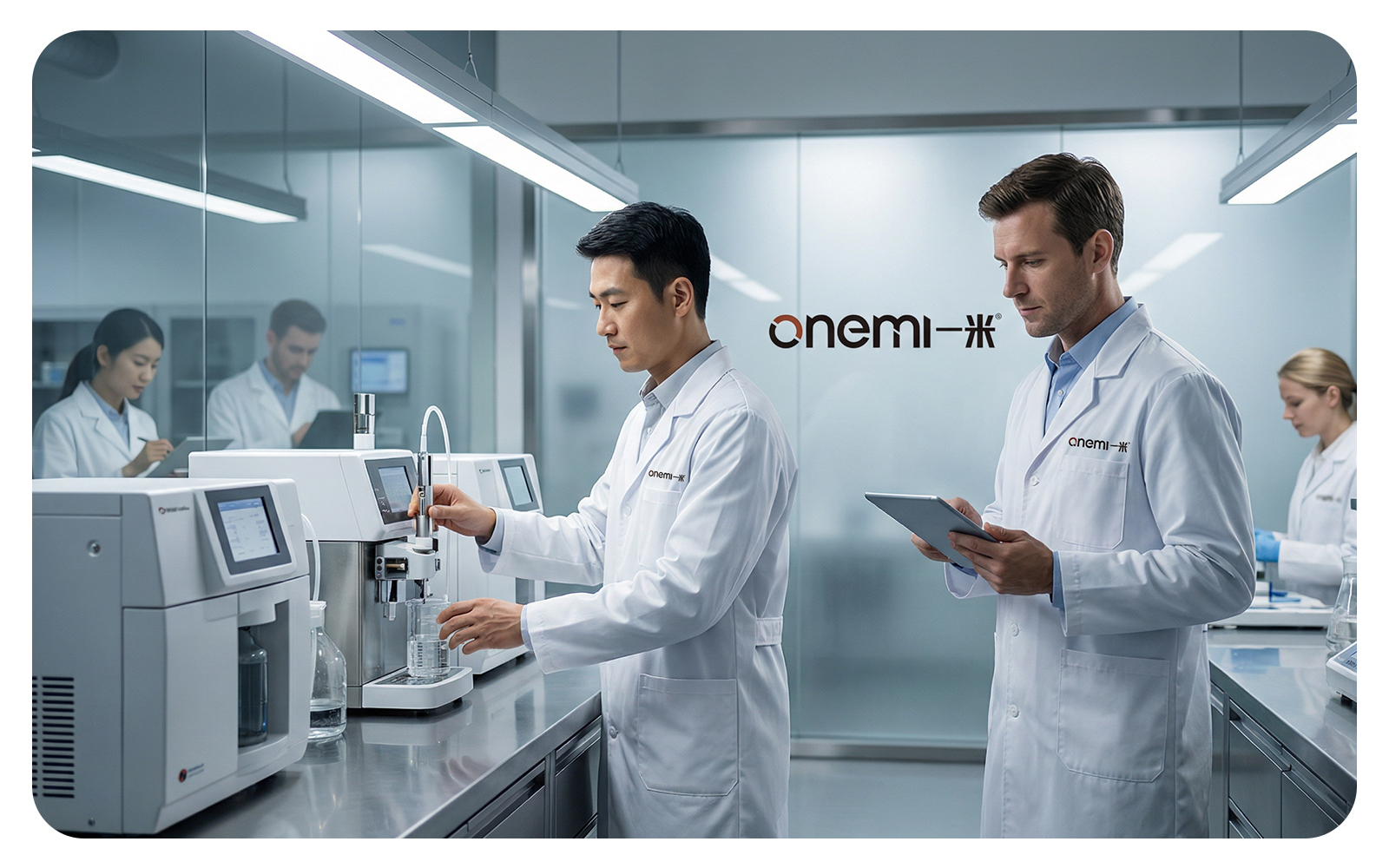
Then there is the issue of lead. While municipal water treatment plants do their best, lead often leaches into the water from aging service lines and building plumbing before it ever reaches your tap. If you are operating in older metropolitan areas, your filtration systems must have NSF/ANSI 53 certification for lead reduction. When you are auditing potential suppliers, do not just take their word for it. Ask for their official test reports from independent bodies like the NSF or WQA. If they hesitate to share the raw laboratory data, walk away.
Are you actually checking the manufacturing origin of the plastic components inside these machines? Many suppliers buy cheap plastic housings that leach bisphenols or other plasticizers back into the purified water over time. It is a massive irony: you buy a purifier to clean the water, but the machine itself contaminates it. Ensure your supplier uses food-grade, BPA-free materials for every single component that touches the water stream.
Evaluating Manufacturing QA and Supply Chain Resilience
Let us talk about a major practical gotcha that catches many procurement teams off guard: component consistency. A supplier might send you a beautifully crafted sample unit for your evaluation team. It works flawlessly. But when your bulk order of fifty units arrives, you find that the internal wiring is messy, the fittings are loose, and the pumps are from a completely different, lower-tier sub-vendor. This happens when a manufacturer lacks tight control over their sub-tier supply chain.
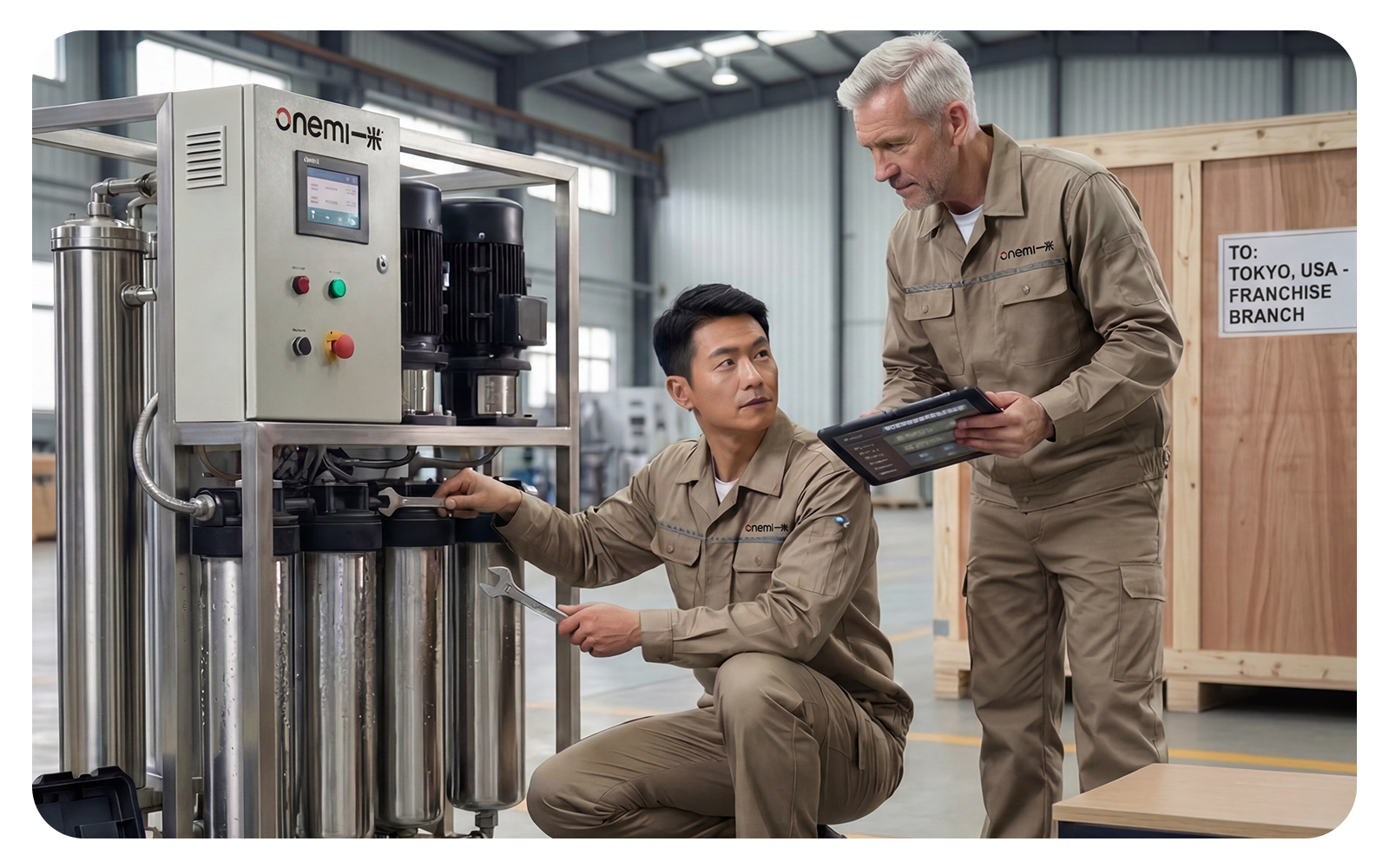
To avoid this, your procurement framework must evaluate how a supplier manages their own parts sourcing. Do they manufacture their key components in-house, or are they simply an assembly shop putting together random parts they bought off the shelf? Brands like ONEMI maintain strict quality control over their entire assembly line, ensuring that the unit you test is identical to the units that ship to your offices.
How do they handle pressure testing? Every single water purifier should undergo a static and dynamic pressure test before it leaves the factory floor. A tiny leak in a commercial building can cause tens of thousands of dollars in property damage overnight. If your supplier cannot show you their automated testing protocols for leak detection, you are taking a massive gamble with your facilities.
You also need to ask hard questions about their supply chain resilience. If a global shipping crisis hits, or a major component factory shuts down, how long will you have to wait for replacement filters? If your supplier relies on a single, fragile supply route with no regional warehousing, your offices could be left with useless, clogged water systems for months. Look for suppliers with diversified manufacturing bases and localized distribution hubs.
Technical Alignment and Customization Capabilities
Every building has unique water chemistry. The water in Phoenix, Arizona, is incredibly hard, loaded with calcium and magnesium that will scale up and destroy heating elements in a matter of weeks. The water in New York City is much softer but can carry high levels of sediment from century-old water mains. A one-size-fits-all water purifier is a myth.
A truly capable supplier will not just try to sell you their standard catalog model. They will ask to see your local water quality reports first. They should offer customization options, such as adding a dedicated polyphosphate pre-filter to prevent scale buildup in hard water areas, or integrating an ultrafiltration membrane to handle heavy sediment loads without clogging the main reverse osmosis membrane. This level of technical alignment is what separates a transactional vendor from a strategic partner.
What about smart monitoring features? In modern facility management, sending a technician to manually check every water filter is incredibly inefficient. Look for systems that feature integrated IoT sensors. These sensors can monitor water flow, total dissolved solids (TDS) levels, and filter life in real time, alerting your maintenance team via a cloud dashboard before a filter actually fails. This predictive maintenance approach keeps your downtime close to zero.
But here is a quick reality check on tech limitations: IoT sensors are great, but they add failure points. If a supplier’s smart system relies on a poorly designed app that crashes constantly or requires complex integration with your corporate Wi-Fi network, it might cause more headaches than it solves. Always ask if the machine can still function perfectly in manual mode if the wireless connection drops.
At the end of the day, choosing the right partner comes down to looking past the glossy brochures and asking the tough, technical questions. When you find a supplier like ONEMI that values engineering transparency, rigorous testing, and honest cost projections, you aren’t just buying water purifiers. You are buying peace of mind for your entire organization, one clean glass of water at a time.