

 한국어
한국어

Market Context: Demand for Portable RV Water Filtration
As of 2026, the global RV market continues its upward trajectory, with the RV Industry Association reporting over 400,000 units shipped annually in North America alone. This growth directly fuels demand for portable water filters that address the unique challenges of traveling with a camper: inconsistent municipal water quality, potential contamination from aging campground infrastructure, and the need for self-sufficiency when boondocking. Importers and distributors seeking to capitalize on this trend must understand the technical specifications, certification requirements, and sourcing strategies that define a reliable product line.
Two-Stage Filtration Architecture: A Best-Practice Standard
Professional installers and experienced RV owners converge on a two-stage approach. The first stage is an inline sediment pre-filter installed at the water hookup point. This typically uses a 5-micron cartridge in a standard 10-inch housing, capturing rust, sand, and other particulate matter that can damage downstream components or compromise taste. The second stage is a point-of-use drinking water filter, either a countertop unit or a faucet-mounted device, that reduces chemical contaminants, improve taste, and may include UV or RO technology for higher removal rates.
For B2B buyers, this architecture translates into a clear product portfolio requirement. You need to offer both stages—or a combined solution—to meet the expectations of RV dealerships, outdoor retailers, and direct-to-consumer e-commerce platforms. Key engineering constraints include compact footprints (under 10 inches in any dimension for most hookup points), zero permanent installation (all connections must be quick-disconnect or standard garden hose threads), vibration tolerance (components must withstand constant road movement), and dual-power compatibility (ability to operate on 12V DC and 120V AC, critical for boondocking scenarios).
2026 Portable Purifier Categories: Technical Specifications
The 2026 market for portable water purifiers is segmented into four primary categories, each with distinct procurement specs:
- Countertop RO with UV: 5-stage filtration (sediment, carbon block, RO membrane, post-carbon, UV disinfection). Removes up to 99.9% of contaminants including PFAS, heavy metals, and bacteria. Flow rate: 0.1–0.3 L/min. Filter lifespan: 6–12 months. Weight: 3–5 kg. Ideal for RV kitchens and off-grid cabins.
- Gravity filters: Use a 0.1-micron hollow fiber membrane, no power required. Flow rate: 2–4 L/hour. Weight: 1–2 kg. Suitable for emergency preparedness and extended camping.
- Filter straws: 0.2-micron absolute filtration, direct suction. Flow rate: 0.5–1 L/min. Weight: 50–100 g. Low-cost entry point for hikers and emergency kits.
- Pump purifiers: Manual or battery-operated, 0.01-micron UF membrane. Flow rate: 1–2 L/min. Weight: 400–800 g. Effective for group camping.
Evaluating these categories requires a matrix of performance metrics: micron rating, flow rate, filter lifespan (in liters), weight, and certification status. The table below summarizes typical specifications across the four categories—use this as a baseline for supplier evaluation.
| Category | Micron Rating | Flow Rate | Filter Lifespan | Weight | Power Source |
|---|---|---|---|---|---|
| Countertop RO+UV | 0.0001 (RO) | 0.1–0.3 L/min | 6–12 months | 3–5 kg | 12V/120V |
| Gravity Filter | 0.1 micron | 2–4 L/hour | 1,000–2,000 L | 1–2 kg | None |
| Filter Straw | 0.2 micron | 0.5–1 L/min | 1,000 L | 50–100 g | None |
| Pump Purifier | 0.01 micron | 1–2 L/min | 2,000–5,000 L | 400–800 g | Manual/Battery |
OEM Manufacturing: Sourcing from Guangdong Factories
Guangdong Province remains the epicenter of portable water filter manufacturing, with hundreds of factories producing everything from simple filter straws to advanced countertop RO systems. For B2B importers, the region offers a mature supply chain with competitive pricing and flexible MOQs. Typical MOQs range from 500 to 1,000 pieces, allowing mid-sized distributors to test markets without excessive inventory risk. Export destinations are dominated by the US, Europe, and Southeast Asia, reflecting global demand for reliable outdoor water treatment.
When evaluating OEM partners, prioritize factories with documented certifications. The most relevant are NSF/ANSI 42 (aesthetic effects) and NSF/ANSI 53 (health effects) for filter cartridges, CE for the European market, and UL for electrical safety on powered units. Note that whole-unit NSF certification is rare; most manufacturers hold NSF only for the filter cartridge itself. This distinction is critical for your marketing claims—never present a whole-unit NSF certification unless you have verified the certificate explicitly covers the assembled product.
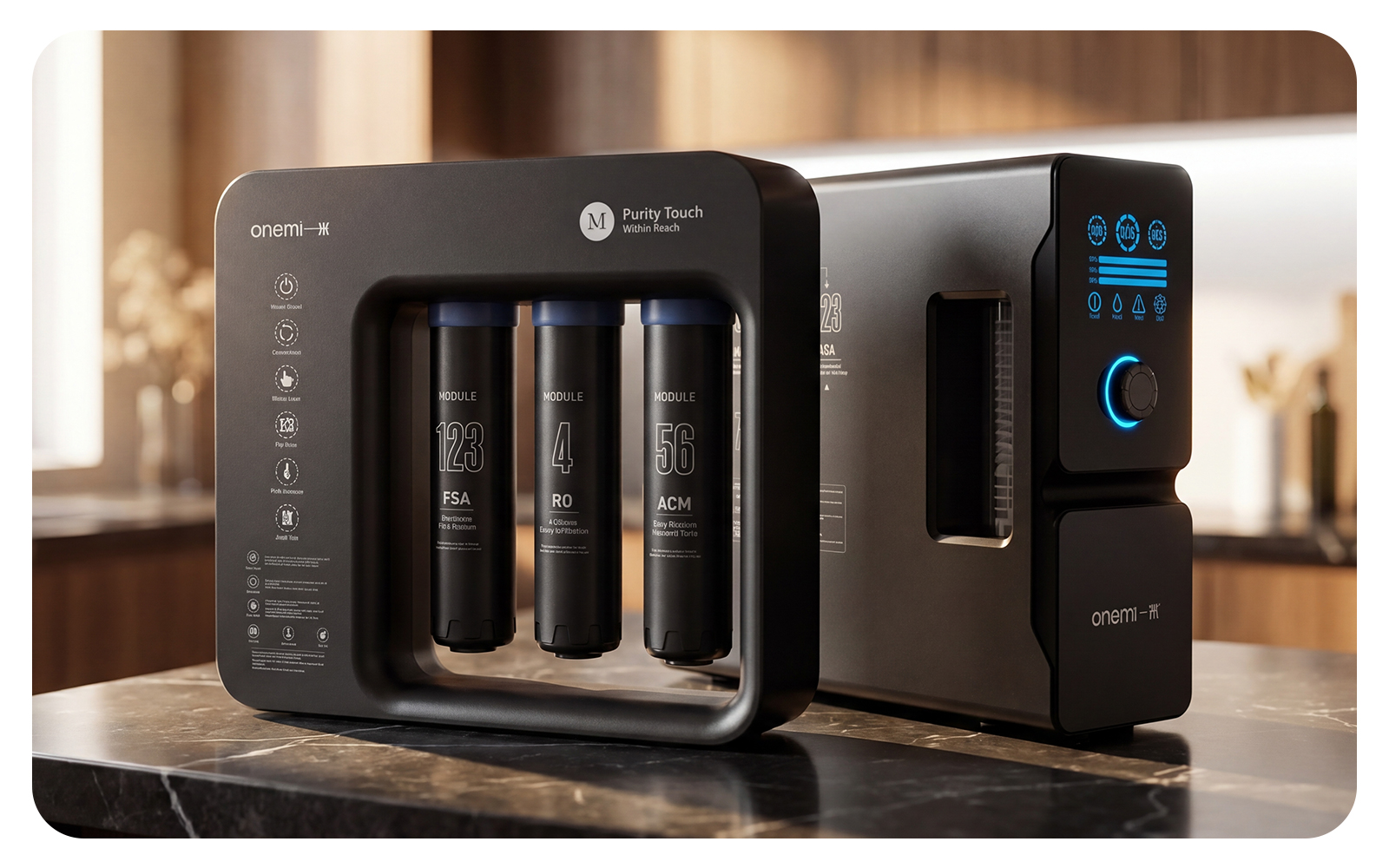
ONEMI, a Guangdong-based water purification equipment manufacturer, exemplifies the regional capability. The company produces portable single-stage water purifiers rated at 1.0 micron, CE certified, and designed for manual operation with no plumbing required. These units are suitable for outdoor, RV, and home emergency use. ONEMI exports to the US, El Salvador, and Kenya, demonstrating a track record in diverse regulatory environments. Customization options include logo printing, housing color, and packaging design—key for private-label programs.
For importers, the decision between a ready-made product and a custom OEM design depends on volume and brand strategy. If you plan to launch a proprietary brand, OEM/ODM services allow you to differentiate through aesthetics and packaging while relying on the factory’s engineering expertise. If speed-to-market is your priority, private-labeling an existing design with minimal changes (logo and packaging) can reduce lead times to 30–45 days.
ONEMI Portable Solutions: A Practical Example
ONEMI’s portable single-stage purifier is a case study in simplicity and reliability. It employs a 1.0-micron pleated filter that reduces sediment, rust, and protozoan cysts. The unit operates entirely manually—no electricity, no batteries—making it ideal for boondocking and emergency scenarios. The housing is food-grade plastic with a transparent bowl for visual inspection. Connections are standard garden hose threads, enabling direct hookup to RV water inlets or a sink faucet with an adapter.
From a procurement perspective, this product offers several advantages: low unit cost (typically under $15 FOB), minimal SKU complexity, and universal compatibility. However, it is not a comprehensive solution. For campers who demand chemical reduction or virus removal, a countertop RO system or a pump purifier with UF membrane is necessary. Therefore, a well-rounded product line should include multiple tiers.
ONEMI also supports OEM/ODM programs. For example, you can specify a different micron rating (e.g., 0.5 micron) or add a carbon block stage. The factory can adjust the flow rate by modifying the cartridge geometry. Lead times for custom orders range from 45 to 60 days, depending on the complexity. MOQs for custom designs start at 1,000 units, while stock items may be available at lower quantities.
Certifications and Compliance: What to Verify
Certification is a non-negotiable element in the RV water filter market. Retailers and end-users increasingly check for NSF, CE, or UL marks. For your due diligence, request copies of certificates and cross-reference them with the issuing body’s database. Key points:
- CE (whole unit): Indicates compliance with European health, safety, and environmental directives. Ensure the certificate covers the exact model you import.
- UL (whole unit): For electrical safety, relevant for countertop RO and UV systems. Verify the UL file number.
- NSF (filter cartridge only): Confirms contaminant reduction claims. Common standards: NSF/ANSI 42 (taste/odor) and 53 (health).
- ROHS (whole unit): Restriction of hazardous substances—required for EU markets.
Be cautious of suppliers who claim NSF certification for the entire unit without documentation. In practice, NSF certification for whole units is rare and costly; most manufacturers obtain it only for the cartridge. If a supplier cannot provide a verifiable NSF certificate, do not advertise NSF compliance. Instead, rely on CE and UL for the unit and mention cartridge-level NSF only if supported.
Sourcing Strategy: Key Considerations for Importers
When building your RV water filter product line, consider the following procurement factors:
- MOQ and Lead Time: Balance inventory costs with demand forecasts. For new markets, start with low MOQ items like filter straws (500 pcs) to test demand.
- Customization vs. Standardization: Standard products reduce costs and lead times; customization increases differentiation but requires minimum order quantities.
- Logistics and Import Duties: Portable water filters are relatively compact, allowing efficient sea freight. Check duty rates under HS codes 8421.21 (filtering machinery) or 8421.99 (parts).
- Quality Control: Implement in-factory inspections before shipment. Verify flow rates and micron ratings with third-party testing if necessary.
For a deeper dive into sourcing strategies, refer to our guide on working with Chinese OEM manufacturers and the camping water filter B2B sourcing guide.
Conclusion
The RV and camper water filter market presents a robust opportunity for importers and distributors who understand the technical landscape and sourcing nuances. By offering a two-stage solution—inline sediment pre-filter plus point-of-use purification—you can meet the expectations of safety-conscious travelers. Leverage the manufacturing capabilities of Guangdong, but always verify certifications to protect your brand’s reputation.
ONEMI, with its portable single-stage purifiers and OEM flexibility, provides a viable entry point. However, a complete product line should incorporate multiple categories—straws, gravity filters, and countertop RO systems—to address varied use cases and price points. Begin with a focused assortment, validate market response, then expand based on data.
For more insights, explore our analysis of 2026 RO water filter market trends and the portable water purification B2B market overview. Both provide additional data to support your procurement decisions.
- Adopt a two-stage filtration approach: inline 5-micron sediment pre-filter plus point-of-use drinking water filter for comprehensive RV water safety.
- Prioritize certifications: CE/UL for whole units, NSF for cartridges—verify certificates to avoid compliance risks.
- Source from Guangdong OEMs with MOQs from 500 pieces; leverage customization for brand differentiation.