

 한국어
한국어

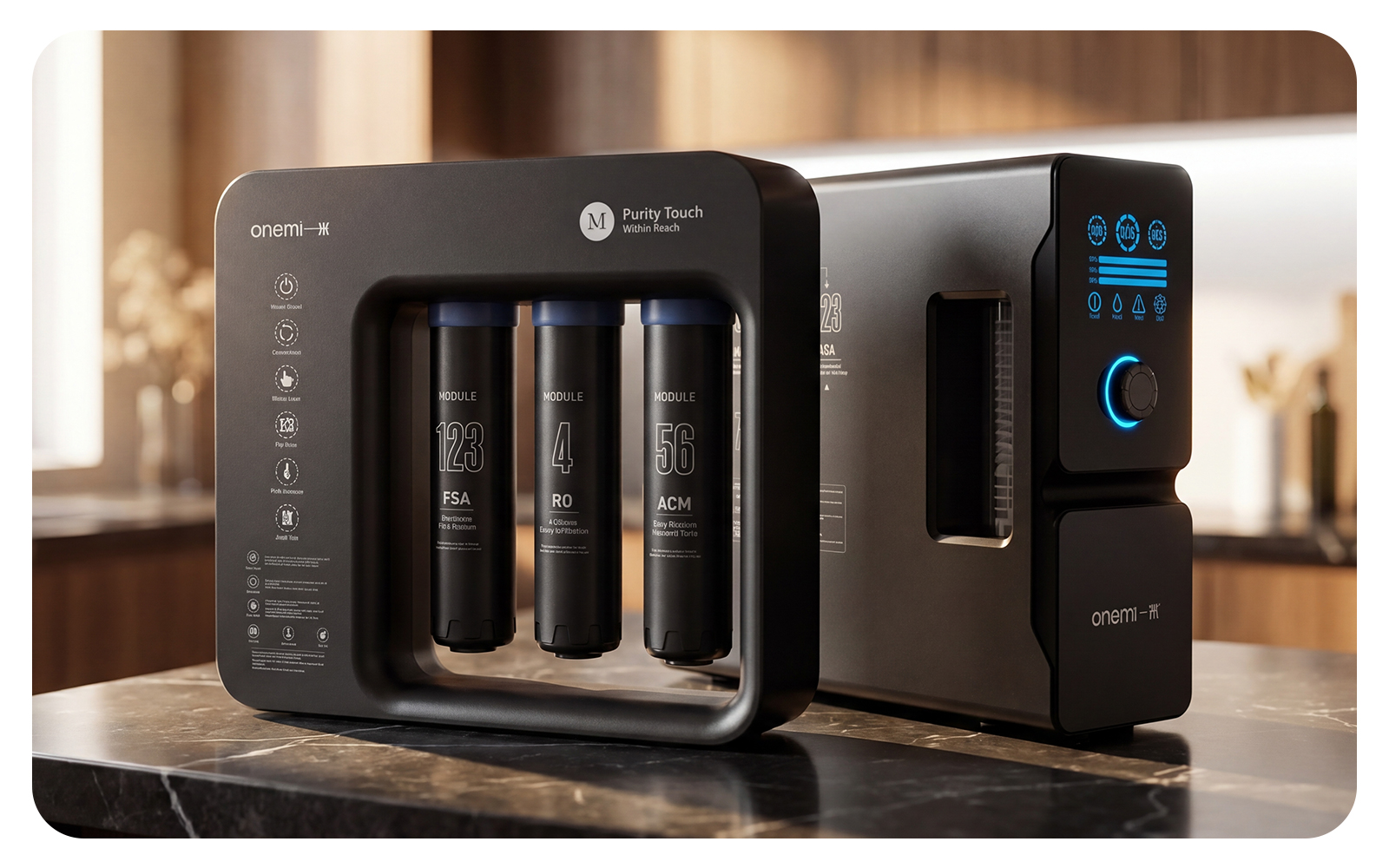
Imagine walking into a high-end appliance showroom in Munich, Chicago, or Sydney. You spot a sleek, under-sink Reverse Osmosis (RO) system with an Italian-sounding name, a touch-screen faucet, and a price tag that makes you hesitate. You buy it anyway because your local municipal water report just flagged rising levels of PFAS, those stubborn “forever chemicals” that municipal plants struggle to filter out. What the glossy brochure won’t tell you is that the core of that machine—from the injection-molded chassis to the multi-layered polyamide membrane—was likely designed, tested, and boxed in a highly automated smart factory in Zhejiang or Guangdong province.
Executive Summary
- Global Supply Dominance: Chinese OEM/ODM manufacturers now supply between 75% and 80% of the world’s residential and commercial water purification systems, driven by massive supply chain integration and automated production lines.
- Strict Regulatory Compliance: Leading Chinese exporters have shifted from low-cost assembly to high-spec engineering, meeting stringent international standards including NSF/ANSI 58 for RO systems, CE, and WRAS.
- The Tankless Evolution: The global market is rapidly pivoting toward high-flow, tankless RO designs (ranging from 600 GPD to 1200 GPD) pioneered by Chinese manufacturers to eliminate secondary contamination risks.
The scale of this global supply chain shift is staggering. According to recent global water industry data, Chinese manufacturers now control approximately 75% to 80% of the global residential and commercial water purification export market. It is no longer just about cheap labor. The reality is that the global water treatment industry has centralized its manufacturing brain in the East, creating an ecosystem where a single industrial park can source raw polypropylene, wind RO membranes, assemble brushless booster pumps, and print custom-branded packaging without a single component traveling more than five miles.
The Anatomy of a Global Export Powerhouse
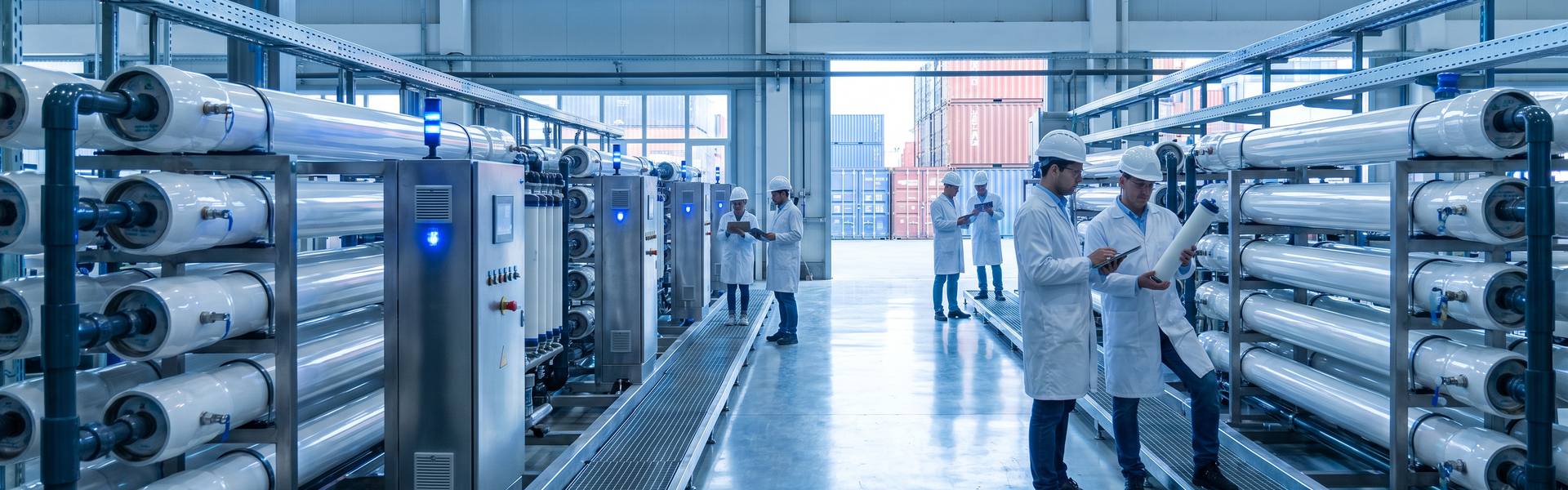
To understand how this dominance happened, we have to look at the sheer density of the supply chain. In places like Ningbo or Shunde, the water purification industry operates like a finely tuned machine. If a global brand wants to launch a new countertop RO system with instant heating capabilities, a Chinese OEM can take the project from a CAD drawing to a certified, mass-produced product in less than ninety days.
This speed is impossible in Western markets where component sourcing is fragmented. A typical RO system requires over a hundred individual parts: O-rings, solenoid valves, quick-connect fittings, high-pressure switches, carbon blocks, and electronic control boards. In the West, sourcing these parts means dealing with dozens of vendors across different continents, leading to long lead times and compounding shipping costs. In China, all of these components are manufactured within a two-hour drive of the primary assembly plants.
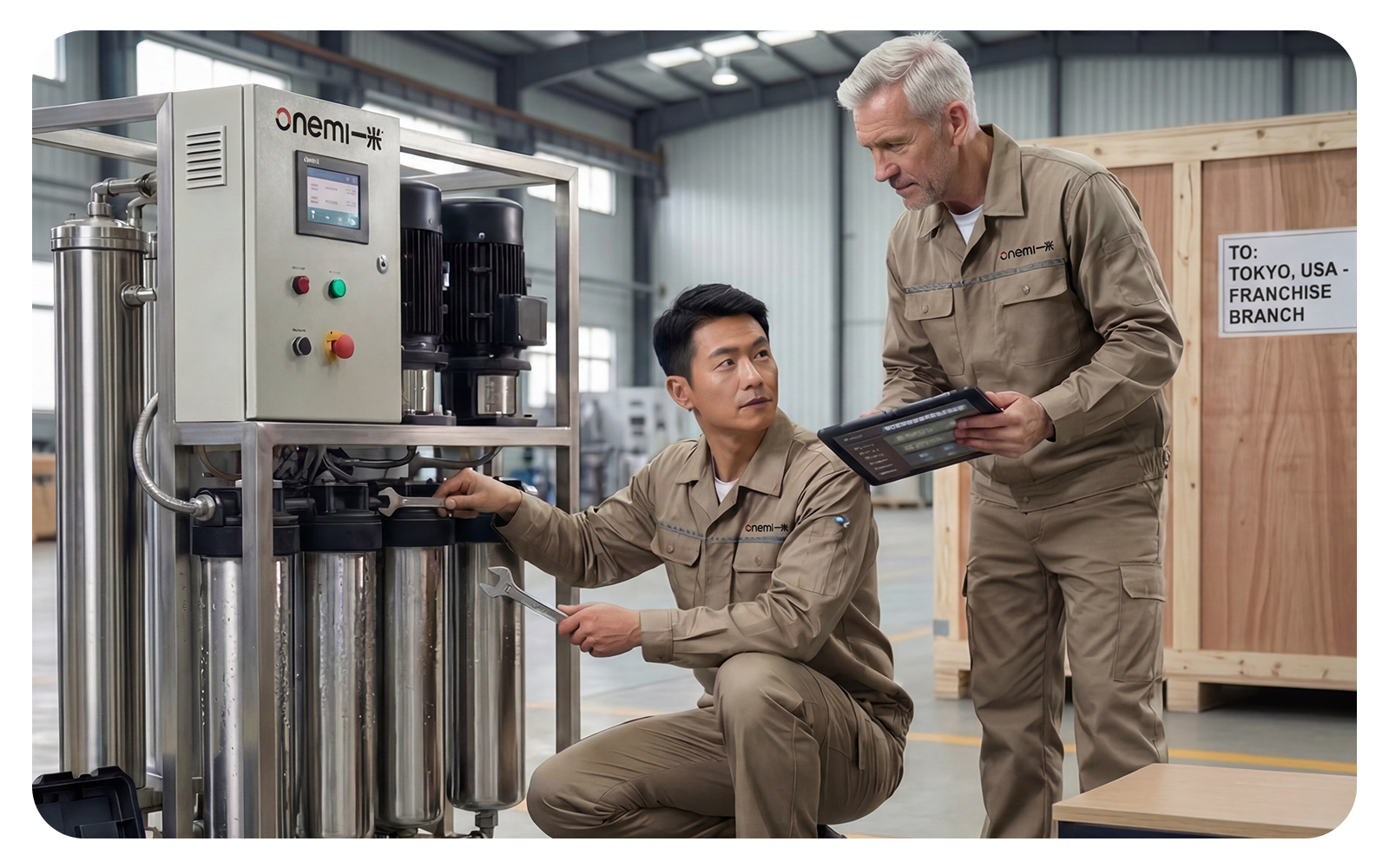
This concentration of manufacturing has led to massive economies of scale, allowing factories to reinvest profits into advanced automation. Walk into a modern Chinese water purifier factory today, and you won’t see rows of workers manually winding filter cartridges. Instead, you will find climate-controlled cleanrooms where robotic arms assemble multi-bore hollow fiber membranes and laser-weld plastic housings to ensure they can withstand extreme water hammer tests of up to 100,000 cycles at pressures ranging from 100 to 150 PSI.
Let’s look at how these manufacturers stack up across key global regions:
| Target Market | Key Regulatory Standards Required | Dominant Product Form Factor | Average OEM FOB Cost Range (USD) |
|---|---|---|---|
| North America | NSF/ANSI 42, 53, 58, FCC, Lead-Free Compliance | Under-sink Tankless RO (600-1000 GPD), Countertop RO | $65 – $140 |
| European Union | CE, RoHS, REACH, LFGB, DM 174 (Italy) | Compact Under-sink Slim RO, Carbon Block Inline Filters | $70 – $150 |
| United Kingdom | WRAS, Reg 31, UKCA | Under-sink RO, Gravity-fed Ceramic Systems | $55 – $120 |
| Southeast Asia | Local Ministry of Health Standards, Halal (where applicable) | Traditional Tank RO (50-100 GPD), Hot/Cold Standalone Dispensers | $35 – $85 |
The Technical Leap from Low-Cost to High-Spec
There is a persistent myth that products manufactured in Asia are merely cheap imitations of Western designs. In the water purification sector, this assumption is dangerously outdated. Over the past decade, Chinese OEMs have transitioned from simple contract assemblers to research-driven innovators holding thousands of global patents in fluid dynamics, membrane chemistry, and smart sensor integration.
Take the evolution of the Reverse Osmosis membrane itself. Historically, the thin-film composite (TFC) membranes used in RO systems were sourced exclusively from a handful of American and Japanese chemical giants. Today, Chinese manufacturers have mastered the precise chemical deposition of polyamide layers on polysulfone support sheets. They are now producing membranes that match or exceed the salt rejection rates of traditional brands—typically maintaining a 97% to 99% rejection rate even under fluctuating feed water TDS (Total Dissolved Solids) levels ranging from 500 to 2000 ppm.
Another major technical breakthrough is the development of high-flow, tankless RO systems. Traditional RO systems rely on a pressurized storage tank to accumulate water slowly because the membrane only produces a few drops per minute. These tanks are bulky, prone to secondary bacterial growth, and take up valuable under-sink real estate. By optimizing booster pump efficiency and developing high-flux membrane sheets, Chinese engineers pioneered the tankless RO revolution. These systems deliver fresh, real-time filtered water at rates ranging from 1.5 to 2.5 liters per minute, completely eliminating the need for a storage tank.
Consider the engineering challenge of a tankless system: without a tank to buffer the pressure, the system must instantly ramp up its booster pump the moment the user opens the faucet. This requires sophisticated pressure sensors and integrated microprocessors to prevent water hammer from rupturing the internal plumbing. This level of system integration is where companies like ONEMI have carved out a significant competitive advantage, designing robust internal water pathways that reduce the number of connection points by up to 60%, drastically minimizing the risk of internal leaks.
Navigating the Global Regulatory Maze
Selling water purification systems globally is a regulatory nightmare. Water that is considered safe in one country might fail chemical leaching tests in another. Because water purifiers are in direct contact with human drinking water, every single plastic fitting, silicone seal, and adhesive used in the system must undergo rigorous extraction testing to ensure they do not leach harmful chemicals like bisphenol A (BPA), phthalates, or heavy metals into the water.
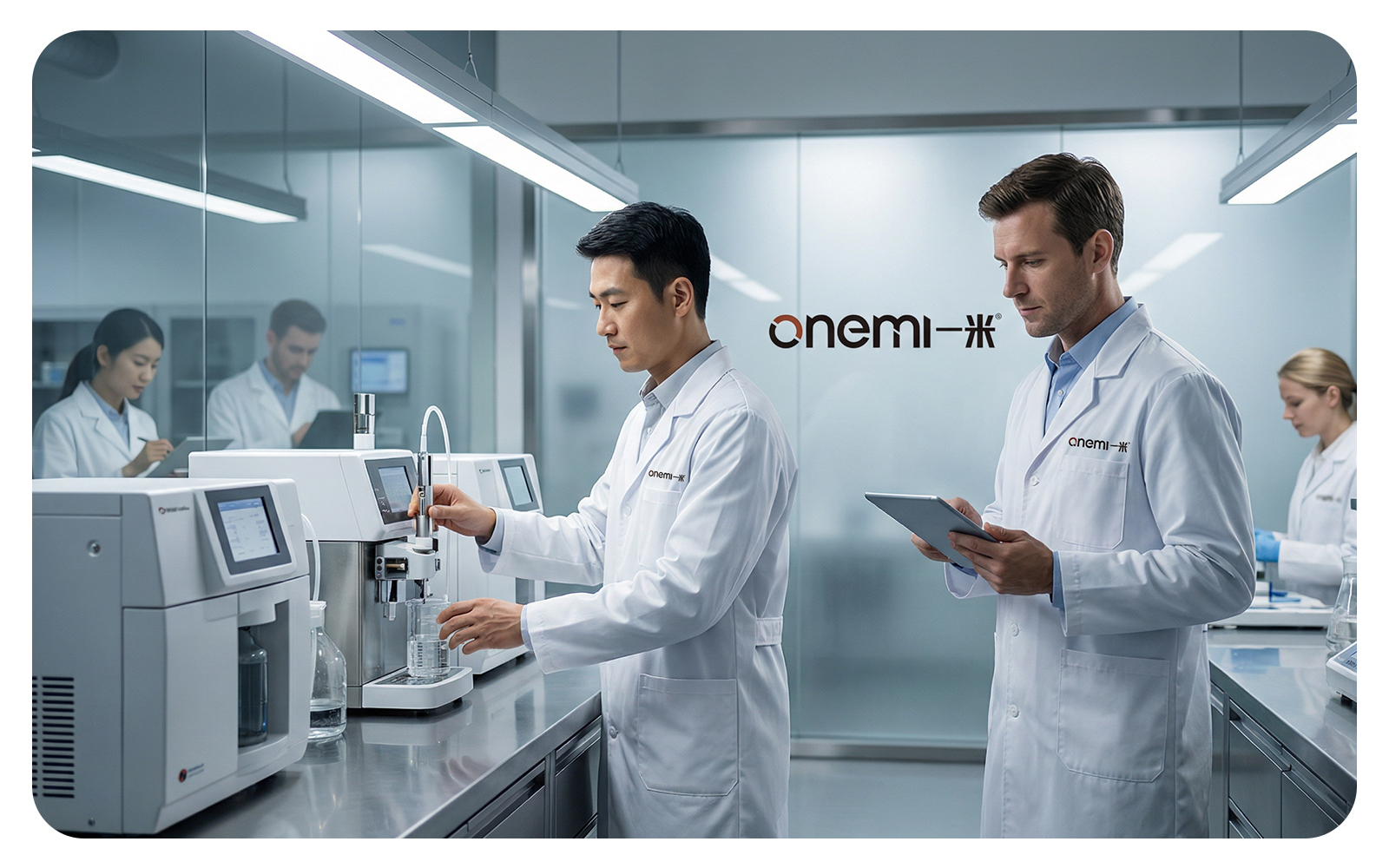
In the United States, the gold standard is the NSF/ANSI 58 certification for reverse osmosis systems, which requires extensive structural integrity testing, materials safety evaluation, and contaminant reduction performance verification. Meeting these standards is incredibly expensive and time-consuming. A single certification run can cost upwards of $50,000 to $100,000 and take more than six months of continuous laboratory testing. Chinese export-oriented manufacturers have embraced this challenge by building their own in-house, state-of-the-art laboratories certified by third-party bodies like WQA (Water Quality Association) and IAPMO.
The regulatory landscape in Europe is even more fragmented. While the EU has overarching directives like RoHS (Restriction of Hazardous Substances) and REACH (Registration, Evaluation, Authorisation and Restriction of Chemicals), individual countries maintain their own strict national standards. For instance, Germany has the KTW guidelines for plastics in contact with drinking water, France has the ACS (Attestation de Conformité Sanitaire), and Italy enforces DM 174. A manufacturer cannot simply ship a standard US-spec machine to Europe without modifying the elastomer formulations to comply with these local European decrees.
This is where the expertise of a sophisticated OEM becomes invaluable. They maintain a database of material formulations tailored to specific target markets. If a client in the UK wants to import an under-sink system, the OEM will automatically swap out standard silicone tubing for WRAS-approved compounds and ensure the brass components are lead-free compliant, preventing costly customs seizures or post-market recalls.
The Localized Water Quality Challenge
One size does not fit all when it comes to water treatment. The tap water in London is vastly different from the tap water in Phoenix, Arizona, or Mumbai, India. This geographical variability requires water purification systems to be highly customizable, a need that has driven Chinese OEMs to develop modular filtration platforms.
Let’s look at a concrete example of how local water chemistry dictates product design:
- High Hardness Regions (e.g., Southern Europe, US Midwest): Water in these areas contains high concentrations of calcium and magnesium carbonates, often ranging from 200 to over 400 ppm. Without proper pre-treatment, these minerals will rapidly precipitate onto the RO membrane surface, a phenomenon known as scaling. This scale blocks the microscopic pores of the membrane, reducing water production and shortening the membrane’s lifespan from two years to under six months. To combat this, OEMs integrate specialized anti-scalant polyphosphates or ion-exchange media into the pre-filter stage.
- High Chlorine/Chloramine Regions (e.g., US Municipalities): Most municipal water systems use chlorine or chloramines to disinfect water. While excellent for killing pathogens, free chlorine will chemically attack and degrade polyamide RO membranes, causing irreversible structural damage. Manufacturers must design high-capacity activated carbon block pre-filters with sufficient contact time to completely reduce chlorine levels to below 0.1 ppm before the water reaches the membrane.
- Microbiologically Unsafe Regions (e.g., parts of Latin America and South Asia): In areas where the municipal infrastructure is compromised, there is a constant risk of bacterial and viral contamination. Standard RO systems, while theoretically capable of filtering out pathogens, can suffer from bacterial biofilm growth on the clean-water side of the membrane. In these markets, OEMs like ONEMI integrate ultraviolet (UV-C) LED sterilizers directly into the faucet or the final stage of the water pathway, providing a 99.99% reduction of bacteria and viruses right at the point of dispense.
Here is a counter-intuitive finding that many brands discover the hard way: super-pure water is not always what consumers want. When you strip water of all its minerals using high-rejection RO membranes, the resulting water has a slightly acidic pH (often dropping to between 5.5 and 6.5) and can taste flat or “empty” to some palates. To solve this, advanced export systems now feature a mineralization post-filter. This stage carefully adds back controlled amounts of calcium, magnesium, and potassium ions, raising the pH to a slightly alkaline range of 7.5 to 8.5 and restoring a natural, crisp spring-water taste.
How to Choose a Manufacturing Partner
For global brands, sourcing water purifiers from China is no longer a question of “if,” but “who.” The market is highly stratified. On one end, you have small-scale assemblers operating out of basic workshops, buying off-the-shelf components and gluing them together with minimal quality control. On the other end, you have world-class manufacturing giants that operate like high-tech semiconductor fabs.
If you are looking to partner with a manufacturer, you need a structured framework to evaluate their capabilities. Here is a checklist of critical factors to consider during your factory audit:
- Traceability and Quality Management: Does the factory use an ERP (Enterprise Resource Planning) system that tracks every batch of raw plastic resin and RO membrane sheet back to its original supplier? If a field failure occurs in Germany, can the manufacturer trace that specific unit’s serial number back to the injection molding machine and the specific shift that produced it?
- Testing Infrastructure: Look for an on-site laboratory equipped with gas chromatography-mass spectrometry (GC-MS) machines for chemical leaching analysis, bursting pressure test rigs, and environmental chambers to simulate extreme shipping conditions (ranging from -20°C to 60°C).
- Automation Level: High-quality water purifiers require highly consistent assembly. Look for automated robotic gluing machines for the filter housings and automated testing stations that check 100% of finished units for air leaks before they are packed.
A major practical gotcha in this industry is the post-purchase filter replacement business model. The real profit in water purification does not come from selling the initial machine; it comes from the recurring sale of replacement filter cartridges. Many brands make the mistake of choosing an OEM that uses standard, generic filter shapes. While this keeps the initial cost low, it allows consumers to buy cheap, unbranded replacement filters on Amazon, cutting the brand out of the highly lucrative recurring revenue stream. Sophisticated manufacturers like ONEMI design proprietary, twist-and-pull filter locking mechanisms with custom keyways. This ensures that only the brand’s official replacement filters will fit the machine, locking in lifetime customer loyalty and securing a highly profitable, multi-year revenue stream.
Ultimately, the dominance of Chinese water purifier manufacturers is not just a story of manufacturing capacity. It is a story of continuous engineering iteration, deep regulatory understanding, and a relentless focus on solving the world’s diverse water quality challenges. As clean water becomes an increasingly scarce and precious resource, the technology developed in these manufacturing hubs will play an indispensable role in safeguarding public health across the globe.