


 한국어
한국어

- Hard water is a structural feature of the UK, not a niche: roughly 60% of households sit in hard or very hard areas, with the South East running past 200 mg/L of calcium carbonate — which is why a central water softener is a repeat-order line, not a one-off appliance sale.
- WRAS approval under the Water Supply (Water Fittings) Regulations 1999 is the pass-fail gate for any softener touching UK mains water; large retail and trade channels treat it as non-negotiable, and the UKCA mark is replacing CE on the construction-products side after Brexit.
- The margin and the reorder both live in the resin: a premium bed rated around 2.1 eq/L exchange capacity regenerates less often than a commodity 1.5 eq/L bed, which lowers the owner’s salt cost and is the spec an informed distributor quotes to close a villa or light-commercial deal.
A water softener is not bought because the water is unsafe. In the UK it is bought because the water is hard, and hard water is the one water-quality problem a household can feel every day — in the kettle, on the shower screen, and in the energy bill. For an importer or distributor, that is a far better foundation than a contamination scare. A scare passes. Geology does not.
Hard Water Is the UK’s Structural Demand Driver
The Drinking Water Inspectorate reports compliance above 99.9%, and the UK’s tap water is consistently rated among the safest in the world. Hardness is not a safety failure; it is a mineral load. Where rain filters through chalk and limestone — London, the South East, much of the Midlands and the east coast — the mains picks up calcium and magnesium, and roughly 60% of UK households draw water classified as hard or very hard. In the worst band around London and the South East, calcium carbonate runs past 200 mg/L.
The cost lands on appliances and energy, not on health. Industry estimates put the annual bill for a hard-water household at roughly £200 in extra energy, descaler, detergent and premature appliance failure. Limescale on a boiler heat exchanger or a washing-machine element forces it to work harder for the same output, and a combi boiler in a hard-water postcode can lose years off its service life. That is the B-end pitch in one sentence: the softener is sold against the cost of not having one.
Scale Is the Reorder Engine, Not the One-Off Sale
A central water softener is not a cartridge you swap and forget. It is a resin bed that sits on the main inlet and regenerates on a schedule, consuming salt to flush the captured hardness down the drain. That means every install carries a predictable consumable tail: salt on a monthly cadence, and a resin replacement years down the line. For a distributor, the softener is the product that keeps an account open between the big-ticket system sales — the same logic that makes sediment prefiltration the entry point also makes the central softener the retention point.
The appliance-longevity argument is what lets a trade counter hold margin. A four-person household in a hard-water area can precipitate tens of kilograms of limescale a year across boilers, washing machines, dishwashers, showers and kettles. Position the softener as insurance on that appliance fleet, and the conversation stops being about the box price and starts being about the avoided replacement cost. Importers who train their channel to sell longevity sell more units at better margins than importers who sell only on litre-per-hour.
Ion Exchange Versus Salt-Free: The Split the Channel Must Get Right
The UK market is splitting between two technologies, and a distributor who conflates them will face returns. Salt-based ion exchange is the only technology that actually removes calcium and magnesium ions, swapping them for sodium and flushing the hardness away during regeneration. Salt-free conditioners — sold under labels like TAC or template-assisted crystallisation — do not remove minerals; they change their crystal structure so the minerals pass through without binding to surfaces. Both have a place, but they answer different briefs.
| Attribute | Salt-based ion exchange | Salt-free conditioner |
|---|---|---|
| Removes calcium & magnesium | Yes — full softening | No — alters crystal form |
| Removes existing scale | Yes, over time | No — prevents new deposits |
| Running cost | Salt + periodic regeneration | Minimal, no salt |
| Best fit | Very hard water, appliance protection | Brine-restricted, moderate hardness |
| Discharge | Brine to drain during regen | No brine |
For the hard-water South East, ion exchange is the workhorse. Salt-free conditioning appeals where a customer wants scale control without the salt handling, but an importer should position it as a companion line, not a replacement — a salt-free unit will not soften 300 mg/L water the way a resin bed will. Carrying both, with the honest split on the spec sheet, is what separates a real water-treatment supplier from a box mover.
WRAS Is the Gate, and It Is Getting Stricter
Any fitting that carries or receives water from the UK public mains must comply with the Water Supply (Water Fittings) Regulations 1999, and WRAS approval is how a manufacturer proves it. The material test is BS 6920, covering taste, odour, colour, toxicity and microbial-growth support on every wetted part — the resin, the valve body, the seals, the brine tank. A softener built from a resin tank and a control valve without that paper trail is effectively unsellable through the mainstream retail and trade channels, because the buying desks at the big DIY and plumbing merchants treat WRAS as pass-fail.
There is no shortcut around it. A US NSF listing does not transfer to the UK mains, and after Brexit the UKCA mark is replacing CE on the construction-products side while WRAS itself stays fully independent. An importer should ask for the WRAS approval number up front, not after the container lands. The factories worth keeping are the ones that can produce the certification stack — WRAS and BS 6920 for the UK, CE or UKCA for the electrical side, and material documentation for every wetted component — without a month of back-and-forth.
The Resin Grade Decides Both Margin and Reorder
Every softener is, at bottom, a resin bed with a valve on top. The resin is where cheap units quietly fail. A commodity bed might deliver around 1.5 equivalents per litre of exchange capacity; a premium food-grade bed delivers closer to 2.1 eq/L. The gap sounds small on a datasheet and shows up as real money in the field: higher capacity means fewer regeneration cycles, which means less salt, less waste water and a lower running cost the installer can quote against a competitor. It also means a longer resin service life before the bed needs replacing — which is where the distributor’s reorder tail actually lives.
For an importer, the resin grade is the one line on the spec sheet that is worth auditing at the factory, because it is the line that is hardest to fake and easiest to get wrong. Ask for the resin certification, the exchange-capacity test report, and the regeneration cycle the unit is programmed for. A factory that can name its resin supplier and its capacity rating is a factory that has already been through the discipline of a quality buyer.
What ONEMI Builds on the Softener Line
ONEMI is a Guangdong-based water purification equipment manufacturer. On the central softener side the relevant line runs on ion exchange, sized to the two ends of the UK residential and light-commercial market.
| Model | Flow | Resin bed | Regeneration | Fit |
|---|---|---|---|---|
| SOFT-1800A | 1,800 L/h | 12.5 L | 3,000 L per cycle | 2–3 person, one-to-two bathroom |
| SOFT-3000A | 3,000 L/h | 23 L | 5,500 L per cycle | 3–5 person, villa or small commercial |
Both run a premium resin bed, AI-managed regeneration that adapts the backwash window to actual use rather than a fixed clock, counter-current regeneration to cut salt waste, and power-off memory so a brownout does not reset the settings. Working range is 5–38°C at 0.15–0.4 MPa, which spans UK mains pressure without a booster. For a distributor the point is a single source that carries the softener and everything around it — the whole-house entry stage, the central filtration and the point-of-use RO — so an account does not fragment across three factories. The OEM/ODM line lets an importer run the softener under private label with their own resin and valve configuration, and the softener-versus-RO positioning is the same factory’s answer to the question of which system belongs where.
A Sourcing Checklist for the UK Channel
An importer who has not sourced a central softener before should hold the factory to four checks before committing to a container.
- Certification first. WRAS and BS 6920 for wetted parts, UKCA or CE for the electrical control, and the full material documentation. No paper trail, no order.
- Resin grade on the record. Exchange capacity around 2 eq/L or better, with a test report — not a verbal claim. This is the line that determines salt cost, service life and reorder cadence.
- Regeneration logic. Metered, demand-initiated regeneration beats a fixed timer on running cost, and counter-current regeneration cuts salt use further. It is a spec a UK installer will be asked about.
- Valve and tank quality. The valve is the moving part and the failure point. A cheap valve leaking brine on a kitchen floor kills the relationship faster than any lost sale.
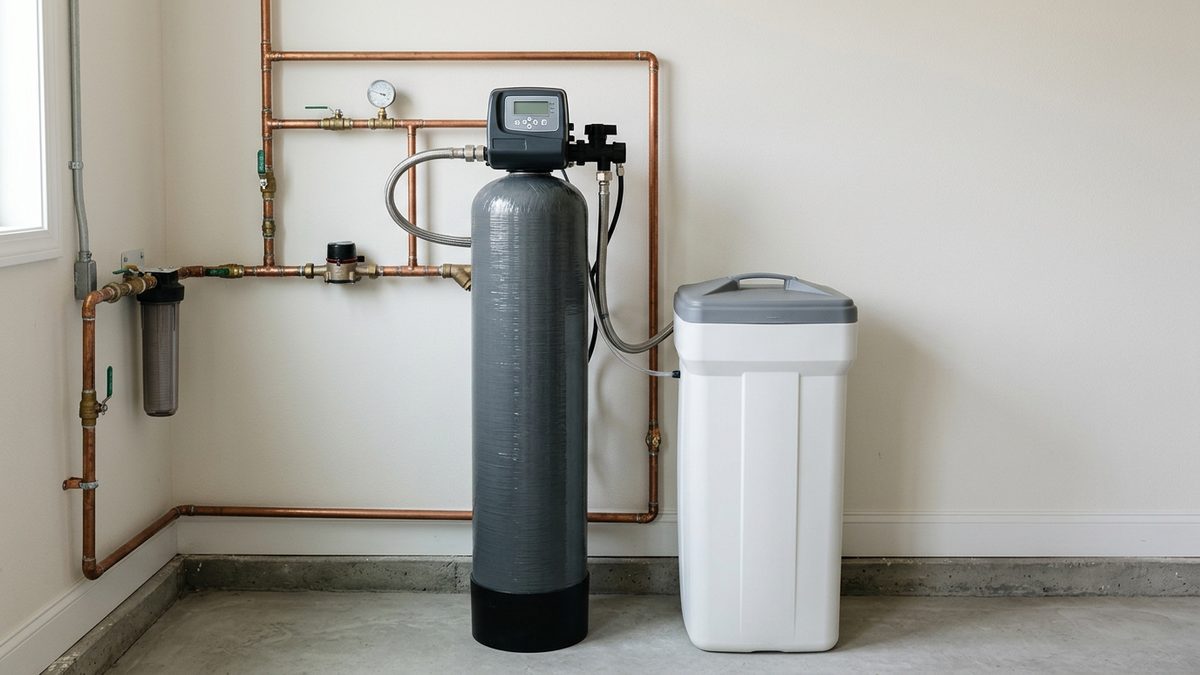
The softener is the product in the ONEMI line that turns geology into a recurring account. Hard water will not leave the South East, and no regulator is about to soften the chalk aquifer. The importer who gets the certification right, specs the resin honestly and trains the channel to sell appliance longevity is not chasing a trend — they are stocking for a demand curve that has been running for a century and will run for the next one.
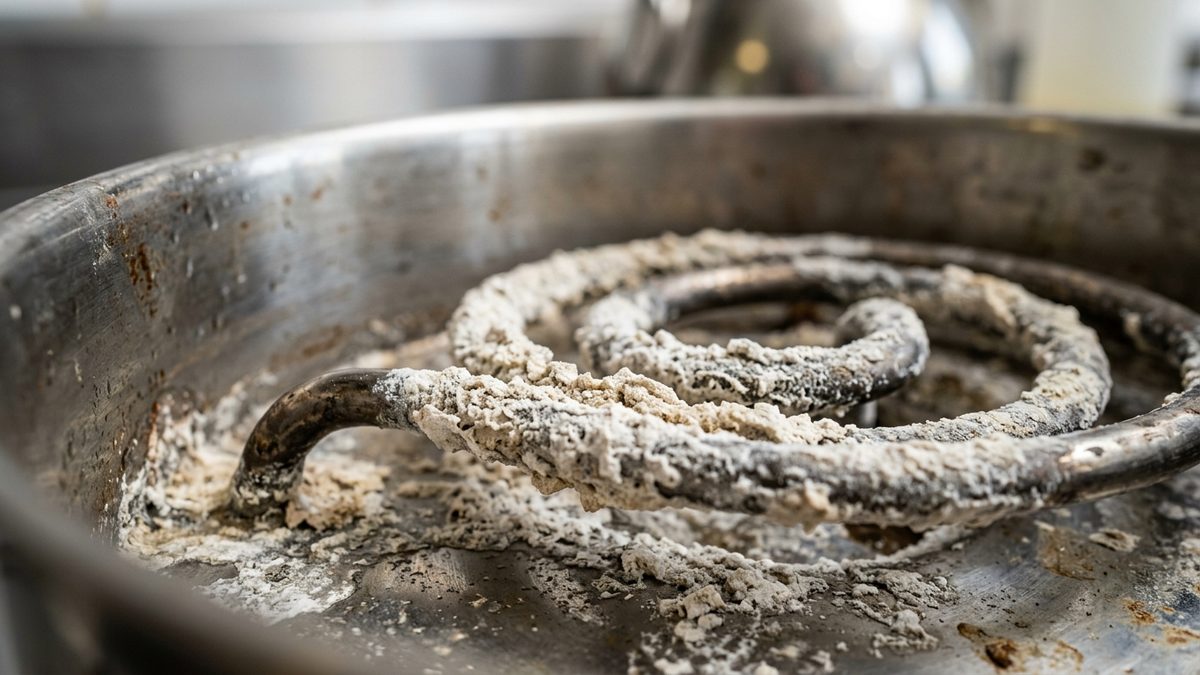
Every reorder of salt, every resin replacement and every service call is a touch point that keeps the account open. That is the quiet arithmetic behind a central water softener line, and it is why the category belongs in the catalogue of any distributor who treats water treatment as a recurring business rather than a container of boxes.