


 한국어

- The global replacement filter and cartridge market passed roughly $12.7 billion in 2025 and is heading for about $13.5 billion in 2026, with subscription replenishment the fastest-growing delivery model.
- Subscriptions convert a one-off cartridge sale into predictable recurring revenue — early movers report customer lifetime value gains of around 40%.
- IoT gallon-based filter tracking, not calendar reminders, is the technical backbone that keeps subscribers from churning.
The Aftermarket Now Outgrows the Hardware It Serves
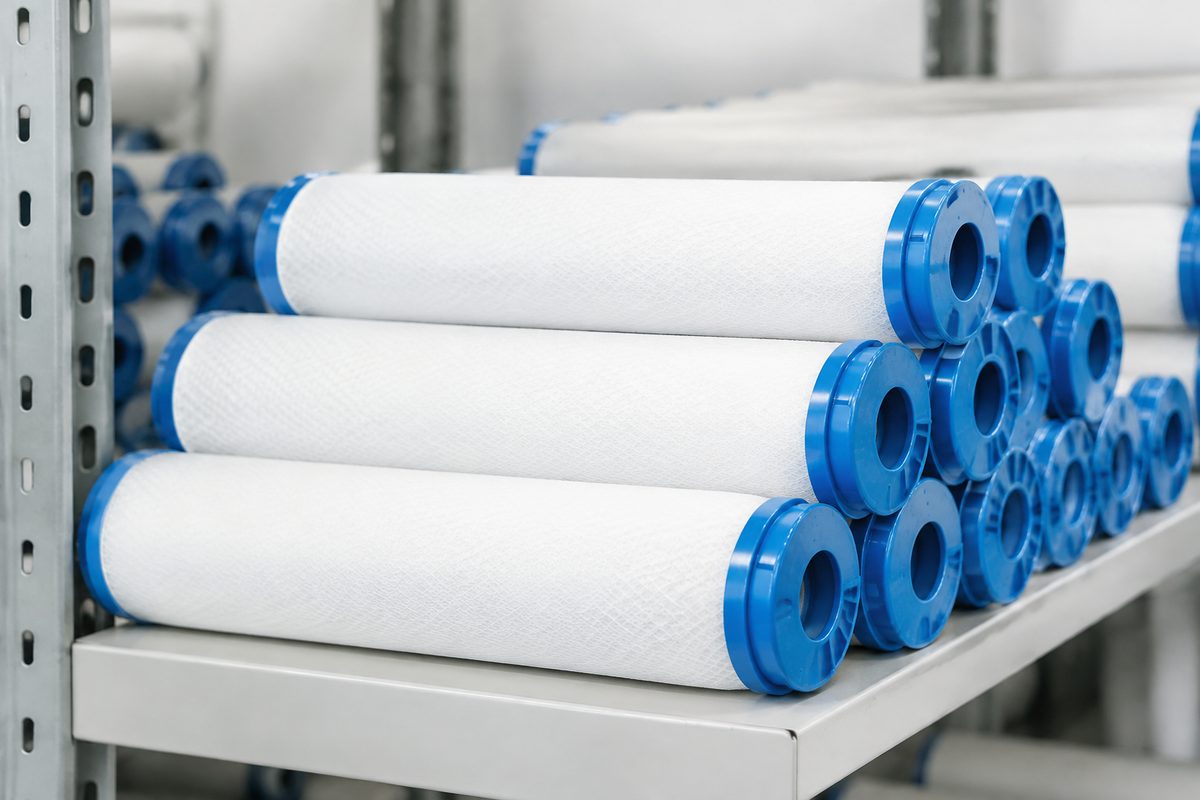
Replacement cartridges have quietly become the largest and most durable piece of the water purification business. The logic is simple. Every installed RO system, ultrafiltration unit, and countertop dispenser commits its owner to years of consumable purchases, and those purchases repeat whether or not the brand sells another piece of hardware.
Market research firm Dataintelo pegs the global replacement water filters and cartridges market at $12.7 billion in 2025, climbing to $13.5 billion in 2026 and reaching $23.4 billion by 2034. A separate analysis from pmarketresearch puts the narrower home water filtration replacement segment at $6.63 billion in 2025, rising to $7.01 billion in 2026 at a compound annual growth rate of 7.42%. Under-sink replacement filters alone captured 48.32% of that revenue, reflecting how point-of-use configurations drive the most frequent cartridge changes.
North America still holds the highest market value at $2.16 billion in 2025, or 32.6% of the global total, built on a mature installed base and well-developed after-sales networks. Asia-Pacific is the fastest-growing region, propelled by urbanization and deteriorating groundwater quality in large economies. For a manufacturer, the strategic consequence is blunt: whoever owns the aftermarket owns the customer relationship.
This is why the competitive center of gravity has shifted. Hardware margins compress under pressure from price comparison and marketplace competition, but a cartridge locked into a recurring delivery schedule produces margin year after year with almost no incremental acquisition spend. The installed base becomes an annuity, and every new unit sold is a deferred future revenue stream rather than a one-time transaction.
Retention Metrics That Decide Whether a Subscription Works
Most brands enter the subscription game chasing subscriber counts. That is the wrong number to watch. A subscription business lives or dies on three figures: monthly churn, customer lifetime value, and the ratio between lifetime value and acquisition cost. If churn runs above a few percent a month, the recurring revenue never compounds. If lifetime value falls below three times acquisition cost, the unit economics collapse.
Early movers who tied cartridge delivery to actual consumption rather than a fixed calendar report customer lifetime value gains of around 40%. The mechanism is straightforward. A household that replaces filters on time stays subscribed longer, buys more cartridges over the life of the machine, and is far less likely to defect to a generic compatible cartridge found on a marketplace.
Compliance is the quiet lever underneath all of this. Global Growth Insights estimates that only about 52% of users replace cartridges within the recommended interval, and cartridge replacement compliance sits near 54% in the mature US market. Every percentage point of that gap is churn risk a subscription program can close — and a margin opportunity the brand would otherwise hand to a no-name compatible supplier.
Consider the arithmetic. A five-stage RO system carries four to six consumables with staggered lifecycles — sediment pre-filter, carbon pre-filter, RO membrane, and post-carbon. A subscriber on a managed schedule replaces all of them at the right time, generating perhaps $60 to $150 in annual cartridge revenue per household. A lapsed customer replaces nothing, or worse, buys an off-brand cartridge that neither fits properly nor protects the machine. The difference compounds across a few thousand subscribers into a meaningful line of predictable gross margin.
| Metric | What it tells you | Healthy benchmark |
|---|---|---|
| Monthly churn | Subscriber retention velocity | Under 5% |
| Customer lifetime value (LTV) | Total margin per subscriber | 3x acquisition cost or more |
| Replacement compliance | Share replacing on schedule | Above 70% |
| Reactivation rate | Win-back effectiveness | 15%+ of lapsed users |
For a fuller treatment of how procurement teams evaluate these recurring-revenue structures, see our B2B procurement framework for water purifiers.
The IoT Layer That Keeps Subscribers From Leaving
Calendar reminders are dying. A cartridge scheduled to ship every six months ignores the reality that a two-person household and a six-person household burn through the same filter at very different rates. The brands winning the subscription race have moved to gallon-based tracking: sensors measure actual water throughput and trigger a replacement order only when the filter has genuinely approached the end of its useful life.
This shift does three things at once. It eliminates premature replacements that annoy subscribers and invite cancellation. It prevents late replacements that degrade water quality and erode trust in the product. And it generates usage data the manufacturer can use to forecast demand and right-size regional inventory, cutting working capital tied up in slow-moving cartridge stock.
pmarketresearch notes that IoT-enabled smart sensors monitoring filter life in real time are now a core technology trend, replacing time-based estimates with throughput-based ones. The commercial logic runs deeper than convenience: a brand that knows exactly when each installed unit needs a new cartridge can time its outbound offers to the moment of need, which is when a replenishment message converts at its highest rate.
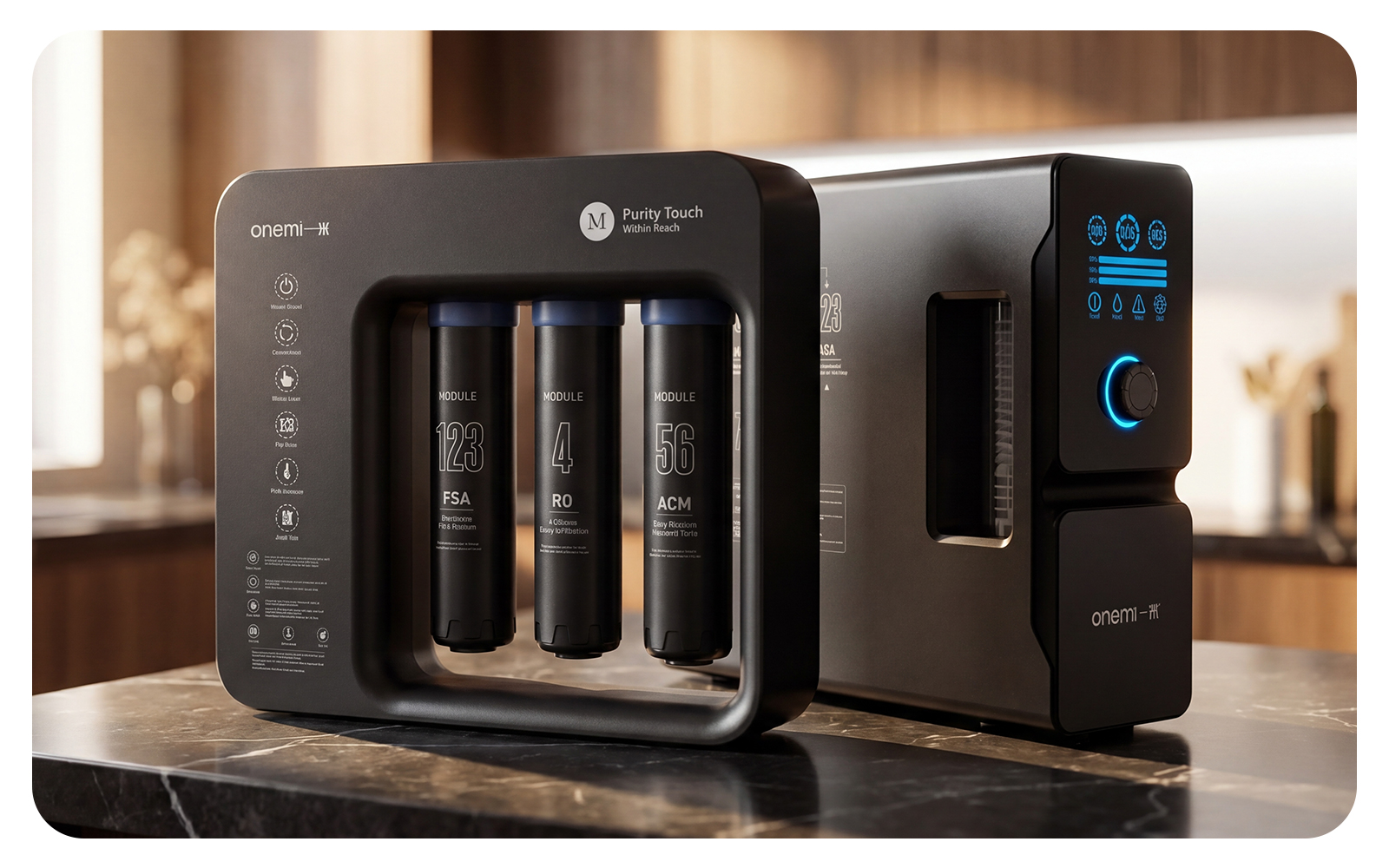
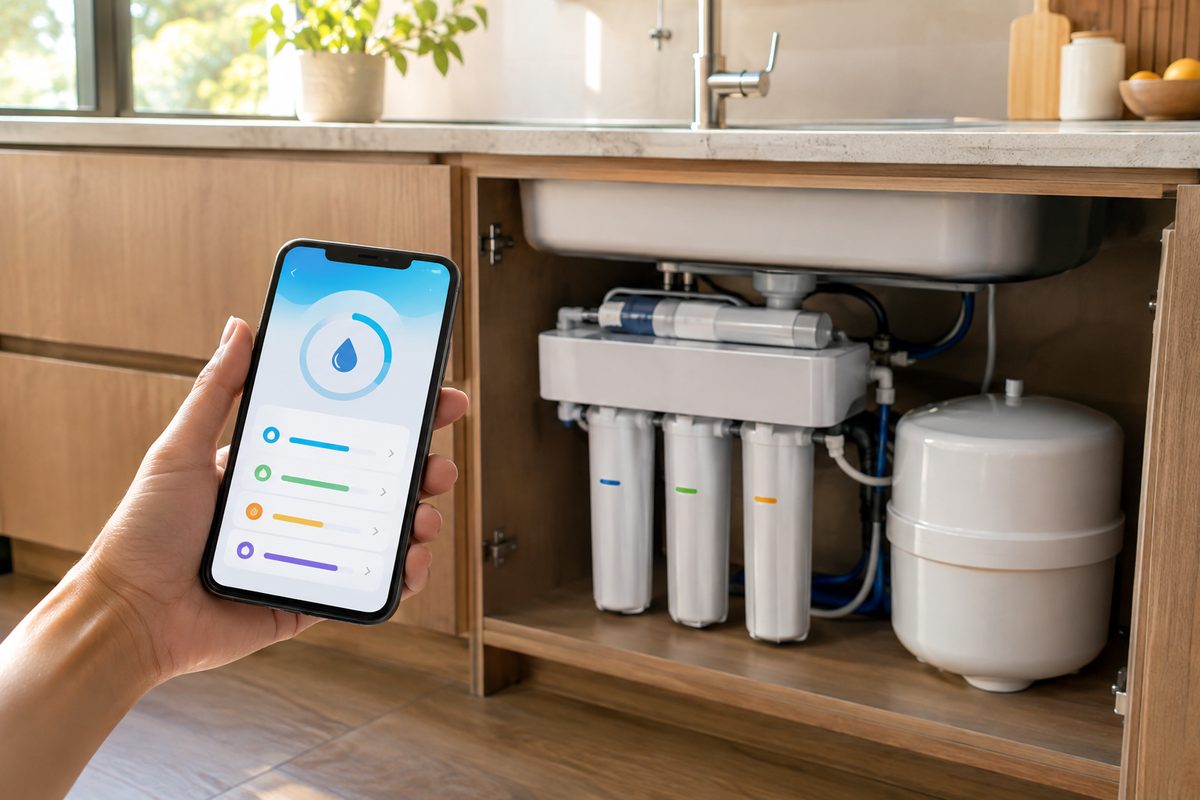
The hardware side of this is no longer exotic. Smart under-sink RO systems already expose filter-life status, flow rate, and TDS readings through a companion app — precisely the data layer a subscription engine needs to operate. ONEMI’s 400G smart RO water purifier ships with this connectivity built in, so a distributor can stand up a replenishment program without retrofitting third-party monitoring hardware.
What the Subscription Shift Means for OEM and Distributor Buyers
If you import water purifiers to sell under your own label, the subscription trend changes your component checklist. A machine that cannot tell you when its filter is spent is a machine you cannot easily attach a replenishment program to. Buyers evaluating OEM partners should ask three questions before anything else: does the hardware support IoT filter-life monitoring, do the cartridges use a proprietary quick-change fitting that locks in repeat sales, and can the factory supply cartridges at a cost that leaves room for subscription margin?
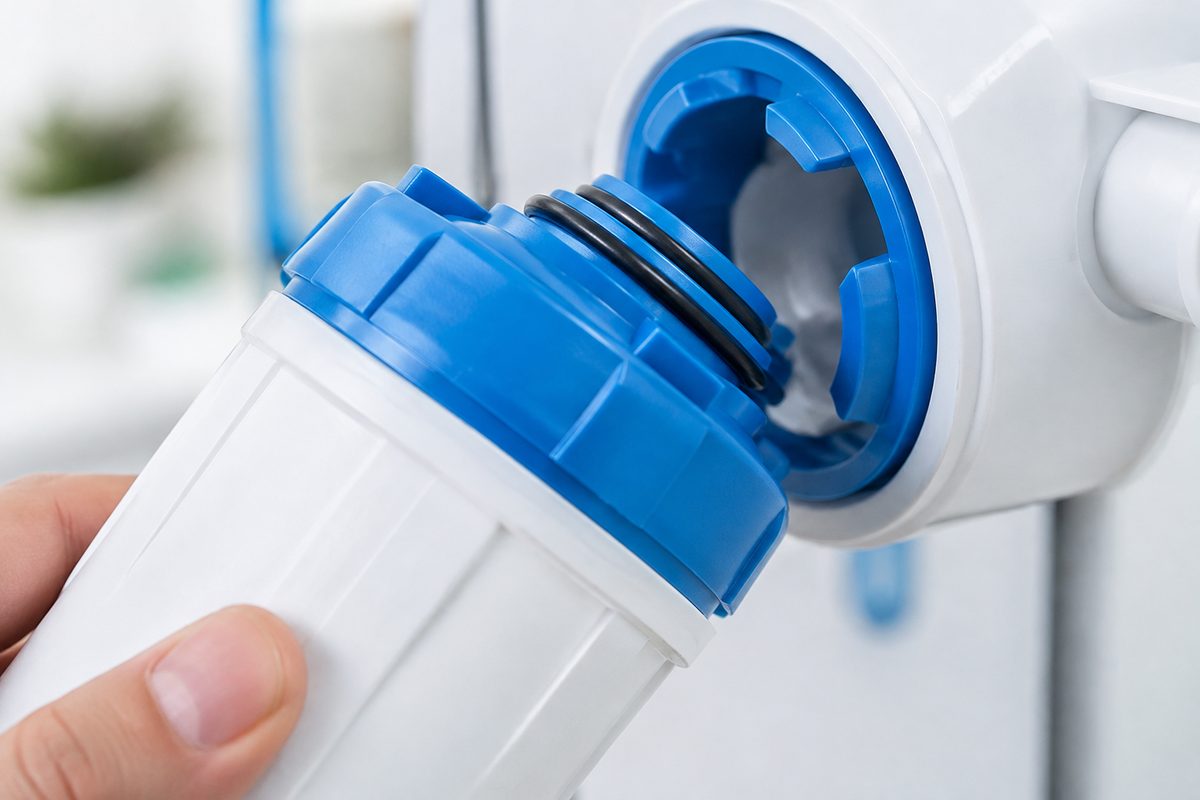
Quick-change bayonet designs matter more than they appear to. A twist-lock cartridge that installs in seconds keeps the consumer in the habit of replacement, whereas a housing that requires a wrench and a bucket invites neglect — and neglect invites churn. The proprietary locking mechanism is also the structural defense against generic compatible cartridges, which pmarketresearch flags as a genuine restraint on the category: low-cost, non-certified alternatives that undermine trust and undercut recurring revenue.
There is a regulatory dimension here as well. Subscription programs built on certified cartridges carry compliance documentation that generic competitors rarely hold, which matters in markets where buyers demand NSF/ANSI or CE paperwork as a condition of procurement. A replenishment stream is only defensible if the cartridge itself clears the certification bar; otherwise the program is a discounting exercise, not a moat.
ONEMI operates a full OEM/ODM capability from a Guangdong manufacturing base, covering the hardware, the cartridges, and the connectivity layer under one roof. For buyers building a private-label subscription brand, that means one supplier for the water purifier factory relationship, the cartridge supply, and the IoT integration — rather than three vendors to coordinate. Our private-label OEM guide walks through the economics of standing up a brand around recurring cartridge revenue.