한국어
한국어

- Online water filter sales have reached roughly 31% of global volume and are compounding near 12% a year — about three times the pace of legacy retail channels.
- Dealer and professional-installer channels aren’t shrinking in dollars; they’re concentrating into high-ticket whole-house, commercial, and service-bound segments that parcel-shipped D2C can’t reach.
- The split forces OEM and private-label buyers into two distinct specs: subscription-ready, tool-less, low-return products for D2C, versus certified, installation-friendly systems for dealer networks.
For decades water purification equipment moved through a single chain: manufacturer to importer to distributor to retailer to end user. That chain is now splitting in two directions at once, and the numbers finally make it visible. Online channels hold about 31% of global sales volume and are still compounding near 12% a year, per 2026 data from Dataintelo — while the remaining offline business keeps consolidating around a narrower set of high-ticket, service-heavy categories.
If you source water filters for resale, the channel you build for decides almost everything downstream: the product spec, the certification set, the packaging, and the margin structure. Getting the channel wrong is more expensive than getting the product wrong, because a product can be adjusted far more cheaply than a distribution strategy.
The Channel Map Is Moving Faster Than Most Importers Realize
The US water purifier market — the world’s most mature — was worth roughly $6.75 billion in 2024 and is forecast to reach $10.35 billion by 2032, a 5.5% compound annual growth rate, according to Fortune Business Insights. Globally, the category sits near $37.7 billion in 2025 and is heading toward $72.8 billion by 2034.
Beneath that steady top line, the channel mix is shifting faster than the headline growth suggests. Online sales have climbed from roughly 12% of the US market in 2019 to about 22% in 2024 — a near-doubling in five years. On a global basis, online now represents close to 31% of volume and is expanding at 12% annually, which outpaces traditional retail by a wide margin.
What this means for an importer is concrete. A channel that was a rounding error in 2019 is now a primary sales floor. The buyer you need to reach is no longer only the distributor’s purchasing manager; increasingly it’s a brand owner running a storefront, an Amazon FBA operation, or a subscription business that ships replacement cartridges on a schedule.
The point-of-use segment — the products that actually fit in a parcel — is the part of the market moving fastest. The broader point-of-use water treatment category is projected to exceed $34 billion by 2030 at an 8% compound annual growth rate, with under-counter filters alone expected to hold about 40% of that value, according to The Business Research Company.
Where D2C Brands Actually Win
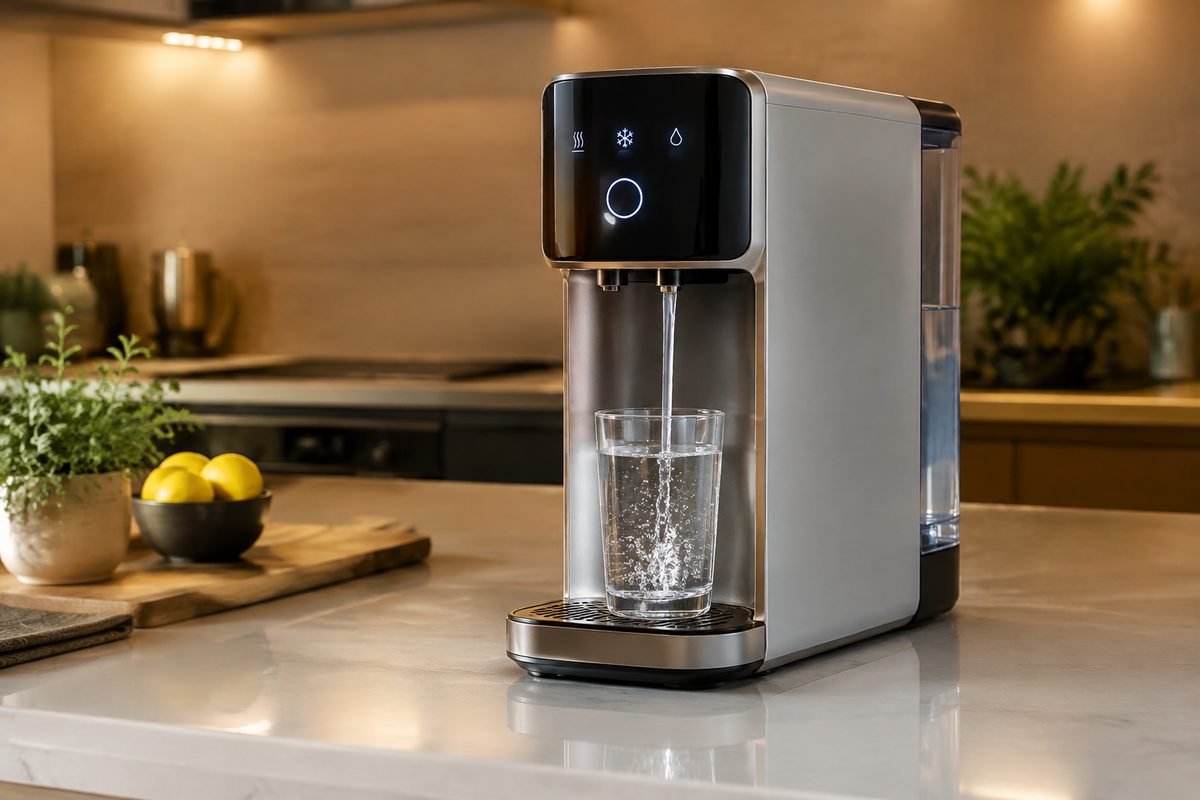
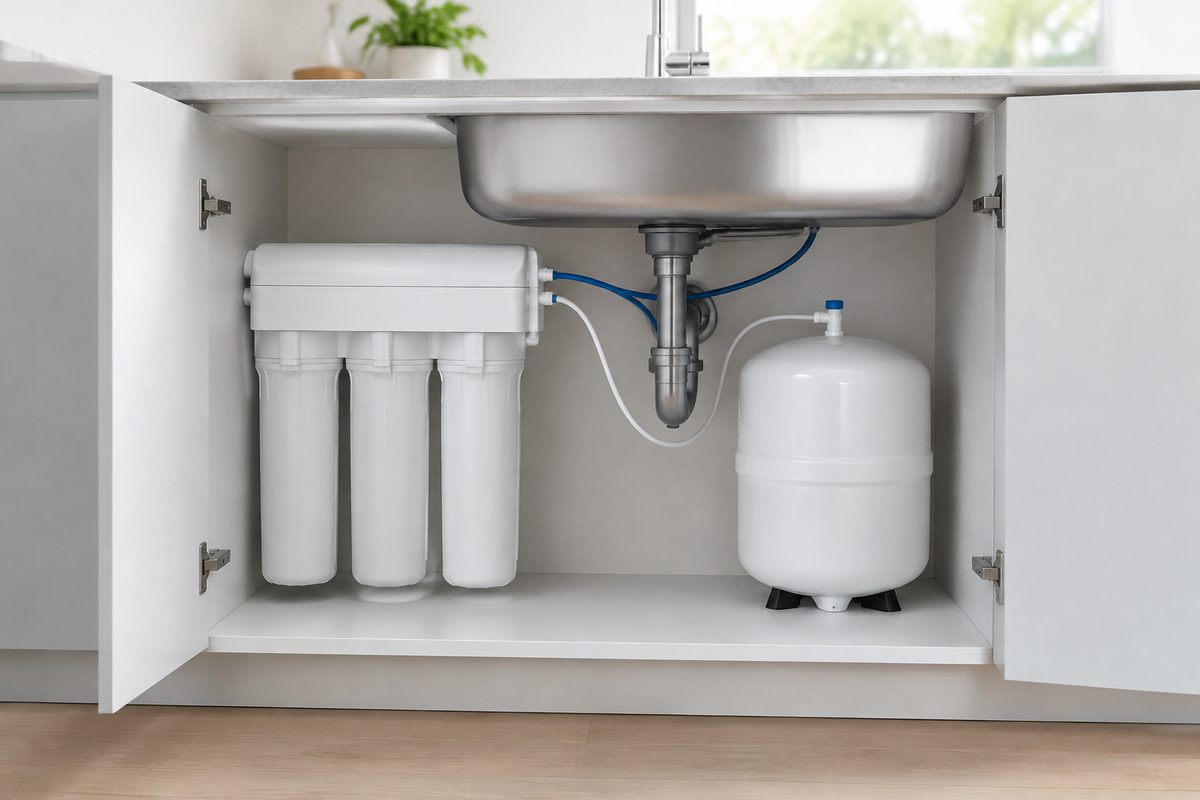
D2C water filter brands win in a specific band of the market: compact, no-install products with a strong consumables story. Countertop RO systems, under-sink RO units with tool-less installation, and faucet-mounted filters are the categories where online-first brands have taken real share.
The economics are simple to trace. D2C strips out the retail margin and the distributor layer, then reinvests that margin into digital acquisition and product content. An online-first brand can run a countertop RO system through its own storefront with transparent pricing, customer reviews, and two-day shipping — none of which a traditional dealer counter can match on speed or price transparency.
The real moat, though, is the consumable. Replacement filters represent roughly 72% of unit demand in the home appliance filtration category, per 2026 data from Industry Research. That recurring revenue is exactly what subscription models monetize. Filter delivery tied to a schedule can lift customer lifetime value by roughly 40%, according to channel data from Dataintelo, because the subscription locks in both the initial system and the long tail of cartridge replacements.
For a sourcing decision, the takeaway is blunt: if your product has a replaceable cartridge and fits in a parcel, D2C is where the growth is. The winning D2C spec is tool-less installation, a subscription-ready filter format, and packaging that survives single-unit parcel shipping without damage or excessive return rates.
The competitive dynamic is worth noting for importers. D2C brands compete on acquisition efficiency and product experience, not on brand heritage. A well-specced private-label product with a clean storefront can out-convert an incumbent on a marketplace because the customer is comparing specs, reviews, and price — not the size of the marketing budget behind the name.
Where Traditional Dealers Still Hold the Edge
Dealer networks are not dying. They’re specializing.
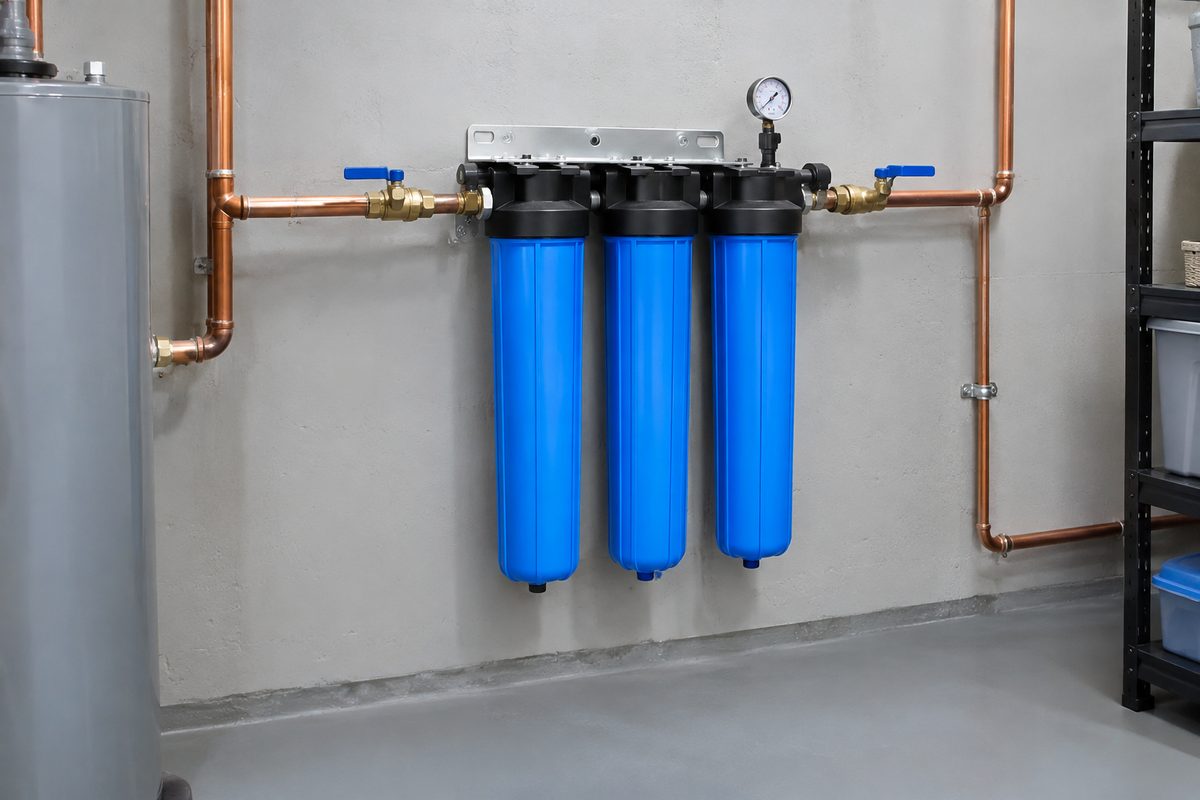
The categories where traditional distribution still dominates are the ones D2C structurally can’t serve: point-of-entry whole-house systems, water softeners, and commercial installations. These products require plumbing work, local code compliance, water-quality testing, and ongoing service — none of which ships in a cardboard box. Professional installers and dealers hold roughly 12-18% of the US market, and that share is sticky precisely because it’s service-bound.
Brick-and-mortar still concentrates volume in a few hands. Home improvement retail is dominated by two chains that together control about 46% of the market, according to Numerator’s Home Improvement Tracker. These stores are evolving from shelf space into experience centers, adding in-store water-quality testing and installation services that a pure online brand can’t replicate.
The dealer value proposition is installation, warranty handling, and compliance documentation. A whole-house system selling above $800 doesn’t close on a product page; it closes on a site visit, a water test, and a signed service agreement. That’s a different product, a different buyer, and a different margin structure.
For importers, the dealer channel demands a different discipline: regional service partners, spare-parts availability, and documentation that survives a regulator’s review. The products are lower-volume but higher-margin, and the relationships are sticky once established.
What the Split Means for OEM and Private-Label Sourcing
The channel split has a direct consequence for anyone sourcing water filters from a factory: you no longer buy “a product.” You buy a product engineered for one channel or the other.
A D2C-spec system needs tool-less installation, quick-change cartridges, IoT filter-life monitoring, and compact, damage-resistant packaging that keeps return rates low. A dealer-spec system needs full certification documentation, installation-friendly fittings, and serviceable internals that a technician can maintain over a ten-year lifespan.
At ONEMI, a Guangdong-based water purification equipment manufacturer, these two specs are built on the same platform but configured differently. The same under-sink RO architecture can ship as a subscription-ready D2C unit or as a certified, dealer-installed system — the difference is the filter format, the smart module, and the packaging. For OEM and private-label buyers, that platform flexibility matters: it means you can launch in one channel and extend into the other without re-engineering the core. You can see how the OEM/ODM manufacturing structure works in the factory overview.
The certification question also splits. D2C buyers lean on NSF/ANSI standards for the US market because they market directly to consumers who recognize the mark. Dealer and commercial buyers need the full documentation set — NSF, CE, RoHS, and the rest — because their contracts and local regulators demand it. One factory should be able to supply both without confusion, and the buyer should verify this capability before committing.
A Channel-Agnostic Sourcing Playbook for 2026
The smart play is not to bet on one channel. It’s to spec your product so it can travel across channels as conditions shift.
Three rules guide the decision. First, pick your primary channel before you freeze the spec — the product requirements diverge early, and re-engineering later is expensive. Second, build the consumables story regardless of channel; replacement cartridges are the margin engine in both D2C and dealer models. Third, don’t treat the channels as either/or. A hybrid model that sells through dealers while running a direct storefront captures both the service-bound high-ticket segment and the parcel-shipped recurring segment.
Here’s how the two channel specs compare on the factors that actually move a sourcing decision:
| Factor | D2C Spec | Dealer Spec |
|---|---|---|
| Installation | Tool-less, under 30 minutes | Professional, permitted |
| Filter format | Quick-change, subscription-ready | Serviceable, long-cycle |
| Smart features | IoT monitoring, auto-reorder | Optional, service-oriented |
| Certification | NSF/ANSI consumer-facing | Full NSF/CE/RoHS documentation |
| Packaging | Parcel-safe, low return rate | Bulk, dealer-ready |
| Margin structure | Lower unit, recurring cartridge | Higher unit, service revenue |
A countertop dispenser like the instant hot-and-cold unit is a natural D2C fit — compact, plug-and-play, and heavy on consumables. An under-sink RO platform like the 100G reverse osmosis system can be configured for either channel depending on how the filter format and smart module are specced. Browse the full platform range in the product catalog.
The importers who win the next few years won’t be the ones who guessed the channel right. They’ll be the ones who built products flexible enough to follow the consumer wherever the next shift lands.