

 한국어
한국어

On a Tuesday morning in a clinical pathology lab just outside Boston, a high-throughput chemistry analyzer threw a series of calibration errors. The suspect was initially a bad batch of reagents, costing the facility thousands of dollars in discarded inventory and lost technician hours. However, the real culprit was far more insidious: a microscopic rise in Total Organic Carbon (TOC) levels in the laboratory’s central water loop. The system was delivering water that technically met resistivity standards but harbored organic compounds that interfered with spectrophotometric assays. This is the reality of modern laboratory operations, where water is not just a utility, but the most critical reagent in the entire building.
Executive Summary
- Laboratory water is classified into three distinct tiers (Type I, II, and III) based on ASTM D1193 and ISO 3696 standards, with each grade serving specific experimental and analytical boundaries.
- Modern facility design favors a cascading purification architecture, utilizing the reject or product water of pre-treatment stages to feed ultra-pure polishing systems, maximizing water conservation.
- The total cost of ownership (TCO) for laboratory water is heavily influenced by cartridge consumption rates, local feed water quality, and structural plumbing decisions rather than the initial capital expenditure of the purification unit.
For decades, procurement managers and lab directors viewed water purification as a simple box-ticking exercise. You bought a system, hung it on the wall, and changed the cartridges when the alarm beeped. Today, the landscape is vastly different. Analytical instrumentation has advanced to detection limits in the parts-per-trillion (ppt) range, meaning that impurities once considered negligible are now experimental deal-breakers. As an industry observer tracking the evolution of laboratory infrastructure, I have watched facilities struggle to balance the stringent requirements of regulatory bodies like the College of American Pathologists (CAP) and the Clinical and Laboratory Standards Institute (CLSI) with the harsh realities of rising municipal water costs and sustainability mandates.
The Three-Tier Hierarchy of Laboratory Water
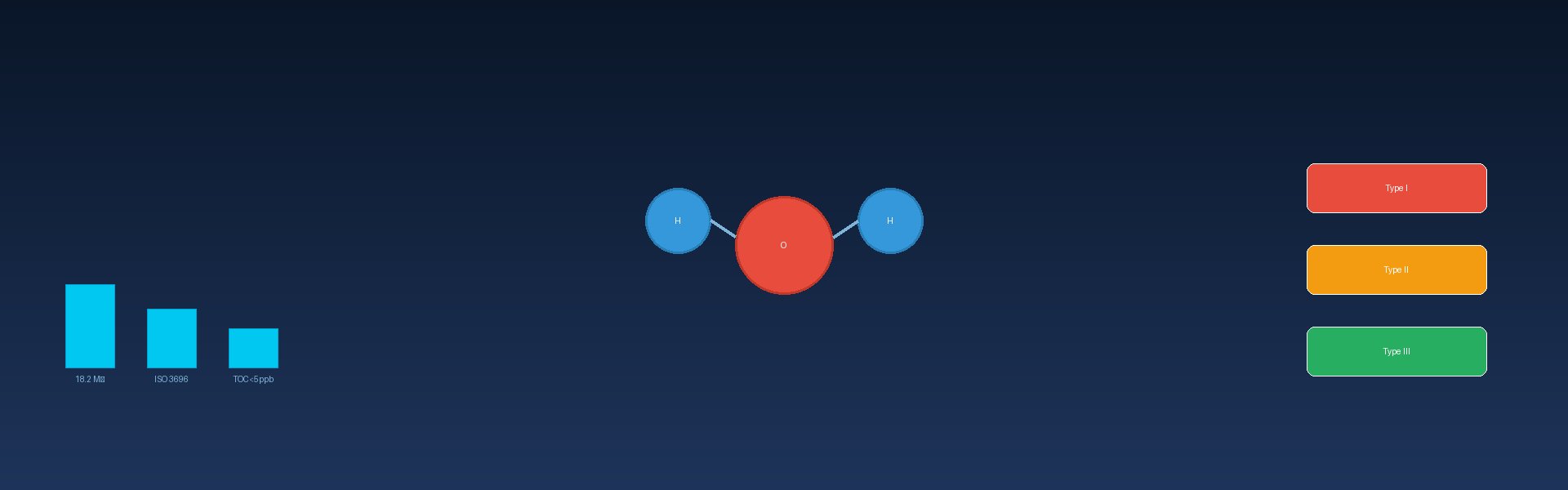
To understand how to build an efficient laboratory water infrastructure, we must first dissect the standards that govern it. The industry primarily relies on ASTM D1193 standards, alongside guidelines from the ISO and the European Pharmacopoeia. These frameworks classify water into three distinct types, each defined by strict physical and chemical parameters. What many lab managers overlook is that these numbers are not static targets; they represent dynamic ranges that fluctuate based on temperature, flow rates, and the age of the purification media.
Type III water, often referred to as primary grade or reverse osmosis (RO) water, is the starting point for most laboratory processes. With a conductivity range of 1.0 to 5.0 µS/cm, it is stripped of 90% to 99% of ionic contaminants, bacteria, and particulates. It is the workhorse of the facility, used for rinsing glassware, filling heating baths, and feeding autoclaves. Feeding an autoclave with raw tap water is a fast track to scale buildup and expensive heating element failures, making Type III an operational necessity rather than a luxury.
Stepping up to Type II water brings us into the realm of general laboratory grade water. This grade maintains a resistivity range of 1.0 to 15.0 MΩ·cm (equivalent to a conductivity of 1.0 to 0.067 µS/cm). It is typically produced through a combination of reverse osmosis and deionization (DI) or electrodeionization (EDI). Type II water is the standard for microbiological media preparation, buffer compounding, and feeding clinical analyzers. It is also the critical feed water for Type I systems, a relationship that forms the backbone of efficient laboratory design.
At the apex sits Type I water, also known as ultrapure water. This is water at its theoretical limit of purity, exhibiting a resistivity of 18.2 MΩ·cm at 25°C (conductivity of 0.055 µS/cm). It is virtually free of ions, silica, particulates, and microorganisms. Type I water is mandatory for highly sensitive analytical techniques such as High-Performance Liquid Chromatography (HPLC), Inductively Coupled Plasma Mass Spectrometry (ICP-MS), gas chromatography, and molecular biology applications like PCR and cell culture. In these environments, even a trace amount of organic carbon can bind to active sites on chromatography columns, ghosting peaks and invalidating weeks of research.
| Water Parameter | Type III (Primary Grade) | Type II (General Lab) | Type I (Ultrapure) |
|---|---|---|---|
| Resistivity at 25°C | 0.2 to 1.0 MΩ·cm | 1.0 to 15.0 MΩ·cm | 18.2 MΩ·cm |
| Conductivity at 25°C | 1.0 to 5.0 µS/cm | 0.067 to 1.0 µS/cm | 0.055 µS/cm |
| Total Organic Carbon (TOC) | < 200 ppb | < 50 ppb | 1 to 5 ppb |
| Bacteria Count | < 1000 CFU/ml | < 10 to 100 CFU/ml | < 1 CFU/ml |
| Endotoxins | N/A | < 0.25 EU/ml | < 0.03 EU/ml |
The Cascading Architecture: Engineering for Efficiency
One of the most common mistakes in laboratory design is treating water purification as a series of isolated, point-of-use systems. I recently observed a biotech startup in San Francisco that installed five independent Type I systems, each fed directly by municipal tap water. Within six months, they were spending a small fortune on pre-filtration cartridges because the local municipal water had high seasonal turbidity. The cartridges were fouling long before their rated capacity, forcing the lab to halt operations for unscheduled maintenance.
The solution to this resource drain is a cascading architecture. By designing a system where the reject water or product water of one stage feeds the next, labs can dramatically reduce operational costs and environmental impact. In a typical cascading setup, municipal water is first treated by a centralized Type III reverse osmosis system. This RO water is stored in a reservoir, which then feeds the autoclaves and glass washers directly. Simultaneously, this Type III water is used as the feed source for localized Type II and Type I polishing systems.
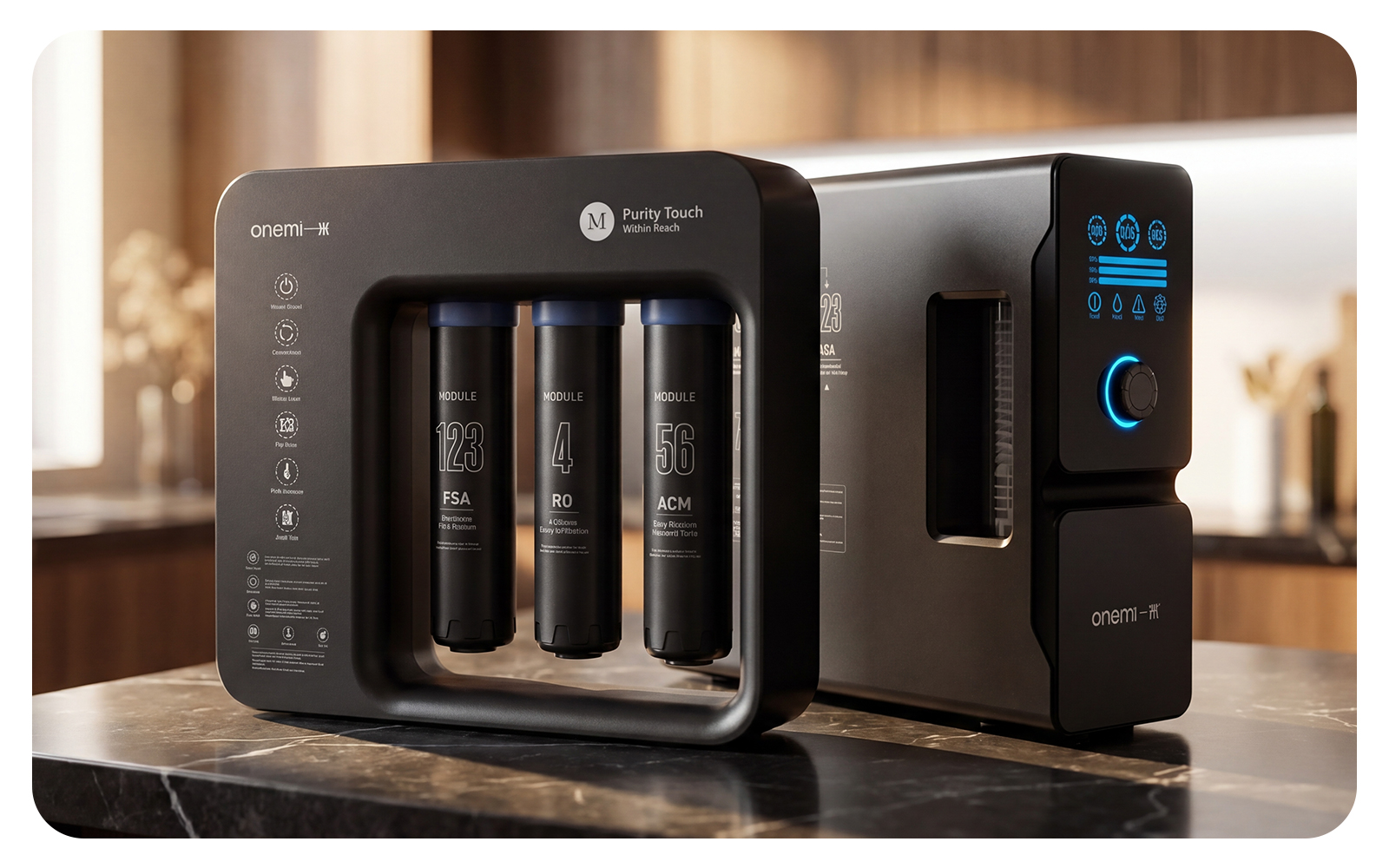
Why does this matter? Because purification technologies like deionization resins and ultrafiltration membranes are highly sensitive to feed water quality. When a Type I ultrapure system is fed with high-quality Type II or Type III water, its internal cartridges can last up to three times longer. This drastically lowers the total cost of ownership and ensures that the system can consistently deliver 18.2 MΩ·cm water without rapid degradation. Furthermore, some advanced setups, such as those incorporating ONEMI commercial water filtration designs, integrate smart recirculation loops that keep water constantly moving, preventing the biofilm growth that typically occurs in stagnant storage tanks.
But here is a counter-intuitive finding that many lab managers learn the hard way: more purification is not always better. I have seen researchers use Type I ultrapure water for simple buffer preparation, believing it would make their assays more accurate. In reality, ultrapure water is highly aggressive. Because it is completely stripped of ions, it greedily leaches carbon dioxide from the air upon dispensing, forming carbonic acid and rapidly shifting the pH. For simple buffers, Type II water is actually more stable and predictable than its ultrapure counterpart.
The Real-World Procurement Gotchas
When evaluating B2B water systems, the initial purchase price is often just the tip of the iceberg. The real financial story lies in the recurring operational expenses, specifically consumables and electricity. Many manufacturers price their hardware competitively, only to charge exorbitant rates for proprietary replacement cartridges. Before signing a contract, procurement teams must request a guaranteed cost-of-consumables projection based on their estimated daily volume.
Another major pitfall is the failure to account for local water quality variations. Municipal water in regions like the American Southwest has high hardness and total dissolved solids (TDS), often ranging between 300 and 500 ppm. In contrast, the Pacific Northwest enjoys soft water with TDS levels frequently below 50 ppm. A system that runs flawlessly in Seattle without heavy pre-treatment will clog within weeks in Phoenix. Therefore, a comprehensive water analysis at the specific facility tap must be the first step in any procurement process.
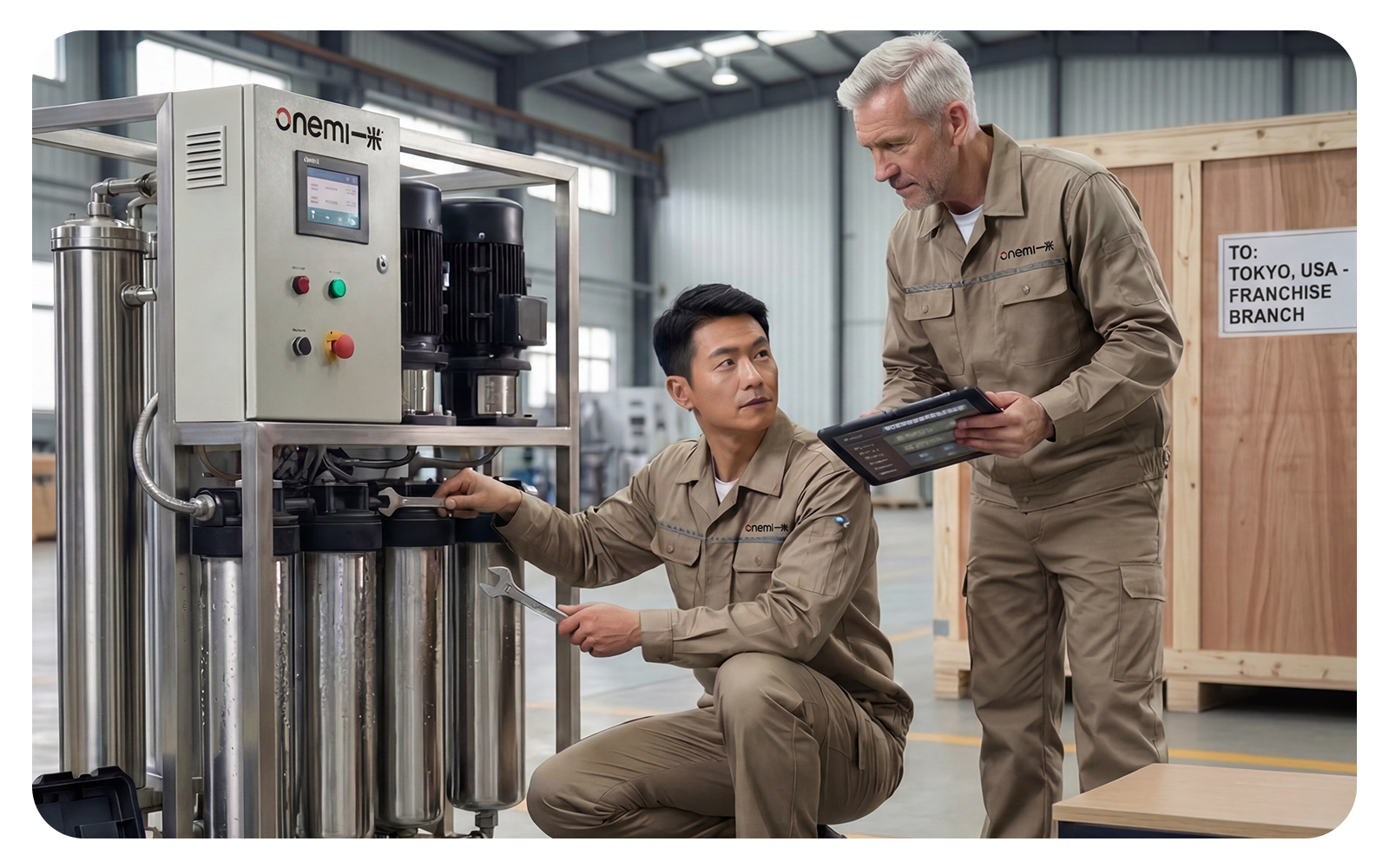
Is your facility prepared for the physical footprint of these systems? A complete setup requires not just the purification unit, but also pre-filter housings, carbon tanks, water softeners, storage reservoirs, and distribution pumps. Some labs fail to allocate sufficient wall or floor space, leading to cramped installations that make routine filter changes a logistical nightmare. Accessibility is key; if a cartridge is difficult to reach, technicians will inevitably delay replacing it, compromising the integrity of the entire water loop.
The Role of Emerging Technologies in Lab Water
The laboratory water market is undergoing a quiet technological revolution, driven by the dual pressures of sustainability and data integrity. Traditional deionization systems relied heavily on chemically regenerated mixed-bed resins, a process that required the handling of hazardous acids and bases. Today, Electrodeionization (EDI) has largely replaced these older systems in high-volume settings. EDI uses an electric field to continuously regenerate ion-exchange resins, eliminating chemical waste and providing a highly consistent water quality that does not suffer from the typical exhaustion curves of standard DI cartridges.
At the same time, digital integration is changing how labs monitor water quality. Modern systems are no longer passive appliances; they are IoT-enabled devices that continuously log parameters like resistivity, temperature, and TOC. This data can be streamed directly to a Laboratory Information Management System (LIMS), providing an unbroken audit trail for regulatory compliance. In clinical settings, where a regulatory inspector might ask for proof of water quality from six months ago, having automated, cloud-based data logs is an invaluable asset.
This level of monitoring is particularly crucial for TOC levels. While resistivity measurements are excellent for detecting ionic impurities, they are completely blind to non-ionized organic contaminants. A system can show a perfect 18.2 MΩ·cm reading while containing organic compounds that can ruin sensitive molecular biology experiments. Advanced systems now feature real-time, dual-wavelength UV oxidation chambers that measure TOC levels in real-time, warning users the moment organic levels drift beyond acceptable thresholds.
Structuring Your Next Water System RFP
When drafting a Request for Proposal (RFP) for a new laboratory water system, specificity is your best defense against operational headaches. Do not simply ask for a “Type I water system.” Instead, define your requirements based on daily volume, peak flow rates, and the specific applications the water will support. For instance, if you are running cell cultures, you must specify a requirement for ultrafiltration to remove pyrogens and nucleases, which standard deionization cannot achieve.
Ensure that the RFP requires vendors to detail the recovery rate of their reverse osmosis systems. Traditional RO systems can waste up to 70% of the feed water as reject. However, modern, eco-conscious engineering, such as the technologies developed by ONEMI, focus on maximizing recovery rates, sometimes pushing water efficiency up to 50% or higher even under challenging feed conditions. This not only reduces your facility’s environmental footprint but also directly lowers monthly municipal water utility bills.
Finally, demand a clear service level agreement (SLA) from your prospective vendors. When a laboratory water system goes down, the entire lab can grind to a halt. Ask about local technician availability, guaranteed response times, and the cost of preventative maintenance contracts. A slightly more expensive system backed by a robust, local service network is always a wiser investment than a cheaper unit that leaves you stranded for weeks waiting for a replacement part from overseas. By treating water as a critical, integrated infrastructure asset rather than a simple utility, modern laboratories can safeguard their research, control their operational costs, and focus on the scientific breakthroughs of tomorrow.