


 한국어
한국어

- Magnetic water softeners do not remove calcium or magnesium, the minerals that actually make water hard. At most they behave as descalers, and even that effect is inconsistent across independent tests.
- Peer-reviewed work dates back to the 1980s and remains divided. Some lab loops show a shift in calcium carbonate crystal form; others show no measurable change, and no study shows true hardness removal.
- Importers should source ion-exchange softeners certified to NSF/ANSI 44 for real hardness removal, and treat magnetic devices as accessories, not softener SKUs.
The claim magnetic water softeners make
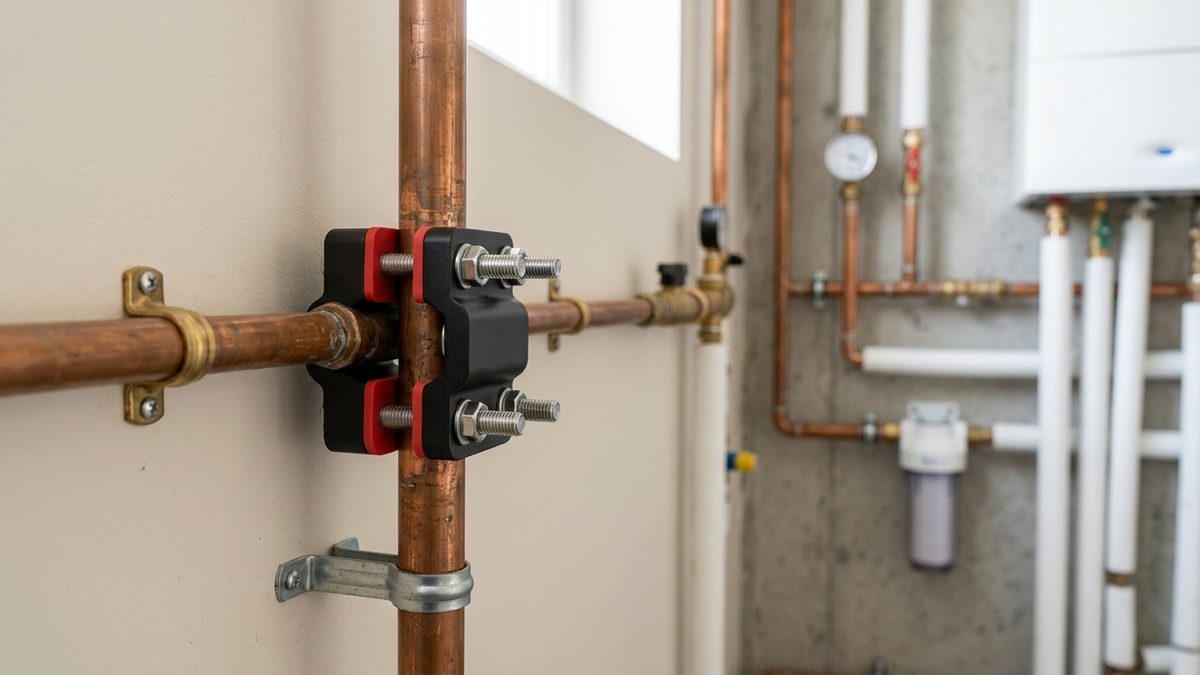
Magnetic water softeners are sold as a salt-free, maintenance-free way to soften water. The device is usually a pair of strong magnets that clamps onto the outside of a pipe, or a housing that water flows through. The promise is that a magnetic field changes the chemistry of the water so that hardness no longer causes scale, without removing anything and without adding sodium.
The pitch is seductive because it targets the two real drawbacks of a genuine softener. A true ion-exchange softener needs salt for regeneration and takes up space. A magnetic device needs neither. For a buyer watching return rates and warranty claims, the question is simple: does the physics support the promise?
What hardness actually is
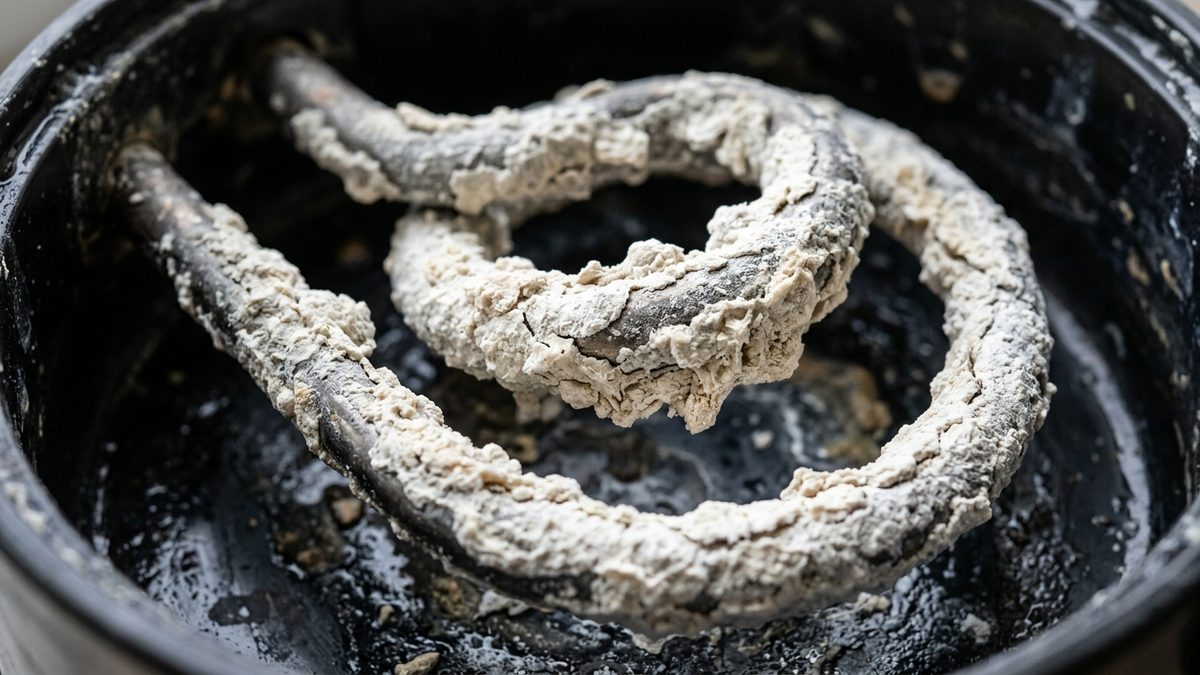
Hard water is water with a high concentration of dissolved calcium and magnesium ions, usually measured in milligrams per litre as calcium carbonate. These ions are what react with soap, leave spots on glass, and build scale inside kettles, boilers, and heating elements. The World Health Organization does not set a health-based guideline value for hardness, because hardness itself is not a health concern. It is an operational and aesthetic one: it shortens the life of heating equipment and plumbing.
That distinction matters for sourcing. A product that claims to soften water is claiming to remove or neutralize calcium and magnesium ions. A product that only changes how those ions crystallize is doing something different. Calling both of them softeners is where most of the confusion, and most of the risk, begins.
What the science shows
The idea of treating water with magnets is old, and it has been studied for decades. The most cited academic work goes back to 1985, when Hasson and Bramson published results in a peer-reviewed journal of the American Chemical Society on magnetic treatment for suppressing calcium carbonate scale. Their findings were mixed, and follow-up research has kept coming to the same conclusion: under some controlled laboratory conditions a magnetic field can shift the crystal structure of calcium carbonate from calcite to aragonite, but the effect is highly dependent on flow rate, field strength, and water chemistry.
A 1996 review by Baker and Judd in Water Research summarized the field bluntly: the process industry remained sceptical of magnetic scale treatment despite its long history. In plain terms, a magnetic field does not take calcium out of the water. It cannot. The ions are still there, still in solution, still able to form scale once conditions allow it. What a magnet might do, in the best case, is encourage scale to form as a softer, less adherent crystal that does not stick to pipe walls as readily.
That is a real but narrow effect. It is why honest manufacturers describe these devices as descalers or physical water conditioners, not softeners. A descaler manages scale deposition. A softener removes the minerals that cause hardness. The two are not interchangeable, and a product marketed as one while performing as the other is a liability waiting for a return or a regulatory complaint.
Descaler versus softener, side by side
The cleanest way to understand the gap is to compare the two technologies directly.
| Attribute | Magnetic descaler | Ion-exchange softener |
|---|---|---|
| Removes hardness minerals | No | Yes, down to near zero |
| Working mechanism | Magnetic field alters crystal form | Resin exchanges sodium for calcium and magnesium |
| Measurable hardness reduction | None | Full |
| Standard it can claim | None | NSF/ANSI 44 |
| Consumables | None | Regeneration salt |
| Verifiable specification | Field strength only | Exchange capacity in eq/L |
The last row is the one that separates a durable product from a marketing story. An ion-exchange softener has a spec you can measure and test: resin exchange capacity, flow rate, regeneration cycle volume. A magnetic device has a magnet. There is no laboratory standard that certifies a magnet as removing hardness, because it does not.
Standards and regulatory reality
Real water softeners are tested against NSF/ANSI 44, the standard for cation exchange water softeners, which verifies hardness reduction, salt efficiency, and structural integrity. Magnetic devices cannot be tested to NSF/ANSI 44 because they do not perform cation exchange. A supplier that puts softener language on a magnetic product is making a claim no certification body will back.
For importers this is not a theoretical concern. In the United States, the FTC treats false and unsubstantiated performance claims as deceptive advertising. In the European Union and the United Kingdom, unfair commercial practices rules reach the same result. If a container of magnetic softeners arrives and the product does not soften water, the importer, the distributor, and the brand owner all share the exposure. The cheapest time to fix that is before the purchase order, not after the first chargeback.
What importers should source instead
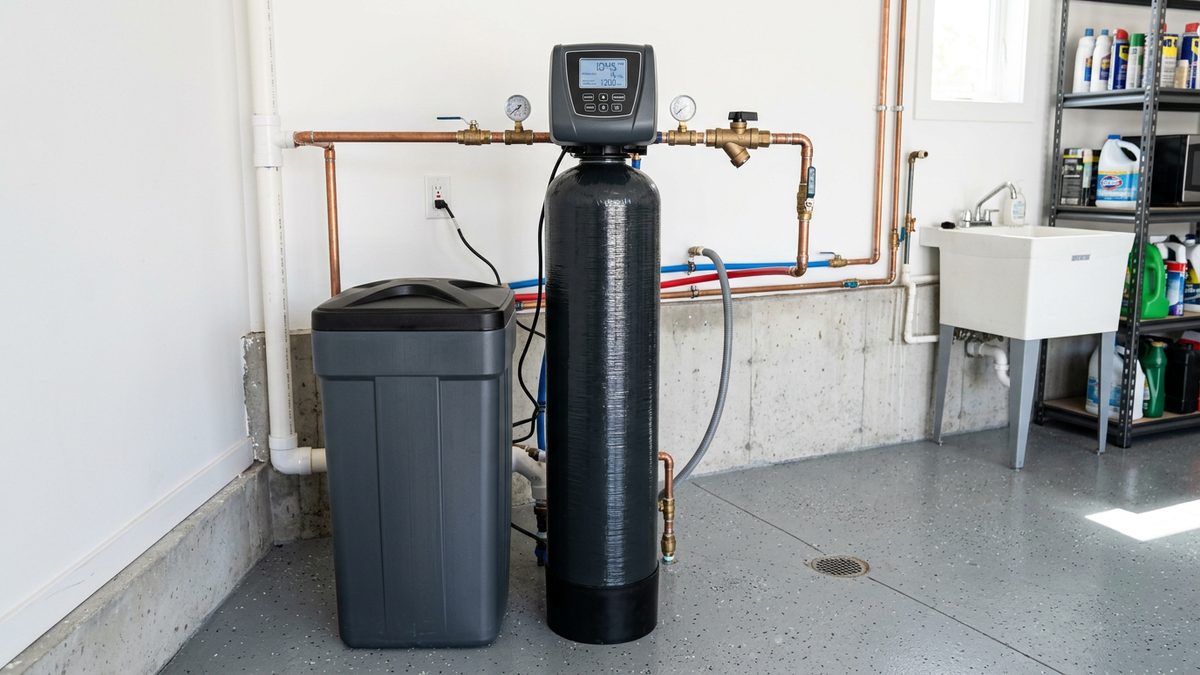
The durable market is ion-exchange softening, and that is where an OEM relationship pays off. ONEMI, a Guangdong-based water purification equipment manufacturer, builds whole-house softeners around genuine cation exchange. Its water softener line uses high-capacity resin rated at 2.1 eq/L exchange capacity, against the 1.5 eq/L common in entry-level resin, and delivers flow rates of 1,800 and 3,000 litres per hour for the two main models.
The control side matters as much as the resin. ONEMI softeners run automatic counter-current regeneration, so the unit regenerates based on actual water usage and a programmable hardness input rather than a fixed timer. That changes the economics of the product for the end user, because regeneration consumes salt and water. A softener that regenerates on demand wastes less than one that regenerates on a schedule.
For private-label and OEM and ODM buyers, the advantage is a platform with verifiable specifications. Exchange capacity, flow rate, regeneration cycle volume, and dimensions are documented, which is what lets a brand owner print honest marketing copy and stand behind it. Certification documentation is available through the certification page, and the OEM FAQ covers what the factory can and cannot claim on a label.
A practical checklist for magnetic softener sourcing
If a magnetic device still has a place in your catalogue, position it honestly as a descaler accessory and run this checklist before committing:
- Ask the supplier for independent test data showing hardness reduction. If the answer is a whitepaper about crystal structure, you are buying a descaler, not a softener.
- Check the marketing language on the packaging. The word softener on a magnetic device is the single biggest red flag, because it is a claim no standard supports.
- Confirm the device carries no certification implying hardness removal. If a certificate appears, read the standard number and verify what it actually covers.
- Match the product to the water. Magnetic descaling shows results mainly in closed-loop heating and cooling systems, not whole-home point-of-entry use.
- For anything sold as a true softener, insist on NSF/ANSI 44 and a documented resin exchange capacity.
The difference between a descaler and a softener is not a marketing nuance. It is the difference between a product that manages scale and a product that removes hardness. Buyers who keep that distinction sharp will stock products they can defend, and the brands that sell on honest specifications are the ones that hold their distribution channel for more than one season.