
 한국어

- The water softening systems market is projected to reach USD 6.41 billion by 2035 at a 7.2% CAGR, with subscription and rent-to-own models driving a growing share of that revenue.
- Rent-to-own softeners already serve more than one million households in North America, and analysts put the expansion of this model into Europe and Asia-Pacific at a USD 400 million-plus opportunity by 2030.
- For dealers, recurring rental revenue can out-earn one-time hardware sales over the life of a customer relationship — but only if the equipment is built for low-maintenance, long-interval service.
The water softener has spent most of its commercial life as a box you sell once. A dealer installs it, collects the check, and hopes the customer calls again in a decade when the resin bed finally gives out. That model is quietly being replaced by a different one, and the numbers behind the shift are worth understanding before the channel finishes moving.
Water softening systems are now a service business as much as a hardware business. Industry reports project the market to reach USD 6.41 billion by 2035, growing at a 7.2% compound annual rate, but the more telling figure is how the revenue is being collected. Subscription and softener-as-a-service models are lowering the barrier for consumers and, more importantly, locking them into multi-year relationships that renew automatically.
For a dealer or an importer deciding where to put capital, the question is no longer whether to carry softeners. It is whether the softener line they carry is engineered for the rental economics that are taking over the channel.
Why the rental model took hold in North America first
North America is the natural home for softener rentals because hard water is pervasive and the alternatives are unappealing. A salt-based softener is not a cheap purchase, and it carries an ongoing chore: someone has to keep the brine tank full and the resin bed regenerating. Renting turns that chore into a monthly fee that includes the service, which is exactly the pitch that has worked for the leading national rental operators.
The largest rent-to-own program in the region now serves more than one million households, according to industry reporting. Monthly fees range from roughly $25 to $60 for a standard salt-based system, with premium service plans running higher. Over five years, a $35 monthly rental adds up to about $2,100 — more than the purchase price of a comparable system — yet the customer keeps paying because the service, the salt delivery, and the absence of a large upfront outlay are worth the premium to a sizable share of the market.
That arithmetic is the entire point for dealers. A sold softener produces one transaction. A rented softener produces a stream of transactions, and the lifetime value of that stream is what makes the rental channel worth building.
The dealer math: rental revenue versus one-time sales
The financial contrast between the two models is stark once you lay it out over a customer’s tenure.
| Model | First-year revenue | Five-year revenue | Cash flow shape |
|---|---|---|---|
| One-time sale | Full unit price, one transaction | Unit price only (plus replacement parts) | Lumpy, front-loaded |
| Rent-to-own | Install fee + monthly fees | Monthly fees that exceed the unit price | Smooth, recurring |
| Subscription with service | Install fee + lower monthly + service plan | Lower monthly, but adds salt delivery and maintenance | Predictable, high retention |
There is a reason the industry is converging on the recurring model. It smooths revenue, builds a service relationship, and creates a natural moment to upgrade or upsell when the customer’s household changes. But the model only works if the equipment holds up. A rented softener that needs a service call every quarter erases the margin. A rented softener that runs for months between touchpoints is a profit center.
That is where the equipment itself becomes the variable that decides whether a dealer’s rental business is viable. The control valve, the resin quality, and the regeneration logic determine how often a technician has to visit, and technician visits are the cost that eats rental economics.
What rental-grade equipment actually looks like
Not every softener is built for the rental channel. The units that work in this model share a few characteristics that a dealer should verify before committing to a line.
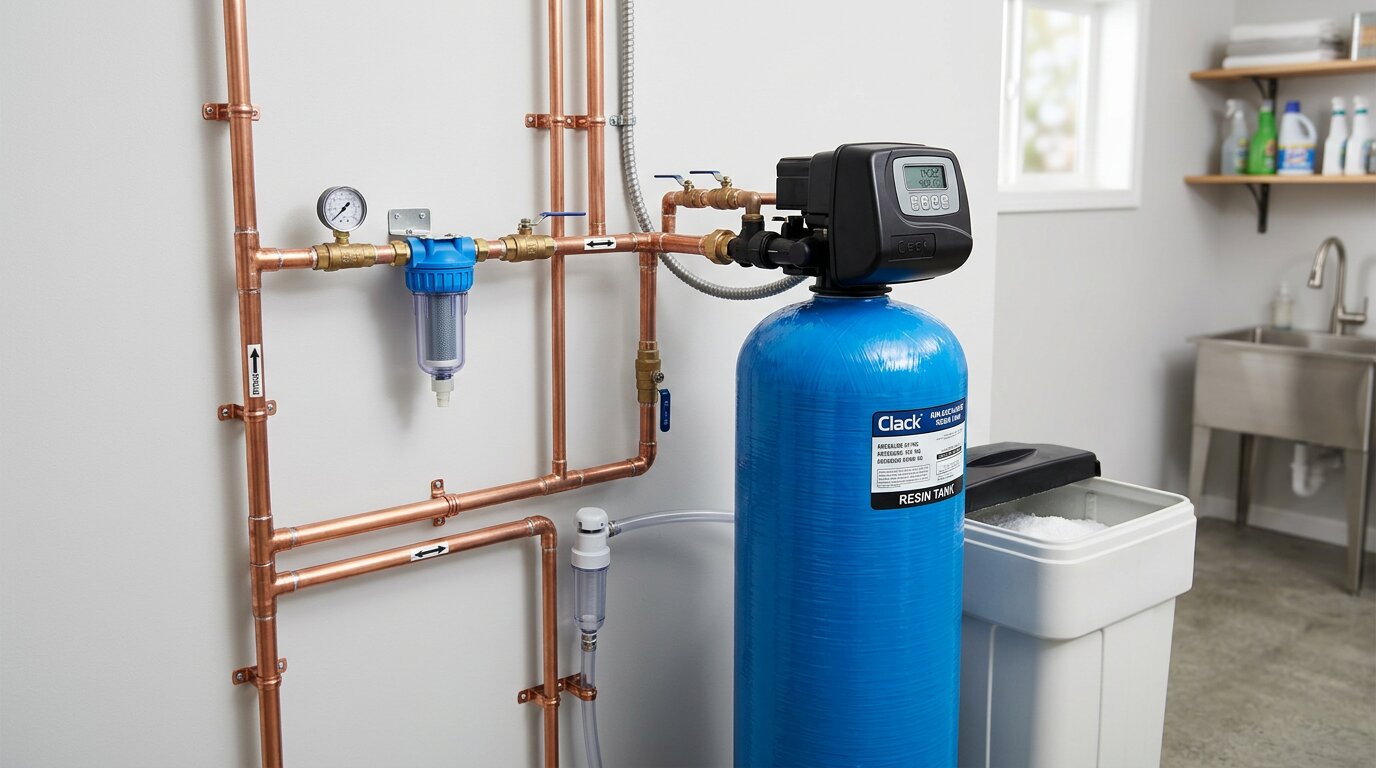
First, the resin has to last. Exchange capacity is the key spec, and it varies widely. A premium ion-exchange resin with an exchange capacity of 2.1 eq/L processes meaningfully more water per liter than a budget resin rated around 1.5 eq/L. In practice, one liter of the higher-grade resin treats roughly 170 liters per hour against the 140 liters a standard resin manages. Over a multi-year rental, that gap compounds into fewer regenerations and less salt consumed.
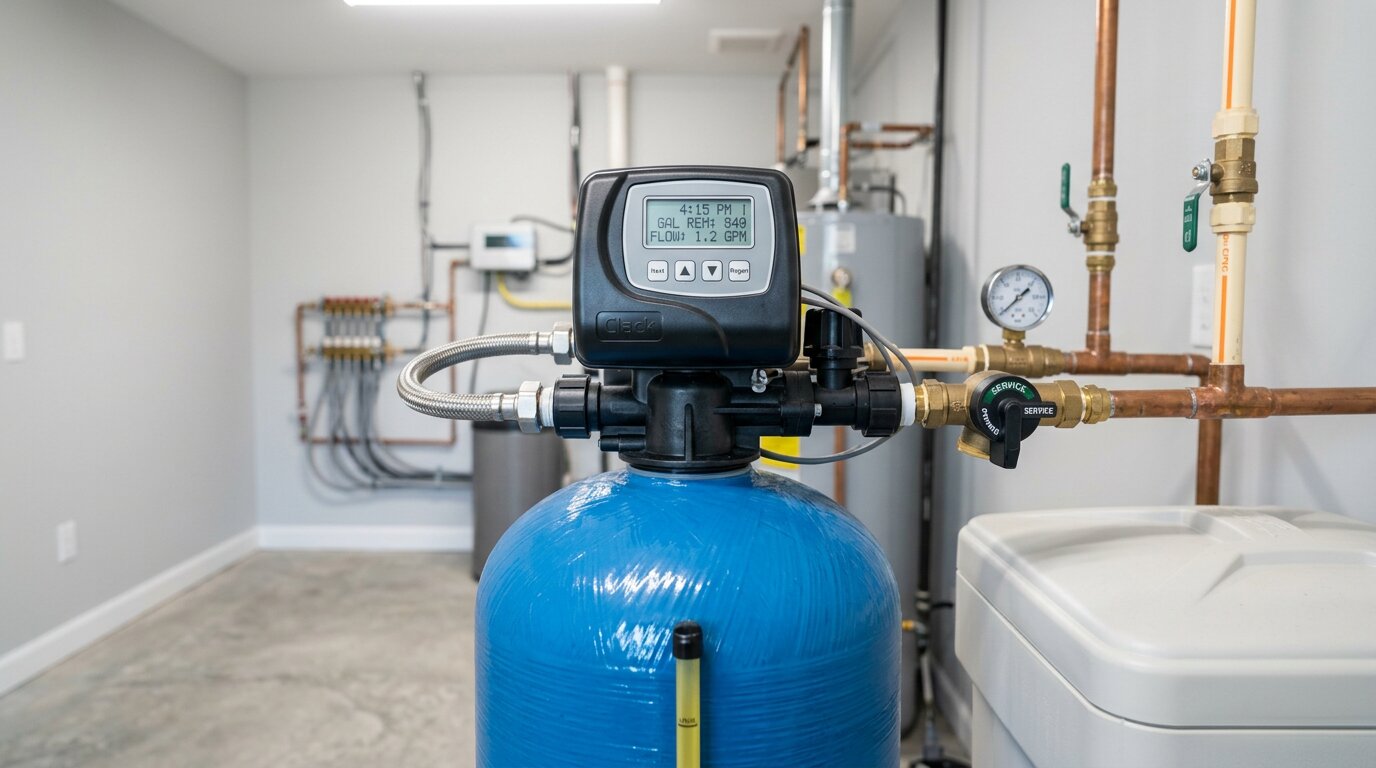
Second, the regeneration has to run itself. Demand-initiated regeneration — where the control valve calculates the cycle based on actual water use and hardness input rather than a fixed timer — cuts both salt waste and service visits. A unit that remembers its regeneration parameters through a power outage, and that automatically adjusts for the input hardness the installer enters at setup, is a unit a dealer can leave alone for months.
Third, the flow rate has to cover the household without complaint. A softener that starves a family of water when two taps and a washing machine run at once will generate cancellation requests. The rental channel favors units sized for whole-house demand, with flow rates in the range of 1,800 to 3,000 liters per hour depending on household size.
The OEM angle: how factories should position softener lines
For an OEM or private-label buyer sourcing softeners for the rental channel, the requirements are different from a retail-focused line. The dealer wants a unit that can be serviced predictably, stocked with standard consumables, and supported over a contract that may run three to five years.
Three considerations stand out from the factory side:
- Consumable compatibility. A softener that takes only a proprietary resin or a hard-to-source control valve becomes a liability when the dealer has a service call in year three. Standard, widely available components keep the dealer’s inventory costs down and the service operation simple.
- Regeneration intelligence. Demand-initiated, hardness-adjustable regeneration with power-failure memory is not a premium feature in this channel — it is the baseline that determines service frequency. A factory that can ship it standard is a factory that understands the rental model.
- Scalable flow options. A single flow rate does not fit every household. A line that spans the 1,800 to 3,000 liters-per-hour range, with resin volumes matched to household size, lets a dealer cover apartments through villas from one supplier.
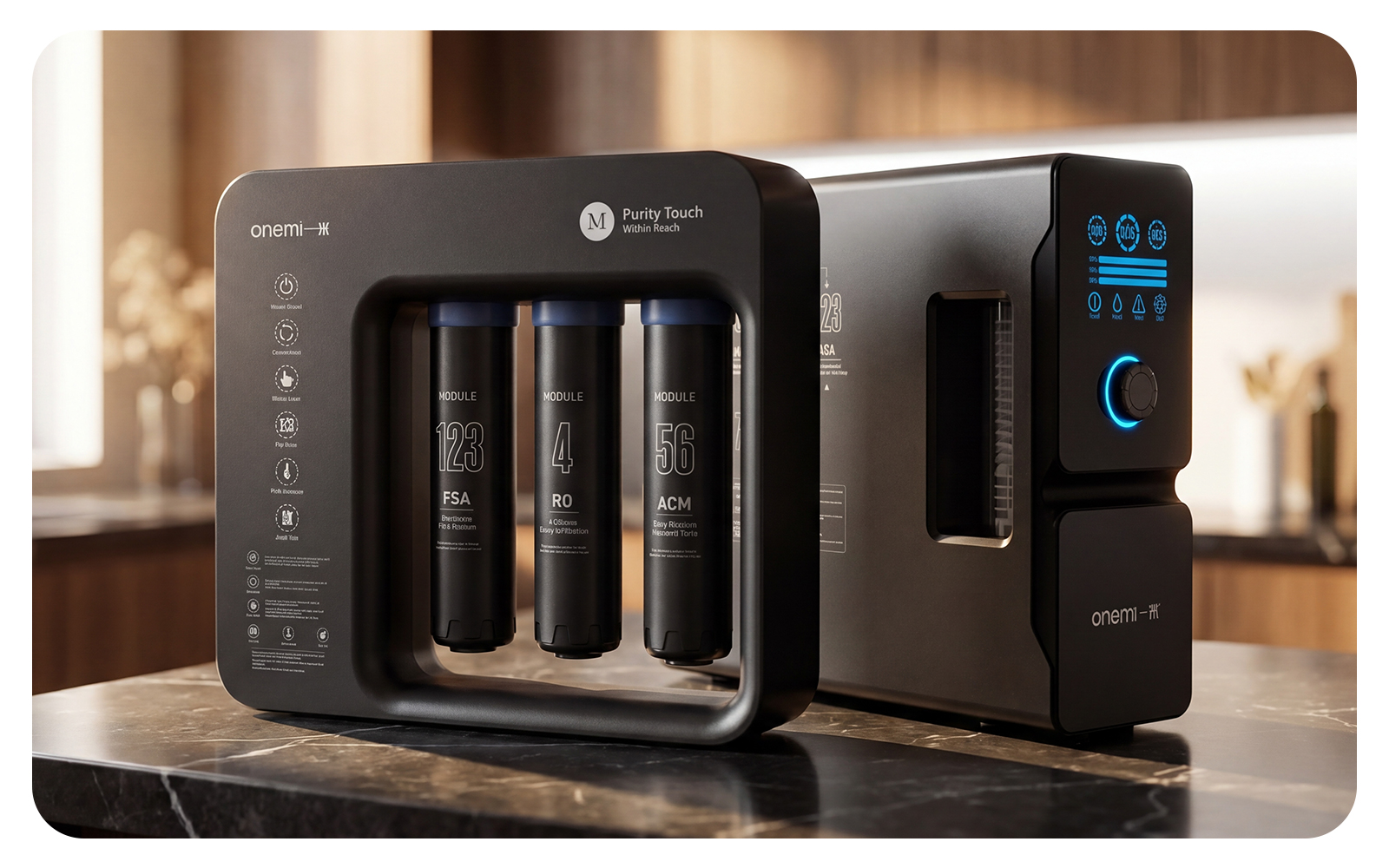
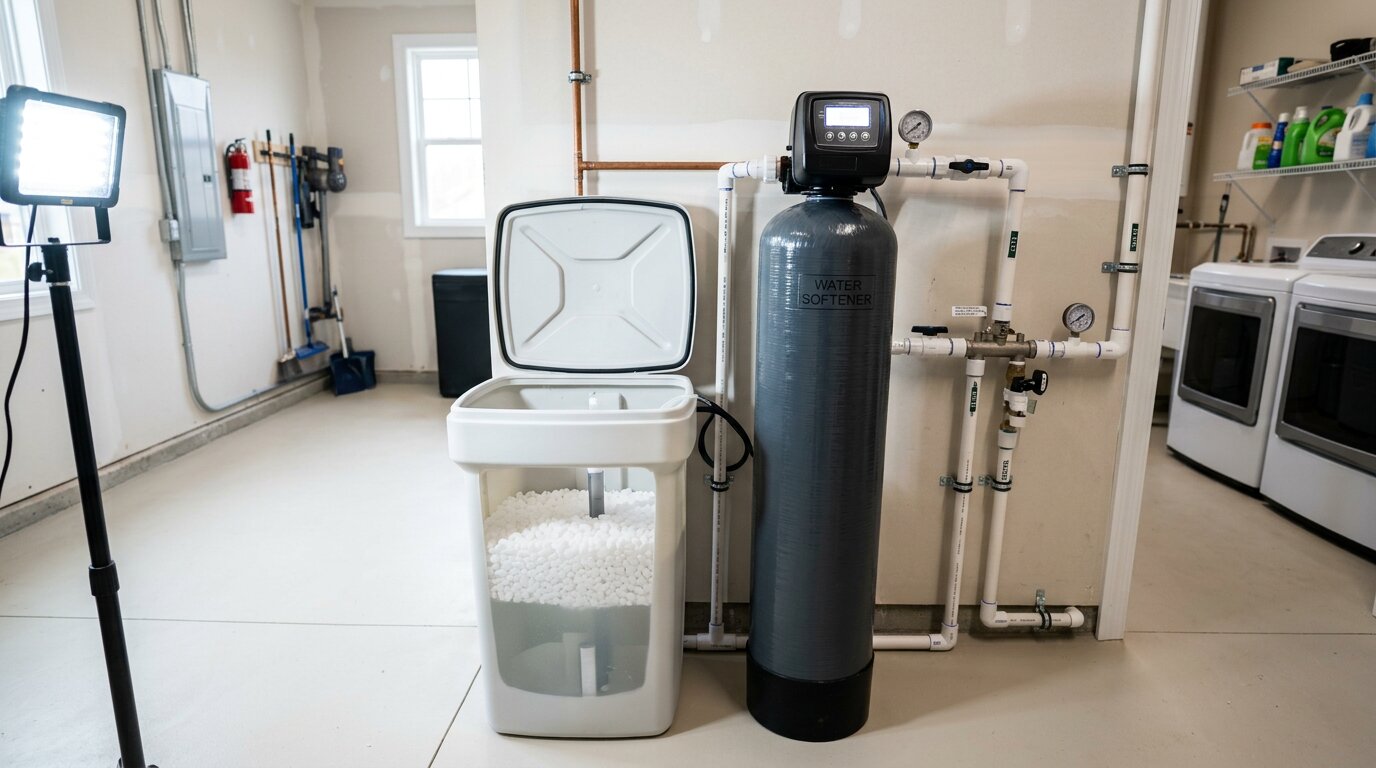
ONEMI’s whole-house softener range is built around these rental-channel requirements — demand-initiated regeneration, high-capacity ion-exchange resin, and flow rates sized for whole-house demand. The full specifications are on the water softener product page, and the OEM/ODM manufacturing capabilities page covers how private-label softener lines are built to order.
Where the rental channel goes from here
The subscription model has cleared its proof-of-concept phase in North America and is now spreading. Analysts estimate that extending rent-to-own softeners into Europe and Asia-Pacific represents a USD 400 million-plus incremental opportunity by 2030, according to industry reporting on the sector. Smart, IoT-connected softeners that integrate with whole-home water management platforms are commanding price premiums of 30 to 40 percent in the same reports.
There are headwinds, and they are worth naming. Several California municipalities have moved to restrict self-regenerating softeners over brine-discharge concerns, pushing the market toward salt-free conditioners and more efficient regeneration. In emerging markets, import duties in the 12 to 18 percent range push installed costs beyond what middle-income households will bear, which is why rental penetration there trails North America. These constraints shape where the rental model works and where it does not — and a dealer sizing up the channel should map them against the markets they actually serve.
What does not change is the underlying economics. A water softener is a durable machine with a consumable component and a service tail, which makes it a nearly perfect candidate for recurring revenue. The dealers who recognize that first, and who source equipment engineered for it, are the ones positioned to own the customer relationship for a decade instead of a single transaction.
For a buyer evaluating softener suppliers, the certification and compliance posture matters as much as the hardware — the details are documented on the certifications page. The channel is moving toward service, and the suppliers who build for service are the ones the rental economics will favor.