



 한국어

- NSF/ANSI 53 covers health-effect claims (lead, arsenic, PFAS, cysts); NSF/ANSI 58 is the RO-specific standard with a 75% TDS-reduction baseline.
- EPA set 4 parts-per-trillion enforceable limits for PFOA and PFOS in 2024; a May 2026 proposal would push compliance from 2029 to 2031.
- “Certified” no longer means EPA-compliant. Current NSF 53/58 PFAS claims aren’t yet aligned to the 4 ppt federal level, so importers must verify per-contaminant claims, not blanket labels.
NSF/ANSI 53 and NSF/ANSI 58 are the two documents that decide whether a water filter clears customs with its marketing intact or gets pulled for an unverifiable claim. Both are moving. If you source reverse osmosis systems or carbon block cartridges, the next four years will rewrite what “certified” means on your packaging, your product sheets, and your listing copy.
Here’s the short version: the EPA set its first federal PFAS limits in April 2024 at 4 parts per trillion for PFOA and PFOS. The certification standards for filters, however, have not yet caught up to that number. A filter stamped “NSF/ANSI 53 certified for PFAS reduction” has been tested against the standard’s own challenge concentration—not necessarily against the EPA’s 4 ppt enforcement level. That gap is now the single most important thing an importer can misunderstand, and it is closing on a deadline.
The Two Standards That Actually Matter for Importers
NSF/ANSI 53 is the health-effects standard. It verifies that a treatment device reduces specific contaminants that pose a health risk—lead, arsenic, volatile organic compounds, cysts, and now PFAS. A unit certified to 53 can carry over 50 distinct reduction claims, each one tested and listed separately. NSF/ANSI 58 is narrower: it covers point-of-use reverse osmosis systems as complete units, with a baseline requirement of at least 75% total dissolved solids reduction plus structural integrity testing.
What trips up first-time buyers is assuming one certification covers everything. It doesn’t. A carbon pitcher certified to NSF/ANSI 42 has been tested for chlorine, taste, and odor—the aesthetic stuff—not for lead or PFAS. The standard number tells you which contaminant family was actually tested.
| Standard | What it covers | Typical claims | Importers should note |
|---|---|---|---|
| NSF/ANSI 42 | Aesthetic effects | Chlorine, taste, odor, particulates | Not a health claim; useless for lead/PFAS |
| NSF/ANSI 53 | Health effects | Lead, arsenic, VOCs, cysts, PFAS | 50+ claims, each tested separately |
| NSF/ANSI 58 | RO systems (whole unit) | TDS reduction ≥75%, specific contaminants | Baseline plus optional per-contaminant claims |
| NSF/ANSI 61 | Materials safety | Leaching from wetted components | Required for plumbing-contact parts |
| NSF/ANSI 372 | Lead content | Weighted average lead ≤0.25% | Pairs with 61 for lead-free claims |
| NSF/ANSI 401 | Emerging contaminants | 15 trace compounds (drugs, BPA) | Differentiator, not a baseline |

The practical rule: if a claim is health-related, it lives under 53 or 58. If it’s cosmetic, it lives under 42. If you’re selling into the US and your cartridge only carries a 42 mark, you cannot legally tell customers it removes lead, no matter what your factory rep insists.
The PFAS Gap: Certified Doesn’t Yet Mean EPA-Compliant
In April 2024 the EPA finalized its first National Primary Drinking Water Regulation for PFAS, setting enforceable Maximum Contaminant Levels of 4 parts per trillion for PFOA and PFOS. On May 18, 2026, the agency proposed letting eligible water systems apply for a two-year extension, sliding the compliance deadline from 2029 to 2031, while proposing to rescind the limits for four other PFAS compounds on procedural grounds. The 4 ppt limits for PFOA and PFOS stayed put.
The scale is real. The Environmental Working Group reported in March 2026 that roughly 176 million Americans drink tap water that has tested positive for PFAS, with 9,728 contaminated sites logged across all 50 states under the EPA’s UCMR 5 monitoring round. That is demand, not a policy footnote.
Here’s the problem importers keep missing: the Massachusetts DEP states plainly—as of June 2026—that current certification standards for PFAS filters “do not yet indicate that a filter will remove PFAS down to the levels EPA has now set.” EPA is working with the standards bodies to close that gap, but it isn’t closed. A peer-reviewed study out of Duke University and NC State, published in Environmental Science & Technology Letters, found wide variability in activated carbon filter performance against PFAS—some units removed essentially nothing, and overdue filters could release previously captured PFAS back into the water.
Translation for a sourcing team: a supplier’s certificate is necessary but not sufficient. You need to ask what specific compound the claim covers, at what challenge concentration it was tested, and whether the test result sits below 4 ppt. If the supplier can’t produce the listing detail, the claim is marketing. See our breakdown of the NSF 53/58 PFAS reduction landscape for the full compliance picture.
The 2026–2030 Roadmap: What’s Changing and When
Certification is not a one-time event; the standards bodies are actively revising, and the revisions carry dates importers should calendar. Three items matter most right now.
First, the NSF/ANSI/CAN 61-2024 revision broadens PFAS testing requirements for wetted materials, adding new target compounds and introducing a toxicological threshold-of-concern risk-assessment method, plus seven new brass alloys to the accepted-materials list. Certification service providers tracking the change report a December 31, 2026 deadline for affected manufacturers to complete their applications.
Second, NSF/ANSI 53 and 58 are updating their PFAS-reduction effluent requirements. Certification service firms following the standards report that products must satisfy the revised requirements by January 1, 2030. That’s the number your product roadmap needs to plan around—not the marketing launch, but the certified claim.
Third, NSF launched Protocol 549 in October 2026, the first global protocol to independently verify glyphosate-reduction claims for filtration systems. It aligns with the test frameworks of 53 and 58. Glyphosate is the most widely used herbicide on the planet, and a verifiable reduction claim is now a defensible differentiator for brands that want to stand out in an increasingly crowded certificate stack. The direction is clear: claims are moving from “general filtration” to “compound-specific, third-party verified.” Importers who get ahead of that shift now will own shelf space that slower competitors can’t touch. Our guide to NSF/ANSI 42, 53, and 58 for importers walks through each standard’s scope and testing in more detail.
RO vs Carbon: Matching the Claim to the Contaminant
Reverse osmosis and activated carbon fail differently, and the certification reflects that. RO is a physical barrier: water is forced through a semipermeable membrane under pressure, rejecting dissolved solids and the long-chain PFAS compounds that carbon struggles with. Carbon works by adsorption—contaminants stick to the pore surface—which is excellent for chlorine, taste, and volatile organics but variable against short-chain PFAS.
That’s why the two standards split the way they do. An RO system under 58 gets a TDS-reduction baseline of 75% or better and can add specific claims for lead, arsenic, fluoride, nitrate, and PFAS. A carbon block under 53 carries health claims but only for the specific compounds it was tested against—and that test list varies from one cartridge to the next. The same “certified” word hides very different performance.
| Contaminant | Activated carbon (53) | Reverse osmosis (58) |
|---|---|---|
| Chlorine / taste / odor | Strong (42/53) | Strong (with carbon pre/post) |
| Lead | Depends on media and claim | Strong, common claim |
| VOCs | Good | Good with carbon stage |
| Long-chain PFAS (PFOA/PFOS) | Variable by media | Stronger, more consistent |
| Dissolved solids (TDS) | Minimal | ≥75% baseline under 58 |
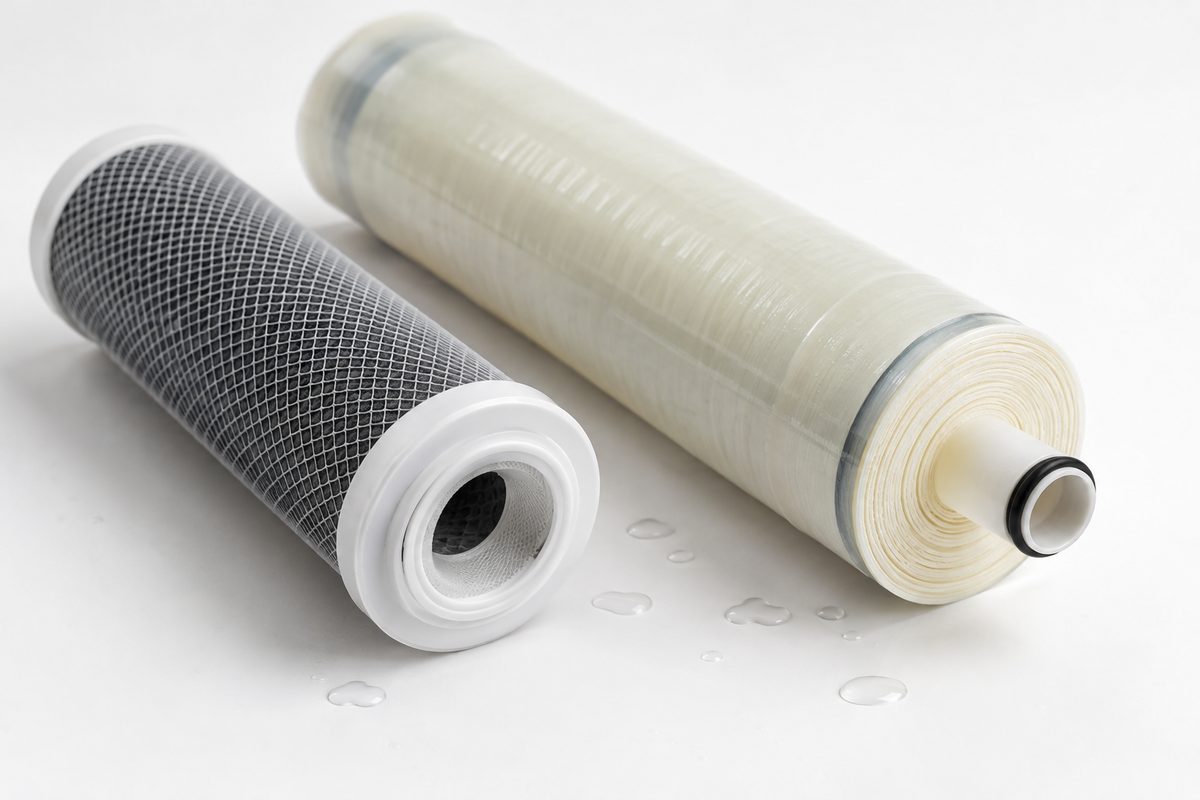
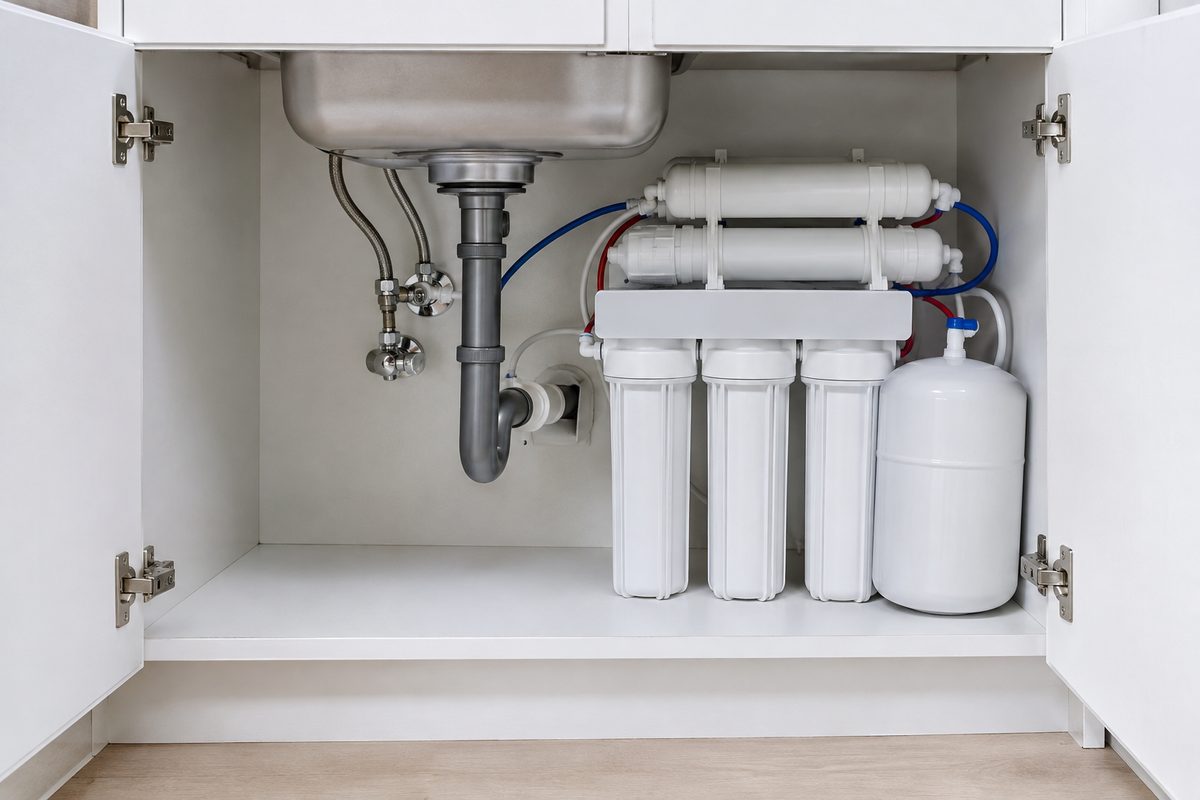
The sourcing implication is direct. If your market is municipal water with chlorine complaints and taste issues, a certified carbon cartridge at a lower unit cost is the right play. If your market has PFAS advisories, lead service lines, or high-TDS groundwater, RO is the honest answer—and only a 58-certified unit lets you say so on the box.
How ONEMI Positions Its Certification Stack
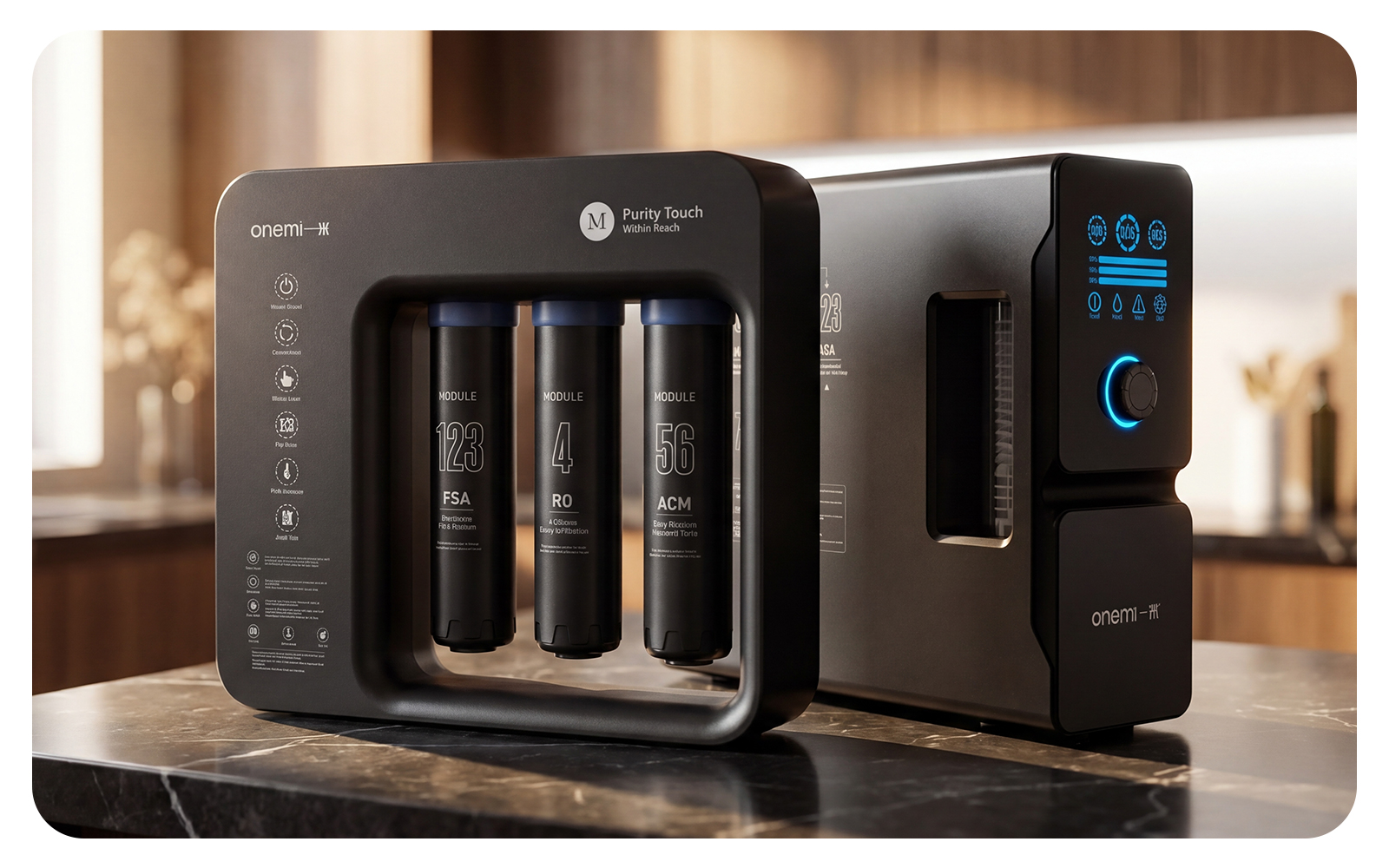
ONEMI, a Guangdong-based water purification equipment manufacturer, runs its certification stack on a principle that mirrors the standard split: whole-machine certifications for the systems, filter-specific certification for the consumables. The company holds CE, UL, FCC, and RoHS for its complete units, and NSF certification on its filter cartridges—not a whole-machine NSF claim. That distinction is deliberate and, frankly, the correct one under the standards as they currently stand.
For importers, this matters because it tells you exactly what you can print on the packaging. An ONEMI RO system carries the machine-level marks that clear EU and North American electrical and materials requirements, while the filter cartridges that actually touch the water carry the NSF claim where NSF actually applies. The company also holds a granted US utility patent on its universal filter-cartridge structure—an IP position that matters when you’re negotiating a private-label line and want protection against copycats on the consumable that drives your recurring revenue.
The product range maps cleanly onto the standard split. The 100G and 400G reverse osmosis systems sit under the RO side of the equation—TDS reduction as the working principle—while the carbon block and sediment cartridges carry the health and aesthetic claims that 42 and 53 govern. If you’re building an import line, start from the claim you want to make, then pick the product and the standard that support it. More detail on the factory’s capabilities is on the OEM/ODM water purifier factory page, and the full certification register is on the certification page.
A Seven-Step Verification Checklist for Sourcing Teams
Most certification disputes between importers and factories come down to one missed question. Run this checklist before you sign a purchase order, and most of them disappear.
- Ask for the NSF listing number, not a PDF. Look it up in the public NSF database and confirm it’s live.
- Match the listed manufacturer name to the entity on your contract. Private-label listings must name your brand, not the factory’s.
- Confirm which compounds the claim covers. “NSF 53 certified” is meaningless without the reduction-claim list.
- Check the challenge concentration and the resulting effluent. For PFAS, does the tested output sit below 4 ppt?
- Verify whether the mark is for the whole unit or the cartridge only. Whole-machine NSF is a specific, separate listing.
- Calendar the revision dates—December 31, 2026 for the 61 material changes and January 1, 2030 for the 53/58 PFAS effluent updates.
- Have the factory confirm in writing that a certificate will survive a factory audit and annual surveillance, not just the initial test.
The window to clean up your claim language is open now and closing on a schedule. Compounds are becoming the unit of trust in this category, and the importers who treat a certificate as a starting point—not a finish line—are the ones who won’t have to reprint a container’s worth of packaging in 2028.