



 한국어

- The EPA’s 2024 PFAS rule sets a 4 ppt limit for PFOA and PFOS, with compliance phased through 2031 — and the May 2025 update kept only those two compounds at the federal level.
- “Certified for PFAS” only means something when the standard is named: NSF/ANSI 53, 58, and 401 each cover a different slice of the problem, and a cartridge claim does not extend to the whole system.
- For OEM buyers, PFAS compliance is now a design problem, not a marketing line — media selection, certification scope, and state-level patchwork (California is strictest) all shape the spec sheet.
For most of the water-filtration industry’s history, PFAS was an emerging-contaminant footnote — a term specialists used, not a number buyers had to meet. That changed in 2024, and it changed the spec sheet for every residential purifier sold into the US market. The shift is not about marketing a “PFAS filter.” It is about whether a product can legally, verifiably claim to remove the two compounds regulators actually care about.
This article walks through what the rule actually says, what certification really covers, and what it all means for the people who design and source residential water purifiers.
The rule that rewrote the spec
In April 2024, the US Environmental Protection Agency issued its first national drinking water standard for PFAS, setting a maximum contaminant level of 4 parts per trillion for PFOA and 4 ppt for PFOS, with a goal of zero for both. For context, 4 ppt is the concentration equivalent of four drops in an Olympic-sized pool — the strictest enforceable limit the agency has ever set for a drinking water contaminant.
The regulatory picture shifted again in May 2025, when the EPA announced it would keep the enforceable limits for PFOA and PFOS but withdraw the federal limits for four other PFAS compounds — PFHxS, PFNA, HFPO-DA (GenX), and PFBS — which had been governed by a hazard-index approach. Compliance deadlines were also pushed from 2029 to 2031. The net effect for manufacturers: the federal requirement has narrowed to two named compounds, but the expectation from buyers has not narrowed at all.

What “certified for PFAS” actually means
The phrase “removes PFAS” without a standard number is meaningless. Three NSF/ANSI standards do the real work, and they cover different things. NSF/ANSI 53 covers health-effect claims for point-of-use and point-of-entry systems — lead, arsenic, VOCs, and now PFAS reduction to below 20 ppt. NSF/ANSI 58 is the reverse-osmosis standard, covering total dissolved solids reduction of at least 75% plus specific contaminants including PFAS. NSF/ANSI 401 covers emerging compounds: pharmaceutical residues, BPA, and other trace contaminants that do not fall under 53.
One distinction trips up buyers more than any other: a filter cartridge can carry NSF/ANSI 53 certification while the rest of the system — the housing, the fittings, the faucet — does not. Certification applies to the tested component or system, not to a brand as a whole. When an OEM claims “NSF certified” without saying which standard and which component, treat it as a red flag, not a reassurance. We unpacked how PFAS intersects with the broader market in our earlier look at 2026 RO water filter market trends.
The state-level patchwork matters more than the federal floor
The federal rule is a floor, not a ceiling. California runs ahead of it, with its own PFAS monitoring orders and notification levels — PFHxS at 3 ppt, with a response level of 10 ppt — that predate the federal standard and remain stricter in places. Other states have followed with their own advisory levels and reporting requirements. A product that clears the federal bar can still stumble on a state-level procurement or a retailer-specific requirement.
For a manufacturer or importer, this means the target is not “EPA compliant.” The target is “compliant across the markets your buyers sell into.” That is a different, harder problem, and it pushes the conversation from a certificate on a wall to a design decision made before the mold is cut.
What it changes in product design
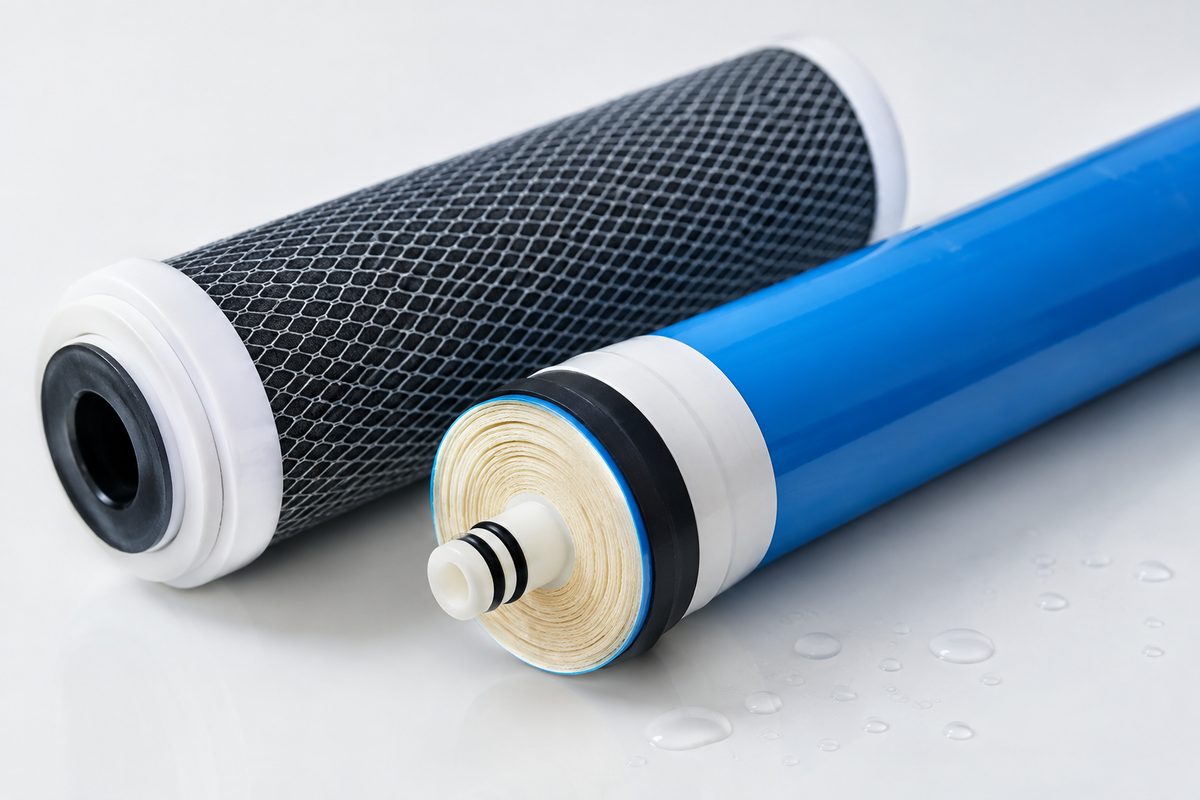
Removing PFAS is not one technology; it is usually a stack. Granular activated carbon adsorbs PFAS effectively, and reverse osmosis is the most complete barrier — the two are often combined: carbon for chlorine and short-chain PFAS, RO for the long-chain compounds and total dissolved solids. The design question becomes which stages to include, in what order, and how to size the carbon bed so it keeps working over the cartridge’s stated life rather than saturating early.
Media selection has real cost consequences. A carbon block engineered for PFAS removal costs more than a basic chlorine-reduction block, and it changes the replacement interval math. An OEM that specs a cheap carbon block and slaps “PFAS” on the label is selling a claim the media cannot hold — and in the US market, that is a liability problem waiting to happen, not just a performance gap.
What an OEM buyer should verify before ordering
The sourcing checklist has three parts, and none of them is optional.
First, certification scope. Get the exact standard number and the exact component it covers — NSF/ANSI 42 for aesthetic claims, 53 for health-effect claims including PFAS, 58 for RO systems, 61 for material safety, 372 for lead content. A cartridge with 53 does not make the housing 61-certified. Second, test data. Ask for the challenge concentration, the reduction percentage, and the certified flow rate — a PFAS claim only holds at the tested conditions. Third, continuity. A supplier that cannot document the carbon source and keep the media formulation stable over years will drift out of compliance without anyone noticing.
These are exactly the questions a manufacturer should be able to answer in writing. The full certification picture is on our certifications page, factory capability on the OEM/ODM page, and the sourcing questions answered in the OEM FAQ.
Where ONEMI fits
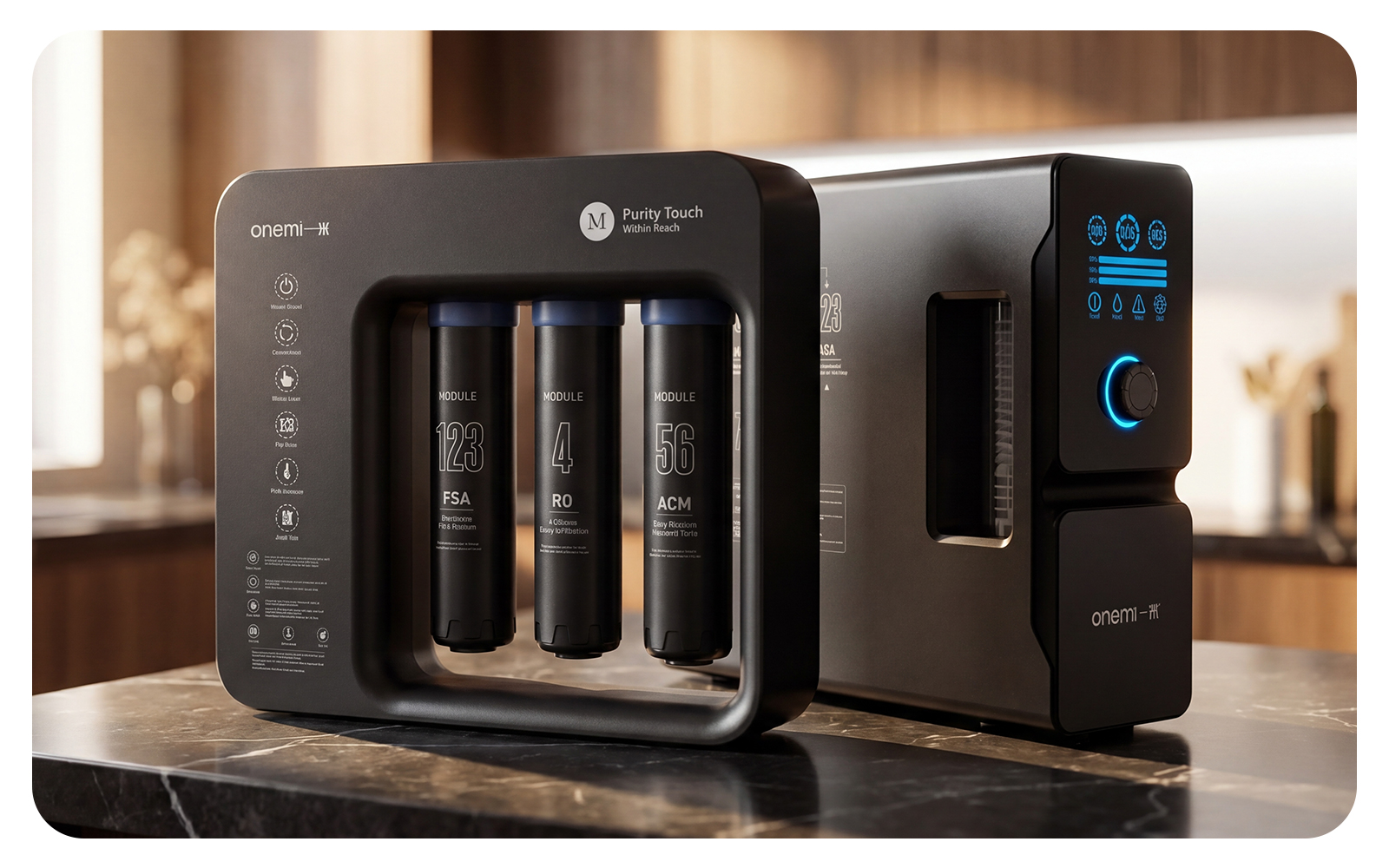
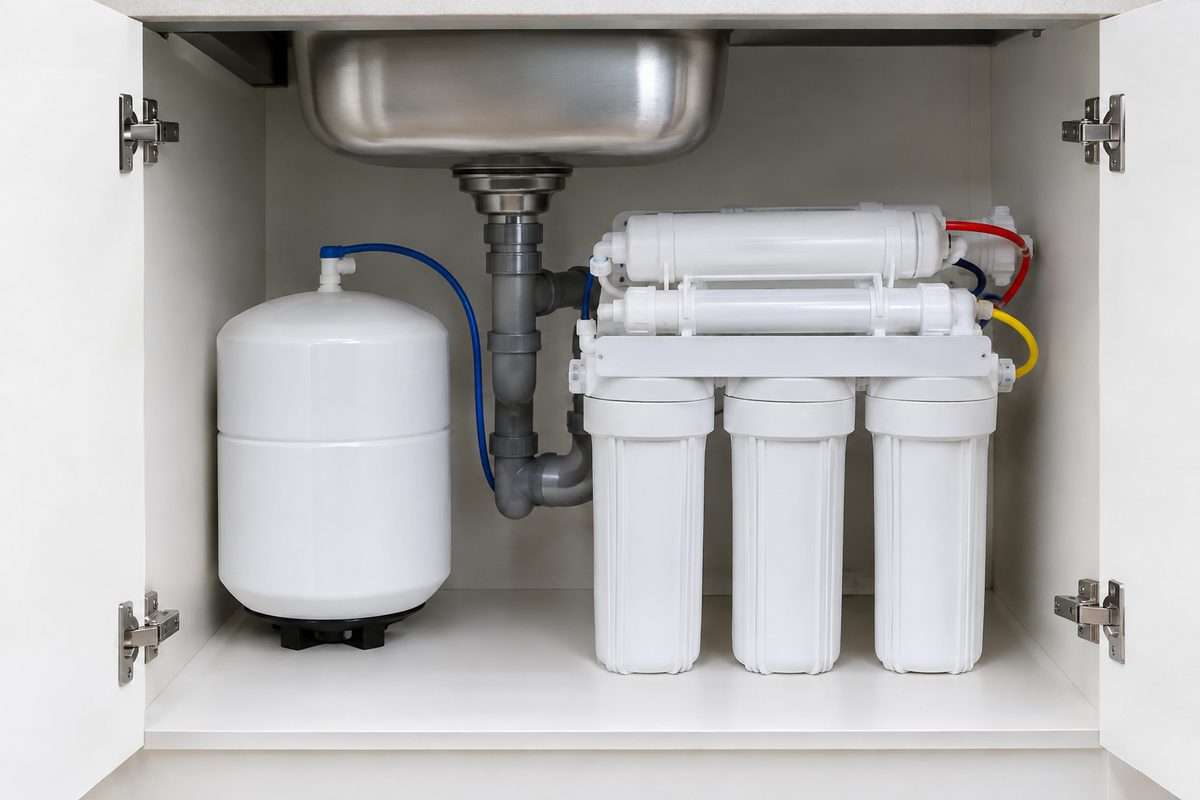
ONEMI, a Guangdong-based water purification equipment manufacturer, treats PFAS compliance as a design input rather than an after-the-fact claim. Whole-machine certifications cover CE, UL, FCC, and RoHS, while NSF coverage applies specifically to the filter cartridges — the distinction stays explicit, because blurring it is how buyers get burned. Reverse-osmosis systems are built around membrane and carbon stages sized for the market’s actual contaminant profile, not a one-size default.
The PFAS rule did not create a new product category. It created a new standard of proof for an old one. The manufacturers who treat that proof as a design requirement — documented media, named standards, tested flow rates — are the ones who will keep selling into the US market as the 2031 deadline closes in. Everyone else is shipping a label.