




 한국어
한국어

- Latin America’s water purifier market was valued at $2.5 billion in 2025 and is projected to reach $4.7 billion by 2035 at a 6.7% CAGR (GM Insights, 2026).
- Under-sink systems are the fastest-growing install segment, while gravity and UF units win the price-sensitive majority that RO cannot reach.
- Brazil is the largest national market and Argentina the fastest-growing; roughly 160 million people across the Americas still lack safely managed drinking water.
Latin America is not a single water market. It is a region where a São Paulo high-rise and a rural Andean household buy completely different machines for completely different reasons. The under-sink segment is where the growth sits, but the product that wins the volume is not the same product that wins the margin. Importers who read Latin America as “one market” misprice the opportunity.
The region’s purifier market was worth $2.5 billion in 2025 and is projected to reach $4.7 billion by 2035, a 6.7% CAGR according to GM Insights. Under-sink installation is the fastest-growing segment. Yet the demand is deeply split: urban middle-class buyers want compact point-of-use treatment, while a large share of the region still needs low-cost, low-electricity filtration that works off an unreliable grid.
Market size and the under-sink growth story
GM Insights sized Latin America’s water purifier market at $2.5 billion in 2025, rising to $2.6 billion in 2026 and $4.7 billion by 2035 at a 6.7% CAGR. Equipment demand is projected to grow from roughly 8.7 million units in 2025 to 15.5 million by 2035, while the average selling price edges up from about $287 to $303. That unit growth is the signal: Latin America is a volume story, not a premium story.
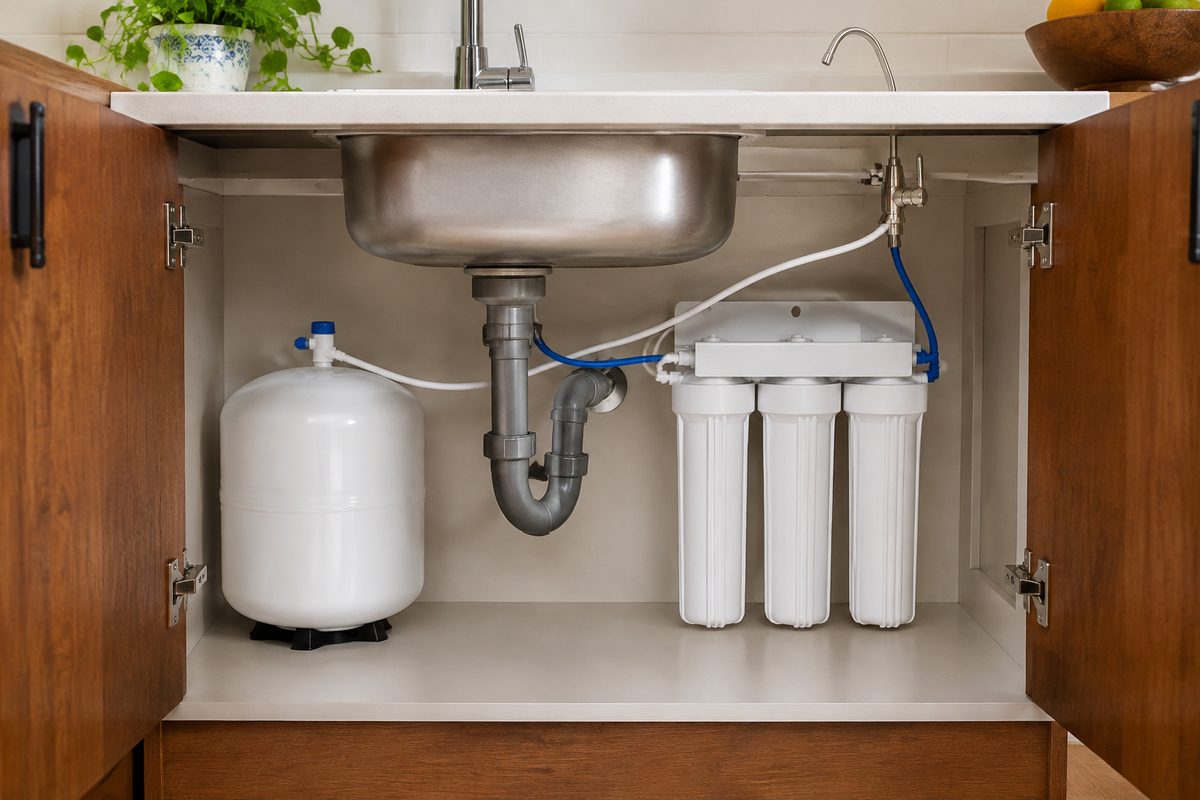
The under-sink segment is where that volume concentrates, and it compounds faster than the market as a whole. Across the broader global picture, under-sink systems are the fastest-growing install category at a 10.92% CAGR, according to Straits Research. The driver is the same in Lima or Guadalajara as it is in Jakarta: a compact unit under the counter is the cheapest way to get treated water at the point where people actually drink it.
Why gravity and UF lead the price-sensitive majority
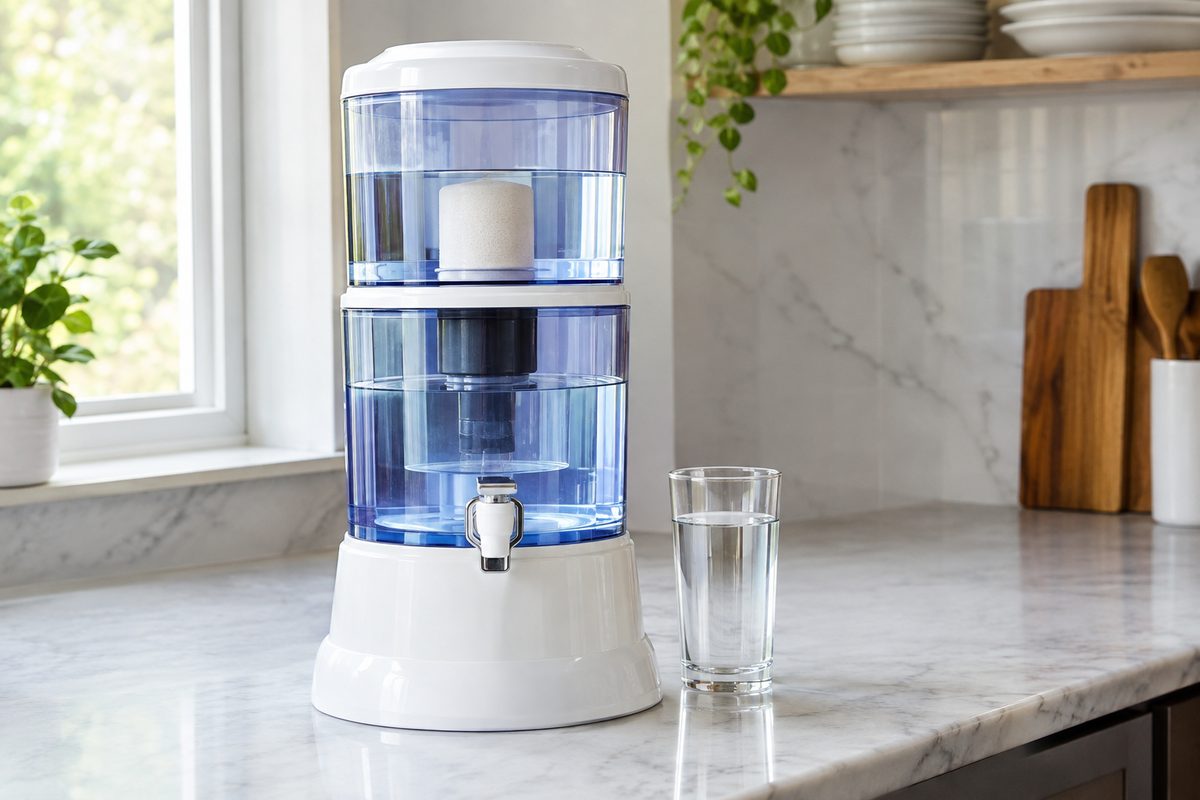
The product mix in Latin America does not mirror North America. Where a US kitchen defaults to an RO system, much of Latin America defaults to gravity and ultrafiltration units. The reason is structural: the Pan American Health Organization estimates roughly 160 million people across the Americas still lack safely managed drinking water, and a large share of the population lives with intermittent electricity or none at all at the point of use.
A gravity purifier needs no power, no pump, and no install labor. It is a fill-and-wait device that filters by head pressure alone. An ultrafiltration unit runs at line pressure, retains minerals, and only needs electricity where a pump is required to overcome low municipal pressure. Both hit a price band that reverse osmosis cannot reach: gravity units typically land well under $100, and UF systems between roughly $150 and $400. That is the core of the opportunity. The low-cost tier is the entry point, and it is the largest tier by unit volume.
The no-electricity UF play, which maps directly to off-grid Latin America, is covered in the off-grid UF sourcing guide.
Country-level split: Brazil, Argentina, and the rest
Brazil is the region’s largest market, and Argentina is its fastest-growing, according to GM Insights. The two anchor different strategies. Brazil is a scale play with mature retail and e-commerce channels; Argentina is a growth play where currency volatility and import restrictions mean the sourcing model matters as much as the product.
Beyond the two anchors, the opportunity is fragmented across Mexico, Colombia, Peru, Chile, and Central America. The common thread is distribution. The region’s water purifier market is still dominated by offline retail, which held over half of global sales by channel in 2025. A product that depends on online-only discovery will underperform; one that can reach hardware stores, appliance chains, and installer networks will not.
For importers building a China-sourced line, the channel and compliance groundwork is laid out in the China import sourcing framework.
What this means for an import or OEM strategy
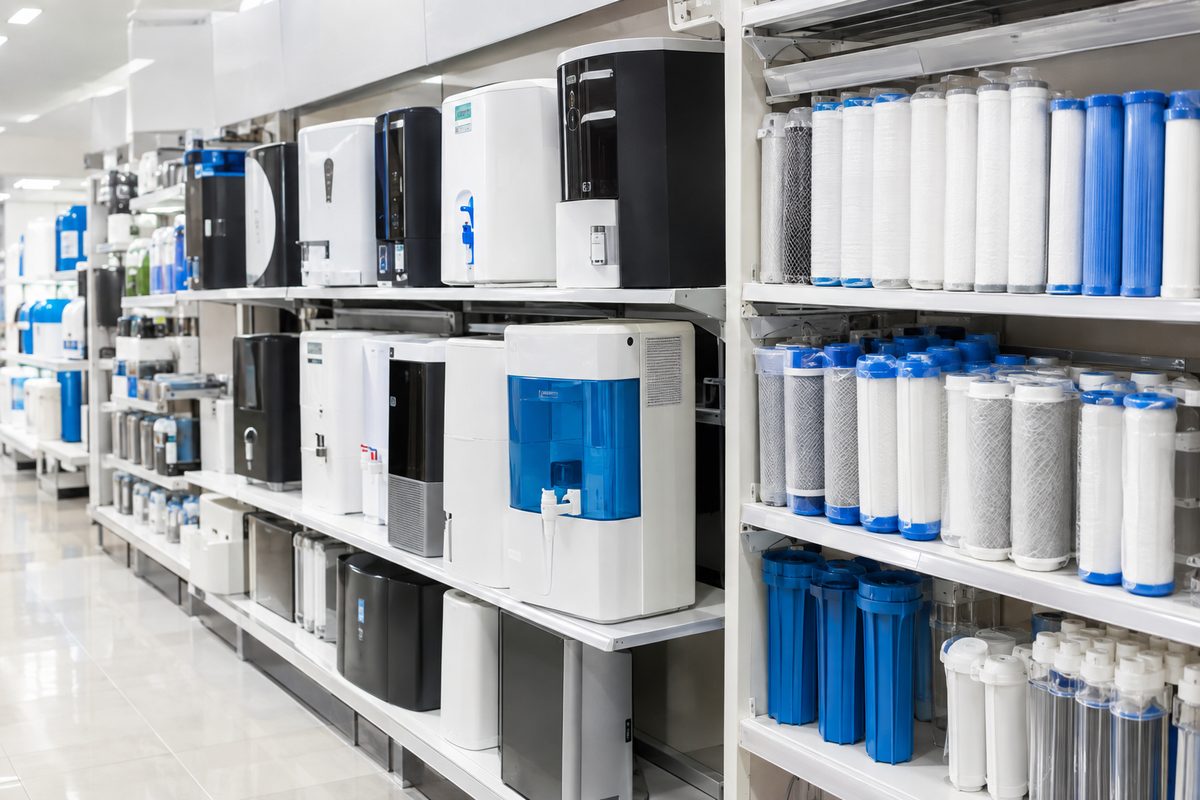
The practical conclusion for a manufacturer or importer is to carry two tiers at once. A gravity or low-cost UF line opens the volume tier and rides the region’s structural water-access gap. A compact under-sink RO or UF line captures the urban middle-class upgrade tier. The two tiers share the same certification groundwork, so the compliance investment is paid once and amortized across the range.
ONEMI, a Guangdong-based water purification equipment manufacturer, runs this exact logic: a sediment and pre-filter line that anchors entry-level systems, and under-sink RO and UF platforms for the upgrade tier. The sediment filter OEM guide explains how the pre-filter anchors a full-system line, and the tankless RO market forecast covers the premium end. The sequence that works is to anchor on a low-cost gravity or UF unit, then expand upward once the channel is in place. Latin America is growing, but it grows from the bottom of the price ladder first.